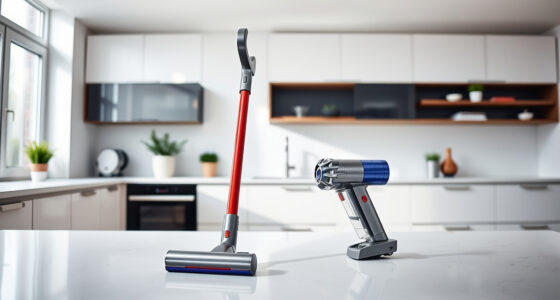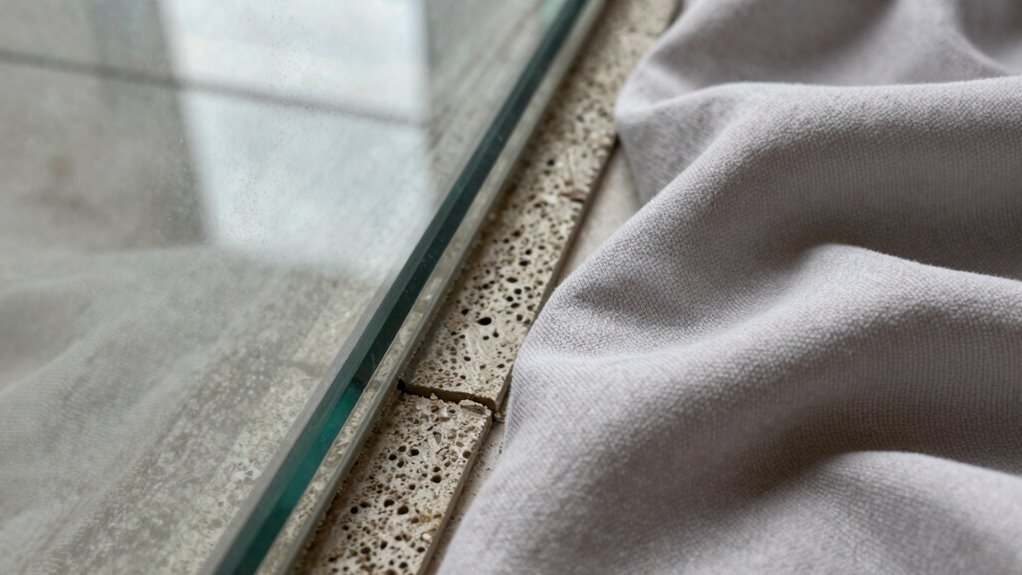

You need different approaches for glass, grout, and fabric because each material reacts uniquely to cleaning and care methods. Glass resists stains and scratches but needs gentle cleaning to avoid etching. Grout is porous, so it absorbs stains easily and requires sealing and scrubbing. Fabric is sensitive to stains, fading, and wear, needing special cleaning and protection. Understanding these differences helps you keep each material in top shape—stick with us to learn how to do it right.

Get cleaning gear delivered free with Prime
- Fast, free delivery on millions of items
- Prime Video, Amazon Music and more included
- Member-only deals all year
Key Takeaways
- Each material has unique surface properties requiring specific cleaning techniques to prevent damage or deterioration.
- Porous materials like grout need sealing and different stain removal methods compared to non-porous glass.
- Fabrics are sensitive to stains, fading, and pilling, necessitating gentle, specialized cleaning and protective treatments.
- Surface durability and susceptibility to scratches, moisture, or chemical damage vary, influencing maintenance approaches.
- Tailored care preserves material appearance, extends lifespan, and avoids unintended harm caused by generic cleaning methods.
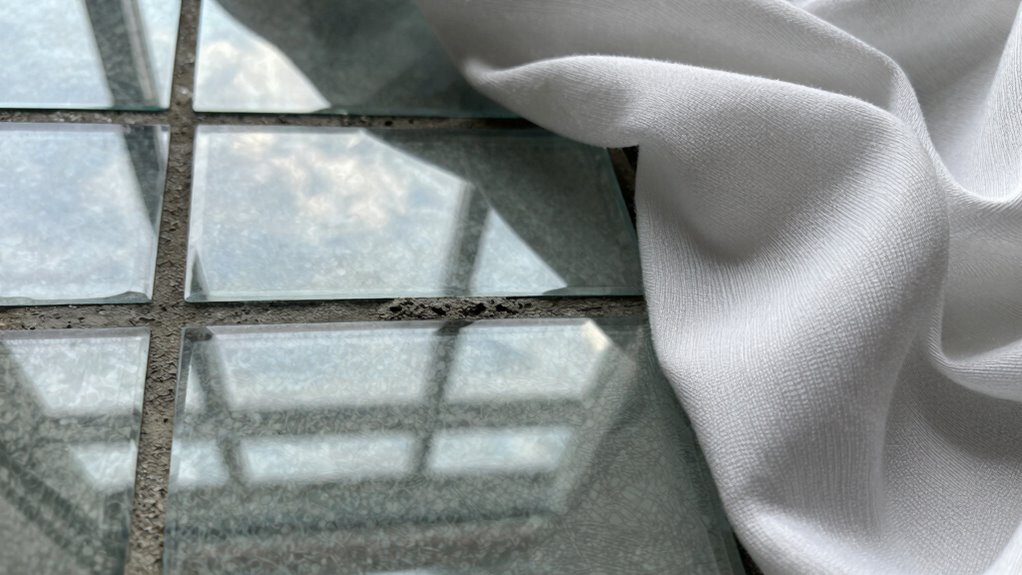
When choosing a design approach, understanding the distinct qualities of glass, grout, and fabric can help you create a space that’s both functional and visually appealing. Each material has unique characteristics that demand tailored strategies for maintenance, durability, and overall care. Recognizing these differences guarantees your space remains attractive and practical over time.
Starting with glass, its surface durability is exceptional, making it ideal for windows, partitions, and decorative features. Glass resists stains, scratches, and moisture, but it’s not completely invincible. While it’s highly durable, the key to maintaining its pristine look lies in proper cleaning techniques. Regularly wiping down glass with a soft cloth and a gentle cleaner prevents streaks and reduces the buildup of dust and fingerprints. Avoid abrasive scrubbers that could scratch the surface, and be cautious with harsh chemicals, which can cause etching or damage over time. When cleaning glass, use a mixture of water and vinegar or a glass-specific cleaner, and always dry with a lint-free cloth to prevent streaks. This approach preserves its clarity and guarantees it remains a sleek, functional element in your space. Proper cleaning techniques also help prevent surface damage, ensuring the longevity of the glass. Additionally, using appropriate cleaning tools can further protect glass surfaces from unnecessary wear. Regular maintenance not only enhances appearance but also extends the lifespan of glass installations.
Grout, on the other hand, presents a different challenge. As a porous material used to fill gaps between tiles, grout’s surface durability can vary based on its composition and sealing. Unsealed grout absorbs moisture and stains easily, leading to discoloration and decay. As a result, sealing grout lines is essential for extending their lifespan and maintaining an attractive appearance. Cleaning techniques for grout involve regular scrubbing with a stiff brush and a suitable cleaner to remove dirt and prevent mold buildup. For tougher stains or discoloration, a mixture of baking soda and water or a commercial grout cleaner can be effective. It’s important to avoid overly abrasive tools that might damage the grout surface. Proper sealing and diligent cleaning techniques are necessary to keep grout looking fresh and to prevent deterioration, especially in high-moisture environments like bathrooms or kitchens. Regular inspection of grout sealing can help catch issues early before they cause significant damage. Taking proactive steps can also prevent mold growth, which is common in damp areas.
Fabric requires a completely different approach. Its surface durability depends heavily on the type of fabric and the level of exposure to wear and tear. Many fabrics are sensitive to stains, fading, and pilling, so choosing the right cleaning techniques is essential. Regular vacuuming removes surface dirt, while spot cleaning with a mild detergent helps eliminate stains. For deeper cleaning, professional steam cleaning or gentle machine washes are recommended. It’s also wise to consider fabric treatments like stain guards, which provide an extra layer of protection. Since fabric can fade or weaken with harsh chemicals or excessive agitation, always check care labels before cleaning. By understanding the specific needs of fabric, you can extend its life and keep your furnishings looking their best. Proper storage and avoiding direct sunlight can also significantly prolong fabric’s appearance and integrity. Consistent care and mindful usage are key to maintaining fabric’s quality over time.
As an affiliate, we earn on qualifying purchases.
Frequently Asked Questions
How Do Environmental Factors Affect Each Material’s Maintenance?
Environmental factors directly impact each material’s maintenance by affecting their surface susceptibility and overall resilience. For glass, harsh weather can cause scratches or cloudiness, so you need regular cleaning and protection. Grout’s porous nature makes it vulnerable to staining and mold, requiring sealing and prompt cleaning. Fabric is sensitive to UV rays and moisture, so you should protect it from sun damage and damp conditions to maintain its appearance and durability.
Are There Eco-Friendly Cleaning Options for Glass, Grout, and Fabric?
You can use natural solutions like vinegar and baking soda for eco-friendly cleaning of glass, grout, and fabric. For instance, a homeowner in Oregon successfully used vinegar-based sprays on glass and grout, avoiding harsh chemicals while maintaining shine and cleanliness. Innovative techniques, like steam cleaning, also work well without chemicals. These eco-friendly options reduce environmental impact and keep your surfaces spotless without harmful residues.
Can These Materials Be Repaired if Damaged?
Yes, you can repair damaged glass, grout, and fabric, but success depends on material durability and proper repair techniques. For glass, you might need specialized adhesives or professional glazing. Grout can often be repaired with color-matching fillers or sealants, while fabric repairs involve patching or sewing. Understanding each material’s durability helps you choose the best repair method, ensuring longer-lasting results and maintaining your surfaces’ appearance.
What Are the Cost Differences in Maintaining Each Material?
You might think maintenance costs are similar, but they vary widely. Glass typically costs less over time because it’s easy to clean with simple techniques and has high material longevity. Grout and fabric require specialized cleaning techniques, meaning higher ongoing expenses. While grout can stain and wear, fabric may need frequent replacement or professional cleaning, increasing costs. Choosing the right approach guarantees you save money and prolong each material’s lifespan.
How Long Does Each Material Typically Last With Proper Care?
With proper care, glass typically lasts 20-30 years due to its high material durability, but it can chip or crack if mishandled. Grout’s lifespan varies from 5-15 years, depending on cleaning techniques and exposure to moisture; regular sealing extends its durability. Fabric generally lasts 5-10 years, with proper cleaning techniques preventing stains and wear. Each material’s longevity depends on how well you maintain and protect it over time.
As an affiliate, we earn on qualifying purchases.
Conclusion
Just like glass, grout, and fabric each demand their own unique care, your approach should mirror their differences—clear and precise for glass, firm and steady for grout, gentle and flexible for fabric. When you tailor your methods, you create a harmony that keeps each material shining, holding strong, and feeling soft. Embrace the diversity, and watch how your efforts transform your space—bright, resilient, and inviting—showcasing the beauty that comes from understanding what each one needs.
As an affiliate, we earn on qualifying purchases.
As an affiliate, we earn on qualifying purchases.
Halloween Picks
halloween
As an affiliate, we earn on qualifying purchases.