
If your home’s insulation, windows, and external heat sources aren’t addressed, a bigger AC often won’t solve cooling issues. Poor insulation allows cool air to escape and hot air to seep in, making your system work harder. Old, inefficient windows let in more heat, while exposed areas gain extra warmth from direct sunlight. To truly improve comfort and save energy, you need to upgrade insulation, windows, and control external heat. Keep exploring to discover how to create a cooler, more efficient home.
Key Takeaways
- Poor insulation causes heat gain and cool air loss, making a bigger AC insufficient without addressing insulation issues.
- Inefficient or outdated windows increase heat transfer, requiring more than just a larger AC to maintain comfort.
- External factors like direct sunlight and lack of shading raise indoor temperatures, necessitating additional cooling strategies.
- Overworking the AC due to leaks or poor building envelope increases energy consumption and reduces effectiveness.
- Upgrading insulation and windows enhances thermal efficiency, often reducing the need for a bigger AC unit.
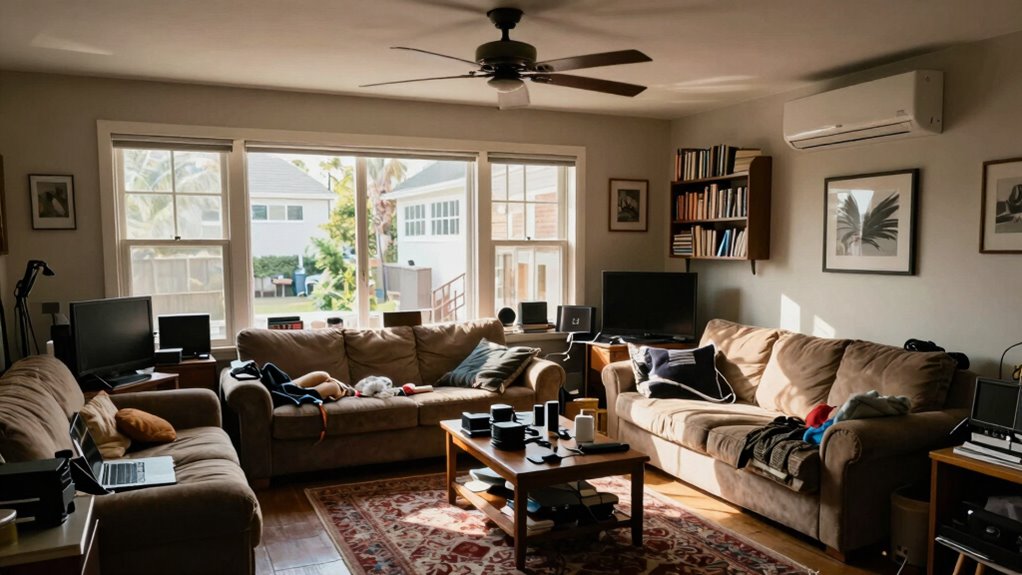
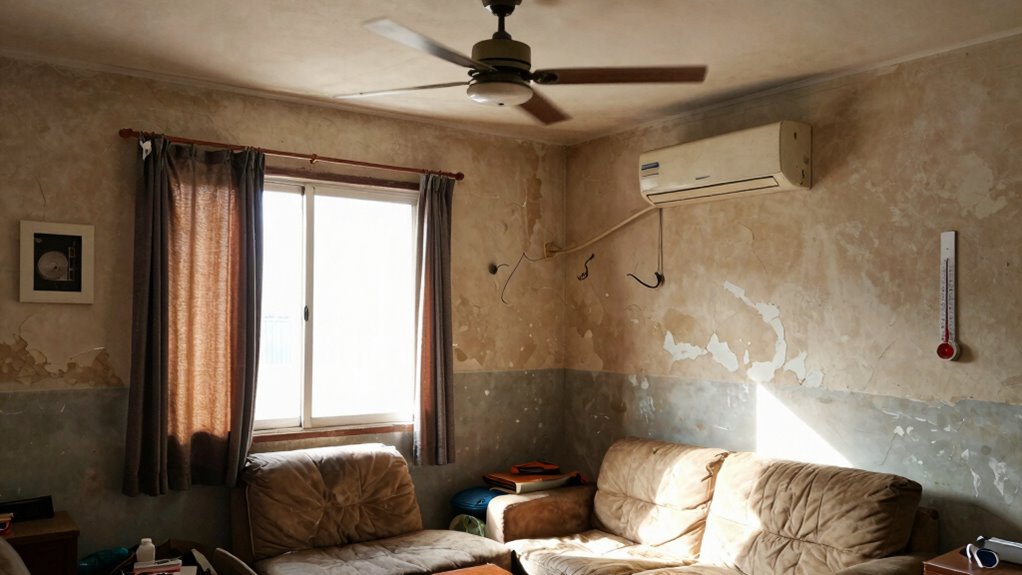
When a bigger air conditioner alone doesn’t keep your home comfortably cool, it’s a sign that other issues might be at play. You might think that increasing the AC’s size will solve the problem, but often, the root causes lie elsewhere. One common issue is poor home insulation, which allows cool air to escape and hot air to seep in. If your insulation improvements are lacking, your AC has to work overtime just to maintain a comfortable temperature, wasting energy and increasing your energy bills. Addressing insulation issues can make a significant difference. Upgrading your attic insulation, sealing leaks around windows and doors, and adding insulation to walls can help your home retain cooled air more effectively, reducing the load on your air conditioner.
Another key factor is your windows. Old or inefficient windows can be a major source of heat gain during summer. Energy efficient windows are designed to minimize heat transfer, keeping the interior cooler without relying solely on the AC. These windows often feature better glazing, reflective coatings, or inert gas fills that block heat from entering your home. If you have outdated or single-pane windows, replacing them with energy efficient options can dramatically improve your home’s cooling efficiency. This not only helps your current AC work less but also extends its lifespan and reduces energy costs over time.
Upgrading to energy-efficient windows reduces heat gain and boosts your home’s cooling efficiency.
You should also consider how your home’s design impacts cooling. Poorly shaded windows or direct sunlight hitting your house can significantly increase indoor temperatures. Installing window shades, awnings, or planting shade trees can reduce heat gain. Additionally, improving insulation and sealing leaks work together to create a more thermally efficient home. When your home is better insulated and your windows are energy efficient, your cooling system doesn’t have to compensate for external heat sources. Proper home insulation and window upgrades are essential components of an energy-efficient cooling strategy. Ensuring that your home’s thermal barriers are effective can greatly reduce cooling costs and improve comfort. Incorporating seasonal shading strategies can also help to further reduce heat gain during the hottest months. Additionally, understanding the effects of thermal transfer can help you identify areas where heat is entering or escaping your home, making targeted improvements more effective. Recognizing the importance of building envelope improvements can lead to more sustainable cooling solutions.
In many cases, upgrading your home’s insulation and windows provides a more sustainable and cost-effective cooling solution than simply increasing the size of your AC. These improvements work hand in hand to keep your home cooler naturally, reducing strain on your air conditioning system. So, if your larger AC isn’t enough, look beyond just the unit. Focus on making your home more energy efficient through better windows and insulation. Not only will your home stay cooler, but you’ll also save money on energy bills and reduce your environmental impact. Sometimes, the smartest fix isn’t bigger equipment, but smarter home improvements.
energy efficient attic insulation
As an affiliate, we earn on qualifying purchases.
As an affiliate, we earn on qualifying purchases.
Frequently Asked Questions
How Does Insulation Affect Cooling Efficiency in Homes?
Insulation quality directly impacts your home’s cooling efficiency by reducing heat transfer and keeping the cool air inside. Good thermal barriers, like properly installed insulation, prevent warm outdoor air from infiltrating and cool indoor air from escaping. When your insulation is excellent, your AC doesn’t have to work as hard, saving energy and lowering costs. So, upgrading insulation can make your cooling system much more effective and comfortable.
Can Window Placement Impact Cooling Effectiveness?
Your window placement considerably impacts cooling effectiveness. For example, if your windows face the afternoon sun, they let in more heat, making cooling harder. Proper window orientation, combined with ventilation strategies like opening windows during cooler evenings, can improve airflow and lower indoor temperatures. By optimizing window placement and ventilation, you’ll reduce the load on your AC, making your home cooler and more energy-efficient without needing a bigger unit.
What Role Do Ceiling Fans Play Alongside AC Units?
Ceiling fans work alongside your AC to boost air circulation, helping to distribute cooled air more evenly throughout your home. This synergy can lead to significant energy savings because you can set your thermostat a few degrees higher without sacrificing comfort. By improving air movement, ceiling fans make your space feel cooler, reducing the load on your AC unit and ultimately lowering your energy bills.
Are Smart Thermostats Beneficial for Larger or Complex Homes?
Yes, smart thermostats are highly beneficial for larger or complex homes. They enhance energy savings by intelligently adjusting temperatures based on your habits and occupancy patterns. With user control through smartphone apps, you can easily customize settings in different zones or rooms. This guarantees consistent comfort while avoiding unnecessary energy use, making your heating and cooling system more efficient and tailored to your home’s unique layout.
How Does Humidity Influence Cooling Needs?
Humidity considerably influences your cooling needs. High moisture levels make your home feel warmer and more uncomfortable, even if the temperature is ideal. Proper humidity control helps reduce this sensation, making air feel cooler and more comfortable. Without it, your AC works harder to remove moisture, increasing energy consumption and wear. As a result, managing humidity isn’t just about comfort; it’s essential for efficient cooling and maintaining a balanced indoor environment.
double pane energy efficient windows
As an affiliate, we earn on qualifying purchases.
As an affiliate, we earn on qualifying purchases.
Conclusion
So, next time your home feels too warm despite a bigger AC, ask yourself: is it really just about cooling? Sometimes, addressing insulation, airflow, or humidity makes all the difference. Relying solely on a bigger AC might seem like the simple fix, but it’s often just part of the solution. Wouldn’t you rather have a comfortable, energy-efficient home that stays cool no matter what? Sometimes, a little extra effort makes all the difference.
As an affiliate, we earn on qualifying purchases.
home sealing and weatherstripping kit
As an affiliate, we earn on qualifying purchases.
As an affiliate, we earn on qualifying purchases.