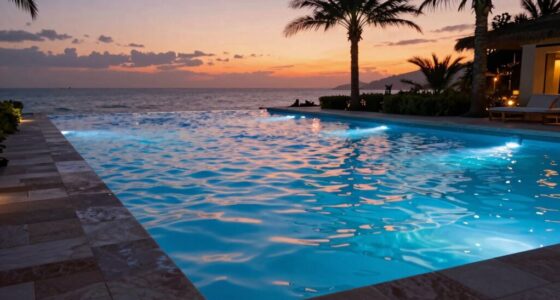
To open your pool season properly, start with a thorough safety inspection of the deck and guarantee all equipment like life rings and first aid kits are accessible. Test and balance the water’s chemical levels, including pH, alkalinity, and sanitizer, adjusting as needed. Check the filtration system for leaks or malfunctions, and run it to circulate and clean the water. Finally, conduct a final water test and keep detailed records. Continue to explore for more detailed steps to ensure a safe and successful pool opening.

Get cleaning gear delivered free with Prime
- Fast, free delivery on millions of items
- Prime Video, Amazon Music and more included
- Member-only deals all year
Key Takeaways
- Conduct a thorough pool safety inspection, checking for hazards and ensuring safety equipment is accessible.
- Test and balance water chemistry, including pH, alkalinity, and sanitizer levels, before opening.
- Inspect and maintain the filtration system to ensure proper water circulation and system functionality.
- Remove and clean the pool cover, then check for debris or damage before filling or opening the pool.
- Record all water tests and chemical adjustments to monitor water quality throughout the season.
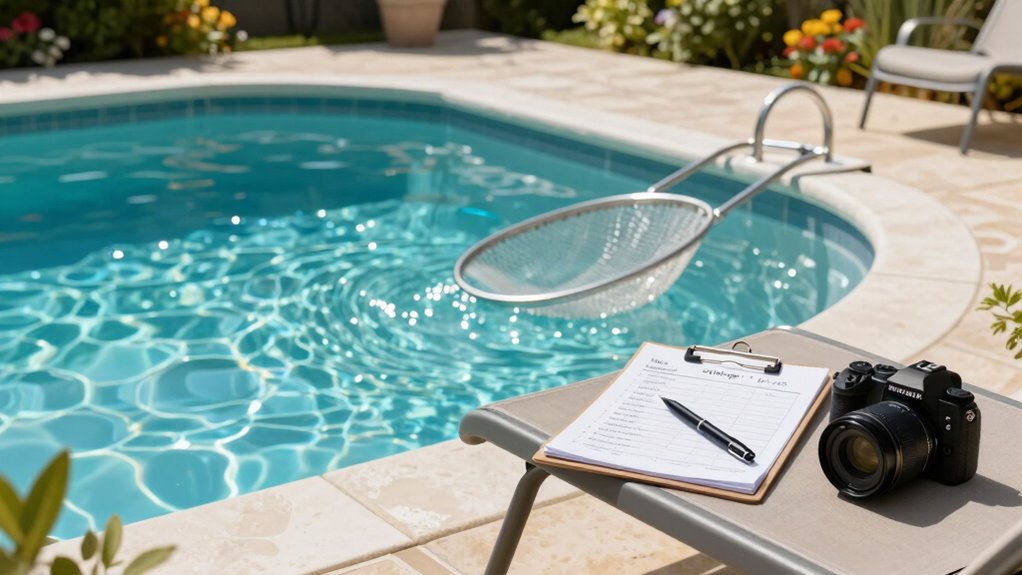
Opening your pool for the season can be straightforward if you follow a clear checklist, but missing key steps can lead to costly repairs or unsafe conditions. The first priority is guaranteeing pool safety, which means inspecting your pool area thoroughly. Check the surrounding deck for any cracks, loose tiles, or hazards that could cause accidents. Make sure safety equipment, like life rings and first aid kits, are easily accessible and in good condition. Verify that your pool cover is removed carefully and stored properly to prevent debris from falling in, which could compromise safety and cleanliness.
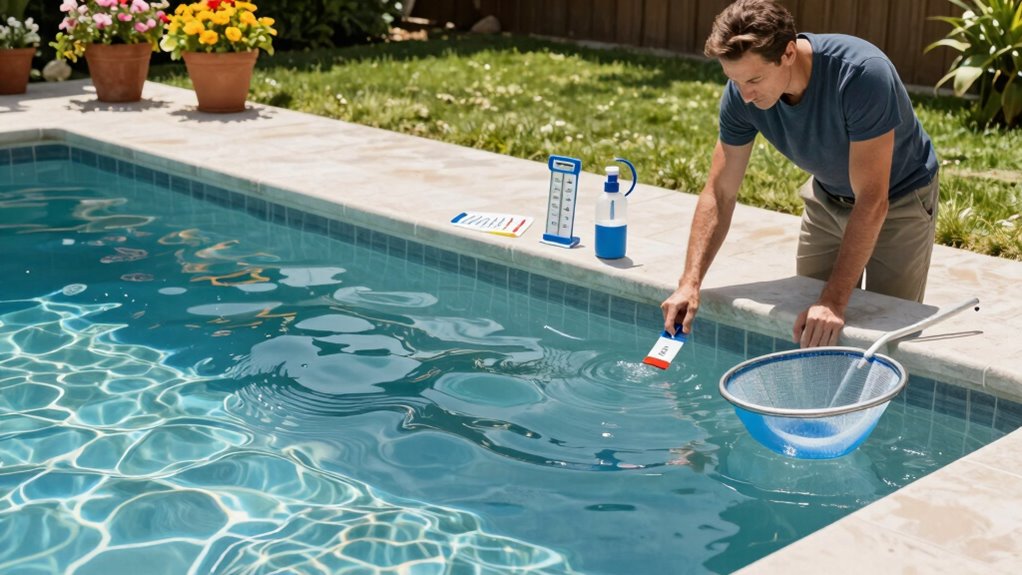
Once the area is secure, focus on the chemical balance. Proper chemical levels are essential for maintaining water safety and clarity. Test the water using a reliable test kit or strips to measure pH, alkalinity, and sanitizer levels. The ideal pH range is typically between 7.2 and 7.6, which helps prevent skin irritation and protects your pool equipment. If the pH is too low, add a pH increaser; if it’s too high, use a pH reducer. Balancing alkalinity, usually between 80 and 120 parts per million, helps stabilize pH levels and prevents fluctuations that could damage your pool or make the water unsafe. Regular testing and adjustments are crucial for maintaining optimal water chemistry, especially after opening your pool.
Sanitizer levels, like chlorine or bromine, should be checked and adjusted to guarantee the water is sanitized effectively. A free chlorine level of 1 to 3 ppm is generally recommended for residential pools. If levels are low, add sanitizer accordingly, but avoid overdoing it, as excess chemicals can cause skin irritation and other issues. Remember, maintaining proper chemical balance not only keeps the water safe but also extends the life of your pool equipment and prevents algae growth. Additionally, ensuring your filtration system is functioning correctly can help maintain consistent water quality throughout the season. Proper water circulation is crucial for distributing chemicals evenly and preventing stagnation. Regularly inspecting and maintaining your equipment will help identify potential issues early and save you time and money later.
Next, inspect your filtration system. Run the pump and filter to circulate water and check for leaks or malfunctions. Clean or backwash the filter as needed, especially if it’s been sitting unused during the off-season. Clear water circulation is vital for managing chemical distribution and ensuring pool safety. Confirming that all components are in good working order will help prevent issues later in the season. To ensure your pool stays in top condition, consider reviewing your routine maintenance schedule and making adjustments as needed. Remember, proper maintenance and system checks are key to a trouble-free swimming season.
Before swimming, it’s wise to give the water a final test to confirm chemical balance and sanitizer levels. Add any necessary chemicals to reach ideal levels. Keep a record of your tests and adjustments to track water quality over time. By prioritizing safety and chemical balance from the start, you set yourself up for a smooth, enjoyable swimming season without unexpected problems or hazards.
As an affiliate, we earn on qualifying purchases.
Frequently Asked Questions
What Tools Are Essential for Opening a Pool?
You’ll need essential tools like a pool skimmer and brush for cleaning debris and algae, a pump for circulation, and test kits to check water chemistry. A leaf net helps remove large debris, while a vacuum keeps the pool spotless. Remember to follow safety precautions, such as wearing gloves and goggles. These tools guarantee proper pool maintenance, making your opening smooth and safe, so you enjoy a clean, inviting swimming environment.
How Early Should I Start Preparing My Pool?
You should start preparing your pool at least two to three weeks before your planned opening date. Follow a thorough pool opening checklist, guaranteeing you complete seasonal maintenance tasks like cleaning filters, balancing chemicals, and inspecting equipment. Starting early helps you catch issues early, prevent surprises, and ensure a smooth opening. By beginning in advance, you give yourself ample time to address any problems and enjoy a hassle-free swimming season.
Can I Open My Pool Alone or Should I Hire a Professional?
You can open your pool alone if you’re comfortable with pool maintenance, but hiring a professional guarantees proper pool cover removal and thorough chemical balancing. Doing it yourself saves money but requires knowledge and safety precautions. A professional handles everything efficiently, from removing the cover to balancing chemicals, reducing errors and ensuring your pool is safe and ready for swimming. Consider your skills, time, and comfort level before deciding which approach works best.
How Do I Test the Water Quality After Opening?
You should perform water testing to check your pool’s water quality after opening. Use a reliable test kit or strips to measure chemical balance, including pH, chlorine, and alkalinity levels. Adjust these chemicals as needed to guarantee safe, clean water. Regular testing helps prevent issues like algae growth or irritation. Keep monitoring until your water tests show a balanced, healthy environment, ensuring a smooth and enjoyable swimming season.
What Are Common Mistakes to Avoid During Pool Opening?
Think of opening your pool as setting sail—every detail counts. To avoid common mistakes, prioritize pool safety by checking for hazards and guaranteeing proper fencing. Don’t skip seasonal maintenance like cleaning filters and inspecting equipment, as neglecting these can cause bigger problems later. Avoid rushing the process; thoroughness ensures your water stays crystal clear and safe. Staying attentive prevents costly issues and guarantees a smooth, enjoyable swim season.
As an affiliate, we earn on qualifying purchases.
Conclusion
By following these key checks, you guarantee your pool is safe, clean, and ready for enjoyment. By inspecting the equipment, balancing the chemicals, and cleaning thoroughly, you prevent problems before they start. By staying organized, staying proactive, and staying consistent, you make opening your pool a smooth process. Remember, preparation today means worry-free swimming tomorrow. Keep these steps in mind, stay vigilant, and jump into the season confident and carefree.
As an affiliate, we earn on qualifying purchases.
As an affiliate, we earn on qualifying purchases.
Fall Picks
fall essentials
As an affiliate, we earn on qualifying purchases.