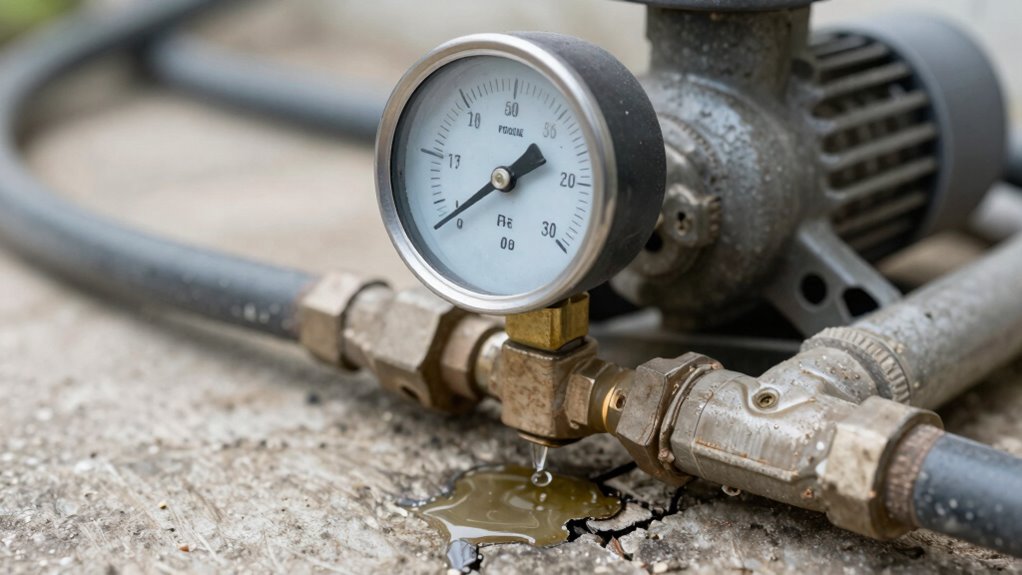
To spot early signs of pool equipment trouble, look for cloudy water, strange smells, or dullness, which may indicate chemical imbalances or filter issues. Listen for unusual noises or vibrations from the pump and watch for increased pressure or leaks around equipment. Reduced water flow and poor circulation also signal potential problems. Regularly inspecting and maintaining your system can catch issues early, and if you keep paying attention, you’ll gain more tips on keeping your pool in top shape.

Get cleaning gear delivered free with Prime
- Fast, free delivery on millions of items
- Prime Video, Amazon Music and more included
- Member-only deals all year
Key Takeaways
- Listen for unusual noises like grinding or squealing from pumps and filters.
- Watch for increased vibration or irregular pump operation.
- Monitor water clarity; cloudy water may indicate equipment issues.
- Check for leaks around pump or filter housing and observe pressure gauge readings.
- Regularly inspect chemical balance and water smell for signs of system imbalance.
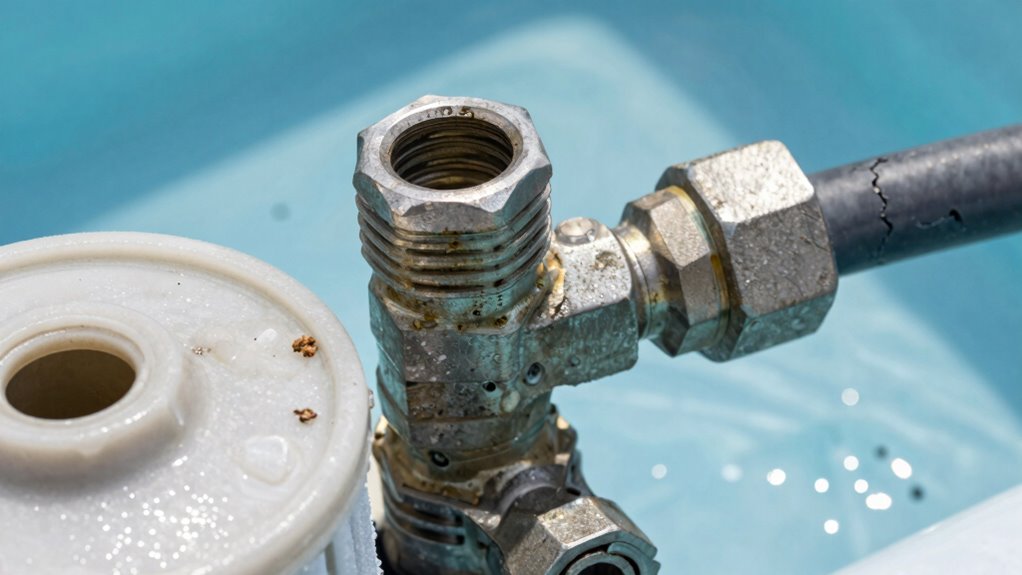
Your pool’s equipment works quietly in the background, but recognizing early signs of trouble can save you time and money down the line. One of the first signs you might notice is a chemical imbalance in your water. If you see your pH levels consistently off or your chlorine readings fluctuate wildly, it’s a clear indicator that your system isn’t functioning properly. An imbalance can lead to cloudy water, algae growth, and even damage to your equipment if left unchecked. Regular testing is crucial, but if you notice your pool’s water looks dull or has a strange smell, it’s time to check the chemicals and consider whether your filtration system is working effectively. Proper water testing helps maintain safe and balanced pool conditions.
Early signs of trouble include chemical imbalances, dull water, or strange smells—regular testing helps prevent costly repairs.
Another common issue is filter clogging. Over time, debris like leaves, dirt, and algae particles can accumulate in your filter, reducing its efficiency. When filters clog, you might notice reduced water flow or increased pressure on your pump. If the pump is working harder than usual, it’s a sign that your filter needs attention. Ignoring this can cause your pump to overheat or fail prematurely. Additionally, you might also notice a decrease in circulation efficiency, which can impact overall water quality. You might also see your pool water taking longer to circulate or clear, which indicates the filter isn’t doing its job well. Regularly inspecting and cleaning your filter can prevent these issues before they escalate. Ensuring your filter is properly maintained is essential for equipment longevity.
Your equipment’s motor and pump are also key indicators of potential trouble. If you hear unusual noises, such as grinding or squealing, or if the pump vibrates excessively, it’s a sign that something isn’t right. Over time, worn-out bearings or motor issues can develop silently, but these sounds are a warning. Neglecting them can lead to complete pump failure, which is costly and inconvenient. Additionally, check for leaks around your pump and filter housing. Small drips may seem insignificant, but they often point to failing seals or cracks that need fixing before they cause more extensive damage. Regular equipment inspections can help catch these issues early. Keeping an eye on the performance of your pool equipment is vital for preventing costly repairs and maintaining efficiency.
Lastly, keep an eye on your pool’s overall clarity and circulation. If your water remains cloudy despite proper chemical levels and your pump runs continuously without clearing, it could be a sign that your equipment isn’t functioning at its best. Sometimes, this is due to filter clogging, but it can also signal problems with the skimmer, pump, or other components. Regular system checks ensure that all parts are working harmoniously. Addressing these early signs by inspecting and maintaining your equipment can save you from costly repairs and extend the life of your entire pool system. Being attentive to these indicators ensures your pool stays safe, clear, and enjoyable all season long.
pool filter cartridge replacement
As an affiliate, we earn on qualifying purchases.
As an affiliate, we earn on qualifying purchases.
Frequently Asked Questions
Can Pool Equipment Issues Cause Water Safety Concerns?
Yes, pool equipment issues can cause water safety concerns. When filters clog or chemical imbalance occurs, it affects water clarity and quality, making it unsafe for swimming. You might notice cloudy water, strong odors, or skin irritation. These problems can indicate equipment trouble, so you should address them promptly. Regular maintenance and monitoring help prevent issues, ensuring your pool stays safe and inviting for everyone.
How Often Should Pool Equipment Be Inspected?
You should inspect your pool equipment weekly, like a steady heartbeat maintaining pool health. Regular pool maintenance keeps equipment in top shape, preventing costly repairs and extending its lifespan. Visual checks reveal leaks, corrosion, or strange noises, while ensuring filters and pumps operate smoothly. By staying attentive and proactive, you safeguard your pool’s equipment, ensuring it runs efficiently and lasts longer, providing you with crystal-clear water and worry-free swimming seasons.
Are There DIY Solutions for Minor Equipment Problems?
Yes, you can try DIY repairs for minor fixes like tightening loose fittings, cleaning filters, or replacing small parts such as O-rings. Start by turning off power and water supply, then follow manufacturer instructions carefully. Use basic tools and safety gear. While DIY solutions work for simple issues, avoid tackling complex repairs; consult a professional to prevent further damage or safety hazards.
What Are the Costs Associated With Professional Repairs?
Think of professional repairs like hiring a skilled pilot—you pay for expertise to avoid turbulence. Cost estimation varies based on the repair, with minor fixes costing around $100-$300, and major issues potentially reaching $1,000 or more. Repair options include replacing parts or complete system overhauls. Investing in professional help guarantees your pool stays smooth and safe, preventing costly future damage and keeping your backyard oasis enjoyable all season long.
How Do Seasonal Changes Affect Pool Equipment Performance?
Seasonal changes, like temperature fluctuations, can impact your pool equipment’s performance. As temperatures drop or rise, your equipment may struggle with proper calibration, leading to inefficient operation or damage. You should regularly check and recalibrate your equipment to adapt to these changes. Doing so helps maintain ideal performance, prevents costly repairs, and extends the lifespan of your pool system throughout different seasons.
As an affiliate, we earn on qualifying purchases.
Conclusion
Keep a watchful eye on your pool’s heartbeat—its equipment. When you notice unusual sounds or sluggish flow, it’s like hearing a faint whisper of trouble. Addressing these signs early is like tending a fragile garden before weeds take over. With attentive care, you’ll prevent small cracks from becoming deep fissures, ensuring your pool remains a tranquil oasis. Trust your instincts, and your pool will sing a smooth, harmonious tune all season long.
As an affiliate, we earn on qualifying purchases.
As an affiliate, we earn on qualifying purchases.
Halloween Picks
halloween
As an affiliate, we earn on qualifying purchases.