
TL;DR
Polysilicon prices stay steady at approximately $19.23/kg amid ongoing industry focus on the US Section 232 investigation. Market participants await the outcome, expected by July 4, which could influence supply and pricing strategies.
Global polysilicon prices remained unchanged at approximately $19.23 per kilogram last week, according to OPIS, as industry participants at SNEC discussed the potential impact of the US Section 232 investigation outcome, which is expected by July 4.
The OPIS benchmark for polysilicon outside China held steady at $19.227/kg, reflecting broadly stable market fundamentals. However, industry insiders indicated that future pricing, production, and sales strategies are likely to be influenced by the US government’s findings from the Section 232 national security review of polysilicon imports, which have reportedly been submitted to the White House.
Despite stable prices, significant disparities persist across supply sources, with price gaps reaching up to $5/kg in long-term contracts and $10/kg in spot markets. Some industry sources believe the investigation’s impact may be overstated, suggesting it may not fully restrict non-U.S. polysilicon but could influence the market if Chinese material that fails traceability standards remains accessible to the US market.
Meanwhile, Chinese polysilicon prices for mono-grade material used in n-type ingots declined slightly, dropping 1.88% week-on-week to CNY 33.429 ($4.86)/kg. Producers are adopting divergent strategies; some operate at higher utilization due to diversified revenue streams, while others are offering more competitive prices to maintain market share amid rising supply. Industry sources also noted ongoing discussions about consolidation efforts in China’s polysilicon sector, though progress remains uncertain.
Implications of US Section 232 Decision on Market Dynamics
The outcome of the US Section 232 investigation is a key factor that could shape polysilicon supply chains and pricing strategies globally. A favorable ruling for US import restrictions could limit Chinese material’s access, potentially boosting non-U.S. suppliers or causing price volatility. Conversely, if restrictions are limited or ineffective, market stability might persist, but ongoing tensions could influence long-term investment and capacity expansion in the sector.
Additionally, the stability of global polysilicon prices amid geopolitical and trade uncertainties provides some relief to manufacturers and project developers, although persistent disparities between supply sources complicate market planning. The focus on consolidation efforts in China also indicates ongoing structural adjustments within the industry, which could influence future supply and pricing patterns.

KEJNYT 12V Small Solar Panel 2Pcs, 3.6W 300mA Wire Clip Solar Cell Charger
- Compact 12V Power Supply: Suitable for DIY projects and garden lights
- Quick Clip Connection: Easy testing with wire clip leads
- Ideal for Learning & Prototyping: Perfect for hobbyists and STEM activities
As an affiliate, we earn on qualifying purchases.
As an affiliate, we earn on qualifying purchases.
Industry Responses and Market Conditions Ahead of US Decision
Market participants have observed that despite stable global prices, significant price disparities remain between different supply sources, with non-Chinese polysilicon contracts varying by as much as $5/kg and spot prices differing by up to $10/kg. Chinese producers are operating under divergent strategies: some ramping up capacity utilization supported by diversified revenues, while others offer aggressive pricing to retain market share amid increased competition.
Prior to SNEC, Chinese authorities, including the China Photovoltaic Industry Association, encouraged further consolidation in the polysilicon sector, though progress has been limited by the lack of clear frameworks. Meanwhile, Chinese prices for mono-grade polysilicon have declined slightly, reflecting increased supply from larger producers and the return of capacity during the wet season. Export interest from countries like India and Turkey is rising, but significant growth remains unlikely in the near term due to limited outside manufacturing capacity.
“The investigation’s outcome is unlikely to fully block non-U.S. polysilicon but could influence access if Chinese material that fails traceability standards remains in the market.”
— an industry insider

JJN Bifacial 425 Watt Solar Panel, N-Type UL 61730 16BB Solar Panels, 25% High Efficiency Monocrystalline Solar Module for 12V/24V/48V PV System for Homes Rooftop Farm RV and Off-Grid Applications
- Bifacial Technology for Higher Efficiency: Generates power from both sides, up to 25% more
- High-Efficiency N-Type Cells: 16BB cells reduce shading impact and boost performance
- Weather-Resistant and Durable: Corrosion-resistant frame with waterproof junction box
As an affiliate, we earn on qualifying purchases.
As an affiliate, we earn on qualifying purchases.
Unclear Impact of US Investigation on Future Prices
While industry insiders expect the US Section 232 decision to be announced by July 4, the precise effects on global polysilicon trade, pricing, and supply chains remain uncertain. Some believe restrictions may be limited or manageable, but the full scope of the decision’s impact is yet to be seen, especially regarding Chinese material’s access to the US market.
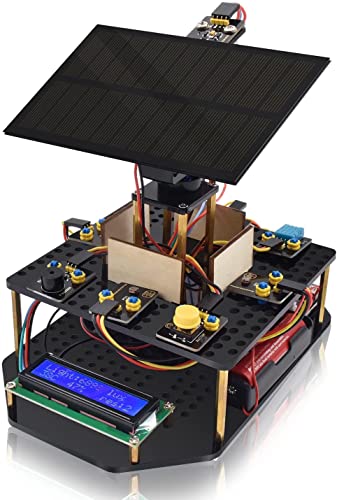
KEYESTUDIO DIY Solar Tracking Electronic Kit for Arduino, Smart Phone Charging, Temperature & Humidity Sensor, BH1750 Light Sensor, Educational Programming Kit for Teens & Adults 15+
- Arduino-Based Solar Tracking: Includes sensors, servos, and solar panel
- Smartphone Charging Module: Enables device charging via solar energy
- Environmental Sensors: Temperature, humidity, and light sensors included
As an affiliate, we earn on qualifying purchases.
As an affiliate, we earn on qualifying purchases.
Upcoming US Decision and Market Adjustment Period
The US government is expected to announce the outcome of the Section 232 investigation by July 4. Market participants will closely monitor this development, which could lead to shifts in supply strategies, pricing, and trade flows. Meanwhile, Chinese producers may continue adjusting their capacity and pricing in response to domestic and international market pressures.

Fluke SMFT-1000 Solar Tools Pro Kit with Multifunction PV Tester and Performance Analyzer, I-V Curve Tracer, IRR2-BT Wireless Irradiance Meter Pro, i100 AC/DC Current Clamp 100A, and TruTest Software
- All-in-one Solar Testing Solution: Meets IEC 62446-1 standards for categories 1 and 2
- Includes TruTest Advanced Software: For solar asset management and testing
- MC4 Solar Clamp Test Lead Set: Included for accurate connections
As an affiliate, we earn on qualifying purchases.
As an affiliate, we earn on qualifying purchases.
Key Questions
When will the US Section 232 investigation decision be announced?
The decision is widely expected by July 4, according to industry sources, but an official announcement date has not yet been confirmed.
How might the US decision affect polysilicon prices?
If restrictions limit Chinese imports or restrict access to the US market, prices could rise for non-U.S. suppliers. Conversely, a limited impact may keep prices stable around current levels.
Will Chinese polysilicon exports increase due to current prices?
Export interest from countries like India and Turkey is rising, but significant growth is unlikely in the short term due to limited outside manufacturing capacity and ongoing trade uncertainties.
What is the current state of Chinese polysilicon capacity and pricing?
Chinese mono-grade polysilicon prices have declined slightly, and producers are operating at varying levels of capacity utilization, with some increasing output to capitalize on lower costs during the wet season.
Source: PV Magazine