
TL;DR
Prime for Young Adults — start your free trial
Fast free delivery, streaming and member deals for eligible 18–24 year olds.
As an affiliate, we earn on qualifying purchases.
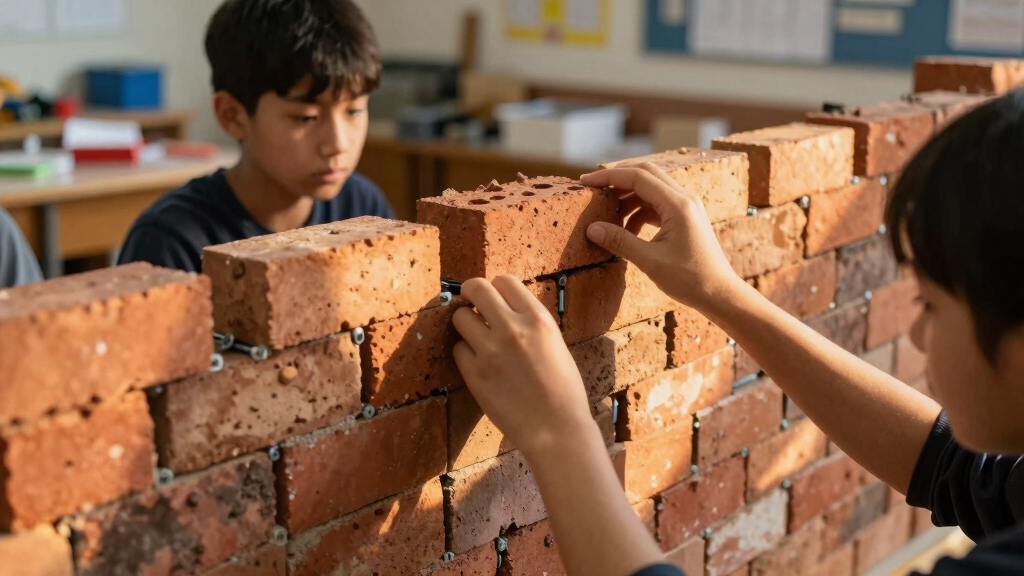
Students at Oslo Metropolitan University have designed Gjenreis, a modular brick system that allows for walls to be assembled, dismantled, and reconfigured without mortar. The project promotes circular construction and material reuse, with potential applications in flexible interior spaces.
Students at Oslo Metropolitan University have developed Gjenreis, a modular construction system that enables reclaimed bricks to be assembled into temporary or reconfigurable interior walls without mortar, highlighting innovative approaches to circular construction.
Gjenreis, created by students Ariel Hammer and Åshild Limstrand as part of their bachelor project, is designed for environments requiring adaptable interior partitions, such as restaurants, hotel lobbies, and open-plan offices. The system uses specially designed components that allow bricks to be assembled and disassembled easily, supporting sustainable practices by reusing existing materials. The project was presented at the Built by Design exhibition during 3daysofdesign, a curated event showcasing student projects focused on material reuse and circular construction. The bricks retain traces of weathering and previous use, emphasizing their history and material qualities, while contrasting with crafted wooden elements that enhance the modular aesthetic.
Implications for Circular Construction and Interior Flexibility
This development demonstrates a practical application of circular economy principles in architecture, promoting reuse of materials and reducing waste. The mortar-free system offers flexibility for interior design, allowing spaces to be easily reconfigured or dismantled, which is especially relevant amid growing sustainability concerns and the demand for adaptable spaces. If adopted widely, Gjenreis could influence future building practices by extending the lifespan of reclaimed bricks and supporting more sustainable construction methods.
As an affiliate, we earn on qualifying purchases.
Background on Reclaimed Material Use and Modular Systems
The project emerged within the context of increasing interest in sustainable architecture and circular design. It builds on trends emphasizing reuse of existing building materials and modular construction techniques. The students’ work was part of the Built by Design exhibition, which showcases innovative student projects exploring material reuse, construction methods, and the evolving role of designers in resource management. The initiative aligns with broader efforts to reduce construction waste and promote adaptable, resource-efficient interior solutions.
“The Gjenreis system exemplifies how reclaimed materials can be integrated into flexible interior designs without compromising sustainability.”
— an anonymous researcher
As an affiliate, we earn on qualifying purchases.
Unconfirmed Aspects of Long-Term Durability and Scalability
It is not yet clear how the Gjenreis system performs over extended periods or under different environmental conditions. The scalability of the system for larger or more complex structures remains untested, and industry adoption will depend on further validation of its durability and cost-effectiveness.
mortar-free interior wall panels
As an affiliate, we earn on qualifying purchases.
As an affiliate, we earn on qualifying purchases.
Next Steps for Development and Industry Adoption
Further testing of the Gjenreis system is expected to evaluate its long-term performance and structural stability. The project team may seek industry partnerships to explore commercial applications and pilot projects in real-world settings. Additionally, research into adapting the system for different types of reclaimed bricks and building contexts is likely to follow.
reconfigurable interior wall system
As an affiliate, we earn on qualifying purchases.
As an affiliate, we earn on qualifying purchases.
Key Questions
Can this brick system be used for load-bearing walls?
Currently, Gjenreis is designed for interior partitions and not for load-bearing applications. Its primary purpose is for flexible, temporary, or reconfigurable interior walls.
How easy is it to disassemble and reconfigure the walls?
The system is designed for straightforward assembly and disassembly, supporting reconfiguration without the need for mortar or permanent bonding, making it suitable for spaces that frequently change layout.
What types of reclaimed bricks are compatible with Gjenreis?
The project was demonstrated using weathered bricks that retain traces of previous use. Compatibility with different brick types will depend on their size, surface condition, and structural integrity, which require further testing.
Is the system suitable for outdoor use?
Gjenreis was developed for interior environments. Its suitability for outdoor applications has not yet been established and would require additional weatherproofing and structural considerations.
What are the environmental benefits of this system?
The system promotes reuse of existing bricks, reducing construction waste and extending the lifespan of materials, aligning with sustainable and circular construction principles.
Source: designboom
Flea & tick season Picks
flea and tick prevention
As an affiliate, we earn on qualifying purchases.