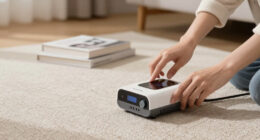

The LuxHeat 100 sq ft Electric Floor Heating System with WiFi Thermostat earns my best overall pick because it balances generous coverage, a modern app-controlled thermostat, and straightforward installation at a mid-range commitment level. For smaller projects, the HeatTech 20 sq ft Mat System stands out as the easiest entry point for a single bathroom, while the SunTouch WarmWire 3.0 Kit offers the most flexible cable layout for irregularly shaped rooms. The main tradeoff in this category is mats versus loose cable: mats install faster but waste coverage in odd-shaped rooms, while cable kits take longer to place but conform to any footprint. Voltage (120V versus 240V) and whether a WiFi thermostat or a basic programmable one is included also swing the value equation considerably. Read on for the full breakdown of all 15 systems and which one fits your floor.

Get cleaning gear delivered free — and shop member deals
- Fast, free delivery on millions of items
- Access to Prime Big Deal Days deals on October 6–7
- Prime Video, Amazon Music and more included
Complete the kit


Key Takeaways
- LuxHeat dominates this lineup with eight of 15 spots, but its kits are not interchangeable — the differences between mat, cable, and uncoupling membrane versions matter more than the brand name.
- Kits that bundle an uncoupling membrane (the LuxHeat 50 sq ft and 25 sq ft systems) cost more upfront but simplify tile installation and reduce cracking risk, making them the smartest choice for DIY tilers.
- Cable kits like the Nuheat N1C060 and Warming Systems 50 sq ft consistently deliver better coverage-per-dollar than mat kits, but demand far more layout time and spacing discipline.
- The only 240V kit in this roundup (the 32 sq ft WiFi kit) is the better electrical choice for larger rooms on a 240V circuit, but it is overkill for a small bathroom already served by 120V.
- The QuietWarmth Float mat is the lone option that avoids mortar entirely, making it the clear pick for floating floors where tile-style systems cannot be used at all.


| radiant floor heating system | Voltage | Thermostat | Coverage | Power |
|---|---|---|---|---|
| LuxHeat 50 sq ft Electric Radi | 120V | OJ Microline UWG5-4999 WiFi touchscreen | — | 600W (5.0A) |
| WiFi Programmable Electric Rad | 240V kit; thermostat supports 120V and 240V | DHERT104/BW WiFi programmable touchscreen | 32 sq ft | — |
| HeatTech 20 sq ft Electric Rad | 120V | — | 20 sq ft | 240W (2.0A) |
| SunTouch WarmWire 3.0 Kit | 120V | SunStat Pro II Programmable | — | — |
| Nuheat N1C060 120V Radiant Flo | 120V | Home AC0056 programmable | — | — |
| Warming Systems 50 Sq. Ft. Ele | 120V | UWG5-4999 programmable touch with Wi-Fi and Bluetooth | 50 sq. ft. | 600W (12W per sq. ft.) |
| LuxHeat 150 Sq. Ft. Electric R | 120V, 15A | OJ Microline UDG4-4999 touchscreen programmable | 150 sq. ft. | 1800W (12W/sq. ft.) |
| LuxHeat 45 sq. ft. Electric He | 120V, 4.5A | OJ Microline UDG4-4999 touchscreen programmable | 45 sq. ft. | 540W (12W/sq. ft.) |
| LuxHeat 70 Sq Ft Electric Heat | 120V, 7.0A | OJ Microline UDG-4999 programmable | 70 sq. ft. | 840W (12W/sq. ft.) |
| LuxHeat 100 sq ft Electric Flo | 120V, 10A | OJ Microline UWG4-4999 WiFi programmable touchscreen | 100 sq. ft. | 1200W |
| 40 sq. ft. Electric Radiant Fl | 120V | — | 40 sq. ft. | — |
| QuietWarmth Float Radiant Floo | 120V | — | — | — |
| LuxHeat 150 sq. ft. Electric F | 120V | UDG4-4999 programmable touchscreen with integrated Class A GFCI | 150 sq. ft. at 3-inch spacing | 1800W |
| LuxHeat 25 sq ft Electric Radi | 120V | OJ Microline UDG4-4999 touchscreen, 7-day/4-event, Class A GFCI | 25 sq ft | — |
| LuxHeat 150 sq. ft. Electric F | 120V | 7-day programmable with floor sensor and built-in GFCI | 150 sq. ft. | 1,800W (15A) |
More Details on Our Top Picks
LuxHeat 50 sq ft Electric Radiant Floor Heating System with 120V WiFi Programmable Thermostat and Uncoupling Membrane
This kit stands out because it solves the problem most heating systems ignore: what happens under your tile. The 3-in-1 Prova Flex-Heat membrane combines heating channels, crack isolation, and waterproofing in one layer, which matters most in bathrooms where substrate movement and moisture ruin floors over time. Compared with the SunTouch WarmWire 3.0, which fastens cable to a plain subfloor, the LuxHeat membrane approach simplifies spacing and protects your grout lines simultaneously. The included OJ Microline UWG5 WiFi thermostat adds app control and up to 10 schedules—more programming depth than the basic programmable unit bundled with the HeatTech mat. The tradeoff is real, though: the wire must be buried in self-leveler or thinset, and the cable can’t be cut, so layout planning needs to be exact before you commit.
Pros:- Complete all-in-one kit: cable, membrane, WiFi thermostat, sensor, and alarm
- 3-in-1 membrane adds crack prevention and waterproofing alongside heating
- Strong warranty coverage: 25 years on cable, 50 years on membrane
- WiFi thermostat with app and voice control plus 10 programmable schedules
Cons:- Heating wire must be covered with self-leveler or thinset, adding installation cost
- Cable cannot be cut or shortened, limiting layout flexibility
- Requires 120V electrical work that may need a licensed electrician
Best for: Homeowners doing a full bathroom or kitchen tile renovation who want heating, waterproofing, and crack protection in a single installation
Not ideal for: DIYers on a tight timeline or budget — the mandatory self-leveler pour and 120V electrical work add cost and labor
- Coverage Area:50 sq ft
- Voltage:120V
- Power:600W (5.0A)
- Cable Length:200 linear ft
- Membrane Size:3.24 ft x 21.6 ft (70 sq ft)
- Thermostat:OJ Microline UWG5-4999 WiFi touchscreen
- Cable Warranty:25 years
Our verdict“This is the pick for a whole-system tile renovation where protecting the floor matters as much as warming it.”
WiFi Programmable Electric Radiant Floor Heating Kit, 240V, 32 Sq Ft
What separates this kit is the thermal break design. When installed over a Ditra Heat DUO membrane, it directs heat upward instead of letting a concrete slab absorb it first, warming floors up to 70% faster over concrete substrates. That makes it the smarter choice for basement conversions or slab-on-grade homes, where systems like the HeatTech 20 sq ft mat lose much of their output warming the slab beneath. The 240V configuration also keeps amperage lower than comparable 120V kits, which matters if your panel is crowded. The catch is specificity: this kit is built around one membrane system, so you’re committed to that installation method, and the fast-heating claim only holds over concrete—if you’re over wood subfloors, the advantage largely disappears.
Pros:- Thermal break directs heat upward for up to 70% faster warming over concrete
- 240V configuration reduces circuit load compared with 120V kits
- Includes two floor sensors for redundancy during installation
- WiFi thermostat programmable from a phone app
Cons:- Designed for compatibility with a specific membrane system, limiting flexibility
- The faster-heating claim only applies over concrete substrates
Best for: Homeowners heating tile or stone over a concrete slab or basement floor who want quicker warm-up times
Not ideal for: Buyers over wood subfloors or unwilling to use the specific Ditra Heat DUO membrane system
- Voltage:240V kit; thermostat supports 120V and 240V
- Coverage:32 sq ft
- Thermostat:DHERT104/BW WiFi programmable touchscreen
- Included Components:Heating cable, thermostat, two floor sensors, installation components
- Compatible Membrane:Ditra Heat DUO peel-and-stick
- Suitable Flooring:Tile, stone, and resilient floor coverings
Our verdict“The clear choice for slab foundations and basements where standard cables waste heat warming concrete.”
HeatTech 20 sq ft Electric Radiant Floor Heating Mat System with Aube TH115-AF-120S Thermostat
For a first radiant installation, the adhesive-backed mesh mat format is the friendliest starting point. Unlike the loose Nuheat N1C060 cable, which requires you to plan and fasten every run yourself, the HeatTech mat arrives pre-spaced at 3 inches and sticks directly to the subfloor—roll it out, cut the mesh (never the wire) to turn, and it stays put. At 20 sq ft and 240W on a standard 120V, 2A circuit, it’s well matched to a single bathroom or powder room without any electrical upgrades. The included Aube TH115-AF-120S floor-sensing thermostat is simpler than the WiFi units in the LuxHeat lineup, but it’s proven and reliable. The limitation is geometry: rectangular rooms work beautifully, while angled or curved layouts fight the mat format, and coverage is fixed at 20 sq ft.
Pros:- Adhesive-backed mesh lays flat and can be cut at the mesh to navigate turns
- Only 2A draw means no electrical panel upgrades needed for small rooms
- Works under tile, stone, and vinyl flooring
- Can be combined with additional mats to heat up to 150 sq ft on one thermostat
Cons:- Heating wire must never be cut, restricting how the mat can be reshaped
- Best suited to rectangular areas with few curves or angles
Best for: DIY beginners heating a small rectangular bathroom or powder room on a standard 120V circuit
Not ideal for: Homeowners with irregular, L-shaped, or angled floor plans — the fixed mat format struggles with curves
- Coverage:20 sq ft
- Mat Dimensions:20 in wide x 12.2 ft long
- Voltage:120V
- Power:240W (2.0A)
- Heat Output:12W/sq ft (41 BTU/sq ft)
- Cold Lead:10 ft
- Warranty:25 years (mat), 3 years (thermostat)
Our verdict“The easiest entry point into radiant heat for a straightforward small-room project.”
SunTouch WarmWire 3.0 Kit, Electric Radiant Floor Heating Cable System, 30 Sq. Ft., 120V
Most radiant kits stop at the bathroom door; this one doesn’t. The SunTouch WarmWire 3.0 is approved for shower applications, meaning steamy shower floors can be heated directly, keeping surfaces drier and more comfortable underfoot. That approval is rare in this lineup—even the Nuheat N1C060, with its wet-area rating, isn’t positioned for inside-shower use the same way. SunTouch also uses dual wire technology to reduce electromagnetic fields to ultra-low levels, a meaningful consideration for bedrooms or nurseries where people spend hours directly above the floor. The single-point power connection simplifies wiring compared with multi-lead systems, and it installs over plywood, backerboard, or concrete without a proprietary membrane. Be aware that 30 sq ft caps a single kit to one modest room, and the subfloor prep requirements are non-negotiable.
Pros:- Approved for shower applications, keeping shower floors warm and dry
- Dual wire technology reduces EMF to ultra-low levels
- Single-point power connection simplifies wiring
- Installs over plywood, backerboard, or concrete without a proprietary membrane
Cons:- Limited to 30 sq ft of coverage per kit
- Requires specific subfloor preparation before installation
Best for: Homeowners who want heated shower floors and low-EMF installation in bathrooms or entryways
Not ideal for: Anyone heating a large room — 30 sq ft of coverage per kit means buying multiples for open floor plans
- Brand:SunTouch
- Model:WarmWire 3.0
- Voltage:120V
- Coverage Area:30 sq ft
- Heating Output:1200 watts
- Installation Spacing:3 inches
- Thermostat:SunStat Pro II Programmable
Nuheat N1C060 120V Radiant Floor Heating Cable Kit, 60 sq. ft.
Loose cable is the most flexible format in radiant heating, and the Nuheat N1C060 makes the most of it. Unlike pre-spaced mats like the HeatTech 20 sq ft system, this cable lets you adjust spacing on the fly—3 inches for 12W/ft² or alternating 3/2 inches for 15W/ft²—so you can dial up heat density near exterior walls or in cold corners. That same freedom makes odd-shaped rooms, closets, and around-vanities runs far easier than any mat can manage. The cable is wet-rated for bathrooms, and the kit includes cable straps, a floor sensor, and the Home AC0056 programmable thermostat. The compromise is effort: you’re hand-placing and securing every run, which takes longer than rolling out a mat, and pushing past 60 sq ft means adding cables—and possibly a load relay once you exceed 15A.
Pros:- Flexible loose-cable layout handles irregular spaces and obstacles easily
- Adjustable heat density: 12 or 15 W/ft² depending on cable spacing
- Wet-rated cable approved for bathroom and wet-area installation
- Thermostat, floor sensor, and cable straps all included
Cons:- Capped at 60 sq ft; larger spaces require additional cables
- Multiple cables may need a load relay once load exceeds 15A
- Manual cable placement is slower than pre-spaced mat installation
Best for: Homeowners with angled, L-shaped, or obstacle-filled bathrooms who need custom cable routing
Not ideal for: Buyers wanting a fast roll-out installation — hand-securing loose cable takes noticeably longer than mat systems
- Brand:Nuheat (nVent)
- Model:N1C060
- Heating Coverage:Up to 60 sq ft
- Voltage:120V
- Heat Output:12 W/ft² at 3-in spacing; 15 W/ft² at alternating 3/2-in spacing
- Thermostat:Home AC0056 programmable
- Included Accessories:Floor heating sensor and plastic cable straps
Our verdict“The right tool for rooms that don’t come in rectangles, at the cost of more installation time.”
Warming Systems 50 Sq. Ft. Electric Radiant Floor Heating Cable Kit with Wi-Fi Thermostat
Most kits in this roundup use fixed-width mats, but Warming Systems builds this one around loose cable, which changes what you can do with it. The 200 feet of flexible, ultra-thin cable winds around angles, closets, and odd corners where a 20-inch mat like the LuxHeat 45 sq. ft. kit would force you to improvise. Compared with that mat-based option, you give up the speed of peeling and sticking a mat in exchange for layout freedom — a fair trade in bathrooms with vanities, toilets, and curved layouts.
The included installation monitor is a quiet advantage over several LuxHeat bundles: it alerts you the moment a cable is nicked mid-job, before thinset covers the mistake. Wi-Fi, Bluetooth, and voice control come standard, and the 25-year warranty plus UL wet-area listing round out a kit aimed at serious tile projects rather than quick upgrades.
Pros:- Loose cable layout handles angled and custom-shaped rooms better than fixed mats
- Installation monitor catches cable damage before it’s buried under mortar
- Thermostat supports Wi-Fi, Bluetooth, and voice control
- UL listed for wet areas in the USA and Canada, with a 25-year warranty
Cons:- Caps out at 50 sq. ft., so larger rooms require additional heating
- Cable routing takes noticeably longer than rolling out a self-adhesive mat
Best for: Homeowners tiling a small bathroom or laundry room with an irregular layout — angles, bump-outs, or fixtures that block straight mat runs
Not ideal for: Anyone heating a room larger than 50 sq. ft. without buying supplemental cable, or DIYers who want the fastest mat-style installation
- Coverage:50 sq. ft.
- Cable length:200 ft.
- Voltage:120V
- Power:600W (12W per sq. ft.)
- Cable thickness:1/8 in.
- Thermostat:UWG5-4999 programmable touch with Wi-Fi and Bluetooth
- Certifications:UL listed USA and Canada; approved for wet areas
- Warranty:25 years
Our verdict“This is the pick when your floor shape defeats a mat — buy it for odd layouts, not for speed or scale.”
LuxHeat 150 Sq. Ft. Electric Radiant Floor Heating System with Touchscreen Programmable Thermostat, 120V
When your project is a full basement, sunroom, or open-plan kitchen, most kits in this lineup simply run out of coverage. This LuxHeat bundle spans 150 sq. ft. across two self-adhesive mats, double the area of the LuxHeat 100 sq. ft. WiFi kit and three times the smaller LuxHeat options. The two-mat design matters more than raw square footage: you can run the layouts independently to work around islands, doorways, and peninsula cabinetry instead of fighting one continuous 91.5-foot roll.
The OJ Microline touchscreen thermostat is the most feature-rich controller in this batch, layering dual sensing, self-learning schedules, power logging, and a child lock onto a Class A GFCI. The tradeoff is real: 1,800W on a 15A circuit means you’re close to the limit, and older homes may need an electrician’s assessment before install. Wires also can’t be cut or shortened, so layout mistakes are unforgiving.
Pros:- 150 sq. ft. of coverage across two independently placeable mats
- Feature-dense thermostat with self-learning 7-day schedule and dual sensing
- Mats can be cut, turned, and rotated to fit the layout
- UL-certified cables rated safe for wet locations
Cons:- 1800W draw sits near the ceiling of a standard 15A circuit
- Heating wires cannot be cut or shortened, leaving no room for layout errors
Best for: Owners of large basements, sunrooms, or open-concept floors who want full-room radiant heat with a smart, schedulable thermostat
Not ideal for: Homes with older 15A circuits already loaded with other appliances — the 1800W draw may require electrical upgrades
- Coverage:150 sq. ft.
- Voltage:120V, 15A
- Power:1800W (12W/sq. ft.)
- Mats:2 mats, 20 in. wide, 91.5 ft. combined
- Thermostat:OJ Microline UDG4-4999 touchscreen programmable
- Certifications:UL-certified cables; cULus-approved thermostat
- Warranty:25-year limited system; 3-year thermostat
Our verdict“The clear choice for whole-room heating at scale, provided your electrical panel can handle the load.”
LuxHeat 45 sq. ft. Electric Heated Floor Mat Kit with Programmable Thermostat
For a standard bathroom renovation, this kit gets the balance right: enough mat to cover a 45 sq. ft. floor, a thermostat you’d otherwise buy separately, and a price of admission that undercuts the larger LuxHeat bundles by simply covering less. Compared with the Warming Systems 50 sq. ft. cable kit, the self-adhesive mat trades a little layout flexibility for a much faster, more forgiving installation — peel, stick, and it can be repositioned before the mortar goes down, which matters if you’re doing this for the first time.
The included OJ Microline touchscreen brings the same GFCI, floor sensing, and 7-day scheduling LuxHeat ships with its bigger systems, so nothing about going small feels cheaped out. The compromises are familiar: the red heating wire must never be cut, and you’re limited to a modest floor area before stepping up to the 70 sq. ft. version.
Pros:- Self-adhesive mat can be cut and repositioned without cutting the heating wire
- Full-featured thermostat with floor sensor and built-in GFCI included
- Works under tile, laminate, and other flooring types
- Heating wires rated for wet locations with a 25-year limited warranty
Cons:- Coverage stops at 45 sq. ft., too small for combined bathrooms or wet rooms
- Wires must be embedded in underlayment, thinset, or mortar, adding installation steps
Best for: DIY renovators heating a typical small-to-mid bathroom who want a complete, repositionable mat kit with no separate thermostat purchase
Not ideal for: Anyone with a bathroom larger than 45 sq. ft. or a floor full of angles — a cable system handles both better
- Coverage:45 sq. ft.
- Mat dimensions:20 in. wide × 27.4 ft. long
- Voltage:120V, 4.5A
- Power:540W (12W/sq. ft.)
- Thermostat:OJ Microline UDG4-4999 touchscreen programmable
- Warranty:25-year limited kit; 3-year thermostat
Our verdict“The most sensible entry point for a standard bathroom reno — complete, capable, and sized to the job.”
LuxHeat 70 Sq Ft Electric Heated Floor Mat Kit with Programmable Thermostat
Sitting between the LuxHeat 45 sq. ft. kit and the 100 sq. ft. WiFi model, this 70 sq. ft. system occupies the sweet spot many bathrooms and kitchens actually fall into — too big for the small kit, not worth paying for unused coverage on the larger one. At 840W on a 7A draw, it’s also gentler on your electrical panel than the 150 sq. ft. LuxHeat system’s 15A appetite, making it easier to add to an existing circuit without an electrician.
Feature-wise you’re not settling. The thermostat offers dual air/floor sensing, power logging, a child lock, and a Class A GFCI — the same control experience as the bigger LuxHeat kits. The mat repositions during layout, and the cable monitor alarm guards the wire while you work. The drawbacks echo the family: the red heater wire cannot be trimmed, so measure carefully, and the wires still need embedding in thinset or self-leveler before flooring goes down.
Pros:- 70 sq. ft. coverage fits the common gap between small and large kits
- Moderate 7A draw works with more existing household circuits
- Dual air/floor sensing thermostat with power logging and Class A GFCI
- Repositionable self-adhesive mat suits varied layouts
Cons:- No WiFi or app control, unlike the 100 sq. ft. LuxHeat kit
- Heater wire must not be cut or shortened, so overbuying coverage is the only fix for errors
Best for: Homeowners with a mid-size bathroom or modest kitchen whose space is too large for a 45 sq. ft. kit but doesn’t justify 100 sq. ft.
Not ideal for: Small powder rooms, where you’d pay for coverage you can’t use, and anyone wanting remote app control — this thermostat lacks WiFi
- Coverage:70 sq. ft.
- Mat dimensions:20 in. wide × 42.7 ft. long
- Voltage:120V, 7.0A
- Power:840W (12W/sq. ft.)
- Thermostat:OJ Microline UDG-4999 programmable
- Warranty:25-year limited system; 3-year thermostat
Our verdict“The right-sized pick for mid-size rooms and panels that can’t spare 15 amps — just don’t expect app control.”
LuxHeat 100 sq ft Electric Floor Heating System with WiFi Thermostat, 120V
If controlling your floor heat from the couch — or a schedule that adapts while you’re away — is the point of the upgrade, this is the kit in this batch that delivers it. The OJ Microline UWG4-4999 adds WiFi remote control and monitoring to the usual GFCI, floor sensor, 7-day programming, and power logging, which the non-WiFi LuxHeat 70 sq. ft. kit matches in everything but connectivity. For a kitchen or master bath you want pre-warmed before your feet hit tile at 6 a.m., that remote access is the difference.
At 100 sq. ft. on a 10A draw, it splits the difference between the 70 and 150 sq. ft. LuxHeat systems — big enough for a generous bathroom or compact kitchen, without the circuit-pressure of the largest kit. The self-adhesive mat can be turned and rotated to fit, though as with every LuxHeat mat here, the wire cannot be cut, and everything must be embedded in thinset or self-leveling underlayment before the floor goes on.
Pros:- WiFi thermostat enables remote control, monitoring, and vacation scheduling
- 100 sq. ft. coverage suits large bathrooms and small kitchens
- Built-in Class A GFCI and floor sensor included
- UL-certified cables listed for wet locations
Cons:- 10A draw may still require a dedicated circuit in older homes
- Heating wire cannot be cut or shortened, and wires must be embedded in mortar or underlayment
Best for: Smart-home owners heating a large bathroom or compact kitchen who want app-based remote control and pre-scheduled warm floors
Not ideal for: Budget-focused buyers with a simple 45–70 sq. ft. bathroom — smaller non-WiFi kits do the same job for less
- Coverage:100 sq. ft.
- Mat dimensions:20 in. wide × 61 ft. long
- Voltage:120V, 10A
- Power:1200W
- Thermostat:OJ Microline UWG4-4999 WiFi programmable touchscreen
- Item weight:14.5 lb
- Warranty:25-year limited warranty
Our verdict“The connected choice for mid-large rooms — pick it for app control and coverage, not for bare-bones value.”
40 sq. ft. Electric Radiant Floor Heating Mat with Programmable Thermostat
This 40 sq. ft. kit stands out for its complete out-of-the-box package: adhesive-backed mat, programmable thermostat with both air and floor sensors, and an installation monitor that alerts you if the cable is damaged mid-install. Compared with the LuxHeat 150 sq. ft. cable kit, this mat format trades maximum layout flexibility for faster, more predictable installation — you roll it out rather than routing loose cable. The four thermostat modes and GFCI, child lock, and overheat protection make it a sensible fit for family bathrooms, and the CSA-certified cable is rated for wet locations. The tradeoff is the usual one for mats: the cable cannot be cut, so you must plan your layout around the fixed 26.25 ft. length or the system will not function.
Pros:- Thermostat with dual air and floor sensors plus four operating modes included
- GFCI detection, child lock, and overheat protection built in
- Adhesive-backed mat speeds up placement under tile or laminate
- CSA-certified cables rated safe for wet locations
Cons:- Heating cable cannot be cut or shortened to fit odd layouts
- Requires careful advance planning to select the right mat size before ordering
Best for: Homeowners heating a mid-size bathroom or laundry room who want a complete kit without buying a thermostat separately
Not ideal for: Buyers with irregular or narrow floor plans — the fixed 19.69 in. mat width and uncuttable cable make custom layouts frustrating
- Coverage:40 sq. ft.
- Mat dimensions:19.69 in. wide x 26.25 ft. long
- Voltage:120V
- Power density:12W/sq. ft.
- Thermostat modes:4
- Sensors:Air and floor
- Included components:Heating mat, thermostat, floor sensor, installation monitor
Our verdict“A well-rounded complete kit for a standard 40 sq. ft. room where layout predictability beats customization.”
QuietWarmth Float Radiant Floor Heating Mat (3′ x 10′, 120V)
Most kits in this roundup — including the LuxHeat membrane system and the 40 sq. ft. mat kit — require embedding cable in thinset or self-leveler, which rules out glue-down-free floating floors. QuietWarmth solves that with a razor-thin mat that lays directly under laminate, wood, or luxury vinyl planks with no mortar at all, adding essentially zero floor height. The self-limiting design also means it cannot overheat the flooring above it, a real concern with vinyl. Running costs are low — the manufacturer claims up to 50% less power than traditional wired systems, under a dollar a day for a bedroom. The compromises: no thermostat is included, the mat length is cuttable but the width is not, and it is strictly an interior dry-area product.
Pros:- No mortar or self-leveler required — lays flat under floating floors
- Razor-thin profile adds no measurable height to the floor
- Self-limiting design protects vinyl and wood from overheating
- Length can be cut to customize coverage
Cons:- Thermostat sold separately, unlike the LuxHeat kits
- Mat width cannot be cut, limiting use in narrow spaces
Best for: DIYers installing laminate or LVP floating floors who want heat without mortar, self-leveler, or added floor height
Not ideal for: Bathroom or shower installations — it is not rated for wet locations, and anyone wanting a thermostat in the box will need to buy one separately
- Dimensions:3′ x 10′ (30 sq ft)
- Voltage:120V
- Compatibility:Laminate, wood, luxury vinyl, floating tile
- Installation:Cuttable to length; width cannot be cut
- Power efficiency:Up to 50% less power than traditional wired systems
- Lead wire length:15 feet
Our verdict“The clear choice for floating laminate or vinyl floors, provided you buy a thermostat and stay out of wet areas.”
LuxHeat 150 sq. ft. Electric Floor Heating Cable Kit with Programmable Thermostat
Where mat-based kits like the LuxHeat 150 sq. ft. mat system constrain you to fixed 20-inch swaths, this loose-cable kit lets you snake 600 feet of heating wire across up to 150 sq. ft. at 3-inch spacing, filling awkward corners, closets, and L-shaped rooms without waste. The included OJ Microline touchscreen thermostat with integrated Class A GFCI matches what ships with LuxHeat’s premium kits, and two cable monitors guard against damage during the embed process. The dual-wire construction is marketed as reducing electromagnetic fields, a nice touch for bedrooms. The cost of that flexibility is labor: every inch of cable must be embedded in self-leveler, thinset, or mortar, and like all cables here, it cannot be shortened.
Pros:- Loose cable layout adapts to irregular room shapes and obstacles
- Covers up to 150 sq. ft. — the largest coverage in this batch
- Touchscreen thermostat with integrated Class A GFCI included
- UL-certified cables listed for wet locations
Cons:- Cable must be fully embedded in underlayment, thinset, or mortar
- Heating wire cannot be cut or shortened, requiring exact layout planning
Best for: Homeowners heating a large basement, open kitchen, or irregularly shaped space who need layout freedom and have the patience for cable routing
Not ideal for: Weekend DIYers wanting a fast rollout — routing 600 ft. of cable by hand and embedding it is markedly more work than laying a mat
- Coverage:150 sq. ft. at 3-inch spacing
- Voltage:120V
- Power:1800W
- Cable length:600 ft.
- Thermostat:UDG4-4999 programmable touchscreen with integrated Class A GFCI
- Warranty:25-year limited (heating); 3-year (thermostat)
- Included:Two heating cables, two cable monitors, thermostat, floor sensor, cable guides
Our verdict“The flexible, large-coverage choice when a fixed mat would fight your floor plan and you are comfortable with an embed installation.”
LuxHeat 25 sq ft Electric Radiant Floor Heating System with Uncoupling Membrane
This is the most turnkey option in the batch: heating cable, Prova Flex-Heat uncoupling membrane, touchscreen thermostat with GFCI, floor sensor, and installation alarm all in one box. The membrane is the differentiator — unlike the plain adhesive mats in the 40 sq. ft. kit, it adds crack isolation and waterproofing on top of heat, which matters enormously under tile in a bathroom or basement. Warranty coverage is the strongest here too: 25 years on the cable and 50 years on the membrane. At 25 sq. ft. it is sized for a single bathroom, and it demands a tile-or-similar floor with the cable still embedded in self-leveler or thinset — so it is not a shortcut around the messy part of installation, just a better foundation for it.
Pros:- Truly all-in-one: cable, membrane, thermostat, sensor, and alarm included
- 3-in-1 membrane delivers heat, crack prevention, and waterproofing
- Exceptional warranties — 25-year cable, 50-year membrane
- cULus certified and safe for wet locations
Cons:- Cable must still be covered with self-leveler or thinset, adding steps
- Cable cannot be cut or shortened
- Limited to tile and similar flooring types
Best for: Bathroom or kitchen renovators already planning tile who want heating, crack protection, and waterproofing solved by one kit
Not ideal for: Anyone heating a laminate or vinyl floor — the membrane system requires tile or a similar rigid finish, and larger rooms will exceed its 25 sq. ft. coverage
- Coverage:25 sq ft
- Voltage:120V
- Wattage:300W (12W/sq ft, 3-inch spacing)
- Cable length:100 ft.
- Thermostat:OJ Microline UDG4-4999 touchscreen, 7-day/4-event, Class A GFCI
- Membrane:3.24 ft x 10.8 ft (35 sq ft), 0.26 in. thick
- Certifications:cULus USA & Canada, wet-location rated
- Warranty:25-year cable, 50-year membrane, 3-year thermostat
Our verdict“The smartest pick for a tile bathroom renovation where waterproofing and crack protection matter as much as the heat itself.”
LuxHeat 150 sq. ft. Electric Floor Heating Mat System with Programmable Thermostat
Think of this as the mat-based counterpart to the LuxHeat 150 sq. ft. cable kit: same coverage, same 1,800W output, same touchscreen thermostat with floor sensing and GFCI — but delivered as two self-adhesive mats instead of loose wire. That difference defines who should buy which. If your room is a big open rectangle, rolling out and sticking down 20-inch-wide mat strips is meaningfully faster than routing 600 feet of cable, with more even spacing as a bonus. The mats can be turned or rotated to work around some obstacles, but complex layouts still favor the cable kit. Like every embed system here, the red heater wire must be buried in thinset, mortar, or self-leveler and never cut, so precise pre-planning is non-negotiable.
Pros:- Covers up to 150 sq. ft. with faster installation than loose cable
- Programmable thermostat with floor sensor and built-in GFCI included
- Self-adhesive mats can be turned or rotated to fit the layout
- UL-certified cables rated for wet locations
Cons:- Heating wires must be embedded in underlayment, thinset, or mortar
- Red heater wire cannot be cut or shortened
- Fixed 20-inch mat width limits fit in irregular spaces
Best for: Homeowners heating a large, mostly rectangular open floor area who value faster installation over layout flexibility
Not ideal for: Buyers with heavily irregular rooms — fixed mat widths handle odd shapes poorly, and the cable version will fit the space better
- Coverage:150 sq. ft.
- Voltage:120V
- Power:1,800W (15A)
- Mat dimensions:20 in. wide; 91.5 ft. combined length
- Thermostat:7-day programmable with floor sensor and built-in GFCI
- Installation:Wires embedded in underlayment, thinset, or mortar; under tile, laminate, and similar flooring
- Warranty:25-year limited (heating); 3-year (thermostat)
Our verdict“The efficient way to heat a big, straightforward room when you want cable-kit coverage with mat-kit convenience.”


How We Picked
I evaluated each system against the factors that actually determine satisfaction after installation: coverage relative to typical room sizes, installation method (mat, loose cable, membrane, or float), thermostat quality (basic programmable versus WiFi app control), voltage compatibility, and what the kit includes versus what you still have to buy separately. A 20 sq ft mat and a 150 sq ft cable kit serve completely different projects, so I ranked them by how well each fits its intended use rather than by raw specifications alone.
The ranking logic favors systems that reduce project risk. Kits with included floor sensors, uncoupling membranes, and dual-function thermostats scored higher because they eliminate common failure points and extra purchases. Cable kits were judged on layout flexibility and heating density; mats were judged on install speed and mesh quality. Finally, I weighed long-term ownership — warranty terms, energy efficiency from programmable scheduling, and how easily a system integrates with smart home routines — to separate the top picks from the middle of the pack.
Factors to Consider When Choosing Best Radiant Floor Heating Systems
Choosing between these 15 systems comes down to matching the product format to your room, your floor covering, and your electrical situation. Before you buy anything, work through the factors below — getting any one of them wrong means returning a kit or living with an underheated floor.Measure Your Heated Area, Not Your Room
The single most common mistake buyers make is ordering a kit sized to the whole room square footage. Radiant heating cable or mat should never run under toilets, vanities, cabinets, or along walls with baseboard fixtures — the actual heated area is typically 10 to 15 percent smaller than the room. Because these systems cannot be cut to length, an oversized kit is useless and an undersized one leaves cold zones. The safest approach is to measure the open floor area precisely, then choose the kit size just below your number and plan spacing to stretch coverage. Keep in mind that the kits in this roundup jump in 20 to 50 sq ft increments, so your measurement determines which specific product is even viable before any other feature matters.
Mat, Cable, Membrane, or Float
Mats unroll in fixed widths and are the fastest to install, but they fight you in L-shaped bathrooms, closets, and around fixtures. Loose cable like the SunTouch WarmWire and Nuheat kits conforms to any footprint and lets you increase density along exterior walls, at the cost of hours of careful spacing work. Uncoupling membrane systems, like the LuxHeat 50 sq ft and 25 sq ft kits, combine heating with crack-isolation for tile — a genuine two-for-one if you were buying membrane anyway. The QuietWarmth Float mat sits in its own category: it needs no mortar and works under laminate or engineered flooring, which disqualifies every mortar-embedded system on this list. Picking the wrong format is the most expensive error in this category, so let your floor covering decide before anything else.
Voltage and Your Electrical Panel
Most kits in this roundup run on 120V, which works on a standard circuit and covers roughly 100 to 150 sq ft before amperage becomes a problem. The 240V kit here is the better choice for larger floors because it draws half the amps for the same wattage, reducing panel load and wiring cost. But if your bathroom already has an available 120V circuit, converting to 240V adds electrician expense that erases any efficiency gain. Larger kits — the 150 sq ft LuxHeat systems especially — may still require a dedicated circuit regardless of voltage. Check with an electrician before ordering; the voltage is fixed at the factory and cannot be switched later.
Thermostat Quality Shapes Daily Satisfaction
The thermostat is the part of the system you interact with every day, and the gap between bundled options is wider than most buyers expect. A WiFi programmable thermostat lets you schedule heating windows, warm the floor from bed, and avoid heating an empty house — which directly cuts the operating cost that scares people away from radiant heat. Basic programmable models still do timed schedules but lack remote control and usage data. Some kits include the floor sensor and some do not, and running a system without one risks overheating the floor covering. If a kit you like ships with a basic thermostat, factor in the cost of upgrading it separately before assuming it is the cheaper option.
Floor Covering Compatibility
Nearly every system here is designed for tile and stone, which conduct heat well and tolerate the mortar embedding. If your plan is laminate, engineered hardwood, or vinyl plank, the mortar-embedded mats and cables are the wrong tool — you need a low-profile float system like the QuietWarmth mat, or a manufacturer-approved underlayment-style heater. Wood floors also cap safe surface temperatures, so thermostat settings matter more. Another overlooked factor: thick natural stone heats slowly and benefits from higher-watt-density cable, while thin porcelain responds quickly. Match the heating density and installation style to the flooring first, then compare coverage and price.
Installation Skill and Hidden Costs
The sticker price of the kit is rarely the total project cost. You will likely need a dedicated circuit, a GFCI connection, mortar, and possibly a membrane, which can add substantially to the budget depending on your electrician’s rates. DIYers comfortable with tile can handle mat and membrane systems in a weekend, but loose cable demands consistent spacing — sloppy runs create hot and cold stripes that cannot be fixed after the mortar cures. Always photograph the cable layout before covering it, and test continuity before, during, and after installation; a broken wire discovered after tiling means tearing up the floor. If your skills are marginal, spend the savings from a DIY kit on professional installation instead.
Frequently Asked Questions
Can I cut a radiant heating mat or cable to make it fit my room?
No — the heating element cannot be shortened under any circumstances, because cutting it changes the resistance and will burn out the wire or trip the breaker immediately. Mats can be cut only on the mesh backing between cable runs so you can turn or fold the mat, but the orange heating wire itself must stay intact. This is why accurate measurement before purchasing matters so much: an oversized 50 sq ft kit cannot be trimmed down to fit a 40 sq ft bathroom. If your area falls between two kit sizes, choose the smaller one and adjust cable spacing to stretch coverage. Cable kits handle this more gracefully than fixed mats, which is one reason they are preferred for irregular rooms.
Is a 240V system better than a 120V system for radiant floor heating?
Neither voltage heats better — heat output depends on wattage per square foot, not voltage, so a 120V and 240V kit of equal wattage produce identical warmth. The real difference is electrical load: 240V draws half the amps, which matters once you exceed roughly 100 to 150 sq ft and start straining a 120V circuit or panel capacity. For a typical bathroom under 60 sq ft, 120V is simpler because it can often use existing wiring with a dedicated circuit. The 240V WiFi kit in this lineup makes sense for larger floors or homes with available 240V circuits, most commonly near laundry rooms or garages. Ask an electrician what your panel can support before deciding, since the choice is permanent once installed.
How much does it cost to run an electric radiant floor heating system?
Operating cost depends on wattage, local electricity rates, and how many hours per day the system actually runs. Most electric floor systems draw around 10 to 15 watts per square foot, so a 50 sq ft bathroom runs at roughly 500 to 750 watts — comparable to a small space heater, but far more efficient at delivering warmth where you stand. The thermostat is your biggest cost lever: scheduled heating that warms the floor for morning routines and shuts off overnight can cut consumption by half compared to running constantly. WiFi thermostats help further by letting you kill the heat remotely when plans change. Radiant floors are supplementary heat for most rooms, not a whole-house replacement, and treating them that way keeps bills reasonable.
Do I need an uncoupling membrane under my tile, or can I embed the cable directly in mortar?
Cable and mats can be embedded directly in thinset mortar without a membrane, and most of the kits in this roundup are designed exactly that way. An uncoupling membrane — like the ones bundled with the LuxHeat 50 sq ft and 25 sq ft systems — adds crack isolation between the subfloor and tile, which protects against movement in wood subfloors and new concrete. If you are tiling over a stable slab, the membrane is optional and a direct-embed kit saves money. Over plywood subfloors or in newer construction where settling is likely, the membrane is cheap insurance against cracked tile running directly over your heating wires. Remember that membrane also adds height to the floor, so check door clearances and transition strips before committing.
Can I install radiant floor heating under laminate or vinyl flooring instead of tile?
Most of the systems in this roundup are built for tile and stone, because they are embedded in mortar and generate surface temperatures that can warp or delaminate synthetic flooring. For floating floors you need a purpose-built low-profile system like the QuietWarmth Float mat, which lies under the flooring without mortar and limits output to safe temperatures for laminate and engineered wood. Standard vinyl plank generally should not go over any of these systems unless the flooring manufacturer explicitly approves it, since trapped heat can off-gas or buckle the planks. If you have your heart set on warm wood-look floors, engineered hardwood over a float mat is the reliable combination. Confirm compatibility with the flooring maker in writing — heat damage is not covered by most flooring warranties.
Conclusion
After comparing all 15 systems, the right choice depends less on brand and more on matching format to project. For the best overall pick, the LuxHeat 100 sq ft Electric Floor Heating System with WiFi Thermostat covers a realistic master bathroom, includes app-based scheduling, and avoids the extremes of both tiny starter kits and labor-heavy 150 sq ft cable jobs. The best value comes from the Warming Systems 50 sq ft Cable Kit — you trade install speed for coverage per dollar and still get a WiFi thermostat in the box. For beginners, the HeatTech 20 sq ft Mat System is the gentlest entry point: small enough to finish in a day, simple enough to build confidence before a bigger project. The best premium option is the LuxHeat 150 sq ft System with Touchscreen Thermostat for large, high-visibility installs where control polish and coverage matter. For specific needs, choose the LuxHeat 50 sq ft membrane kit for DIY tile jobs, the 240V WiFi kit for large rooms on 240V circuits, and the QuietWarmth Float mat for laminate or engineered wood floors. Measure your heated area first, confirm your electrical situation second, and the right system from this list will narrow itself down.
Fall Picks
fall essentials
As an affiliate, we earn on qualifying purchases.