
TL;DR

Get cleaning gear delivered free with Prime
- Fast, free delivery on millions of items
- Prime Video, Amazon Music and more included
- Member-only deals all year
An Ideal Home report says dusty radiators, trapped air, blocked airflow and uneven water distribution can all affect how well a home heats. Experts quoted by the publication recommend cleaning radiators before the heating season, bleeding those with signs of trapped air and avoiding furniture or clutter that blocks heat. The advice is general; it does not establish that every cold home has a radiator problem.
Ideal Home has published expert guidance on radiator problems that can make rooms feel colder, including dust buildup, trapped air, blocked airflow and uneven heat distribution. The advice matters to households preparing to use central heating, but it does not show that one fault explains every poorly heated home.
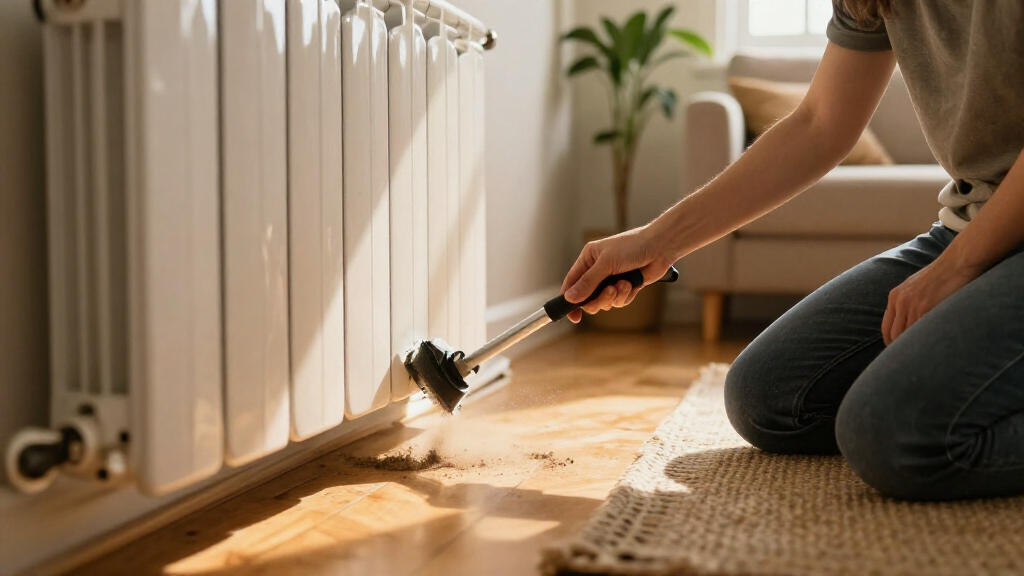
Martin Garbutt, head of technical governance at home services platform Ding, told Ideal Home that accumulated dust can affect air quality and reduce radiator efficiency by up to 10%. He advised switching off a radiator and letting it cool before cleaning inside its fins with a vacuum nozzle or hairdryer. A damp towel placed underneath can catch falling dust. For exterior cleaning, he suggested warm water with a small amount of dish soap or white vinegar and a microfiber cloth.
Ian Palmer-Smith, an appliance repair expert at Domestic & General, said a radiator that is cold at the top and hot at the bottom may have trapped air and need bleeding. Gurgling or banging sounds can also be a sign, he told the publication, recommending bleeding as part of annual maintenance. If a radiator remains cool after bleeding, the cause may be different and require further checks.
Garbutt also warned that furniture and other obstructions can restrict heat circulation. Beds, sofas, wardrobes and drawers placed in front of a radiator can impede warmth from spreading into the room. Ideal Home’s report further raises the possibility of uneven radiator temperatures caused by a system-balancing issue, rather than dirt or trapped air alone.
Why Uneven Heating Matters
Radiators that do not heat rooms effectively can leave households uncomfortable and may lead people to run central heating longer or turn the thermostat up. The report offers practical checks that may help identify straightforward maintenance issues before or during the heating season. It does not quantify any potential savings or establish how often these problems occur, so the advice should not be treated as a guarantee of lower bills.
The distinction between possible causes is useful: dust may affect performance, trapped air can interrupt hot-water circulation, and furniture can restrict heat movement. If only some radiators stay cool, or a problem continues after basic maintenance, the cause may need diagnosis rather than repeated adjustments.
Products Worth Considering

Dyson Ball Animal Total Clean Upright Vacuum

Shark Rocket Pet Plus Corded Stick Vacuum, Bordeaux, HV322

iRobot Roomba Max 715 Pet Robot Vacuum with AutoEmpty Dock
As an affiliate, we earn on qualifying purchases.
Common Radiator Problems
The report is framed around a homeowner’s experience of an older, draughty house that remains cold even when the heating is on. The writer acknowledges that poor insulation and draughts may contribute, and asks heating and maintenance specialists whether radiator issues could also be involved. That account is personal experience, not evidence that radiators are the main cause of cold homes.
The expert advice focuses on several distinct checks: remove dust after radiators have cooled, look for the reported signs of trapped air, keep furniture from blocking heat, and consider whether radiators heat unevenly. Ant Langston of HeatandPlumb.com told Ideal Home that if bleeding has not resolved uneven warmth and valves are set as desired, a lockshield valve may need adjustment to help balance heat around the system. The report does not provide a step-by-step procedure for that adjustment.
“If your radiator feels cold at the top and hot at the bottom, this means there is trapped air inside of it.”
— Ian Palmer-Smith, appliance repair expert at Domestic & General, quoted by Ideal Home
What Radiator Advice Cannot Confirm
The report does not establish the cause of any particular reader’s heating problem. A cold or poorly heated room may involve draughts, insulation, the boiler, controls, radiator valves or other system faults; the source does not assess individual homes or rank these causes. The article also does not say how the cited efficiency figure was measured or provide a comparison method.
It is not clear from the source what thermostat settings the writer used or how that part of the reported investigation concluded. Nor does the report give a detailed diagnostic process for persistent uneven heating. Langston’s balancing suggestion is expert advice as reported by Ideal Home, not confirmation that a lockshield adjustment is appropriate for every system.
Checks Before Heating Season
Households can start with the report’s low-risk checks: switch radiators off, let them cool, clean dust from accessible areas and move furniture or clutter that blocks them. Check for cold-at-the-top symptoms or unusual gurgling and banging. If bleeding is needed, follow the radiator or heating-system instructions and take care around hot water; do not force a valve that is stuck or damaged.
If uneven heating continues after bleeding, or there are signs of a leak, boiler trouble or a persistent system fault, seek advice from a qualified heating professional. The source gives no date for a follow-up or further investigation, and the next step for any household will depend on its heating system and the symptoms observed.
Key Questions
How can I tell if a radiator may need bleeding?
Ian Palmer-Smith told Ideal Home that a radiator cold at the top and hot at the bottom, or one making gurgling or banging sounds, may have trapped air. These signs are not a diagnosis of every heating problem.
How often does the report recommend bleeding radiators?
Palmer-Smith recommends bleeding radiators at least once a year as standard maintenance. Follow the instructions for your system, and seek professional help if a problem persists.
Can dust affect radiator performance?
Garbutt told Ideal Home that dust can affect air quality and reduce radiator efficiency by up to 10%. The report does not provide the measurement method or say that the same effect applies to every radiator.
What if only some radiators heat properly?
After bleeding and checking valve settings, uneven heat may point to a system-balancing issue, according to Ant Langston. The report mentions lockshield valves but does not give a detailed adjustment guide; persistent problems may need a heating professional.
Source: idealhome.co.uk