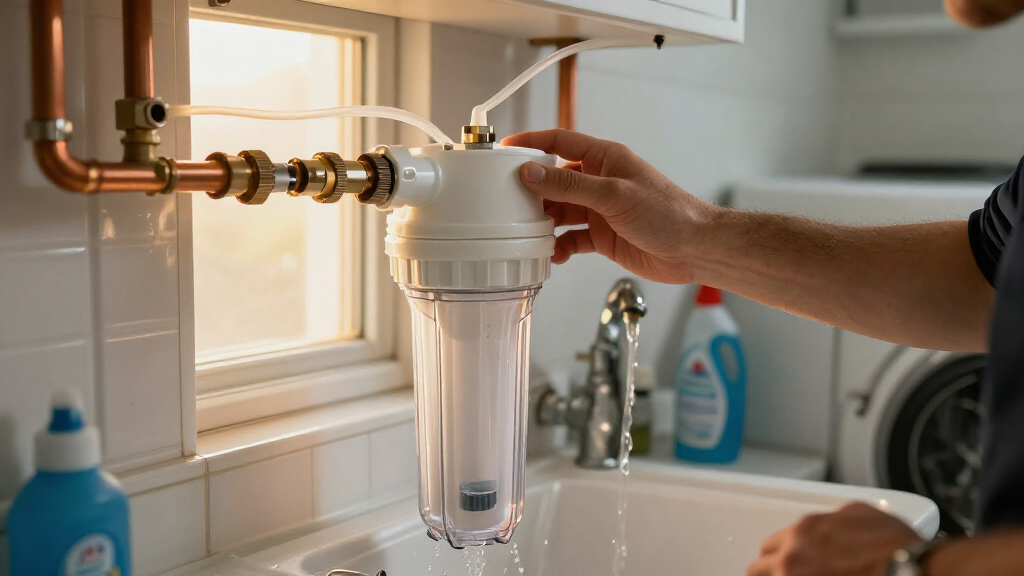
The best whole-house water filters depend on what is in your water, how much maintenance you want, and whether you need sediment, chemical, or specialty contaminant reduction. My best overall pick is the iSpring Ultimate Whole House Water Filter System with Auto-Flush Sediment Filter, which pairs multiple treatment stages with an automatic sediment-flushing feature. The Aquasana Whole House Water Filter System stands out for buyers seeking a more premium, multi-stage approach, while the 3M Aqua-Pure AP904 is a simpler choice for homes prioritizing sediment and scale-related concerns. The main tradeoffs are filtration scope versus flow, purchase and upkeep demands, and how closely a system matches a verified water test. Read on for the full breakdown of all 12 options and guidance on choosing the right fit.

Get cleaning gear delivered free with Prime
- Fast, free delivery on millions of items
- Prime Video, Amazon Music and more included
- Member-only deals all year
Complete the kit


Key Takeaways
- The roundup’s leading choice balances treatment and upkeep: the iSpring Ultimate with auto-flush adds sediment management that can reduce routine manual cleaning, though it still calls for space and plumbing work.
- Different contaminant goals call for different systems: iSpring‘s PFAS-focused model and the WGB32BM for iron and manganese target needs that a general carbon-and-sediment setup may not address.
- More filtration stages do not automatically mean a better fit: three-stage systems such as the HQUA WF3-01 and Waterdrop WHF3T-PG make sense when their treatment stages match the water problem, but add cartridge upkeep.
- Simpler systems trade treatment breadth for easier ownership: the 3M Aqua-Pure AP904 and A. O. Smith AO-WH-Filter suit buyers who want a less elaborate setup, but their scope should be checked against water-test results.
- Pre-filtration and cartridge access affect long-term value: options with larger sediment capacity or a separate jumbo sediment filter can help where sediment loads are high, while system dimensions and replacement-filter availability still matter.
| iSpring Ultimate Whole House Water Filter System with Auto-Flush Sediment Filter |  | Best for Reusable Sediment Control | Filtration stages: Reusable spin-down sediment filter, compound filter, and coconut-shell carbon block filter | Capacity: 250,000 gallons | Maximum flow rate: 15 GPM | VIEW LATEST PRICE | See Our Full Breakdown |
| iSpring Ultimate PFAS Protection Whole House Water Filter System |  | Best for PFAS-Focused Whole-House Filtration | Model: WGB32B-PFKDS | Filtration stages: 3 | Contaminants reduced: PFAS, PFOA, PFOS, chlorine, lead, mercury, chloramine, hydrogen sulfide, radon, and other contaminants | VIEW LATEST PRICE | See Our Full Breakdown |
| HQUA WF3-01 3-Stage Whole House Water Filtration System | 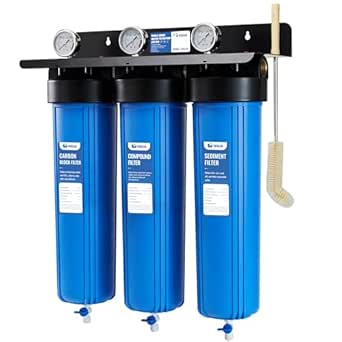 | Best for Maintenance Visibility | Filtration stages: 3 | Filter media: Sediment, carbon block, and GAC+KDF | Maximum flow rate: 15 GPM | VIEW LATEST PRICE | See Our Full Breakdown |
| 3M Aqua-Pure AP904 Whole House Water Filtration System |  | Best for Fast, Simple Cartridge Changes | Model: AP904 | Capacity: 100,000 gallons | Flow rate: Up to 20 GPM | VIEW LATEST PRICE | See Our Full Breakdown |
| Aquasana Whole House Water Filter System |  | Best for Long Service Life | Model: WH-1000 | Capacity: 1,000,000 gallons | Filter life: Up to 10 years | VIEW LATEST PRICE | See Our Full Breakdown |
| A. O. Smith AO-WH-Filter Whole House Water Filter System |  | Best for Long Service Life | Filtration method: Activated carbon | Chlorine reduction: 96.9% of chlorine taste and odor | Certification: NSF/ANSI 42 | VIEW LATEST PRICE | See Our Full Breakdown |
| Waterdrop WHF3T-PG 3-Stage Whole House Water Filter System, 5 Micron |  | Best for Broad Municipal or Well-Water Filtration | Model: WD-WHF3T-PG | Filtration stages: 3-stage system | Filter media: PP, KDF, activated carbon, and carbon fiber | VIEW LATEST PRICE | See Our Full Breakdown |
| iSpring WGB32BM 3-Stage Whole House Water Filter System for Iron and Manganese |  | Best for Iron and Manganese | Filtration stages: 3 | Iron reduction: Up to 3.0 ppm | Manganese reduction: Up to 1.0 ppm | VIEW LATEST PRICE | See Our Full Breakdown |
| iSpring WGB21B Two-Stage Whole-House Water Filtration System | 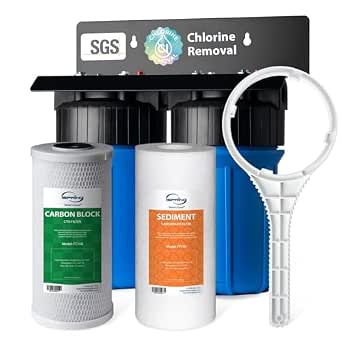 | Best Simple Sediment-and-Chlorine Pick | Filtration stages: 2 | First-stage filter: 5-micron polypropylene sediment filter | Second-stage filter: Carbon block filter | VIEW LATEST PRICE | See Our Full Breakdown |
| Waterdrop WHF21-PG 2-Stage Whole House Water Filter System |  | Best Compact System | Filtration stages: 2-stage system | Filter types: PP sediment and coconut-shell GAC | Filter size: 10 × 4.5 inches | VIEW LATEST PRICE | See Our Full Breakdown |
| Express Water Ultimate Protection 3-Stage Whole House Water Filter System |  | Best for Visible Sediment Control | Filtration stages: 3 | Prefilter: Reusable 50-micron spin-down sediment filter | Maximum flow rate: 17 gpm | VIEW LATEST PRICE | See Our Full Breakdown |
| iSpring WGB32B-KDS+WSP50J Whole House Water Filter System with Jumbo Sediment Filter |  | Best for Longer Service Intervals | Model: WGB32B-KDS+WSP50J | Capacity: 250,000 gallons | Maximum flow rate: 15 gpm | VIEW LATEST PRICE | See Our Full Breakdown |
| whole-house water filter | Capacity | Maximum flow rate | Filtration stages | Dimensions |
|---|---|---|---|---|
| iSpring Ultimate Whole House W | 250,000 gallons | 15 GPM | Reusable spin-down sediment filter, compound filter, and coconut-shell carbon block filter | — |
| iSpring Ultimate PFAS Protecti | 100,000 gallons | — | 3 | 24.5 x 8 x 28 inches |
| HQUA WF3-01 3-Stage Whole Hous | 100,000 gallons | 15 GPM | 3 | 31 in. high × 23 in. wide × 8 in. deep |
| 3M Aqua-Pure AP904 Whole House | 100,000 gallons | — | — | — |
| Aquasana Whole House Water Fil | 1,000,000 gallons | — | — | 32 x 9 x 46 in. |
| A. O. Smith AO-WH-Filter Whole | 600,000 gallons | 7 GPM | — | 30.2 × 9.5 × 9.4 inches |
| Waterdrop WHF3T-PG 3-Stage Who | — | 15 GPM | 3-stage system | 22.9 × 8.46 × 26.1 inches |
| iSpring WGB32BM 3-Stage Whole | 100,000 gallons | 15 GPM | 3 | — |
| iSpring WGB21B Two-Stage Whole | Up to 50,000 gallons | 15 GPM | 2 | — |
| Waterdrop WHF21-PG 2-Stage Who | 50,000 gallons | 15 GPM | 2-stage system | 14.37 × 7.48 × 15.55 inches |
| Express Water Ultimate Protect | Up to 100,000 gallons | 17 gpm | 3 | — |
| iSpring WGB32B-KDS+WSP50J Whol | 250,000 gallons | 15 gpm | — | 18 × 15 × 27 inches |
More Details on Our Top Picks
iSpring Ultimate Whole House Water Filter System with Auto-Flush Sediment Filter
This iSpring is a strong fit for homes where sediment and scale protection matter alongside chlorine and metals reduction. Its auto-flushing sediment filter is reusable, so it can reduce routine sediment-cartridge changes compared with the HQUA WF3-01, which relies on replaceable cartridges and scheduled maintenance. A stated 15 GPM flow rate and 250,000-gallon capacity also give it more listed capacity than the HQUA’s 100,000 gallons. The tradeoff is that scale inhibition does not remove calcium or magnesium, and the system does not reduce TDS. It is also a sizable, 66.7-pound assembly that must be fitted at the main line. I’d choose it for a capable DIY setup, not for a compact space or dissolved-solids treatment.
Pros:- Reusable auto-flushing sediment filter reduces dependence on disposable sediment cartridges.
- Three filtration stages target sediment, chlorine, metals, odors, and other listed contaminants.
- Stated capacity of 250,000 gallons exceeds the HQUA WF3-01’s listed 100,000 gallons.
- DIY installation and a maximum flow rate of 15 GPM.
Cons:- Scale inhibitor does not remove calcium or magnesium, and the system does not reduce TDS.
- Large, heavy assembly requires space and installation at the home’s main water line.
- Maximum supported TDS is 300 ppm.
Best for: DIY homeowners who want reusable sediment control, scale inhibition, and filtration at the main supply line.
Not ideal for: Households seeking TDS or hardness removal, or homes without room and plumbing access for a 66.7-pound main-line system.
- Filtration stages:Reusable spin-down sediment filter, compound filter, and coconut-shell carbon block filter
- Capacity:250,000 gallons
- Maximum flow rate:15 GPM
- Inlet/outlet:1 in. NPT
- System dimensions:25 x 22 x 17 in.
- Weight:66.7 lb
- Maximum supported TDS:300 ppm
- Installation and power:DIY; no power required
Our verdict“Choose this iSpring if reusable sediment flushing and scale inhibition matter more than TDS reduction or a compact installation.”
iSpring Ultimate PFAS Protection Whole House Water Filter System
Among these options, this iSpring puts the clearest emphasis on PFAS reduction, alongside stated targets that include PFOA, PFOS, lead, mercury, chlorine, and chloramine. Its KDF, granular activated carbon, carbon block, and scale-inhibition approach is a broader contaminant-focused package than the 3M Aqua-Pure AP904, which centers on sediment, chlorine taste and odor, and scale buildup. That added scope comes with a more involved three-stage installation and a 100,000-gallon capacity, below the 250,000 gallons listed for the iSpring auto-flush model. Cartridge life is listed as up to 12 months but varies with water quality and use. The scale inhibitor does not remove minerals, and this system does not reduce TDS, so I wouldn’t choose it to soften water or address dissolved solids.
Pros:- Three-stage filtration targets PFAS, PFOA, PFOS, heavy metals, chlorine, and other listed contaminants.
- Scale inhibitor helps limit mineral buildup in plumbing and appliances.
- Standard 1-inch NPT ports and 20 x 4.5-inch housings.
- Individually sealed cartridges help protect filters before installation.
Cons:- Does not reduce TDS or remove calcium and magnesium.
- Listed capacity is 100,000 gallons, with service life dependent on water quality and use.
- Wall-mounted system and cartridge changes require installation space and ongoing maintenance.
Best for: Homeowners prioritizing stated PFAS and heavy-metal reduction across household taps and comfortable with periodic cartridge changes.
Not ideal for: Buyers who need TDS reduction, water softening, or the longer stated capacity of the iSpring auto-flush system.
- Model:WGB32B-PFKDS
- Filtration stages:3
- Contaminants reduced:PFAS, PFOA, PFOS, chlorine, lead, mercury, chloramine, hydrogen sulfide, radon, and other contaminants
- Capacity:100,000 gallons
- Filter life:Up to 12 months, depending on water quality and usage
- Inlet/outlet ports:1-inch NPT
- Dimensions:24.5 x 8 x 28 inches
- Operating pressure:25–80 psi
- Mineral retention:Retains minerals; does not reduce TDS
Our verdict“Pick this model when PFAS-focused filtration is the priority, but skip it if you need dissolved-solids or hardness removal.”
HQUA WF3-01 3-Stage Whole House Water Filtration System
The HQUA WF3-01 stands out for making routine upkeep easier to track: pressure gauges, 180-day filter timers, maintenance valves, and a housing brush are included. That hands-on maintenance setup contrasts with the 3M Aqua-Pure AP904, whose tool-free cartridge change is the simpler route for buyers who want less contact with filter housings. HQUA also supports up to 15 GPM and includes adapters for 3/4-inch or 1-inch NPT plumbing, which can help with different household connections. The tradeoff is its 31-inch height and 23-inch width, plus periodic cartridge replacement and housing cleaning. Its listed capacity is 100,000 gallons, and the product data does not specify a filter replacement interval beyond the timer. I’d favor it when visible service cues and flexible mounting matter more than a compact footprint.
Pros:- Pressure gauges and 180-day timers make filter monitoring and service planning more visible.
- Includes pressure relief and drain valves, a housing brush, and fitting adapters.
- Supports up to 15 GPM and 3/4-inch or 1-inch NPT connections.
- Can be bracket-mounted or used freestanding.
Cons:- 31 inches high and 23 inches wide, requiring substantial installation space.
- Cartridges need periodic replacement and the housings require maintenance.
- Listed capacity is 100,000 gallons, and the supplied data does not state a specific cartridge service life.
Best for: Homeowners who want gauges and timed reminders to manage filter maintenance, with enough room for a large bracket-mounted or freestanding unit.
Not ideal for: Buyers with limited utility-room space or anyone seeking the tool-free cartridge replacement offered by the 3M Aqua-Pure AP904.
- Filtration stages:3
- Filter media:Sediment, carbon block, and GAC+KDF
- Maximum flow rate:15 GPM
- Capacity:100,000 gallons
- Filter size:20 × 5.5 in.
- Dimensions:31 in. high × 23 in. wide × 8 in. deep
- Pipe fittings:Adapters for 3/4 in. or 1 in. NPT
- Filter timer:180-day countdown
- Mounting:Bracket-mounted or freestanding
Our verdict“Choose the HQUA if you value clear maintenance cues and installation flexibility enough to make room for its large footprint.”
3M Aqua-Pure AP904 Whole House Water Filtration System
The AP904 is the lineup’s clearest choice for buyers who want a straightforward cartridge change rather than a multi-housing maintenance routine. Its Sanitary Quick Change design replaces the cartridge without tools or direct contact with the filter media, unlike the HQUA WF3-01, which includes gauges and valves but calls for housing upkeep. The AP904 also lists a 20 GPM flow rate, higher than the 15 GPM maximums listed for the HQUA and both iSpring systems here. Its focus is narrower: sediment, chlorine taste and odor, and scale buildup, rather than the PFAS-focused contaminant list of the iSpring Ultimate PFAS system. Initial setup still calls for plumbing knowledge or professional installation, and the cartridge replacement interval is up to 12 months. This is a convenience-and-flow pick, not the broadest contaminant-targeting option.
Pros:- Sanitary Quick Change design allows tool-free cartridge replacement without touching filter media.
- Listed flow rate of up to 20 GPM is higher than the 15 GPM systems in this batch.
- 304 stainless steel head and 1-inch inlet and outlet.
- NSF Standard 42 and 372 certifications are listed.
Cons:- Initial installation requires plumbing knowledge or professional help.
- Replacement cartridge interval is up to 12 months.
- Its listed filtration targets are narrower than the PFAS and heavy-metal claims of the iSpring Ultimate PFAS system.
Best for: Households that want high listed flow and sanitary, tool-free cartridge changes for sediment, chlorine taste and odor, and scale inhibition.
Not ideal for: Buyers seeking stated PFAS or heavy-metal reduction, or those who cannot accommodate plumbing work during initial installation.
- Model:AP904
- Capacity:100,000 gallons
- Flow rate:Up to 20 GPM
- Connection size:1-inch inlet and outlet
- Head material:304 stainless steel
- Filter media:Activated carbon block with non-woven pleat media
- Certifications:NSF Standard 42 and 372
- Replacement interval:Up to 12 months
- Scale inhibition:Polyphosphate-based
Our verdict“Choose the AP904 if high flow and easy, sanitary cartridge swaps matter more than a wider stated range of contaminant targets.”
Aquasana Whole House Water Filter System
The Aquasana Rhino is the low-intervention choice in this group: its 1,000,000-gallon capacity and stated lifespan of up to 10 years are far beyond the 100,000-gallon capacities listed for the 3M Aqua-Pure AP904 and HQUA WF3-01. Its carbon and KDF media target chlorine reduction while retaining minerals, and it requires no electricity, drain line, or back flushing. That makes it appealing to owners who would rather avoid frequent cartridge-service routines. The tradeoffs are its 14.6 GPM flow rate, below the AP904’s listed 20 GPM, and its large 46-inch height. It also is not designed to reduce TDS or hardness and requires TDS no higher than 300 ppm. I’d choose it for long service life and reduced upkeep, not for compact installation or water softening.
Pros:- Stated capacity of up to 1,000,000 gallons or 10 years exceeds the capacities listed for other products in this batch.
- Reduces 97% of chlorine while preserving minerals.
- Requires no electricity, drain line, or back flushing.
- Includes components for installation on 3/4-inch or 1-inch main water lines.
Cons:- Does not reduce TDS or hardness and requires a maximum TDS of 300 ppm.
- Its 14.6 GPM flow rate is below the 3M Aqua-Pure AP904’s listed 20 GPM.
- At 46 inches tall, the system needs substantial space and can be cumbersome to install.
Best for: Homeowners seeking long service life and low routine upkeep for chlorine reduction, with space for a tall point-of-entry system.
Not ideal for: Households needing hardness or TDS reduction, with source water above 300 ppm TDS, or lacking room for a 46-inch-tall system.
- Model:WH-1000
- Capacity:1,000,000 gallons
- Filter life:Up to 10 years
- Flow rate:14.6 GPM
- Purification method:Copper-zinc (KDF) and carbon filtration media
- Dimensions:32 x 9 x 46 in.
- Maximum TDS:300 ppm
- Operating pressure:20–100 psi
- Certification:NSF/ANSI Standard 42; WQA certified to NSF/ANSI/CAN Standard 61
Our verdict“Pick the Aquasana for long service life and minimal routine maintenance if your water meets its TDS limit and you have installation space.”
A. O. Smith AO-WH-Filter Whole House Water Filter System
The A. O. Smith AO-WH-Filter is a straightforward choice for households whose main concern is chlorine taste and odor throughout the home. Its activated carbon media is rated to reduce 96.9% of chlorine taste and odor, and the stated 600,000-gallon or six-year life means fewer routine cartridge changes than the iSpring WGB21B, which is rated for up to 50,000 gallons and about a year. It also operates without backwashing, drainage, or water waste, a practical advantage where a drain connection is inconvenient. The tradeoff is narrow treatment: unlike the iSpring WGB32BM, it is not designed to reduce iron or manganese, and it does not soften water or reduce TDS, sulfur, or iron. Its 7 GPM maximum flow rate may also be limiting for some high-demand homes, and installation can call for extra tools.
Pros:- Reduces 96.9% of chlorine taste and odor for whole-house water use.
- Rated for up to 600,000 gallons or six years of service.
- Does not require backwashing, a drain, or water-wasting flush cycles.
- Designed for DIY installation and includes a shut-off valve and connection accessories.
Cons:- Does not soften water or reduce TDS, sulfur, or iron.
- The 7 GPM maximum flow rate is lower than the 15 GPM ratings of the iSpring WGB21B and Waterdrop WHF21-PG.
- Installation may require tools beyond the included components.
Best for: Homeowners on municipal water who primarily want chlorine taste and odor reduced at every tap and prefer long intervals between filter changes.
Not ideal for: Households with hard water, elevated iron or sulfur, or high simultaneous water demand that needs more than the stated 7 GPM flow rate.
- Filtration method:Activated carbon
- Chlorine reduction:96.9% of chlorine taste and odor
- Certification:NSF/ANSI 42
- Capacity:600,000 gallons
- Filter life:Up to 6 years
- Maximum flow rate:7 GPM
- Connection:3/4-inch NPT
- Dimensions:30.2 × 9.5 × 9.4 inches
Our verdict“Choose this filter if long service life and chlorine reduction matter more than broad contaminant treatment or a higher flow rate.”
Waterdrop WHF3T-PG 3-Stage Whole House Water Filter System, 5 Micron
The Waterdrop WHF3T-PG earns its place for buyers seeking broader treatment than a chlorine-focused carbon system. Its stated media combination—PP filters, KDF, activated carbon, and carbon fiber—targets sediment, rust, chlorine, heavy metals, and odors, while a rated 15 GPM flow rate suits households that use water at several fixtures at once. Compared with the A. O. Smith AO-WH-Filter, it addresses more types of unwanted material, but gives up the A. O. Smith’s unusually long stated service interval: Waterdrop lists up to 12 months, while other product information gives a 90-day cycle. Capacity is listed as 100,000 gallons, but actual cartridge life depends on incoming water quality. Certification is specifically for lead-free materials, not proof of contaminant-reduction performance, so buyers should verify treatment claims against their water test.
Pros:- Targets sediment, rust, chlorine, heavy metals, and odors with multiple filter media.
- Rated for up to 15 GPM, supporting concurrent household water use.
- Intended for both municipal and well-water sources.
- Includes three cartridges, a wrench, and mounting expansion screws.
Cons:- Filter-life information conflicts between up to 12 months and a 90-day cycle.
- Actual cartridge life depends on source-water quality and use.
- The stated certification covers lead-free materials rather than the system’s contaminant-reduction performance.
Best for: Households on municipal or well water that want sediment and several common taste, odor, and metal concerns addressed in one 15 GPM system.
Not ideal for: Buyers who need a clearly established, consistent replacement schedule or want contaminant-reduction certification beyond the stated lead-free materials standard.
- Model:WD-WHF3T-PG
- Filtration stages:3-stage system
- Filter media:PP, KDF, activated carbon, and carbon fiber
- Maximum flow rate:15 GPM
- Filter capacity:100,000 gallons
- Listed filter life:Up to 12 months; product information also lists a 90-day cycle
- Maximum supported TDS:1,000 ppm
- Certification:IAPMO R&T certified to NSF/ANSI/CAN 372 for lead-free materials
- Dimensions:22.9 × 8.46 × 26.1 inches
Our verdict“Pick the WHF3T-PG if you want broader stated treatment and 15 GPM flow, and are comfortable checking cartridge condition and replacement guidance closely.”
iSpring WGB32BM 3-Stage Whole House Water Filter System for Iron and Manganese
For homes where iron or manganese is the specific problem, the iSpring WGB32BM is more focused than the general-purpose Waterdrop WHF3T-PG. Its three stages are rated to reduce iron up to 3.0 ppm and manganese up to 1.0 ppm, alongside sediment, chlorine, rust, herbicides, and industrial solvents. The 15 GPM rating and 100,000-gallon capacity make it better suited to whole-house treatment than a point-of-use filter, and its large 20 × 4.5-inch cartridges offer substantial filtration area. That breadth comes with a larger, heavier permanent installation: at 55 pounds and 24.5 × 8 × 28 inches, it needs suitable space on the main line. Unlike the A. O. Smith AO-WH-Filter, it targets iron and manganese, but it does not reduce TDS. Buyers should also match the stated reduction limits to a water test rather than assume it handles any concentration.
Pros:- Targets iron up to 3.0 ppm and manganese up to 1.0 ppm.
- Also filters sediment, chlorine, rust, herbicides, and industrial solvents.
- Rated for up to 15 GPM and 100,000 gallons of capacity.
- Includes three filters and a wrench for installation and cartridge changes.
Cons:- Does not reduce total dissolved solids.
- Requires a permanent main-line installation and substantial mounting space.
- The one-year warranty is shorter than the six-year limited warranty listed for the A. O. Smith AO-WH-Filter.
Best for: Well-water households with tested iron or manganese levels within the stated reduction limits that also want sediment and chlorine filtration at the main supply.
Not ideal for: Renters, homes without room for a 55-pound permanent system, or buyers seeking TDS reduction or treatment for iron levels above the stated range.
- Filtration stages:3
- Iron reduction:Up to 3.0 ppm
- Manganese reduction:Up to 1.0 ppm
- Maximum flow rate:15 GPM
- Capacity:100,000 gallons
- Filter life:Up to 1 year
- Inlet/outlet:1-inch NPT
- Cartridge size:20 × 4.5 inches
- Dimensions and weight:24.5 × 8 × 28 inches; 55 pounds
Our verdict“Choose the WGB32BM when a water test points to iron or manganese within its stated limits and your home can accommodate a large permanent system.”
iSpring WGB21B Two-Stage Whole-House Water Filtration System
The iSpring WGB21B is a leaner alternative to the three-stage WGB32BM: a 5-micron sediment filter catches particles, then a carbon block targets chlorine, cloudiness, tastes, odors, and certain VOCs. That pairing makes sense for buyers who want everyday water-quality improvements without adding a dedicated iron-and-manganese stage. Its 1-inch ports and stated 15 GPM maximum flow rate support whole-house use, while the pre-assembled bracket, pressure release valve, and included wrench make cartridge changes more approachable than on a system that requires more assembly. The tradeoff is a lower 50,000-gallon capacity and replacement about every 12 months, compared with the WGB32BM’s 100,000-gallon capacity. Like that model, it retains dissolved minerals rather than reducing TDS, so it is not a substitute for softening or dissolved-solids treatment.
Pros:- Combines 5-micron sediment filtration with a carbon block for chlorine, cloudiness, tastes, and odors.
- Rated for up to 15 GPM with 1-inch inlet and outlet connections.
- Pre-assembled mounting bracket, pressure release valve, and wrench support installation and filter changes.
- Retains dissolved minerals in the water.
Cons:- Rated capacity is 50,000 gallons, half the stated capacity of the iSpring WGB32BM.
- Filters may need replacement about every 12 months, depending on use.
- Does not reduce TDS or target iron and manganese as a dedicated treatment stage.
Best for: Homeowners who want a relatively simple main-line filter for sediment, chlorine taste, and odor, with common filter-change accessories included.
Not ideal for: Households with tested iron or manganese concerns, or buyers seeking higher capacity, water softening, or TDS reduction.
- Filtration stages:2
- First-stage filter:5-micron polypropylene sediment filter
- Second-stage filter:Carbon block filter
- Filter size:10 × 4.5 inches
- Capacity:Up to 50,000 gallons
- Filter life:Up to 12 months
- Inlet/outlet:1 inch
- Maximum flow rate:15 GPM
- Maximum supported TDS:2,500 ppm
Our verdict“Choose the WGB21B for basic sediment and chlorine treatment at the main supply, but select the WGB32BM if iron or manganese is the priority.”
Waterdrop WHF21-PG 2-Stage Whole House Water Filter System
The Waterdrop WHF21-PG is the most space-conscious choice in this group, with a listed footprint of 14.37 × 7.48 × 15.55 inches—far smaller than the iSpring WGB32BM. Its PP sediment cartridge and coconut-shell GAC cartridge target sediment and chlorine while helping improve taste and odor; the product also lists lead among the contaminants it addresses. A 15 GPM maximum flow rate is strong for a compact system, but its 50,000-gallon capacity does not tell the whole maintenance story: the GAC filter is expected to last six months, and the PP filter needs changing every three to six months. That is more frequent upkeep than the A. O. Smith AO-WH-Filter, whose stated life is six years. The listed standards cover lead-free materials and SGS testing to NSF/ANSI 42, so buyers should distinguish those claims from broader system certification.
Pros:- Compact dimensions make it easier to fit than the larger iSpring WGB32BM.
- Combines PP sediment filtration with coconut-shell GAC for chlorine taste and odor.
- Rated for up to 15 GPM and requires no power.
- Includes a wrench for installation and filter replacement.
Cons:- The PP filter needs replacement every 3–6 months, and the GAC filter is expected to last six months.
- Recommended for municipal water to help extend filter service life.
- Listed standards do not establish that the full system is certified for every stated contaminant reduction.
Best for: Homeowners with limited utility-room space who want a compact, non-electric sediment-and-carbon system and can keep up with frequent cartridge changes.
Not ideal for: Buyers who prioritize long filter intervals, have untreated well water, or need iron, manganese, water-softening, or TDS treatment.
- Filtration stages:2-stage system
- Filter types:PP sediment and coconut-shell GAC
- Filter size:10 × 4.5 inches
- Maximum flow rate:15 GPM
- Capacity:50,000 gallons
- GAC filter life:6 months
- PP filter life:3–6 months
- Inlet/outlet:1 inch
- Dimensions:14.37 × 7.48 × 15.55 inches
Our verdict“Choose the WHF21-PG when installation space is tight and you accept more frequent cartridge changes than the A. O. Smith AO-WH-Filter requires.”
Express Water Ultimate Protection 3-Stage Whole House Water Filter System
The Express Water combines a reusable 50-micron spin-down prefilter with three filtration stages for sediment, heavy metals, and scale. Its transparent housing lets homeowners see when larger particles are collecting, while pressure gauges make it easier to spot pressure changes that may call for attention. Compared with the iSpring WGB32B-KDS+WSP50J, it has a higher stated maximum flow rate, but its listed capacity is lower and its filter-life interval is shorter. Quick-change cartridges help simplify routine replacement; they do not remove the need to plan for servicing every six months. At 66 pounds and 29 × 8.5 × 30 inches, it also calls for a sturdy, adequately sized installation area. I’d favor it for buyers who value visible sediment monitoring and a faster stated flow rate over longer service intervals.
Pros:- Reusable 50-micron spin-down prefilter captures larger particles before they reach the other filters.
- Transparent sediment housing and pressure gauges make routine system checks more visible.
- Quick-change cartridges simplify replacement.
- Stated capacity reaches up to 100,000 gallons.
Cons:- Listed filter life is six months, so buyers should expect regular cartridge maintenance.
- At 66 pounds and 29 × 8.5 × 30 inches, it needs a sturdy mounting area with room for service.
- Its stated capacity is lower than the iSpring WGB32B-KDS+WSP50J’s 250,000 gallons.
Best for: Homeowners who want a reusable sediment prefilter, visible sediment monitoring, and a stated maximum flow rate of 17 gpm.
Not ideal for: Buyers seeking long intervals between filter changes or a lighter, compact unit; its listed filter life is six months and the system weighs 66 pounds.
- Filtration stages:3
- Prefilter:Reusable 50-micron spin-down sediment filter
- Maximum flow rate:17 gpm
- Capacity:Up to 100,000 gallons
- Filter life cycle:6 months
- Connections:1 inch
- Operating pressure:20–80 psi
- Dimensions and weight:29 × 8.5 × 30 inches; 66 pounds
Our verdict“Choose the Express Water if visible sediment checks and a 17 gpm stated flow rate matter more to you than longer service intervals or a lighter installation.”
iSpring WGB32B-KDS+WSP50J Whole House Water Filter System with Jumbo Sediment Filter
The iSpring WGB32B-KDS+WSP50J pairs a reusable spin-down sediment filter with a heavy-metal compound filter and coconut-shell carbon block. Its standout advantage over the Express Water Ultimate Protection system is its 250,000-gallon stated capacity and one-year filter life, which may mean fewer scheduled cartridge changes. The listed maximum flow rate is 15 gpm, lower than Express Water’s 17 gpm, so households prioritizing the higher stated flow may prefer that alternative. This system is designed to reduce sediment, chlorine, lead, and other listed contaminants while inhibiting scale and corrosion; its scale inhibitor does not remove calcium or magnesium, and the system does not reduce TDS. I’d choose it for families seeking longer service intervals, not for anyone expecting softened water or dissolved-solids reduction.
Pros:- Stated capacity of 250,000 gallons is higher than the Express Water system’s listed 100,000 gallons.
- Listed one-year filter life offers a longer service interval than Express Water’s six-month cycle.
- Reusable spin-down sediment filter helps limit disposable prefilter replacements.
- Three-stage design combines sediment filtration, heavy-metal filtration, and coconut-shell carbon block for chlorine and taste concerns.
Cons:- The scale inhibitor does not remove hardness minerals, so it does not soften water.
- Does not reduce TDS.
- Its stated maximum flow rate of 15 gpm is lower than the Express Water system’s 17 gpm.
Best for: Families seeking a whole-house system with a reusable sediment filter, a stated one-year filter life, and high listed capacity.
Not ideal for: Households that need calcium and magnesium removal, TDS reduction, or a higher stated flow rate than 15 gpm.
- Model:WGB32B-KDS+WSP50J
- Capacity:250,000 gallons
- Maximum flow rate:15 gpm
- Filter life:1 year
- Inlet/outlet size:1-inch NPT
- Cartridge size:20 × 4.5 inches
- Dimensions:18 × 15 × 27 inches
- Certification:NSF/ANSI standards
Our verdict“Pick this iSpring for its higher stated capacity and one-year filter life, but skip it if you need softened water or TDS reduction.”
How We Picked
I compared these 12 systems by treatment purpose, practical fit, and ownership demands, rather than treating stage count as a shortcut for performance. I looked at whether each product is positioned for general sediment and taste concerns or for more specific issues such as PFAS, iron, or manganese; how its design may affect flow and installation; and what buyers should expect from filter changes and sediment maintenance. Whole-house systems sit on the main water line, so capacity, plumbing compatibility, and household water use matter as much as the filter media.
The ranking favors systems that offer a useful balance of clearly differentiated treatment and manageable upkeep for a broad range of homes. Specialty models rank higher for their intended water problems, not as universal substitutes. Simpler or more focused systems can be the better pick when their stated scope matches a water test, while systems with extra stages are not rewarded merely for having more components. I also weighed the risk of buying treatment that a household does not need and the value of confirming claims against current manufacturer documentation.
Factors to Consider When Choosing Best Whole-house Water Filters
A whole-house filter treats water where it enters the home, but choosing one starts with your water and plumbing—not a comparison of stage counts. These buying factors can help you avoid paying for treatment you do not need or selecting a system that cannot keep up with your household.
Start With a Water Test, Not a Contaminant Guess
Municipal water reports can point to broad concerns, but a report may not capture changes inside your service line or household plumbing. A certified lab test can help distinguish sediment, hardness, iron, and specific chemical concerns, which call for different treatment methods. Do not assume a carbon filter addresses every contaminant: media and certification claims vary by product and target substance. If you use a private well, test regularly and include locally relevant contaminants rather than relying on taste or appearance. Match the test results to the exact reduction claims for the model and filter configuration. This step can prevent buying a specialty system for a problem you do not have—or a general filter that misses the problem you do.
Check Flow Rate Against Peak Household Use
A filter can have suitable treatment media and still feel like a poor fit if it restricts flow when several fixtures run at once. Consider simultaneous use—such as a shower, laundry, and kitchen tap—rather than counting occupants alone. Compare the system’s rated flow and pressure-drop information with your plumbing and household demand, and ask the manufacturer how those figures change as filters load with sediment. A high-flow design may suit a busy home, while a smaller system can be adequate for a lower-demand household. Do not treat a stated maximum flow as a guarantee of unchanged pressure under every condition. If your home already has low pressure, diagnose that issue before adding equipment to the main line.
Separate Filtration From Softening and Specialty Treatment
Whole-house filters are often mistaken for water softeners, but ordinary sediment and carbon stages do not necessarily remove hardness minerals. Hard water scale may need a softener or a dedicated scale-control approach, while iron and manganese may require media selected for those metals and the water’s chemistry. PFAS reduction also depends on the specific media, operating conditions, and product claims; a general-purpose filter should not be assumed to provide it. Some homes need a combination of treatment methods rather than one all-in-one unit. Before choosing a system, identify whether the goal is safer water, better taste, fewer particles, scale management, or a mix. Then confirm that each stage is intended for that job.
Plan for Filter Changes and Sediment Loads
Replacement intervals depend on water quality, household use, and cartridge capacity, so a schedule printed for average conditions may not match your home. Sediment-heavy water can clog a prefilter early, while a cleaner supply may let cartridges last longer. Check replacement part availability, the cost and frequency of changes, and whether changing filters requires shutting off water or using special tools. Auto-flush and jumbo sediment designs may reduce some hands-on maintenance, but they do not remove the need to inspect the system or replace treatment media. A common mistake is comparing only the initial equipment while ignoring years of consumables. Leave room around the unit so service is practical rather than a plumbing puzzle.
Confirm Installation Space, Plumbing, and Drain Access
Whole-house filters usually install near the point where the supply enters, where there must be enough clearance for the housing, valves, and cartridge removal. Some systems need a drain connection for flushing, and not every utility area has a convenient route. Check pipe size, connection type, orientation, and the manufacturer’s installation requirements before ordering. A compact body may simplify placement, while a multi-stage setup can need more wall space and support. If the installation involves cutting a main water line, a qualified plumber can help prevent leaks and preserve access for maintenance. Budgeting for installation and any needed bypass valves gives a more realistic picture than judging the unit alone.
Pay More Only for Treatment You Can Verify You Need
Premium systems can make sense when their treatment scope, capacity, or maintenance design fits a documented household need. They are harder to justify when their extra stages do not correspond to test results or when replacement media are difficult to source. Compare independent certifications and the exact claims they cover; certification for one contaminant does not validate every claim for a product. Also check whether the listed configuration includes all the stages shown and whether the performance data apply at your expected flow. A lower-complexity system may be better value for sediment or taste concerns, while specialty treatment can justify added cost for a verified contaminant. Choose on evidence and ongoing ownership needs, not stage count or marketing breadth.
Frequently Asked Questions
Can a whole-house filter make well water safe to drink?
Not by itself in every case. Well water can contain bacteria, nitrates, arsenic, or other contaminants that ordinary sediment and carbon filters may not address. Start with a lab test that covers the risks relevant to your region and well, then select treatment specifically rated for the detected contaminants. Disinfection or point-of-use treatment may be needed alongside a whole-house system. Retest after installation to check that the chosen setup is doing the job.
Should I choose a system with more filtration stages?
Not automatically: each stage should have a clear purpose tied to your water results. Extra stages can add cartridge changes, pressure loss, space requirements, and replacement costs without improving the outcome for your household. A two-stage unit may be a sensible match for a limited treatment goal, while a three-stage or specialty setup can suit more complex water. Check the media types and contaminant claims rather than relying on the number of housings. The right configuration is the one that addresses the identified issue at your household’s required flow.
Will a whole-house filter remove hard-water minerals?
Most whole-house filters in this roundup are not substitutes for a conventional water softener. Sediment and carbon filtration can address particles or certain taste and odor concerns, but that does not mean they remove calcium and magnesium that cause hardness. If scale is your main problem, test hardness and compare softeners or dedicated scale-control systems. Some products may claim scale-related benefits, but those claims differ from removing hardness minerals. Choose treatment based on whether you want less scale, softer water, or both.
How do I know whether a filter’s PFAS or metal-reduction claims fit my water?
Look for documentation that names the specific contaminant, the tested reduction, and the conditions under which the claim applies. A product aimed at PFAS is not automatically suitable for every PFAS compound or every flow and service life. Iron and manganese treatment can also depend on concentration, pH, and other water characteristics. Compare the documentation with a recent lab test and ask the manufacturer about your results when details are unclear. If health-related contaminants are present, confirm treatment performance with follow-up testing rather than relying on taste or appearance.
Can I install a whole-house filter myself, and what should I check first?
Some homeowners with plumbing experience may be able to install a system, but it connects to the home’s main water line and a mistake can cause leaks or interrupt water service. First check pipe size, connection compatibility, available wall and service clearance, bypass-valve needs, and whether the system requires a drain for flushing. Review the manufacturer’s installation instructions and local plumbing requirements before starting. If you are unsure about cutting or supporting the supply line, hiring a plumber is the safer route. Also confirm that cartridges can be removed without moving other equipment.
Conclusion
For the broadest balance in this lineup, I recommend the iSpring Ultimate with Auto-Flush as best overall, especially for households that value built-in sediment management. The Waterdrop WHF21-PG is a practical value candidate for buyers whose needs fit a simpler two-stage setup, while the Aquasana Whole House Water Filter System is the best premium direction for shoppers seeking a more extensive treatment approach and willing to verify ongoing upkeep. For beginners who want a relatively straightforward system, I would compare the 3M Aqua-Pure AP904 and A. O. Smith AO-WH-Filter against their water report and installation space. For specific needs, look at the iSpring PFAS Protection model for documented PFAS concerns and the iSpring WGB32BM for iron and manganese; neither should be chosen without checking the water chemistry and product claims. My final recommendation is to test first, then choose the least complicated system that addresses the results and fits your flow, space, and maintenance capacity.