For shoppers comparing the best energy efficient windows among these five options, my first distinction is between a window that fits a specific opening and one that offers the clearest practical advantages for a larger replacement project. The 36 × 60 in. COLORPAPA stands out for its double-pane glass, tilt-in lower sash, pre-drilled holes, and built-in J-channel, while the 24 × 36 in. NOTASA is a more manageable single-hung option with similar glass and an inward-tilting sash. For a basement opening, I’d look at the NOTASA 32 × 14 in. hopper, whose inward-opening design suits lower, utility-focused installations.

Get cleaning gear delivered free with Prime
- Fast, free delivery on millions of items
- Prime Video, Amazon Music and more included
- Member-only deals all year
There is a key qualification: the supplied details do not list U-factor, solar heat gain coefficient, Low-E coatings, or an ENERGY STAR qualification for any of these windows. Double-pane insulated glass and vinyl frames can support better temperature control than less insulated constructions, but they do not establish how much energy a particular window will save. My ranking weighs the stated glazing, frame, drainage, opening style, installation information, and fit; I treat missing performance data as a real drawback. The right choice depends as much on your opening and climate as on the product label, and buyers should request verified performance numbers before comparing energy savings.
Complete the kit


Key Takeaways
- Best all-around project fit: The 36 × 60 in. COLORPAPA pairs double-pane glass with a tilt-in lower sash, pre-drilled holes, and a built-in J-channel, but its 58.9 lb weight makes handling harder.
- Best mid-size balance: The 24 × 36 in. NOTASA offers vinyl, double-pane insulated glass, a screen, tilt-in cleaning, and rear drainage in a smaller, lighter package than the COLORPAPA.
- Best basement-specific option: The 32 × 14 in. NOTASA hopper suits basement, bathroom, or utility openings; its inward-opening sash needs clear space indoors.
- Best for compact openings: The 18 × 24 in. TANVILL adds double-pane tempered glass and tilt-in cleaning, but the listing gives little installation guidance.
- Best aluminum-frame alternative: The 23 × 28 in. BLCKTIGR describes wind, water, and air-tightness ratings, yet it lacks specific thermal-performance figures and a stated vinyl frame.
| 36 x 60 in. White Vinyl Single-Hung Window | 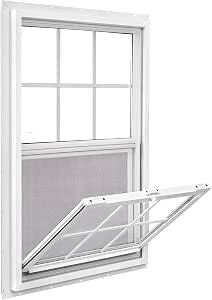 | Best Overall for a Larger Replacement Opening | Manufacturer: COLORPAPA | Window type: Single-hung | Size: 36 × 60 in. | VIEW LATEST PRICE | See Our Full Breakdown |
| NOTASA Vinyl Single-Hung Window, 24 x 36 in, White |  | Best Mid-Size Balance | Manufacturer: NOTASA | Window type: Single-hung | Size: 24 × 36 in. | VIEW LATEST PRICE | See Our Full Breakdown |
| NOTASA Vinyl Basement Hopper Window, 32 x 14 in, Black |  | Best for Basement and Utility Openings | Manufacturer: NOTASA | Window type: Inward-opening, bottom-hinged hopper | Size: 32 × 14 in. | VIEW LATEST PRICE | See Our Full Breakdown |
| TANVILL Vinyl Single-Hung Window, 18 × 24 in, White |  | Best for Compact Openings | Manufacturer: TANVILL | Model: VW-DTL01-WH-18×24 | Window type: Single-hung | VIEW LATEST PRICE | See Our Full Breakdown |
| BLCKTIGR Single-Hung Aluminum Window, Double-Pane Tempered Glass, Gray, 23 × 28 in |  | Best Aluminum-Frame Alternative | Brand: BLCKTIGR | Window type: Single-hung, vertical sliding | Size: 23 × 28 in. | VIEW LATEST PRICE | See Our Full Breakdown |
| energy efficient window | Window type | Size | Frame | Glass |
|---|---|---|---|---|
| 36 x 60 in. White Vinyl Single | Single-hung | 36 × 60 in. | White vinyl, 1.6 in. depth | Double-pane insulated tempered glass |
| NOTASA Vinyl Single-Hung Windo | Single-hung | 24 × 36 in. | Vinyl | Double-pane insulated tempered glass |
| NOTASA Vinyl Basement Hopper W | Inward-opening, bottom-hinged hopper | 32 × 14 in. | Black PVC (vinyl) | Double-pane insulated tempered glass |
| TANVILL Vinyl Single-Hung Wind | Single-hung | 18 × 24 in. | Vinyl | Double-pane tempered glass |
| BLCKTIGR Single-Hung Aluminum | Single-hung, vertical sliding | 23 × 28 in. | Aluminum | Double-pane, 5 mm tempered glass |
More Details on Our Top Picks
36 x 60 in. White Vinyl Single-Hung Window
The COLORPAPA 36 × 60 in. single-hung window takes the top spot because it combines the most complete set of practical features for a sizable residential opening. It has a white vinyl frame, double-pane insulated tempered glass, a screen, a lower sash that tilts inward and can be removed for cleaning, and a rear drainage system. For a buyer comparing efficiency-oriented replacement options, the package makes sense: the stated glazing and frame address insulation, while drainage and a moveable sash add day-to-day utility.
Its clearest advantage over the 24 × 36 in. NOTASA is installation support. Pre-drilled holes and a built-in J-channel can help with mounting and exterior finishing, details the smaller NOTASA listing does not specify. That makes the COLORPAPA a more developed choice for a larger replacement project, though a buyer still needs to verify that its 36 × 60 inch dimensions match the rough opening and installation method.
The tradeoff is scale. At 58.9 pounds, this is substantially heavier than the smaller windows here, so moving and positioning it may call for another person. Only the lower sash is described as opening, limiting the available ventilation configuration. And although its double-pane insulated glass is a useful starting point, the listing does not provide a U-factor, solar heat gain coefficient, Low-E specification, or certification. I rank it first for its well-rounded stated package, not because the available facts prove it outperforms every other window thermally.
Pros:- Double-pane insulated tempered glass and vinyl frame are designed with thermal performance in mind.
- Lower sash tilts inward and can be removed for cleaning.
- Pre-drilled holes and built-in J-channel provide useful installation and exterior-finishing details.
- Included screen and rear drainage system support ventilation and water management.
Cons:- At 58.9 pounds, it may be difficult to position without assistance.
- Only the lower sash is described as opening.
- No U-factor, solar heat gain coefficient, Low-E detail, or energy certification is supplied.
Best for: Buyers replacing a compatible 36 × 60 inch opening who want vinyl, double-pane glass, a tilt-in lower sash, and more installation detail than the other listings provide.
Not ideal for: Anyone without help to handle a heavy window, shoppers needing both sashes to open, or buyers who require published thermal ratings before purchase.
- Manufacturer:COLORPAPA
- Window type:Single-hung
- Size:36 × 60 in.
- Frame:White vinyl, 1.6 in. depth
- Glass:Double-pane insulated tempered glass
- Sash:Lower sash tilts inward and is removable
- Installation details:Pre-drilled holes and built-in J-channel
- Weight:58.9 lb
Our verdict“I’d choose the COLORPAPA for a matching large opening when installation features and a tilt-in sash matter, but I’d request thermal ratings before treating it as a proven energy-saving upgrade.”
NOTASA Vinyl Single-Hung Window, 24 x 36 in, White
The 24 × 36 in. NOTASA is my pick for buyers who want the familiar single-hung format without moving up to the large, heavy COLORPAPA. It has a vinyl frame, double-pane insulated tempered glass, an included screen, and a sash that tilts inward for cleaning. The rear drainage outlet also gives rainwater a route outward. Those features make it a practical mid-size candidate for a compatible opening, while its 27.2-pound weight is easier to manage than the COLORPAPA’s 58.9 pounds.
Compared with the TANVILL 18 × 24 in., this NOTASA is better suited to a larger opening and adds a clear rear-drainage detail alongside its tilt-in sash and screen. Compared with the larger COLORPAPA, it gives up pre-drilled holes and a built-in J-channel, but is less demanding to handle. That makes its role a middle ground rather than an all-purpose winner: more substantial than the compact TANVILL, less feature-detailed for installation than the COLORPAPA.
The energy case remains incomplete. The listing says the double-pane glass can help temperature control and reduce outside noise, but it does not give numeric thermal ratings or identify Low-E coatings or gas fill. The single-hung design also means ventilation comes through the vertical-sliding sash rather than a fully opening arrangement. I’d shortlist it when the opening size, vinyl construction, and inward cleaning access suit the project, then ask for verified performance data before using it to compare energy savings.
Pros:- Double-pane insulated tempered glass is intended to support temperature control and reduce outside noise.
- Tilt-in sash allows cleaning from inside.
- Rear drainage outlet and included screen add practical weather and ventilation features.
- Lighter than the 36 × 60 in. COLORPAPA at 27.2 pounds.
Cons:- No U-factor, solar heat gain coefficient, Low-E detail, or energy certification is listed.
- Single-hung ventilation is limited to the vertical-sliding sash.
- Installation features are less fully described than on the COLORPAPA.
Best for: Homeowners with a matching 24 × 36 inch opening who want double-pane glass, a vinyl frame, a screen, and tilt-in cleaning in a more manageable unit than the large COLORPAPA.
Not ideal for: Buyers who need installation details such as pre-drilled holes or a built-in J-channel, or who need documented thermal ratings.
- Manufacturer:NOTASA
- Window type:Single-hung
- Size:24 × 36 in.
- Frame:Vinyl
- Glass:Double-pane insulated tempered glass
- Opening:Vertical sliding with tilt-in sash
- Included features:Screen and rear drainage outlet
- Item weight:27.2 lb
Our verdict“I’d pick this NOTASA for a mid-size opening where manageable handling and tilt-in cleaning matter more than the COLORPAPA’s added installation details.”
NOTASA Vinyl Basement Hopper Window, 32 x 14 in, Black
The NOTASA 32 × 14 in. hopper earns a distinct place here because it is designed for a different job from the four single-hung models. Its bottom-hinged sash opens inward, which suits low basement, bathroom, and utility-space installations where a wide vertical sliding window may not match the opening. The product description includes double-pane insulated tempered glass, a moisture-resistant vinyl frame, an insect screen, and a lock. For a buyer whose main need is a small horizontal opening with occasional ventilation, those details make it more relevant than simply choosing a smaller version of a single-hung window.
Compared with the TANVILL 18 × 24 in., the hopper is wider and shorter, and its opening style is specifically aimed at basement or utility settings. Compared with the 24 × 36 in. NOTASA single-hung, it gives up the more conventional vertical-sliding format in favor of a bottom-hinged sash. That distinction is important: the hopper is not the more flexible choice for every room, but its frame and opening configuration fit particular locations better.
Its main drawback is the space it needs indoors. Because the sash opens inward, furniture, fixtures, or narrow clearances can prevent convenient operation. The listing also does not provide measured thermal ratings, Low-E glass information, or an energy certification. I would view double-pane glass and vinyl as useful stated features, not a quantified promise of savings. This is my basement-specific pick, not my recommendation for a standard living-room replacement.
Pros:- Double-pane insulated tempered glass is designed to help reduce heat loss.
- Vinyl frame resists moisture, rust, and corrosion without painting.
- Inward-opening hopper sash is suited to basement and utility-space ventilation.
- Includes an insect screen and locking mechanism.
Cons:- The sash needs clear space inside the room to open.
- Its stated applications are more specialized than those of the single-hung options.
- No numeric thermal ratings or energy certification are supplied.
Best for: Buyers replacing a compatible 32 × 14 inch basement, bathroom, or utility-space opening who need an inward-opening hopper with a screen and lock.
Not ideal for: Rooms with limited interior clearance, buyers seeking a conventional vertical-sliding window, or shoppers needing verified energy-performance figures.
- Manufacturer:NOTASA
- Window type:Inward-opening, bottom-hinged hopper
- Size:32 × 14 in.
- Frame:Black PVC (vinyl)
- Glass:Double-pane insulated tempered glass
- Screen:Fiberglass
- Included features:Locking mechanism
- Weight:16.61 lb
Our verdict“I’d choose this NOTASA when a short, wide basement or utility opening calls for a hopper, but not when inward clearance or published thermal performance is a priority.”
TANVILL Vinyl Single-Hung Window, 18 × 24 in, White
The TANVILL 18 × 24 in. window is the most compact conventional single-hung choice in this lineup. Its double-pane tempered glass, vinyl frame, included screen, and tilt-in sash give it the basic features I’d look for in a small replacement or remodeling opening. The ability to tilt the sash in for cleaning is especially useful when exterior access is awkward, while the rear drainage outlet provides a stated path for water to move outward.
Compared with the 24 × 36 in. NOTASA, the TANVILL serves a smaller opening and is lighter at 15.88 pounds. Its listed use in residential construction, mobile homes, sheds, and remodeling projects also gives it a broader set of stated applications than the basement-specific hopper. On the other hand, the NOTASA offers a larger format and similarly describes double-pane insulated glass, a screen, and a tilt-in sash. I’d choose based on opening dimensions rather than treating the TANVILL as a higher-performance alternative.
This compact unit has a clear information gap: the description does not specify installation hardware or detailed instructions. That can complicate planning for buyers who expect a well-documented replacement package. It also lacks U-factor, solar heat gain coefficient, Low-E, gas-fill, and certification details, so its energy performance cannot be compared numerically with the other four. I see it as a small-opening option with useful basic features—not a documented high-efficiency window.
Pros:- Double-pane tempered glass is designed to reduce thermal transfer and outside noise.
- Tilt-in sash gives access for cleaning.
- Rear drainage outlet directs rainwater outward.
- Vinyl frame and included screen support weather resistance and ventilation.
Cons:- The listing does not specify installation hardware or detailed instructions.
- No numeric thermal performance information or energy certification is provided.
- Its compact size limits it to openings that match its dimensions.
Best for: Buyers with a matching 18 × 24 inch opening in a home, mobile home, shed, or remodeling project who want a screened single-hung window with a tilt-in sash.
Not ideal for: Shoppers who need detailed installation instructions or included hardware information, or who need verified thermal ratings.
- Manufacturer:TANVILL
- Model:VW-DTL01-WH-18×24
- Window type:Single-hung
- Size:18 × 24 in.
- Frame:Vinyl
- Glass:Double-pane tempered glass
- Included features:Screen, tilt-in sash, and rear drainage outlet
- Weight:15.88 lb
Our verdict“I’d select the TANVILL for a compact opening where tilt-in cleaning and drainage matter, while confirming installation requirements and thermal data before ordering.”
BLCKTIGR Single-Hung Aluminum Window, Double-Pane Tempered Glass, Gray, 23 × 28 in
The BLCKTIGR 23 × 28 in. single-hung window is the lineup’s one aluminum-frame option, and it stands out for the weather-resistance figures supplied in its description. The listing states level 8 wind-pressure resistance, level 5 water tightness, and level 4 air tightness. Buyers concerned about exposure to wind and rain may find those details more informative than the broad weather-resistance language used for the other models. Its double-pane construction with 5 mm tempered glass and flush-mount design add to its specific appeal.
Compared with the vinyl-framed 24 × 36 in. NOTASA, this BLCKTIGR is smaller and uses aluminum, which the description presents as structurally stable and resistant to deformation. Its vertical slider also needs no extra interior or exterior swing space, unlike the NOTASA hopper. But the difference does not make it the clear energy leader: the other products describe vinyl frames, and none provides a verified thermal rating. The BLCKTIGR’s air-tightness level is useful for evaluating one aspect of weather performance, but it is not a U-factor or a complete measure of insulation.
The main limitation is the missing energy-specific information. The listing gives no U-factor, solar heat gain coefficient, Low-E detail, gas fill, or certification, and it provides no installation instructions or hardware details. A vertical slider may also offer less opening area than a fully opening style. I’d place it last for an energy-focused ranking because its stated weather ratings do not answer the thermal questions central to this purchase. It can still be a reasonable candidate when aluminum, a flush mount, and specified resistance levels fit the project.
Pros:- Listing provides stated air-tightness, water-tightness, and wind-pressure resistance levels.
- Aluminum frame is described as structurally stable and resistant to deformation.
- Vertical sliding operation saves swing space.
- Double-pane tempered glass and flush-mount design suit a space-conscious installation.
Cons:- No U-factor, solar heat gain coefficient, Low-E detail, or energy certification is listed.
- The vertical sliding design may provide less opening area than a fully opening window.
- Installation details and specific energy-efficiency measurements are absent.
Best for: Buyers who prefer an aluminum frame and want stated air, water, and wind-resistance levels for a compact single-hung replacement.
Not ideal for: Shoppers prioritizing documented thermal efficiency, those wanting a larger ventilation opening, or anyone who needs clear installation guidance in the listing.
- Brand:BLCKTIGR
- Window type:Single-hung, vertical sliding
- Size:23 × 28 in.
- Frame:Aluminum
- Glass:Double-pane, 5 mm tempered glass
- Mounting:Flush mount
- Water and air tightness:Level 5 water tightness; level 4 air tightness
- Wind resistance:Level 8 wind pressure
Our verdict“I’d consider the BLCKTIGR for its aluminum frame and stated weather-resistance levels, but I would not rank it as the energy leader without verified thermal ratings.”

How We Picked
I ranked these five windows for the buyer searching for energy efficiency, not for general popularity or appearance. Each listing describes double-pane glass, but that phrase alone is not enough to establish comparative energy performance. I looked at the supplied information for insulation claims, frame material, air and water resistance details, drainage, usable ventilation, cleaning access, dimensions, and installation features. I gave more weight to useful, concrete details than to broad claims about comfort or heat preservation.
Missing data affects the order. None of the listings provides U-factor, solar heat gain coefficient, visible transmittance, Low-E glass details, gas fill, or an independently stated energy certification. I cannot rank these as verified high-performance units or promise reduced bills from the descriptions alone. The BLCKTIGR is the only one with stated air, water, and wind resistance levels, which helps buyers judge weather resistance, but those figures do not replace thermal ratings. I treat weather sealing and insulation as related but distinct buying questions.
I also considered whether a window’s format and installation details make sense for the stated buyer. The large COLORPAPA earns the top position for its combination of double-pane insulated glass, vinyl construction, tilt-in sash, pre-drilled holes, and J-channel. The mid-size NOTASA offers a similarly useful package in a more manageable format. The hopper, compact TANVILL, and aluminum BLCKTIGR each have more specialized advantages, so their rankings reflect narrower fit or less complete energy information. Before purchase, I would match the exact opening and request product-specific performance documentation.
| energy efficient window | Manufacturer | Window type | Frame | Glass |
|---|---|---|---|---|
| 36 x 60 in. White Vinyl Single | COLORPAPA | Single-hung | White vinyl, 1.6 in. depth | Double-pane insulated tempered glass |
| NOTASA Vinyl Single-Hung Windo | NOTASA | Single-hung | Vinyl | Double-pane insulated tempered glass |
| NOTASA Vinyl Basement Hopper W | NOTASA | Inward-opening, bottom-hinged hopper | Black PVC (vinyl) | Double-pane insulated tempered glass |
| TANVILL Vinyl Single-Hung Wind | TANVILL | Single-hung | Vinyl | Double-pane tempered glass |
| BLCKTIGR Single-Hung Aluminum | — | Single-hung, vertical sliding | Aluminum | Double-pane, 5 mm tempered glass |
Factors to Consider When Choosing Best Energy Efficient Windows
Choosing among these five windows starts with a practical limit: the descriptions provide enough detail to compare size, frame, glazing type, and opening style, but not enough to confirm which has the best measured energy performance. I’d use the guide below to narrow the shortlist, then ask the seller or manufacturer for the ratings that match your climate and installation.
Treat double-pane glass as a starting point, not a performance score
All five products describe double-pane glazing, and several use the word insulated. Two panes can create an insulating space between the inner and outer glass, which may reduce heat transfer compared with single glazing. But the phrase double-pane does not tell me the whole thermal story. The listings do not specify U-factor, solar heat gain coefficient, Low-E coating, gas fill, or certified energy performance. Ask for those values for the exact model and size before comparing expected comfort or energy use. Also check whether a product’s stated tempered glass construction is paired with the same performance details as the standard configuration you intend to buy.
Match frame material to the installation and climate
The four vinyl-framed products may appeal to buyers seeking a weather-resistant frame that does not need painting; the NOTASA hopper description also calls its PVC frame moisture resistant. Vinyl is not a guarantee of a particular efficiency level, though: frame design, seals, spacer, glazing, and installation all affect whole-window performance. The BLCKTIGR aluminum frame is described as stable and resistant to deformation, and the listing provides air, water, and wind-resistance levels. Those are relevant weather details, but they do not substitute for thermal ratings. I would compare frame material alongside documented whole-window values rather than choosing by material name alone.
Pick the opening style for the room, not just the glass
The COLORPAPA, TANVILL, BLCKTIGR, and 24 × 36 in. NOTASA are single-hung windows, with vertical-sliding operation. Their listed ventilation and sash features differ: the COLORPAPA and TANVILL describe tilt-in cleaning, and the COLORPAPA lower sash is removable; the other NOTASA also has a tilt-in sash. The 32 × 14 in. NOTASA hopper opens inward from the bottom and is framed for basement, bathroom, and utility uses. That style needs indoor clearance, so check nearby fixtures and furniture. Ventilation habits matter, too: a window that is difficult to open or clean may be less practical even if its glazing looks suitable on paper.
Measure the rough opening and plan how the unit will be handled
These options range from 18 × 24 inches to 36 × 60 inches, and they are not interchangeable. Confirm the manufacturer’s required rough opening, frame dimensions, depth, and mounting method rather than assuming the listed nominal size is the exact opening size. Weight also changes the installation plan: the COLORPAPA is listed at 58.9 pounds, versus 27.2 pounds for the 24 × 36 in. NOTASA and 15.88 pounds for the TANVILL. Ask whether the package includes mounting hardware, flashing guidance, or instructions. The TANVILL and BLCKTIGR listings give limited installation detail, while the COLORPAPA specifies pre-drilled holes and a built-in J-channel.
Check air leakage, water management, and local exposure
Good thermal glazing cannot compensate for a poorly sealed installation. Look for clear information on air leakage and water resistance, and confirm how the frame manages drainage. The BLCKTIGR lists levels for air tightness, water tightness, and wind pressure; the COLORPAPA and both relevant vinyl single-hung descriptions mention rear drainage systems or outlets. These features can matter in exposed or wet locations, but drainage and wind resistance are not energy ratings. Ask what test standard and certification support any stated level, and have installation details checked against local building requirements, weather exposure, and the wall assembly.
Ask for the missing efficiency documents before ordering
For an energy-focused purchase, I would request the exact model’s NFRC label or equivalent verified documentation, including U-factor and solar heat gain coefficient. Ask whether Low-E glass and gas fill are included, and whether the ratings apply to the exact dimensions and configuration being sold. ENERGY STAR qualification can help narrow options where applicable, but it should be checked for the specific product and region rather than inferred from double-pane glass. If the seller cannot provide model-specific documentation, treat efficiency claims as unverified and compare based on fit, stated construction, weather details, and installation support instead.
Frequently Asked Questions
Which of these windows has the best verified energy performance?
The supplied details do not establish a verified energy-performance winner. Each listing describes double-pane glass, but none provides a U-factor, solar heat gain coefficient, Low-E specification, gas fill, or energy certification. I rank the COLORPAPA first for its combination of stated glazing, vinyl frame, tilt-in sash, drainage, and installation details—not on proven thermal superiority. Request model-specific ratings before choosing based on expected energy savings.
Does double-pane glass automatically make a window energy efficient?
No. Double-pane construction can add an insulating air space between panes, but whole-window performance also depends on the glass coatings and fill, frame, seals, spacers, size, and installation quality. The phrase alone does not show how much heat moves through the window or how much solar heat enters. Compare verified U-factor and solar heat gain coefficient values for the exact product rather than relying on a general double-pane description.
Which option makes the most sense for a basement?
The NOTASA 32 × 14 inch hopper is the most directly aimed at basement use, and its description also names bathrooms and utility spaces. Its bottom-hinged sash opens inward and includes a screen and lock. The inward swing needs clear space inside, so I would check the room layout before ordering. If the opening is taller or calls for a conventional vertical slider, one of the single-hung options may fit better.
What should I check before ordering a replacement window?
Measure the existing opening and confirm the manufacturer’s rough-opening requirements, frame depth, mounting method, and exact dimensions. Check that the unit suits the room’s ventilation needs and that its sash can open without hitting furniture or fixtures. Confirm who will install it, what hardware and instructions are included, and how flashing and drainage should be handled. For an energy-focused decision, request the exact model’s verified U-factor, solar heat gain coefficient, glazing details, and applicable certification.
Is the BLCKTIGR’s air-tightness level enough to prove energy efficiency?
No. Its stated level 4 air tightness is useful information about one part of weather performance, while its water and wind levels provide additional exposure-related details. Those figures do not replace a U-factor, solar heat gain coefficient, or an energy certification, and the listing does not provide a testing standard in the supplied information. I would ask the seller what standard supports the levels and request thermal data before comparing it with the vinyl options.
Conclusion
For a compatible large opening, I’d start with the 36 × 60 in. COLORPAPA because its double-pane glass, vinyl frame, tilt-in lower sash, pre-drilled holes, and J-channel make the most complete stated package here. If you want a more manageable mid-size single-hung option, the 24 × 36 in. NOTASA balances a tilt-in sash, screen, and rear drainage without the COLORPAPA’s handling weight. For a basement or utility room, choose the 32 × 14 in. NOTASA hopper only if its inward swing has enough clearance; for a compact opening, the TANVILL offers useful basic features but limited installation guidance. The BLCKTIGR is the one to investigate if aluminum and stated weather-resistance levels matter most.
None of these listings provides enough thermal data to name a proven energy-efficiency champion. If those figures are unavailable, choose by opening fit, frame and sash needs, and installation support rather than assuming that double-pane glass alone guarantees savings.