
When comparing dew point and relative humidity, the most useful depends on your goal. Dew point gives you an accurate measure of actual moisture in the air, making it great for understanding long-term weather patterns like fog or frost. Relative humidity shows how humid or dry the environment feels, which impacts your comfort. If you’re curious about which metric truly matters, stick around to uncover more about their roles in weather and comfort.
Key Takeaways
- Dew point directly measures actual moisture content, making it more reliable for assessing humidity levels.
- Relative humidity indicates how humid or dry the environment feels at a specific temperature.
- Dew point remains stable despite temperature changes, unlike relative humidity, which fluctuates frequently.
- For comfort and perception, relative humidity is more relevant; for understanding actual moisture content, dew point is better.
- Weather predictions like fog or frost rely more on dew point, while immediate comfort depends on relative humidity.

Understanding the difference between dew point and relative humidity is key to grasping how moisture behaves in the air. These two measurements influence your comfort levels and are essential in weather forecasting. While they are related, they serve different purposes and provide distinct insights into the atmosphere’s moisture content. Recognizing which number matters most depends on what you’re trying to understand or achieve, whether it’s staying comfortable or predicting weather patterns.
Relative humidity measures the current amount of moisture in the air compared to the maximum it can hold at a specific temperature. It’s expressed as a percentage. When relative humidity is high—say, 80% or more—the air feels damp and muggy, which can make you feel hotter than the actual temperature. Conversely, low relative humidity—around 30% or less—creates a dry environment that might cause skin irritation or respiratory discomfort. Relative humidity is useful because it directly affects your comfort levels and helps determine how humid or dry your environment feels. It also plays a significant role in weather forecasting because a sudden drop or rise can indicate changing weather conditions, like an approaching cold front or high-pressure system.
Dew point, on the other hand, indicates the temperature at which air becomes saturated with moisture and dew begins to form. It’s measured in degrees Fahrenheit or Celsius. Unlike relative humidity, dew point is a more direct measure of the actual amount of moisture in the air, regardless of temperature fluctuations. A higher dew point suggests more moisture in the air, which can result in muggy conditions and discomfort, especially during hot weather. A low dew point indicates dry air, which feels more comfortable and is less likely to cause issues like mold growth or respiratory irritation. Dew point is particularly important in weather forecasting because it provides a stable, consistent indicator of moisture content that isn’t as affected by temperature swings. This makes it a reliable way to predict humidity-related phenomena and understand the potential for fog, frost, or precipitation.
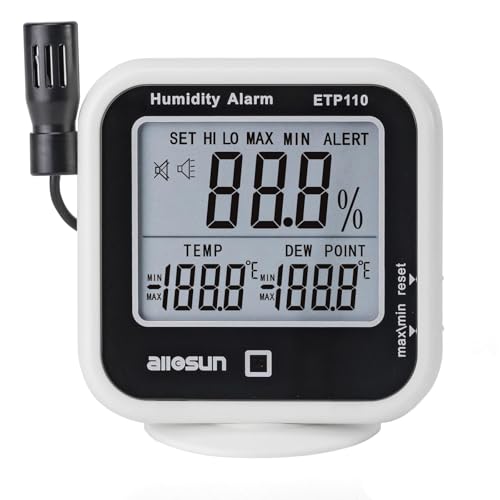
ALLOSUN Digital Thermometer Hygrometer Indoor Humidity Greenhouse Temperature Monitor Alarm Long Probe Gauge Dew-Point Meter with LCD Display
- Display Functions: Temperature, humidity, dew point display
- User-Friendly Operation: Easy to operate in various settings
- Humidity Alarm: Adjustable humidity alarm with LED indicator
As an affiliate, we earn on qualifying purchases.
As an affiliate, we earn on qualifying purchases.
Frequently Asked Questions
How Do Dew Point and Humidity Affect Comfort Levels Indoors?
Dew point and humidity directly impact your indoor comfort. When the dew point is high, the air feels muggy and sticky, making it uncomfortable. Keeping humidity control in check helps prevent this discomfort by maintaining ideal indoor humidity levels, usually between 30-50%. Lower dew points mean less moisture, making the air feel cooler and more comfortable. Monitoring both helps you create a more pleasant indoor environment.
Can Dew Point Indicate Potential for Mold Growth?
Think of dew point as a warning sign for mold risk, like a dark cloud on the horizon. When the dew point is high indoors, it indicates moisture levels that can foster mold growth, impacting your indoor air quality. Keeping an eye on dew point helps you spot potential issues early, so you can take action to reduce humidity and protect your home from mold and poor air quality.
Which Measurement Is More Important for Outdoor Weather Predictions?
You should prioritize dew point accuracy when predicting outdoor weather since it offers a clearer picture of moisture in the air, especially with reliable humidity sensors. Dew point directly influences comfort and fog formation, making it more practical for forecasts. While relative humidity is useful, dew point provides a more consistent measure of moisture levels, helping you prepare better for weather conditions like rain, fog, or humidity-related discomfort.
How Do Temperature Changes Influence Dew Point and Humidity?
Temperature changes cause dew point fluctuations, directly impacting humidity stability. When temperatures drop, the dew point stays steady, but relative humidity rises, making the air feel wetter. Conversely, rising temperatures lower relative humidity, even if the dew point remains unchanged. You’ll notice humidity shifts as temperature fluctuates, affecting comfort and weather conditions. By understanding these dynamics, you can better anticipate how humidity levels will change with temperature variations.
Are Dew Point and Relative Humidity Measurement Techniques Different?
Dew point and relative humidity measurement techniques do differ, but both rely on precise calibration methods to guarantee accuracy. You use a hygrometer for relative humidity, which measures moisture in the air, while dew point is often determined with chilled mirror hygrometers or specialized sensors. By understanding and regularly calibrating these instruments, you can confidently track atmospheric conditions, appreciating each method’s subtle nuances for better climate insights.

HT607 Temperature Humidity Meter – Large LCD Backlight with Cover Protector
- High-Precision Digital Hygrometer: Accurate temperature and humidity readings
- Multiple Measurement Modes: Ambient, humidity, dew point, wet bulb
- Comprehensive Functions: Data hold, unit conversion, backlight, auto shutdown
As an affiliate, we earn on qualifying purchases.
As an affiliate, we earn on qualifying purchases.
Conclusion
Ultimately, understanding dew point and relative humidity is like reading a map in a foggy landscape—you need both to see clearly. Dew point acts as the lighthouse guiding you through moisture’s true depth, while relative humidity is the shifting shadow that hints at unseen changes. By paying attention to the dew point, you hold the key to clarity amid the haze, steering through weather’s subtle signals with confidence. In this dance, one number reveals the hidden story behind the air around you.

AcuRite Humidity Meter Hygrometer and Indoor Thermometer, Hygrometer
- Color and Design: White humidity and temperature monitor
- Ideal Usage Areas: Living room, nursery, kitchen, greenhouse, wine cellar
- Measurement Accuracy: High accuracy for humidity and temperature
As an affiliate, we earn on qualifying purchases.
As an affiliate, we earn on qualifying purchases.
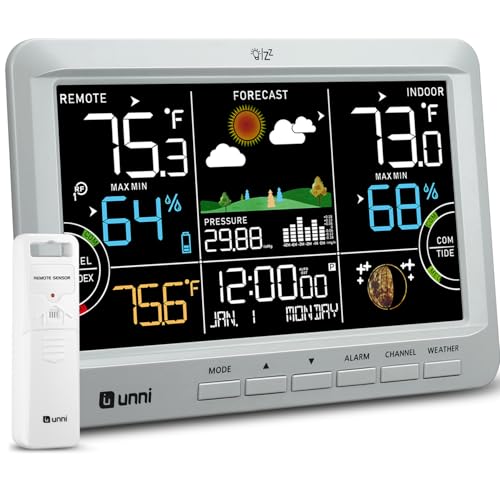
Weather Station Indoor Outdoor Thermometer Wireless, Home Atomic Clock with Large Constant Display, Inside Outside Temperature Humidity Monitor, Dew Heat Point, Barometer Grey
- Real-Time Weather Forecasts: Indoor and outdoor temperature and humidity readings
- Comprehensive Display: Includes dew point, heat index, barometer, tide, moon phase
- Large Adjustable Brightness Screen: Easy-to-read display from across the room
As an affiliate, we earn on qualifying purchases.
As an affiliate, we earn on qualifying purchases.