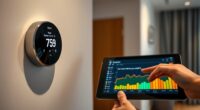
Smart thermostats offer you convenience through learning routines, remote control, and voice integration. They optimize energy use, helping you save on utility bills by adjusting heating and cooling based on your habits. While they cost more upfront, you gain better temperature control and flexibility. Traditional thermostats are simpler and cheaper but lack automation and efficiency features. To discover how upgrading can benefit your home and finances, explore the full comparison below.

Get cleaning gear delivered free — and shop member deals
- Fast, free delivery on millions of items
- Access to Prime Big Deal Days deals on October 6–7
- Prime Video, Amazon Music and more included
Key Takeaways
- Smart thermostats offer automated scheduling and remote control, enhancing convenience over manual traditional models.
- They optimize energy use, leading to potential savings, unlike traditional thermostats with fixed settings.
- Smart thermostats are more user-friendly with features like voice control, whereas traditional ones lack advanced interfaces.
- The higher initial cost of smart thermostats is offset by long-term energy savings and better climate management.
- Traditional thermostats are simpler and cheaper but less adaptable and efficient in managing home comfort.
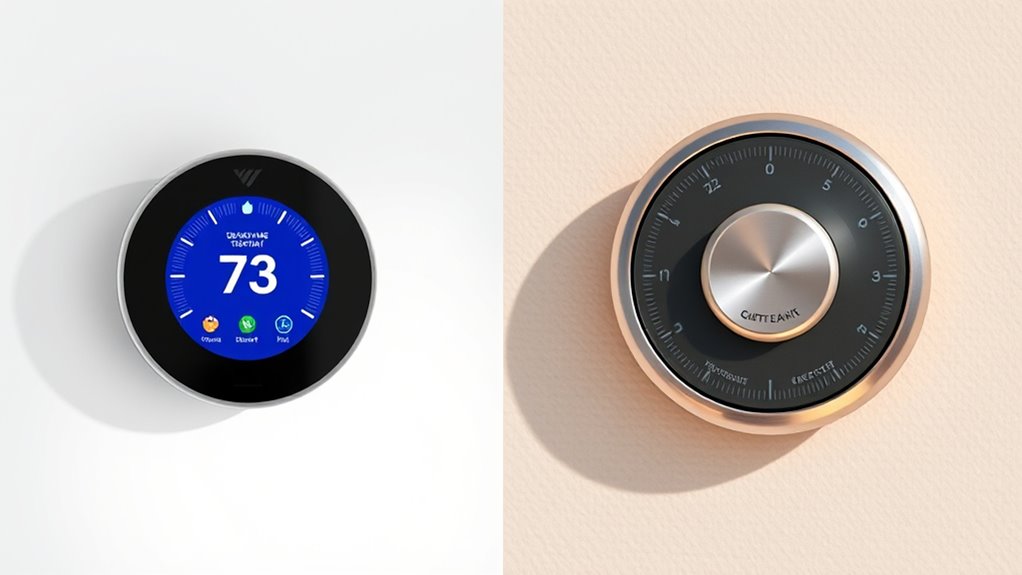
Smart thermostats are transforming how you manage home climate control by offering advanced features that traditional models simply can’t match. They provide a level of user convenience that makes adjusting your home’s temperature more intuitive and effortless. With smart thermostats, you don’t have to manually turn a dial or set a schedule on a limited interface. Instead, they learn your routines, adapt to your habits, and allow you to control your home’s climate remotely via smartphone apps. This means you can adjust the temperature from anywhere, whether you’re at work, on vacation, or just relaxing on the couch. The convenience factor is a major advantage, especially when compared to traditional thermostats that require manual adjustments or fixed schedules.
Smart thermostats learn your routines and let you control home climate remotely for ultimate convenience.
Energy savings are another essential benefit of smart thermostats. These devices optimize heating and cooling cycles based on your habits and preferences, preventing unnecessary energy use. For instance, they can lower the temperature when you’re away or asleep and raise it when you’re back or awake, ensuring your home isn’t wasting energy when nobody’s around. Over time, these efficiencies can lead to significant reductions in your utility bills. Some models even come with energy reports or tips that help you understand your consumption patterns and identify ways to save more. In addition, understanding how spoilage signs like off-smell or discoloration can impact food safety highlights the importance of proper device maintenance and calibration for optimal performance. Traditional thermostats often rely on fixed schedules or manual adjustments, which can lead to wasted energy if you forget to turn off the heat or AC when leaving home or during night hours.
The ease of use that smart thermostats offer also means you’re more likely to maintain consistent comfort levels. You can easily set your preferred temperature, and the device will automatically manage the climate to match your lifestyle. Many models include features like voice control, integration with smart home systems, and customizable schedules, all of which add to the user convenience. Traditional thermostats, on the other hand, tend to be less flexible and require more effort to tweak. They might also lack the intelligence to adapt to your changing routines, resulting in either discomfort or unnecessary energy consumption.
While smart thermostats come with a higher upfront cost, their long-term savings and convenience often outweigh the initial investment. They empower you to take control of your home’s energy use more efficiently, making them an appealing upgrade for many homeowners. In comparison, traditional thermostats are simpler and less expensive upfront but can be less effective at managing energy and maintaining consistent comfort. Ultimately, if you’re looking for a smarter, more efficient way to control your home’s climate, investing in a smart thermostat offers clear advantages over traditional models.
smart thermostat with voice control
As an affiliate, we earn on qualifying purchases.
As an affiliate, we earn on qualifying purchases.
Frequently Asked Questions
Can Smart Thermostats Reduce Overall Energy Bills More Than Traditional Ones?
Yes, smart thermostats can reduce your overall energy bills more than traditional ones. They optimize energy savings by learning your schedule and adjusting temperatures accordingly, making them more cost-effective over time. Plus, you can control them remotely, ensuring you’re not wasting energy when you’re away. This targeted efficiency helps you save money and reduces energy waste, making smart thermostats a smart choice for cost-effective home heating and cooling.
What Are the Common Compatibility Issues With Smart Thermostats?
You might face compatibility issues with smart thermostats, especially if your Wi-Fi connectivity is weak or unstable. Additionally, verify your thermostat is compatible with your HVAC system; some models work only with specific systems like central air or heat pumps. Check the manufacturer’s guidelines to avoid installation problems. Upgrading your Wi-Fi or choosing a thermostat compatible with your HVAC can help prevent these common issues.
How Secure Are Smart Thermostats Against Hacking and Data Breaches?
Imagine hackers exploit a smart thermostat’s cybersecurity vulnerabilities, gaining control of your home’s climate. While manufacturers implement encryption and regular updates, data privacy concerns remain. Smart thermostats are generally secure if you use strong passwords and keep firmware current, but vulnerabilities still exist. Staying vigilant helps protect your device from hacking attempts and safeguards your personal information from potential breaches.
Do Smart Thermostats Require Professional Installation or Can I Do It Myself?
You can definitely do DIY installation of smart thermostats if you’re comfortable with basic wiring and follow the manufacturer’s instructions. However, for complex setups or if you’re unsure about electrical work, it’s better to seek professional assistance. This guarantees your smart thermostat is installed safely and correctly, preventing potential issues. Ultimately, assess your skill level and comfort before deciding whether to tackle the project yourself or hire a professional.
How Long Do Smart Thermostats Typically Last Compared to Traditional Models?
Think of your smart thermostat as a sleek, modern device that might outlast traditional models, but it often requires more frequent replacement due to rapid tech advancements. Typically, smart thermostats last around 8-12 years, while traditional thermostats can last 15-20 years. Device durability varies based on usage and brand, but smart models may need replacement sooner, affecting your long-term savings and peace of mind.
As an affiliate, we earn on qualifying purchases.
Conclusion
So, whether you prefer the charm of a traditional thermostat or the high-tech allure of a smart one, remember it’s all about your comfort… and your budget’s patience. Sure, smart thermostats might save you a few bucks in the long run, but if you enjoy fiddling with dials and wondering if your heater’s on or off, stick with the classics. After all, who needs convenience when you can have nostalgia — and occasional confusion?
programmable traditional thermostat
As an affiliate, we earn on qualifying purchases.
As an affiliate, we earn on qualifying purchases.
As an affiliate, we earn on qualifying purchases.
Fall Picks
fall essentials
As an affiliate, we earn on qualifying purchases.