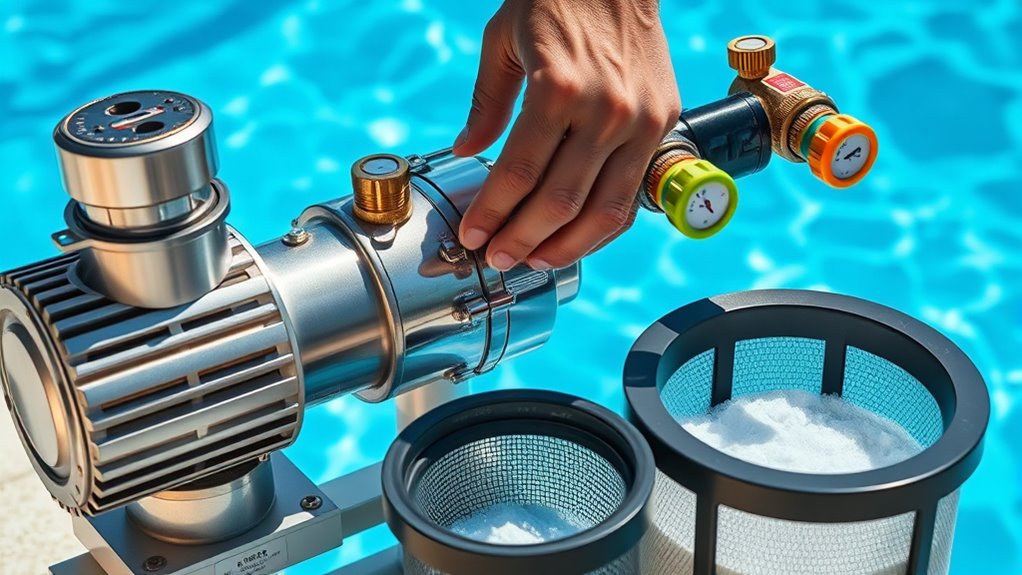

To keep your pool running smoothly, regularly check your pumps, filters, and skimmers. Make certain the pump isn’t making unusual noises and clean the pump basket often to prevent debris buildup. Backwash or clean filters as recommended to keep water clear and reduce strain on the system. Empty skimmer baskets frequently to maintain proper flow and avoid clogging. Staying on top of these tasks helps prolong equipment life and ensures a safe, sparkling pool—learn more about each step to master maintenance.

Get cleaning gear delivered free — and shop member deals
- Fast, free delivery on millions of items
- Access to Prime Big Deal Days deals on October 6–7
- Prime Video, Amazon Music and more included
Key Takeaways
- Regularly inspect and clean pumps, filters, and skimmers to prevent debris buildup and ensure efficient circulation.
- Check for leaks, unusual noises, or vibrations to identify wear or malfunction early.
- Maintain proper chemical balance to protect equipment from corrosion and scale formation.
- Backwash or clean filters as recommended to avoid clogging and reduce strain on the pump.
- Empty skimmer baskets frequently to maintain proper debris removal and water flow.
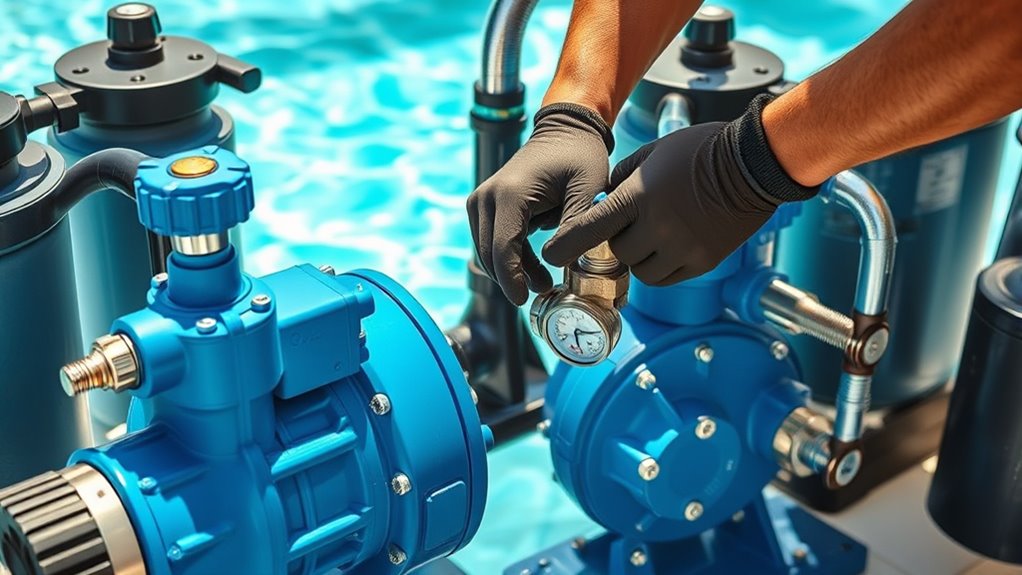
Regular pool equipment checks are essential to guarantee your swimming pool remains safe, efficient, and ready for use. One of the most important aspects of these checks is maintaining proper chemical balance. When the chemicals in your pool are correctly balanced, you prevent the growth of algae, bacteria, and other contaminants that can pose health risks. Proper chemical levels also help protect your equipment from corrosion or buildup, which can shorten its lifespan. For instance, imbalanced pH or chlorine levels can lead to scale formation or corrosion inside pumps, filters, and skimmers, making them work harder and wear out faster. By routinely testing and adjusting your pool’s chemical levels, you not only keep the water safe but also extend the longevity of your equipment.
Maintaining proper chemical balance ensures pool safety and extends equipment lifespan.
When inspecting your pool’s equipment, pay close attention to your pump, filter, and skimmer. Your pump is the heart of your pool system, circulating water to keep it clean and properly chlorinated. Regularly check the pump for leaks, unusual noises, or vibrations, which could indicate worn-out seals or bearings. Cleaning the pump basket and ensuring it’s free of debris prevents clogging and reduces strain on the motor, helping the equipment last longer. The filter plays a critical role in trapping dirt and debris, maintaining water clarity. Backwashing or cleaning your filter as recommended by the manufacturer prevents it from becoming clogged, which can cause your pump to work harder and potentially damage it over time. Additionally, filter technology influences how effectively your pool stays clean and clear.
Your skimmer is responsible for removing floating debris from the pool surface, preventing it from sinking and clogging your filtration system. Regularly empty the skimmer basket and check for any blockages or damage. A clean, well-functioning skimmer ensures proper water flow and reduces strain on your entire circulation system. If you notice persistent issues like reduced flow or cloudy water, it might indicate a problem with one of these components or a need for professional inspection.
Consistent checks and maintenance of your pool equipment not only keep your pool running smoothly but also save you money in the long run. By making sure your equipment is functioning correctly, you reduce the chances of costly repairs or replacements due to neglect. Additionally, maintaining proper chemical balance and equipment condition creates a safer swimming environment, giving you peace of mind whenever you jump in. Ultimately, investing time in regular equipment checks is a smart way to enjoy a clean, safe, and well-maintained pool throughout the season.
As an affiliate, we earn on qualifying purchases.
Frequently Asked Questions
How Often Should I Replace My Pool Pump?
You should replace your pool pump every 8 to 10 years to guarantee peak performance. Regular pool maintenance extends the equipment lifespan, but wear and tear over time can cause efficiency drops. Keep an eye out for strange noises, leaks, or reduced water flow, which indicate it might be time for a replacement. Staying proactive helps prevent costly repairs and keeps your pool running smoothly all season long.
What Are Signs of a Failing Pool Filter?
You might think your pool filter is fine until you notice cloudy water or a drop in circulation, which are clear signs of filter failure. These signs often indicate the filter is nearing the end of its lifespan. Keep an eye out for persistent algae, increased pressure, or debris buildup, as these are common indicators of a failing filter. Regularly checking these signs helps you catch problems early and extend your filter’s lifespan.
How Do I Troubleshoot Skimmer Blockages?
To troubleshoot skimmer blockages, start by turning off the pump. Remove the skimmer basket and check for debris buildup. Clear out leaves, twigs, and other debris that could restrict water flow. Inspect the skimmer opening for obstructions and clean if necessary. Regular debris removal from the basket guarantees proper circulation and prevents blockages, keeping your pool equipment functioning smoothly.
Can I Upgrade My Pool Equipment Myself?
Yes, you can handle some DIY upgrades, but for major equipment like pumps or filters, professional installation is recommended. If you have basic skills and follow instructions carefully, upgrading your pool equipment yourself can save money. However, make sure you understand the manufacturer’s guidelines and safety precautions. When in doubt, consulting a professional ensures proper installation, peak performance, and avoids potential damage or safety hazards.
What Safety Precautions Are Needed During Maintenance?
When maintaining your pool equipment, prioritize pool safety by disconnecting power before starting. Wear protective gear like gloves, goggles, and sturdy footwear to prevent injuries from chemicals or moving parts. Keep the area clear of debris, and work in well-lit conditions. Never bypass safety features, and follow manufacturer instructions carefully. By taking these precautions, you guarantee a safer maintenance process for yourself and your pool.
automatic pool filter backwash valve
As an affiliate, we earn on qualifying purchases.
As an affiliate, we earn on qualifying purchases.
Conclusion
As you finish checking your pool equipment, you might notice a gentle breeze stirring the water’s surface, just as your pump hums smoothly in the background. Coincidentally, a nearby bird settles on the skimmer, reminding you that regular maintenance keeps everything running seamlessly. Proper care isn’t just about equipment—it’s about creating a peaceful oasis. Keep up with your checks, and your backyard paradise will stay inviting, reflecting your dedication and the quiet harmony of a well-maintained pool.
As an affiliate, we earn on qualifying purchases.
As an affiliate, we earn on qualifying purchases.
Fall Picks
fall essentials
As an affiliate, we earn on qualifying purchases.