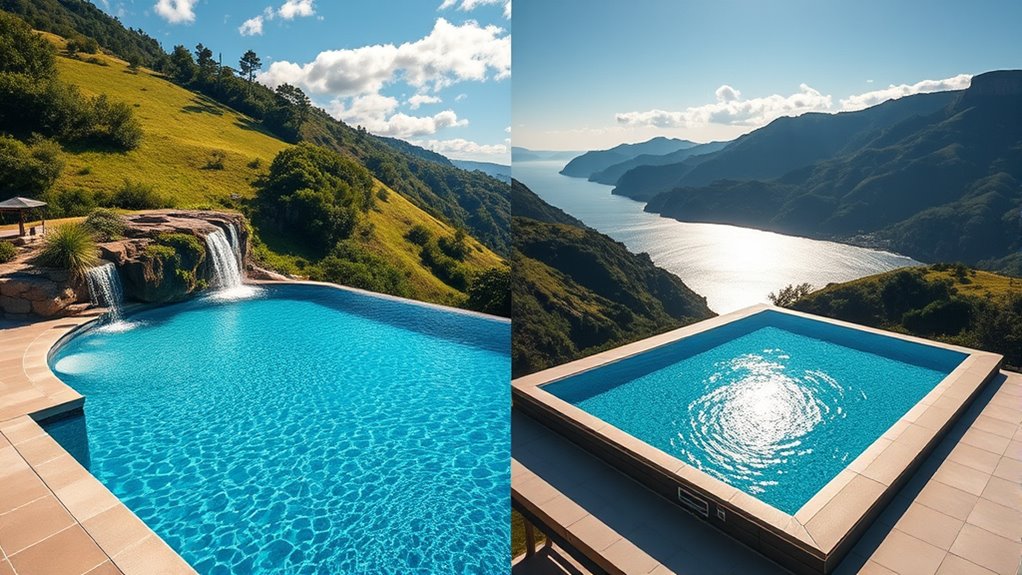

Building an infinity pool on a sloped ground offers a stunning, natural look with multi-level and waterfall features, but it requires complex planning, retaining walls, and higher costs. Flat terrain makes construction simpler, faster, and more budget-friendly, allowing easier customization and integration with decks or lighting. However, it may limit some dramatic design options. Understanding the pros and cons of each can help you choose the best site—keep exploring to learn more about making your pool dreams come true.
Key Takeaways
- Sloped sites offer dramatic views and multi-level waterfall features, enhancing aesthetic appeal, but require complex design and higher costs.
- Flat ground simplifies construction, reduces costs, and speeds up the project, though it limits multi-level and natural landscape integration.
- Building on slopes involves advanced engineering, retaining walls, and longer timelines, increasing overall project complexity.
- Flat terrains facilitate easier foundation work and quicker completion, making them more cost-effective despite potential landscaping expenses.
- The choice of terrain impacts design flexibility, with slopes enabling creative waterfalls and cascades, while flat land offers straightforward customization options.
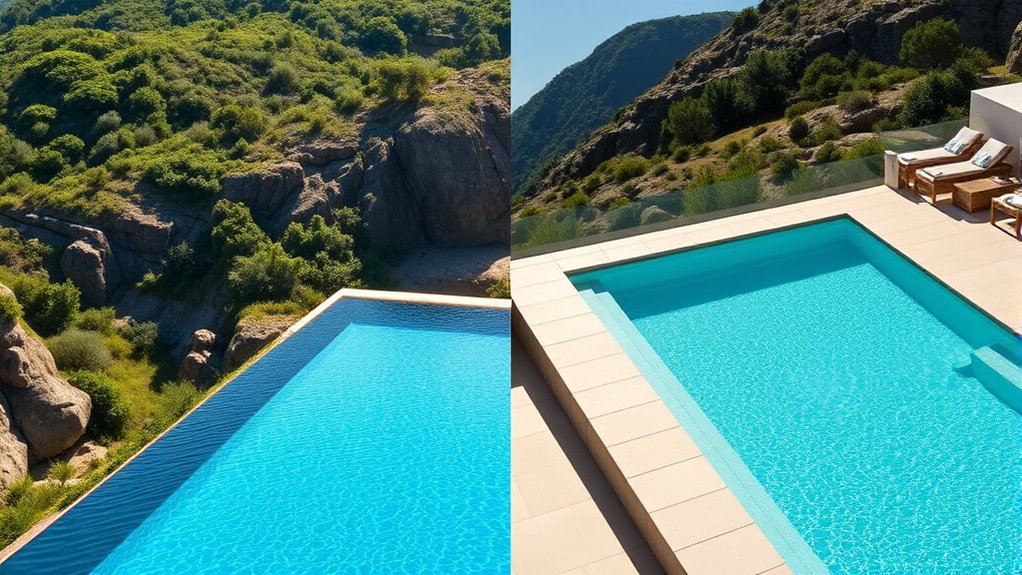
Building an infinity pool can transform your outdoor space, but choosing the right location—whether on sloped or flat ground—significantly impacts the design, construction process, and overall costs. When planning your pool, understanding how the terrain influences the pool design is essential. Sloped ground offers a stunning natural backdrop, creating a dramatic visual effect that blends seamlessly with the landscape. However, this advantage comes with unique construction challenges. Designing an infinity pool on a slope requires meticulous planning to guarantee stability and proper water overflow management. You’ll need to incorporate retaining walls or stepped designs to accommodate the terrain, which can complicate the construction process. These adjustments often lead to increased costs and extended timelines, as more specialized labor and materials are necessary to address the challenges of working on uneven ground.
Choosing a sloped site creates stunning visuals but adds construction complexity and cost.
In contrast, building on flat land simplifies many aspects of the project. The pool design becomes more straightforward because the foundation is easier to level and stabilize. Construction challenges are minimized, allowing for quicker execution and potentially lower costs. You can choose from a broader range of infinity pool styles and customize features without the constraints imposed by uneven terrain. Flat ground also makes it easier to integrate additional features like decks, lighting, or landscaping, enhancing the overall aesthetic and functionality of your outdoor space.
However, flat terrain isn’t always without its drawbacks. Depending on your location, you might need to invest in landscaping or grading to create a suitable level area, which adds to the initial expense. Additionally, if you’re seeking a more natural or dramatic setting, flat ground might lack the visual impact you desire compared to a sloped site with a view. From a design perspective, working with a slope allows for more creative pool layouts, such as multi-level designs or cascading waterfalls, but these come with increased complexity and cost.
Ultimately, your choice depends on your priorities and budget. A sloped site offers a striking, natural aesthetic but demands careful planning to overcome construction challenges. A flat site simplifies the process and reduces costs but might limit some design options. Whichever you choose, understanding the implications for pool design and construction challenges will help you create a stunning infinity pool that complements your landscape and meets your expectations.

USANOOKS Microfiber Cleaning Cloth Grey - 12 Pcs (12.5"x12.5") - High Performance - 1200 Washes, Ultra Absorbent Microfiber Towel Weave Grime & Liquid for Streak-Free Mirror Shine - Car Washing Cloth
- High Absorbency Microfiber Weave: Locks in 8-10x weight in liquids
- Durable 2.5mm Thickness: Resists lint, scratches, and shedding
- Long-Lasting Reusability: Over 1200 washes for extended use
As an affiliate, we earn on qualifying purchases.
Frequently Asked Questions
How Does Soil Stability Affect Infinity Pool Construction?
Soil stability greatly affects your infinity pool construction, as unstable soil can cause shifting or collapse. You need to address potential soil erosion by implementing proper drainage solutions to prevent water buildup that weakens the ground. Stable soil guarantees your pool’s foundation remains solid, reducing future maintenance and safety risks. If the soil isn’t stable, consider soil reinforcement or excavation to create a secure, lasting base for your luxurious infinity pool.
What Are the Long-Term Maintenance Costs for Sloped Versus Flat Sites?
Your long-term maintenance costs are higher on sloped sites because of increased construction complexity and ongoing landscaping integration. The uneven terrain demands more frequent repairs, erosion control, and specialized landscaping, which add up over time. Conversely, flat sites generally entail lower maintenance costs due to simpler construction and easier landscaping integration. While initial expenses may differ, expect ongoing costs to reflect the terrain’s influence on durability and upkeep efforts.
Can an Infinity Pool Be Integrated With Existing Landscape Features?
Yes, you can integrate an infinity pool with your existing landscape features to enhance its aesthetic appeal. By carefully planning landscape integration, you can create a seamless connection between the pool and your surroundings, making it look like a natural extension. This approach not only boosts aesthetic enhancement but also adds value to your outdoor space. Working with a professional ensures the design complements your landscape and meets your personal style.
Are There Specific Permits Required for Pools on Slopes?
Think of your sloped backyard as a canvas with hidden rules. You’ll need to navigate permitting requirements and slope restrictions, which act like the artist’s guidelines. Specific permits are often required for pools on slopes to ensure safety and stability. You must check local regulations because they vary, but generally, permits cover structural integrity and erosion control. Overlooking these can lead to costly setbacks, so plan ahead to keep your dream pool flowing smoothly.
How Does Climate Influence the Choice Between Sloped and Flat Ground Pools?
Climate plays a big role in choosing between sloped and flat ground pools. If you face seasonal variations or harsh weather, a flat ground pool offers better climate adaptability, making maintenance easier and reducing risk of damage. Sloped ground pools might be more suitable in stable climates, but they need extra reinforcement. Consider your local weather patterns to guarantee your infinity pool withstands seasonal changes and stays beautiful year-round.

Amazon Basics Microfiber Cleaning Cloths, Ultra Absorbent, Lint Free, Streak Free, Non-Abrasive, Reusable and Washable, 16" x 12", Blue/White/Yellow, Pack of 24
- Size: 16 x 12 inches
- Quantity: 24-pack
- Material: Microfiber
As an affiliate, we earn on qualifying purchases.
Conclusion
Choosing between sloped and flat ground for your infinity pool depends on your preferences and site conditions. Notably, properties with sloped terrains can increase construction costs by up to 25%, but they often offer unique scenic views that flat sites can’t match. Consider your budget, desired aesthetics, and landscape when making your decision. Either way, building on sloped or flat ground can create a stunning infinity pool—just weigh the pros and cons to find your perfect fit.

HOMEXCEL Red Shop Towels 100 Pack, Reusable Microfiber Cleaning Cloth Bulk, Multipurpose Microfiber Towels for Cars, House and Kitchen, Highly Absorbent Cleaning Rags 11.5 x 11.5 inch
- Cleaning Power: Strong absorption and stain removal
- Lint-Free & Scratch-Free: Safe on glass and stainless steel
- Quick-Dry Technology: Dries rapidly for reuse
As an affiliate, we earn on qualifying purchases.

AIDEA White Microfiber Cleaning Cloth 100PK, Reusable Cleaning Rags 12"x12"
- Package Quantity: 20 packs, 20 cloths each
- High Absorbency: Quickly wicks away water and liquids
- Soft & Lint-Free: Scratch-free cleaning on various surfaces
As an affiliate, we earn on qualifying purchases.