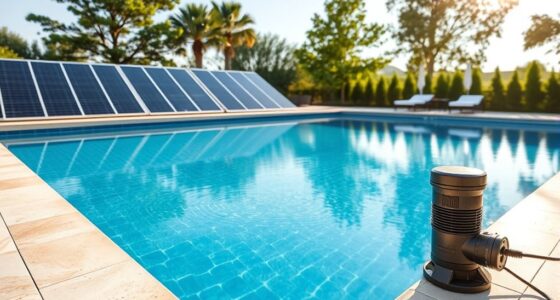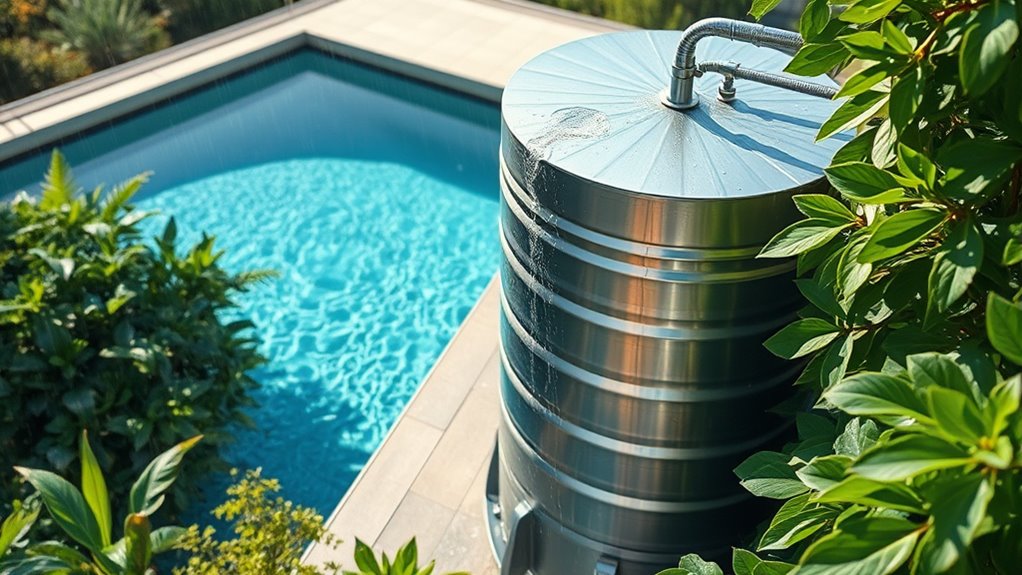

Using rainwater for your pool offers an eco-friendly, cost-effective way to manage water sustainably. By capturing and filtering rainwater, you reduce reliance on municipal supplies and lower utility bills. Proper systems with gutters, first-flush diverters, and multi-stage filters guarantee the water is safe and clean. Regular maintenance and testing maintain water quality, making this approach both practical and environmentally responsible. Keep exploring to learn how to optimize your rainwater harvesting setup effectively.

Get cleaning gear delivered free — and shop member deals
- Fast, free delivery on millions of items
- Access to Prime Big Deal Days deals on October 6–7
- Prime Video, Amazon Music and more included
Key Takeaways
- Rainwater harvesting provides an eco-friendly, cost-effective water source for pools, reducing dependence on municipal supplies.
- Proper filtration systems ensure rainwater is clean, safe, and suitable for pool use.
- Collection components like gutters, first-flush diverters, and storage tanks optimize water quality and system efficiency.
- Regular testing and maintenance prevent contamination, ensuring continuous safe pool water.
- Using harvested rainwater promotes sustainable water management and reduces environmental impact.
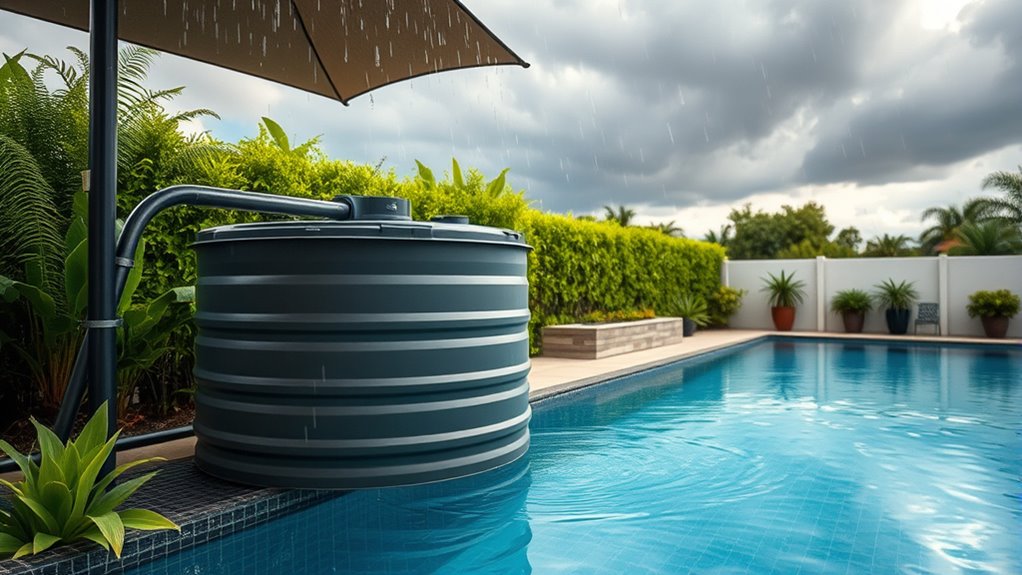
Have you ever considered using rainwater to fill your pool? It might seem unconventional at first, but harvesting rainwater offers a sustainable way to manage water use and cut down on your utility bills. One of the main concerns when switching to rainwater is guaranteeing good pool water quality. Rainwater, if collected properly, can be just as clean and safe as tap water, but it requires careful management. The key is effective rainwater filtration. Installing a high-quality filtration system ensures that debris, leaves, dirt, and other contaminants don’t end up in your pool. This filtration process can be tailored to remove particles and pathogens, helping you maintain crystal-clear water without relying heavily on chemical treatments.
Using rainwater for your pool is eco-friendly, cost-effective, and requires effective filtration for safe, clean water.
When you set up your rainwater harvesting system, it’s essential to focus on the collection surface, gutters, and the storage tank. Use gutters with screens or first-flush diverters that divert the initial runoff, which often contains the most pollutants, away from your storage. This step substantially improves your pool water quality by reducing the amount of contaminants that enter the tank. The rainwater then flows through a series of filters – from coarse mesh screens to finer filtration units – before reaching your storage tank. This multi-stage filtration system guarantees cleaner water, making it suitable for your pool.
Choosing the right storage tank is equally important. Opt for tanks made of non-toxic, durable materials that won’t leach chemicals into the water. Regularly cleaning and maintaining your filtration system and tank will assure the rainwater stays as pure as possible. It’s also wise to test the water periodically for bacteria, algae, or other pollutants, especially if you plan to use it frequently. Incorporating UV sterilization or chemical treatment options can further enhance the safety and quality of the harvested rainwater, giving you peace of mind and reducing your dependence on traditional water sources. Additionally, selecting a filtration system compatible with whole-house water filtration systems can improve your overall water management.
Using rainwater for your pool isn’t just about sustainability; it’s about taking control of your water resources. With proper rainwater filtration and careful system maintenance, you can enjoy clean, fresh pool water while minimizing environmental impact. This approach not only conserves valuable municipal supplies but also encourages eco-friendly practices in your daily routine. Plus, as rainwater is free once your system is set up, you’ll notice a reduction in your water bills over time. By investing in the right filtration equipment and following best practices for collection and storage, you’re making a smart choice for your pool and the environment alike.
Frequently Asked Questions
What Are the Legal Regulations for Rainwater Harvesting in My Area?
You need to check your local regulations for rainwater harvesting, as legal compliance *guarantee* varies by region. Some areas encourage it, while others have regional restrictions or require permits. Contact your city or county authorities to understand specific rules and *verify* you’re following all legal requirements. Staying informed helps you avoid fines and makes sure your rainwater harvesting system aligns with regional guidelines.
How Much Does a Rainwater Harvesting System for Pools Typically Cost?
A rainwater harvesting system for pools typically costs between $2,000 and $10,000, depending on size, complexity, and materials used. For accurate budget planning, consider a detailed cost estimation that includes components like collection surfaces, storage tanks, and filtration systems. Keep in mind that investing in quality parts can save money long-term by reducing maintenance and ensuring reliable water supply. Tailor your plan to fit your pool size and local rainfall patterns.
Can Rainwater Harvesting Systems Be Integrated With Existing Pool Infrastructure?
Yes, you can integrate rainwater harvesting systems with your existing pool infrastructure. You’ll need to connect the system to your pool’s water line, incorporating rainwater filtration to guarantee clean water. This setup supports pool water recycling, reducing reliance on municipal water sources. Properly integrating these systems helps maintain water quality and promotes sustainable water management, making your pool eco-friendly while saving you money on water bills.
What Maintenance Is Required for Rainwater Harvesting Systems in Pools?
While rainwater harvesting systems for pools seem low-maintenance, neglect can cause bigger problems. You need to regularly check and clean filters to prevent debris buildup, ensuring water stays clear. Tank cleaning is equally important; sediment and algae can accumulate over time, affecting water quality. By staying proactive with filter maintenance and tank cleaning, you keep your system efficient, prolong its lifespan, and enjoy sustainable, eco-friendly pool water.
How Does Rainwater Harvesting Impact Pool Water Chemistry and Treatment?
Rainwater harvesting can affect your pool’s water chemistry by lowering the water pH and increasing mineral content, especially if the collected rainwater contains minerals or pollutants. You’ll need to monitor your pool’s water regularly, adjusting pH levels and testing mineral content to maintain proper balance. Proper filtration and treatment help prevent issues like scaling or corrosion, ensuring your pool stays clean and safe for swimming.
Conclusion
By harnessing rainwater for your pool, you’re making a smart, eco-friendly choice that reduces your water bills and environmental impact. Imagine a future where your backyard oasis is fueled by nature’s own gift, conserving precious resources for generations to come. Isn’t it time you took control of your water use and turned rain into a sustainable source? Embrace rainwater harvesting today, and watch your pool thrive while protecting our planet.
Fall Picks
fall essentials
As an affiliate, we earn on qualifying purchases.