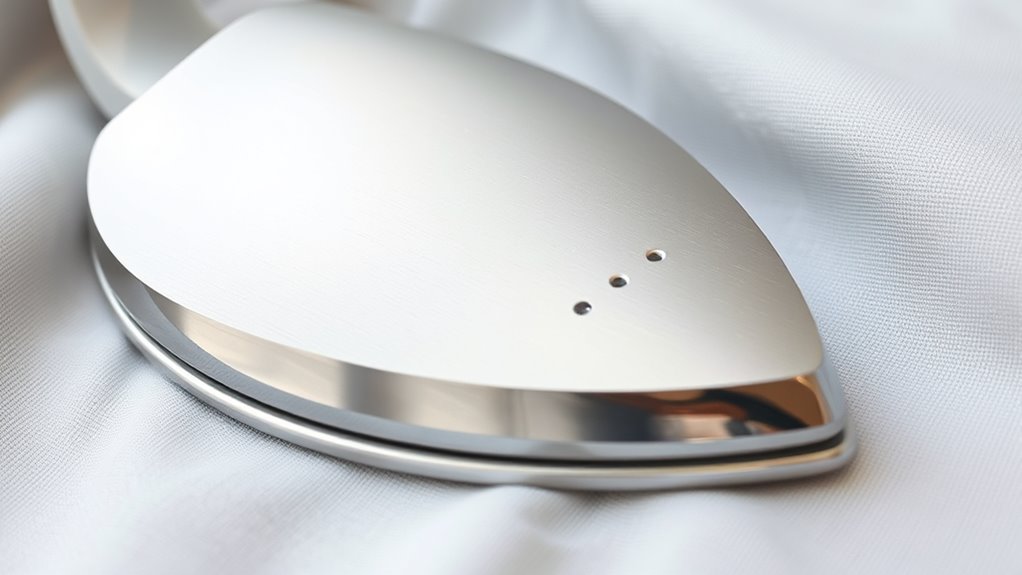

To guarantee your iron’s soleplate glides smoothly without scratches, regularly clean it using a soft cloth and mild detergent, avoiding abrasive tools that may scratch the surface. For stubborn buildup, a baking soda paste works well, and running the steam function helps loosen residues. Always unplug and cool your iron before cleaning. Proper maintenance prevents damage and keeps your clothes looking pristine—stay with us to discover more effective tips.
Key Takeaways
- Use a soft cloth or non-abrasive sponge with mild detergent for gentle cleaning.
- Apply a baking soda paste for stubborn buildup, then gently rub the soleplate surface.
- Avoid abrasive pads or metal brushes to prevent scratches on the soleplate.
- Run the steam function during cleaning to loosen residues and mineral deposits.
- Wipe the soleplate with a damp cloth and dry thoroughly before use to maintain a smooth glide.
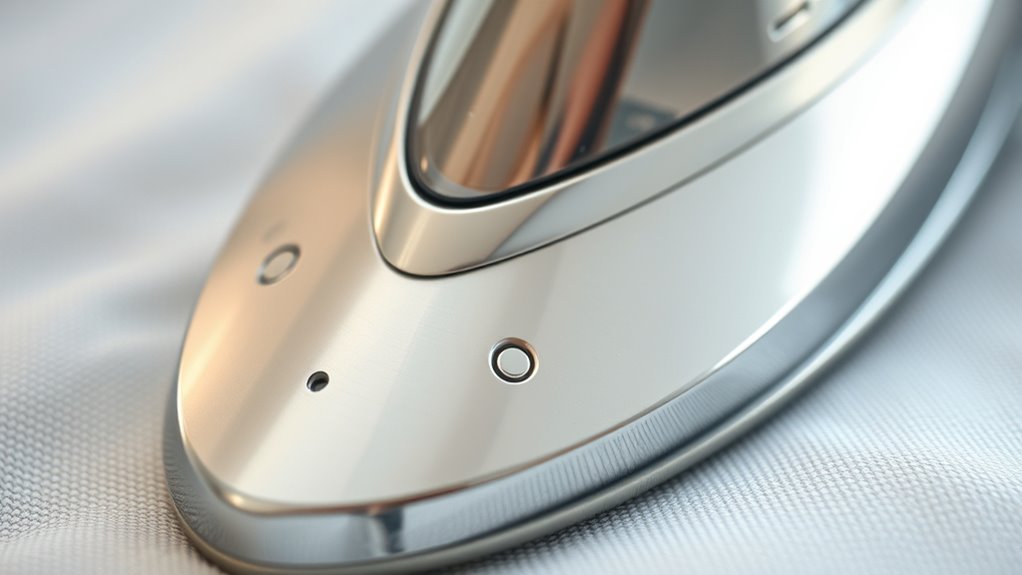
Have you ever noticed your iron leaving marks or sticking to your clothes? That’s often a sign that the soleplate needs some cleaning. Over time, mineral deposits, fabric fibers, and leftover residue build up on the soleplate, causing it to lose its smooth glide and potentially damage your garments. Regular cleaning not only restores the iron’s performance but also prolongs its lifespan. When you clean your soleplate, you’ll notice your clothes come out wrinkle-free and without unsightly shiny spots or scorch marks. Plus, a clean soleplate ensures your iron’s steam function works efficiently, helping to smooth out stubborn wrinkles with ease. Keeping the soleplate free of debris also prevents photobombs by children and pets from causing unexpected issues during ironing sessions.
A clean soleplate prevents sticking, shiny spots, and ensures smooth, efficient ironing every time.
Before you begin cleaning, check your iron’s manual to understand its fabric compatibility and any manufacturer-specific instructions. Some irons have coated soleplates or special surfaces that require gentle cleaning methods. Using abrasive tools or harsh chemicals can scratch or damage the surface, making it rough and less effective. For most models, a soft cloth, a mild detergent, and some distilled water are enough to get the job done. If mineral deposits are stubborn, a mixture of equal parts water and white vinegar can dissolve the buildup without harming the soleplate surface. Always ensure the iron is unplugged and completely cooled before starting the cleaning process.
Many modern irons come with a steam function designed to loosen fabric fibers and remove wrinkles with steam bursts. When cleaning the soleplate, it’s a good idea to run the iron with the steam function on to help loosen dirt and residues. Remember to use the appropriate fabric setting to avoid damaging delicate materials. If your iron has a self-cleaning feature, follow the manufacturer’s instructions for best results. This often involves filling the water tank, turning the iron to the highest temperature, and activating the self-clean cycle to flush out mineral deposits and debris. Regularly performing this maintenance will keep your iron running smoothly and ensure the steam function continues to produce strong, consistent steam for effective ironing.
Maintaining fabric compatibility is essential during cleaning. Avoid using abrasive pads or metal brushes that could scratch the soleplate. Instead, opt for a soft cloth or a non-abrasive sponge. For tougher stains or buildup, a paste made from baking soda and water can be gently rubbed onto the surface. After cleaning, wipe the soleplate with a damp cloth to remove any residue, then let it dry thoroughly before plugging it back in. By staying attentive to the steam function’s capabilities and respecting fabric compatibility, you’ll keep your iron in top condition. A clean, smooth soleplate not only makes ironing easier but also helps prevent fabric damage, ensuring your clothes look pristine every time.
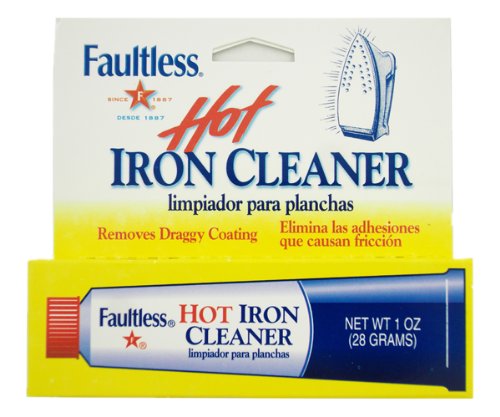
Faultless Starch 40110 Faultless Hot Iron Cleaner1oz (28 Grams)
- Cleans hot iron while in use: Cleans while the iron is hot
- Removes soleplate residues: Removes residues from soleplate
- No cooling wait required: No need to wait for cooling
As an affiliate, we earn on qualifying purchases.
As an affiliate, we earn on qualifying purchases.
Frequently Asked Questions
How Often Should I Clean My Iron Soleplate?
You should clean your iron soleplate after every few uses or whenever you notice build-up or staining. Regular iron maintenance keeps the soleplate materials in top condition, ensuring a smooth glide. For different soleplate types, like non-stick or stainless steel, follow specific cleaning tips to avoid scratches. By maintaining your iron properly, you prolong its lifespan and enjoy wrinkle-free clothes every time.
Can Vinegar Damage My Iron’s Soleplate?
Vinegar safety depends on how you use it. If you dilute vinegar properly and avoid prolonged contact, it generally won’t damage your iron’s soleplate. However, using alternative cleaners like baking soda or commercial descalers can be safer and more effective. Always check your iron’s manufacturer instructions first. By choosing the right cleaner, you make certain your soleplate stays smooth and scratch-free without risking damage.
What Is the Best Method to Remove Stubborn Stains?
Ever notice stubborn stains stubbornly cling despite your efforts? To effectively remove these, try stain removal techniques like a baking soda paste or a magic eraser. For stubborn stain solutions, heat your iron slightly, then rub a damp cloth with baking soda over the stain. Always guarantee the soleplate cools before cleaning. This approach keeps your iron smooth, scratch-free, and ready for perfect creases every time.
Are There Eco-Friendly Cleaning Alternatives?
Yes, you can use eco-friendly cleaning alternatives for your iron soleplate. Opt for biodegradable cleaners that break down naturally and are safe for the environment. Combine these with reusable cloths to wipe away residues gently. This approach guarantees your soleplate stays smooth and scratch-free while reducing your ecological footprint. Always check product labels for eco-friendly certifications, and avoid harsh chemicals to protect both your iron and the planet.
How Do I Prevent Future Scratches on the Soleplate?
You can prevent future scratches on your soleplate by practicing proper soleplate maintenance and following scratch prevention tips. Always use a damp cloth or eco-friendly cleaning alternatives to remove debris, avoiding abrasive materials. Store your iron carefully, away from sharp objects, and avoid dragging it across rough surfaces. Regularly inspecting and gently cleaning your soleplate guarantees a smooth glide, keeping it scratch-free and prolonging its lifespan.

Dansib 2 Set Iron Cleaner Kit Include 2 Hot Iron Cleaner Soleplate Pastes 2 Cleaning Cloths 2 Polishing Cloths for Cleaning Coating Residue from Soleplates
- Complete Cleaning Kit: Includes pastes, cloths, and polishing pads
- Safe, Non-Toxic Materials: Formulated without harmful chemicals, no expiration date
- Effective Residue Removal: Removes starch, fibers, and residues from soleplates
As an affiliate, we earn on qualifying purchases.
As an affiliate, we earn on qualifying purchases.
Conclusion
Now that you’ve learned how to clean your iron’s soleplate, think of it like tending a garden. Just as careful pruning keeps plants healthy and vibrant, regular cleaning keeps your iron gliding smoothly without scratches. I once missed this step and ended up with stubborn stains that marred my fabric—like a gardener neglecting weeds, it’s a small effort that prevents bigger problems. Keep your iron clean, and you’ll enjoy effortless, flawless ironing every time.

As an affiliate, we earn on qualifying purchases.

XANGNIER 8 Pcs Multipurpose Wire Dishwashing Rags,New Upgrade Non Scratch Wire Dishcloth,Steel Wool Cleaning Cloths,Multi Purpose Metal Mesh Miracle Cleaning Cloths for Kitchen,Dishes,Sink
- Reusable and Highly Absorbent: Efficient wet and dry cleaning tool
- Non-Scratch Stain Removal: Removes stubborn stains without damage
- Multi-Purpose Cleaning: Suitable for dishes, surfaces, and more
As an affiliate, we earn on qualifying purchases.
As an affiliate, we earn on qualifying purchases.