

Surge tanks and catch basins work behind the scenes to keep your infinity pool running smoothly. They manage water levels, prevent overflows, and protect your pool’s structure from pressure surges caused by weather or usage changes. Catch basins also remove debris and help filter water, ensuring everything stays clean and functional. If you notice issues like leaks or water level fluctuations, these hidden parts might need attention—there’s more to discover about their essential roles.

Get cleaning gear delivered free with Prime
- Fast, free delivery on millions of items
- Prime Video, Amazon Music and more included
- Member-only deals all year
Key Takeaways
- They manage water flow and prevent pressure surges, ensuring hydraulic stability in infinity pools.
- Located discreetly near filtration systems, they safeguard pool components from sudden water shifts.
- They collect debris and regulate water levels, maintaining water quality and preventing system clogging.
- Signs of damage include leaks, cracks, or unusual water levels, indicating the need for maintenance or repair.
- They extend system lifespan by protecting pipes and equipment from pressure-related stress and damage.
As an affiliate, we earn on qualifying purchases.
What Are Surge Tanks and Catch Basins in Infinity Pool Systems?

Surge tanks and catch basins are essential components in infinity pool systems that help manage water flow and maintain stability. They play a crucial role in ensuring hydraulic stability, preventing pressure surges that could damage equipment or cause water overflow. By absorbing sudden changes in water volume, these components help keep the system running smoothly. Surge tanks are designed to accommodate fluctuations, acting as reservoirs that balance pressure variations. Catch basins collect excess water, preventing debris from clogging the system and maintaining consistent flow. Properly integrated, surge tanks and catch basins contribute to a reliable, safe, and well-functioning infinity pool setup. Additionally, understanding the importance of pressure regulation helps in designing systems that optimize visual clarity and performance. Effective placement and sizing of these components are vital for system longevity, ensuring the pool operates efficiently over time. Incorporating system design principles that prioritize system reliability is essential for maintaining optimal performance and safety.
As an affiliate, we earn on qualifying purchases.
Where Are These Components Usually Located in Your Infinity Pool?
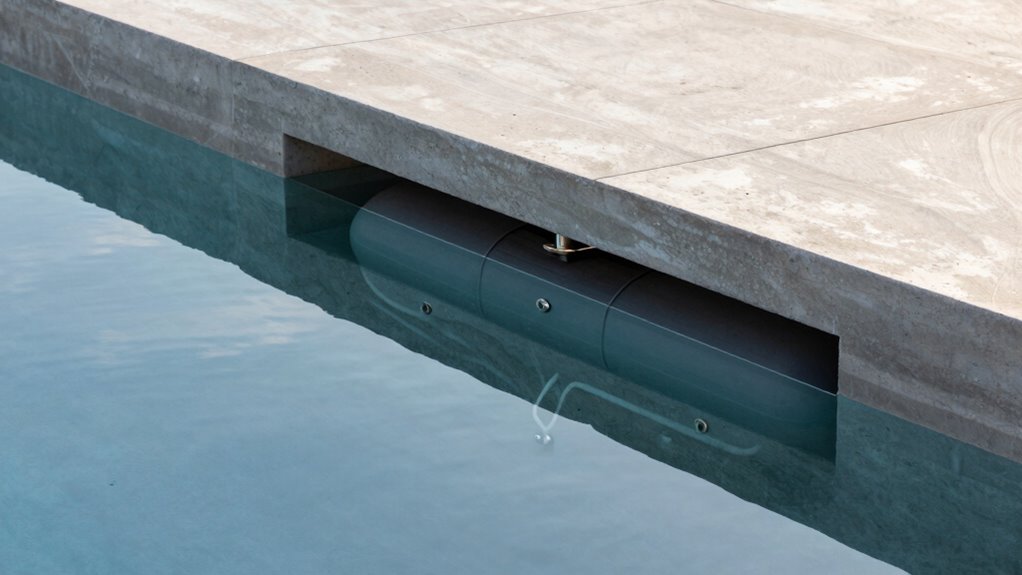
In an infinity pool system, surge tanks and catch basins are typically located near the pool’s filtration and pumping equipment, often in dedicated mechanical rooms or underground chambers. Their placement guarantees smooth water flow and easy maintenance, often hidden from view to preserve aesthetic appeal. You might find surge tanks near pool lighting controls or decorative features, blending functionality with design. Catch basins are usually positioned at low points to capture debris and prevent clogging. Proper component placement also enhances the overall system efficiency and longevity. Strategically positioning these components helps minimize noise and vibration, ensuring a serene pool environment. Correct placement of these components can also facilitate system troubleshooting and routine inspections, reducing downtime and repair costs. Additionally, thoughtful placement supports environmental considerations, contributing to a sustainable and eco-friendly pool operation.
infinity pool water level regulator
As an affiliate, we earn on qualifying purchases.
As an affiliate, we earn on qualifying purchases.
Why Are Surge Tanks and Catch Basins Essential for Maintaining Water Levels?
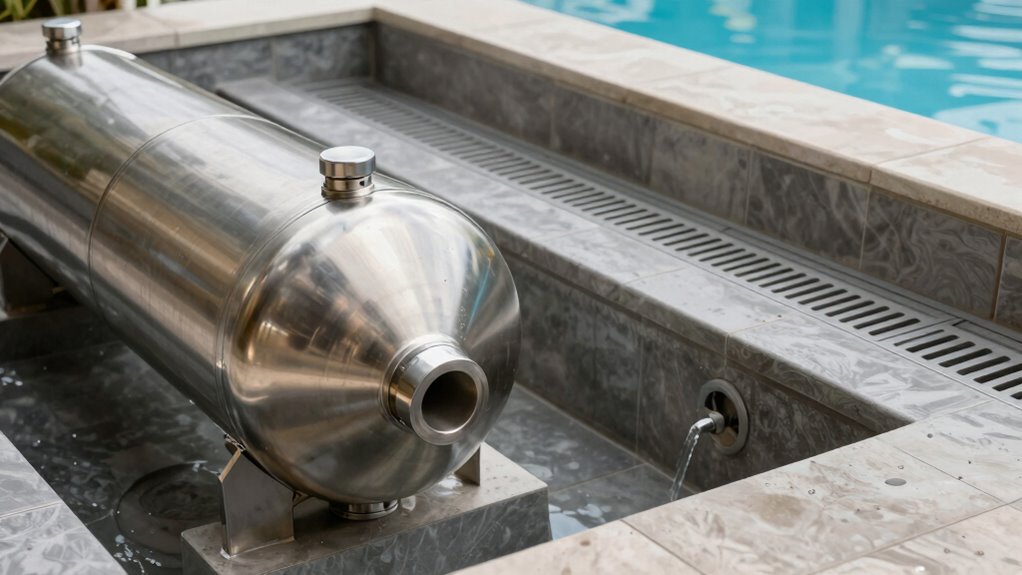
Proper placement of surge tanks and catch basins directly impacts the stability of your pool’s water levels. They help manage fluctuations caused by changes in water chemistry, weather, or usage, preventing overflow or low water issues. Surge tanks absorb sudden surges, ensuring the water remains steady, which is crucial for consistent pool lighting and aesthetic appeal. Catch basins collect debris and excess water, maintaining clear circulation and preventing damage to the pool’s structure. By maintaining ideal water levels, these components also support balanced water chemistry, reducing the need for frequent chemical adjustments. Without them, your pool could experience uneven water levels, risking equipment strain and compromised safety. Essentially, surge tanks and catch basins keep your infinity pool functioning smoothly, preserving its beauty and longevity. Incorporating aromatherapy into your pool area can also enhance relaxation and overall well-being, creating a more inviting environment. Proper water level management is essential for avoiding unnecessary wear on pool equipment and ensuring long-term durability. Additionally, understanding the importance of water stability helps in designing effective water management systems that prolong pool lifespan and improve overall water quality management.
As an affiliate, we earn on qualifying purchases.
How Do Surge Tanks Prevent Overflow and Structural Damage?

Surge tanks help prevent overflow and damage by absorbing sudden water pressure changes. They manage water fluctuations, ensuring the pool stays within safe levels. This protection keeps the pool structure intact and reduces the risk of costly repairs. Incorporating recycled materials in the construction of surge tanks can also promote eco-friendly garden and home practices.
Absorbing Water Pressure
When water flow suddenly changes, surge tanks step in to absorb the resulting pressure spikes, preventing them from damaging the system. By acting as a buffer, they regulate water pressure within the pool and piping, ensuring smooth operation. This absorption protects the structural integrity of your infinity pool, reducing stress on walls, joints, and support structures. When water moves rapidly or shifts unexpectedly, surge tanks provide a space for the excess pressure to dissipate safely. This helps prevent cracks, leaks, or even catastrophic failure. Without this pressure absorption, the force generated by sudden water movement could weaken or compromise your pool’s structure over time. Proper system design ensures surge tanks function effectively and enhances overall safety. Surge tanks therefore serve as a vital safeguard, maintaining stability and longevity by controlling water pressure fluctuations effectively.
Managing Water Fluctuations
Surge tanks actively manage water fluctuations to prevent overflows and protect your pool’s structure. During heavy rain or rapid water level changes, these tanks absorb excess water, reducing pressure on pool construction components. They help maintain stable water levels, preventing overflow that could damage surrounding areas or compromise the pool’s integrity. Proper management of water chemistry is essential, as fluctuations can cause chemical imbalances that weaken materials over time. Surge tanks act as buffers, allowing water to expand or contract without stressing the pool’s structure. By controlling these fluctuations, you ensure your infinity pool remains safe, durable, and visually stunning, even during unexpected weather events or water level shifts. Additionally, understanding water chemistry management can further enhance the longevity and safety of your pool. Incorporating advanced monitoring systems can provide real-time data and automate responses to water level changes, optimizing your pool’s performance. This proactive approach is supported by AI-driven solutions in modern pool technology, which can optimize system responses and maintenance routines. Embracing these technologies can also help mitigate potential issues caused by water fluctuation impacts, ensuring your pool remains a pristine oasis year-round. This proactive approach saves you maintenance costs and preserves your pool’s long-term stability, especially when integrated with smart automation for comprehensive pool management.
Protecting Pool Structure
Ever wonder how surge tanks protect your pool’s structure during heavy rains or sudden water level changes? They act as buffers, absorbing excess water to prevent overflow that could damage your pool’s foundation. By controlling water fluctuations, surge tanks help maintain stable water chemistry, reducing the risk of corrosion or mineral buildup that can weaken the structure. Additionally, surge tanks work in tandem with lighting effects, ensuring safe operation during nighttime when visibility is low. This prevents sudden pressure surges that could crack or stress pool walls. Overall, surge tanks provide a crucial safeguard, managing water levels smoothly and protecting your investment from costly repairs caused by overflow or structural strain. Understanding flow regulation and its role in pool safety is essential for effective maintenance and longevity. Properly functioning surge tanks rely on pressure management to adapt to changing water levels efficiently, ensuring continued protection and performance. Incorporating water level control systems can further optimize the effectiveness of surge tanks in maintaining structural integrity.
What Do Catch Basins Do to Remove Debris and Help Filter Water?
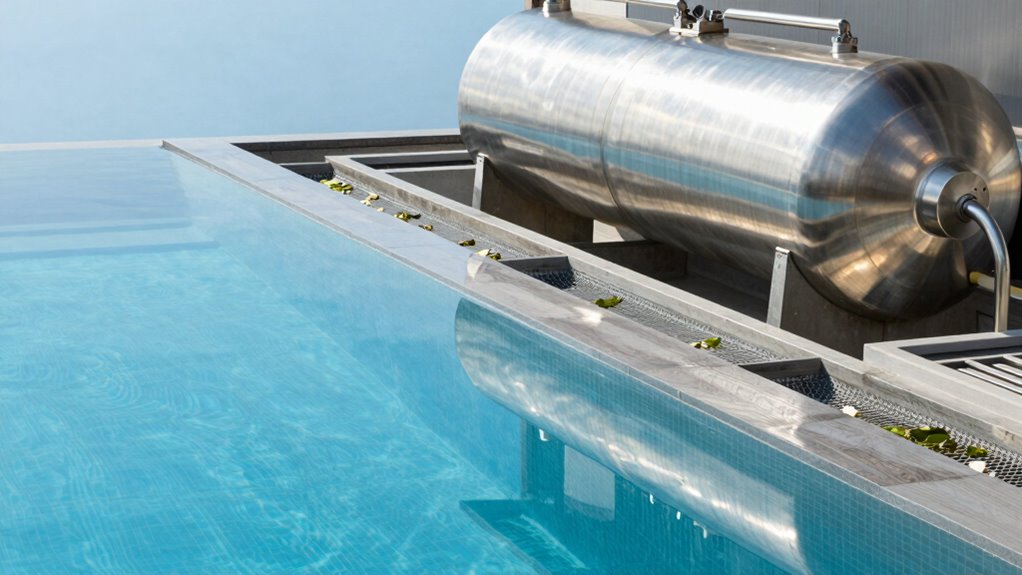
Have you ever wondered how catch basins keep debris out of stormwater systems? They play a key role in water filtration and debris removal, ensuring clean water flows through your system. Here’s how they work:
- Trap debris with a grate or filter screen that catches leaves, trash, and other large particles.
- Sediment settling occurs as water slows down, allowing dirt and smaller particles to settle at the bottom.
- Prevent clogs by directing debris to designated storage areas, reducing blockages downstream.
- Improve water quality by filtering out pollutants before water reaches pumps or treatment areas.
How Can You Tell If Your Surge Tank or Catch Basin Needs Repair?
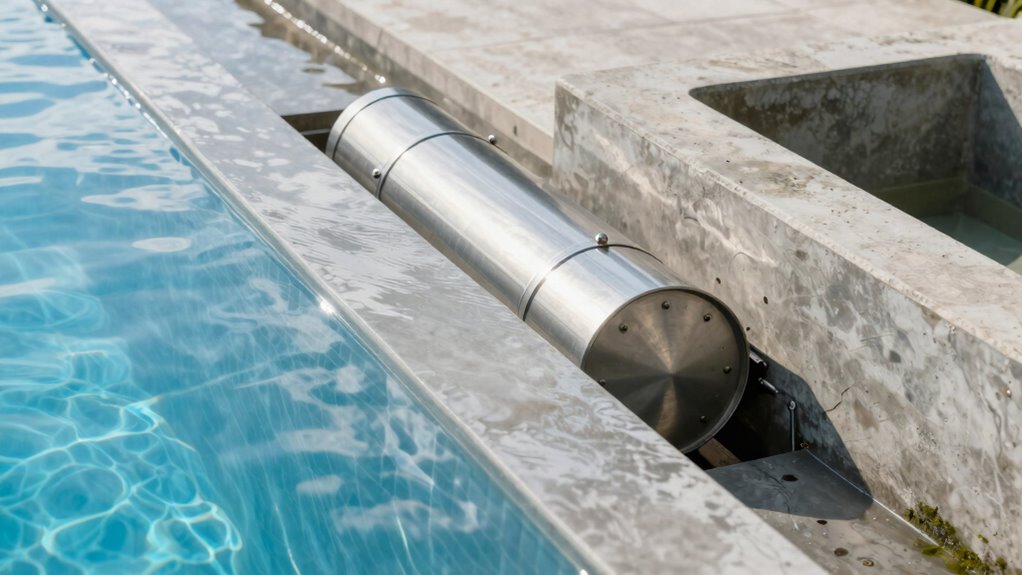
You’ll notice signs like unusual water levels or water constantly leaking, which can indicate your surge tank or catch basin needs attention. Visible cracks or structural damage are clear visual clues that repairs are necessary. Keep an eye out for persistent water loss, as it often signals a problem that can’t be ignored.
Unusual Water Levels
How can you tell if your surge tank or catch basin needs repair? Unusual water levels are a key sign. If the water consistently drops below the normal range, it could indicate a leak or blockage, affecting water conservation efforts. Conversely, if water rises too high and spills over, it might be a sign of a faulty valve or improper system calibration. Also, irregular fluctuations in water levels can signal mechanical issues. Keep an eye on these signs to prevent damage and maintain your pool’s aesthetic enhancements. Regular monitoring helps you catch problems early, saving water and avoiding costly repairs later. Staying vigilant about water levels ensures your infinity pool stays functional and visually appealing.
Visible Structural Damage
Visible structural damage is often the first sign that your surge tank or catch basin needs repairs. Cracks, corrosion, or broken seams may appear on the surface, indicating deterioration. Changes in water chemistry can accelerate damage, weakening materials over time. You might notice rust spots or spalling surfaces that compromise structural integrity. Additionally, faulty pool lighting near these components can highlight cracks or damage, making issues more apparent. If you see water leaking or pooling around the basin, it’s a clear sign of damage needing attention. Ignoring these signs can lead to more serious problems, including leaks or collapse. Regular inspections, paying attention to visible damage and how water chemistry affects the components, ensure your surge tank or catch basin remains safe and functional.
Persistent Water Loss
Persistent water loss is a common sign that your surge tank or catch basin may be leaking or damaged. If you notice your pool’s water level dropping unexpectedly, it could indicate an issue that affects both your pool design and aesthetic considerations. Here are four ways to tell if repairs are needed:
- Constantly refilling the pool without obvious leaks on the surface.
- Unexplained drops in water levels, even after recent maintenance.
- Visible cracks or deterioration around the surge tank or catch basin.
- Uneven water distribution affecting the overall look of your infinity pool.
Addressing these signs promptly helps preserve your pool’s seamless design and prevents costly damage, ensuring your infinity pool remains stunning and functional.
Signs Your Components Are Failing and Need Replacement?
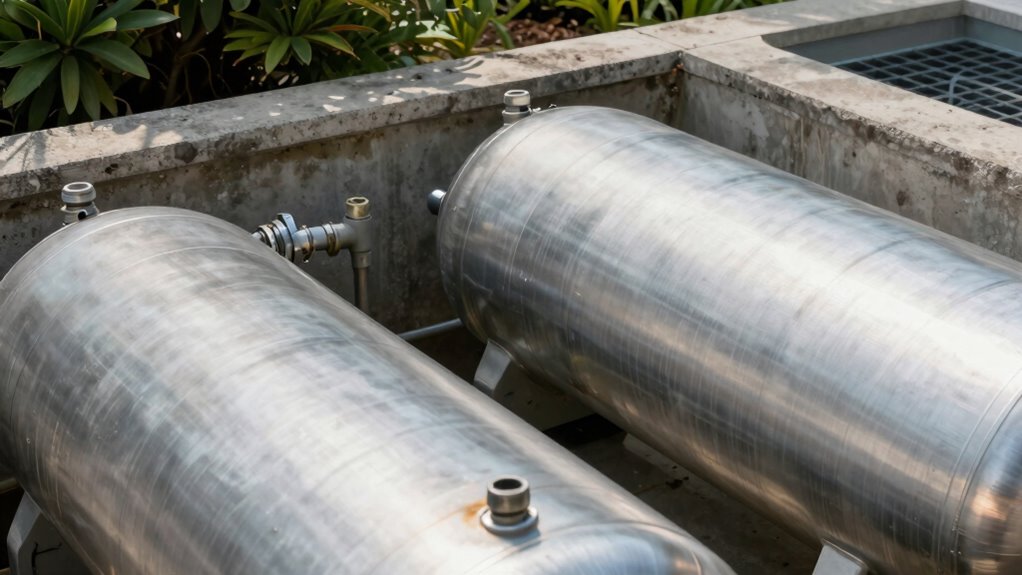
If you notice your surge tanks or catch basins are not functioning as they should, it’s a clear sign that their components may be failing and need replacement. Common indicators include inconsistent water levels, unusual noises, or persistent leaks. Additionally, if your pool lighting or decorative features no longer operate correctly or flicker, it could signal underlying issues with the system’s components. Regular inspections help catch these problems early, preventing costly repairs. Failing components can compromise your pool’s overall performance and safety, so prompt action is essential. Below is a table highlighting key signs of failure:
| Symptom | Possible Cause |
|---|---|
| Fluctuating water levels | Blocked or damaged catch basin |
| Noisy operation | Worn-out pump or valve |
| Non-functioning lighting | Electrical connection issues |
| Visible cracks or leaks | Structural component failure |
How Do Surge Tanks and Catch Basins Contribute to Your Pool’s Longevity?

Surge tanks and catch basins play a crucial role in maintaining your pool’s durability by managing water flow and preventing damage. They help regulate pressure, reducing stress on pipes and equipment, which extends the lifespan of your system. Additionally, by controlling water levels, they protect your pool’s structure and improve overall aesthetics. Here’s how they contribute:
- Minimize water hammer, preventing pipe bursts and costly repairs.
- Enhance energy efficiency by reducing pump workload.
- Maintain consistent water levels, boosting pool aesthetics.
- Protect against sudden surges that can cause structural damage.
Frequently Asked Questions
How Often Should Surge Tanks and Catch Basins Be Inspected?
You should perform routine inspections of surge tanks and catch basins at least quarterly to guarantee proper functioning. If you notice any debris, leaks, or unusual sounds, schedule professional servicing promptly. Regular checks help prevent costly repairs and maintain your pool’s safety and efficiency. Don’t wait too long—consistent inspections keep your infinity pool’s surge tanks and catch basins in top condition, ensuring smooth operation and longevity.
Can Surge Tanks Be Customized for Different Pool Sizes?
Yes, surge tanks can be customized for different pool sizes. You can choose from various design options and specify a custom size to match your infinity pool‘s unique requirements. Customizing guarantees the surge tank effectively manages water flow and pressure, preventing issues. Discuss your pool’s dimensions and needs with a professional, so they can create a tailored surge tank that seamlessly integrates with your infinity pool’s design and performance goals.
What Maintenance Routines Are Recommended for These Components?
You should regularly inspect surge tanks and catch basins to maintain pool safety and water quality. Clean debris and sediment weekly, check for leaks or cracks, and make certain the overflow systems function properly. It’s also essential to verify water levels and operation of related pumps. Routine maintenance keeps these components working efficiently, prevents overflow issues, and ensures your infinity pool remains safe and inviting for everyone.
Are Surge Tanks Suitable for All Types of Infinity Pools?
You’ll find surge tanks suitable for most infinity pools, especially since 85% are designed with versatile materials like reinforced concrete or corrosion-resistant composites. The catch basin design plays a vital role, ensuring proper water flow and pressure regulation. While not all pools need them, your specific setup benefits from surge tanks if you have high water turnover or heavy rainfall, making them adaptable to various pool types.
How Do Climate Conditions Affect the Performance of These Systems?
Climate impact and seasonal variations considerably influence surge tanks and catch basins in infinity pools. You’ll find that colder temperatures can cause water to freeze, potentially damaging equipment or reducing efficiency. In hot, dry conditions, evaporation levels rise, stressing the system. You need to plan for these seasonal changes by choosing appropriate materials and designing systems that can adapt to climate variations, ensuring consistent performance year-round.
Conclusion
Think of surge tanks and catch basins as the silent guardians of your infinity pool, quietly working behind the scenes. Just like a sturdy dam controls a rushing river, these components keep your water levels steady, preventing chaos. Without them, a small overflow could turn into a major flood. When you trust these unseen parts, you guarantee your pool remains a peaceful oasis—calm, controlled, and built to last.
Halloween Picks
halloween
As an affiliate, we earn on qualifying purchases.