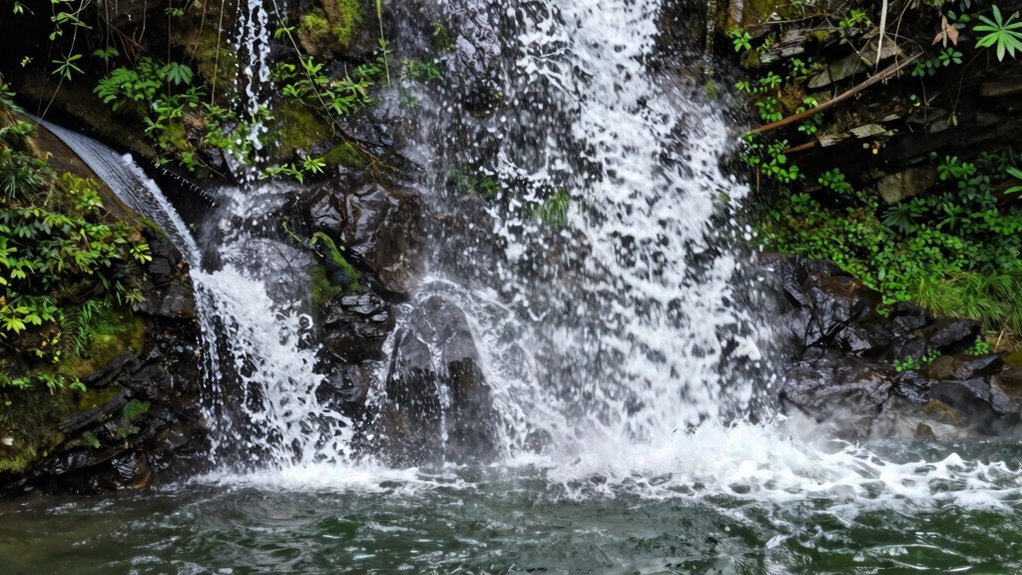

To prevent splash-out from waterfalls and spillways, you should guarantee proper design with smooth, gentle slopes and textured or impact-absorbing surfaces to dissipate energy. Adding natural or artificial barriers like rocks, plants, or boulders at the spillway base can further reduce splashing. Regular maintenance to remove debris and monitoring flow conditions help catch issues early. Continuing with these strategies will provide you with more effective methods to control water splashing and protect your surroundings.
Open a free Amazon Business account
Business pricing, bulk buying and tax-exempt orders.
As an affiliate, we earn on qualifying purchases.
Key Takeaways
- Design spillways with smooth, gentle slopes and rounded shapes to control water velocity and reduce splashing.
- Incorporate splash-absorbing materials like textured surfaces, boulders, or diffusers at spillway bases.
- Regularly inspect and clear debris to prevent obstructions that cause turbulent splashing.
- Use erosion-resistant materials and natural features such as rocks and plants to stabilize the spillway and absorb impact.
- Adjust flow rates and incorporate shallow slopes or terraced steps to naturally minimize splash-out.
As an affiliate, we earn on qualifying purchases.
Why Splash-Out Hurts Waterfall and Spillway Performance
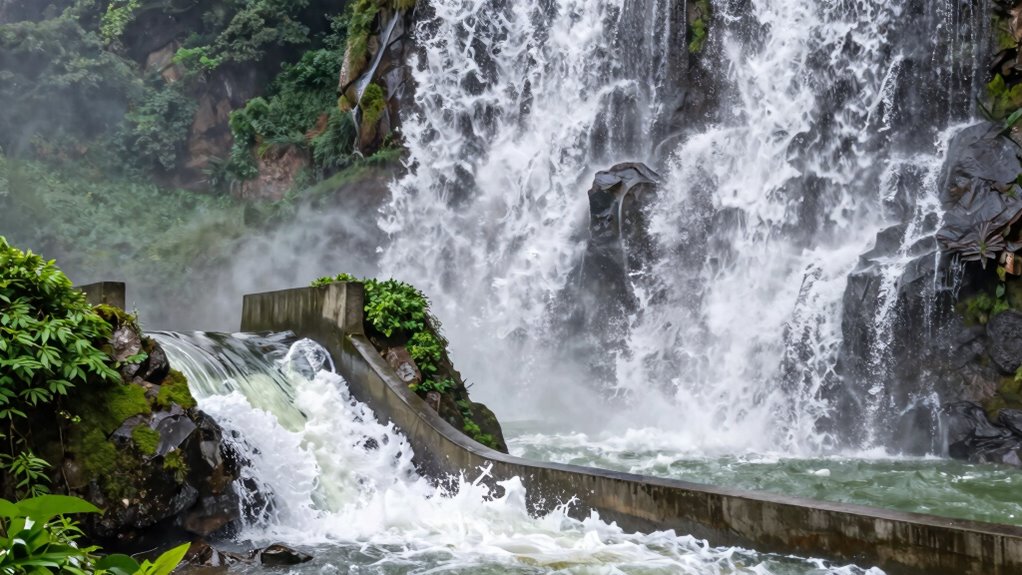
Splash-out occurs when water spills over the edges of a waterfall or spillway and lands outside the designated channel. This can markedly harm water quality by spreading debris, algae, and pollutants into surrounding areas. When water splashes out, it often carries sediment, which can cloud downstream water, affecting aquatic life. Additionally, splash-out disrupts the natural flow, creating turbulent conditions that can disturb local wildlife. Fish and other aquatic creatures may struggle to navigate these unstable environments, and plants nearby can become waterlogged or eroded. Over time, persistent splash-out reduces the efficiency of your waterfall or spillway, leading to increased maintenance needs. Ensuring splash-out is minimized helps maintain better water quality and protects nearby habitats, supporting a healthier ecosystem overall. Proper design features, like splash guards or baffles, can be implemented to help prevent splash-out and promote a more sustainable water feature. Incorporating flow control measures can also significantly reduce splash-out by managing water velocity and impact, which is especially important for water feature durability. Using appropriate materials in construction can further help absorb shock and reduce splash effects, contributing to longer-lasting performance.
impact-absorbing spillway surface
As an affiliate, we earn on qualifying purchases.
As an affiliate, we earn on qualifying purchases.
Check How Your Spillway Handles Splash-Out
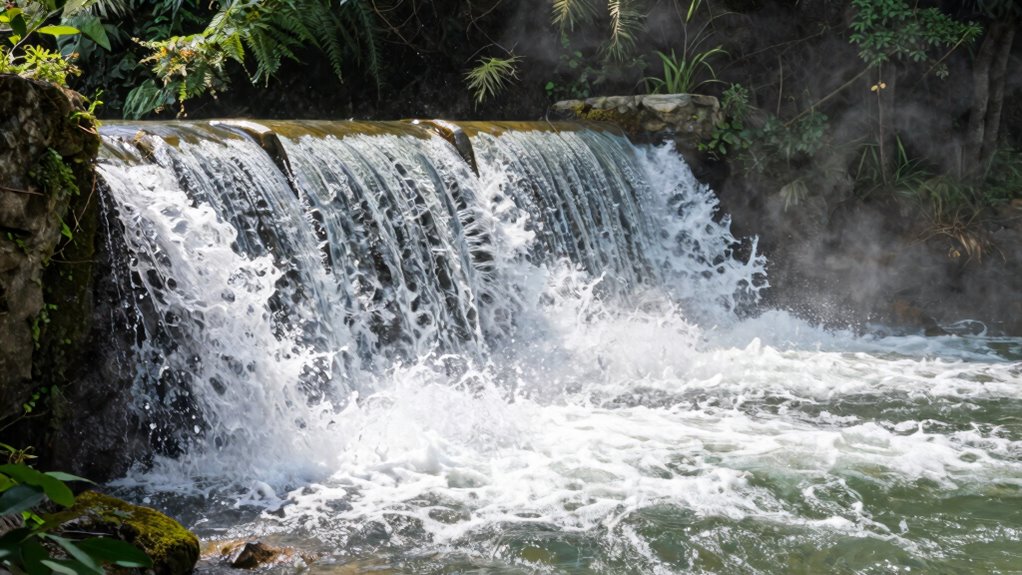
To guarantee your spillway operates efficiently and minimizes environmental impact, it’s important to regularly check how it handles splash-out. Start by inspecting the spillway for any debris buildup that could obstruct water flow or cause uneven splashing. Remove leaves, sticks, or trash that may accumulate and disrupt smooth water movement. Observe how water flows over the spillway during different conditions; excessive splashing or spray indicates areas where splash-out may occur. Adjustments might be needed to improve flow patterns and reduce splash-out, preventing erosion and debris dispersal downstream. Regular monitoring ensures your spillway functions properly, maintains environmental standards, and extends its lifespan. Keeping water flow unobstructed and free of debris is key to minimizing splash-out and ensuring optimal spillway performance. Incorporating sound therapy techniques can also help in understanding and controlling water flow behaviors, ultimately reducing splash-out issues. Paying attention to environmental standards during inspections further supports sustainable operation and minimizes negative downstream effects. Proper water flow management is essential for long-term effectiveness and ecological safety. Additionally, using erosion control methods can further protect the spillway area from damage caused by splash-out. Implementing regular maintenance routines can additionally identify potential issues before they escalate, ensuring continuous proper function.
water flow diffuser for spillways
As an affiliate, we earn on qualifying purchases.
As an affiliate, we earn on qualifying purchases.
Design Spillways to Minimize Water Splashing
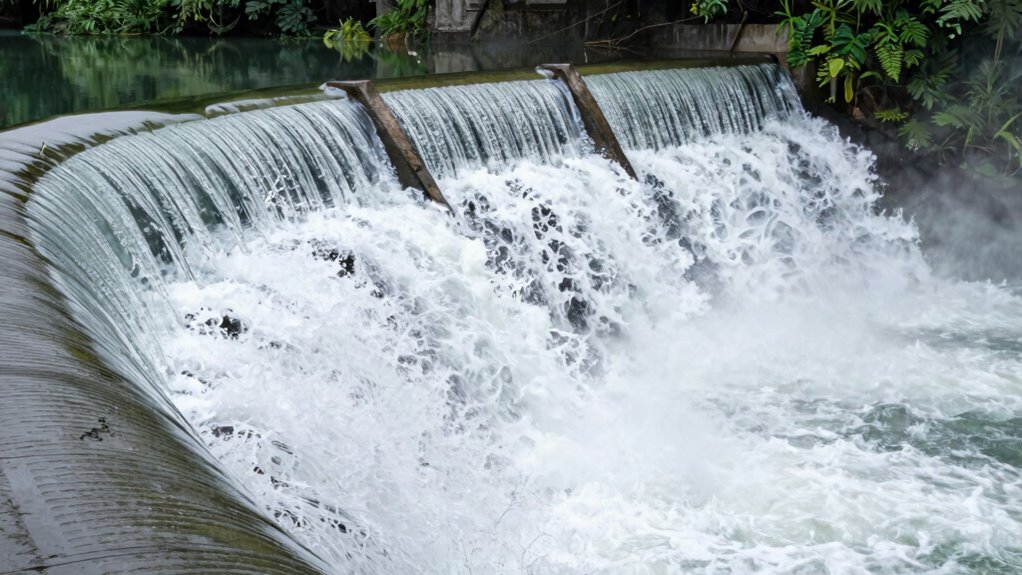
To reduce water splash during spillway operation, you should focus on smooth surface designs and gentle slopes. Incorporating features like splash-absorbing materials can also help control the impact. Additionally, selecting appropriate tracking gear can assist in monitoring spillway performance and preventing overflow issues. Properly designed hydraulic structures can further minimize turbulence and splash effects. Implementing precise engineering practices ensures better control over water flow and reduces the likelihood of splash-out. Regular inspections and maintenance routines are essential for identifying potential issues early and maintaining spillway efficiency. Utilizing proper maintenance routines can help sustain spillway efficiency and prevent unexpected water issues. By selecting these approaches, you’ll create a more efficient and safer spillway system.
Choose Smooth Spillway Surfaces
Have you ever wondered how to reduce water splashing when designing spillways? The key lies in choosing smooth spillway surfaces. When flow velocity is high, rough or uneven surfaces can cause turbulence, increasing splash-out. A smooth spillway shape allows water to glide effortlessly, minimizing turbulence and splash. Opt for materials like polished concrete or coated surfaces that resist roughening over time. By ensuring the spillway surface is slick and uniform, you help water flow steadily without sudden disruptions. This reduces the kinetic energy transferred to the water, lowering splash risks. Remember, the spillway shape also plays a role; gentle curves combined with smooth surfaces promote a controlled water flow. Together, these choices keep water contained and prevent unnecessary splash-out.
Incorporate Gradual Slopes
Incorporating gradual slopes into spillway designs helps control water velocity and reduce splash. By gently sloping the spillway surface, you promote smoother water flow, minimizing turbulence and splash-out risk. This technique is especially important for air fryer accessories, where managing airflow and moisture is crucial. This approach also enhances landscape integration, allowing the spillway to blend seamlessly with its surroundings. When designing with aesthetic considerations in mind, gradual slopes create a more natural and visually pleasing appearance, avoiding harsh edges or abrupt drops. Additionally, understanding erosion control principles can help maintain the spillway’s integrity over time. Proper water flow management ensures the spillway remains effective and durable in varying conditions. Think about how the spillway interacts with the overall landscape—gentle slopes can make the feature look more harmonious and less intrusive. This not only improves the functional performance of your spillway but also elevates its visual appeal, ensuring it complements the environment while effectively managing water flow.
Add Splash-Absorbing Features
Adding splash-absorbing features to your spillway design effectively minimizes water splashing and reduces erosion. These features also enhance aesthetic appeal and support environmental considerations by lowering splash impact on surrounding landscapes. Incorporating materials like textured surfaces, boulder placements, or diffusers creates a soothing visual while protecting your site. Consider how these elements blend seamlessly into the environment, creating harmony between function and beauty. To inspire your design process, here’s a visual guide:
| Feature | Purpose | Emotional Impact |
|---|---|---|
| Boulders at base | Absorb shock, reduce splash | Instills calm and stability |
| Diffusers | Spread water evenly | Promotes serenity and balance |
| Textured surfaces | Minimize splash, look natural | Adds aesthetic charm |
| Vegetation | Erosion control, beauty | Connects with nature |
| Smooth slopes | Gentle water flow | Evokes peace and safety |
Additionally, understanding the environmental impact of your spillway design helps ensure sustainability and minimizes ecological disturbance. Incorporating splash mitigation techniques into your planning can further enhance the longevity and ecological harmony of your water feature. Implementing adaptive design strategies can also optimize performance across different environmental conditions. For example, selecting materials with hydrological properties that adapt to varying flow rates can significantly improve effectiveness and durability. Recognizing the importance of erosion control is essential for maintaining long-term stability and minimizing environmental disruption.
erosion-resistant spillway materials
As an affiliate, we earn on qualifying purchases.
As an affiliate, we earn on qualifying purchases.
Use Surface Treatments and Materials to Reduce Splash
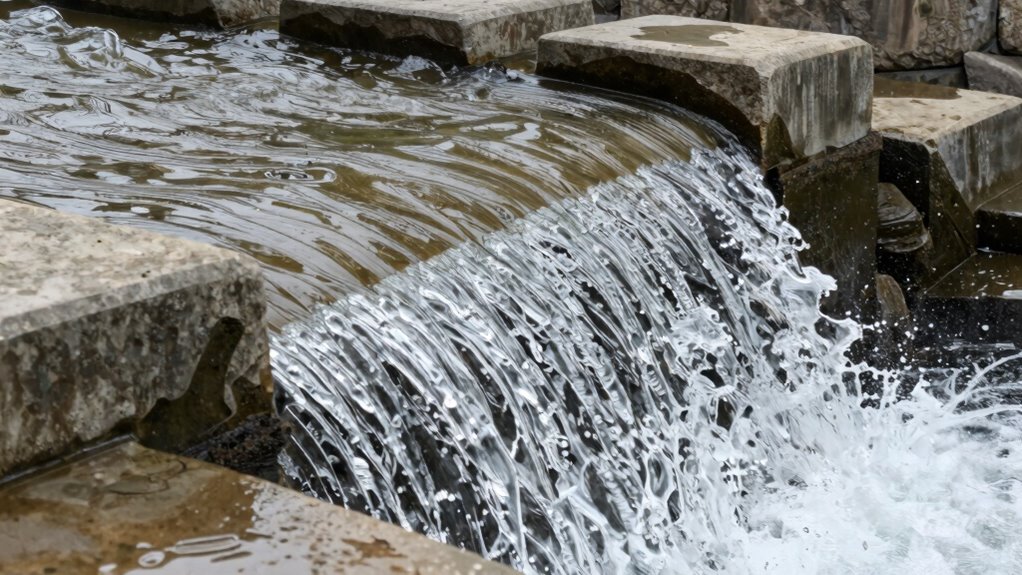
To effectively minimize splash and reduce erosion at waterfalls and spillways, selecting appropriate surface treatments and materials is essential. Applying surface coatings can create a smoother, more durable barrier that absorbs impact and minimizes water splash. Textured finishes, such as roughened or patterned surfaces, help dissipate energy and slow water flow, decreasing splash force. These treatments not only protect underlying structures but also improve overall stability. When choosing materials, opt for those resistant to water erosion and weathering, like specialized sealants or concrete mixes with added aggregates. Properly treated surfaces reduce the likelihood of erosion and maintain the integrity of your spillway over time. Additionally, surface durability is a critical factor to consider when selecting materials to ensure long-term performance under constant water exposure. Implementing surface coatings and textured finishes is a straightforward, effective way to control splash and extend the lifespan of your water feature. Incorporating material resilience into your selection process further enhances the longevity and effectiveness of your spillway protection strategies.
Add Baffles, Wings, or Guide Walls Effectively
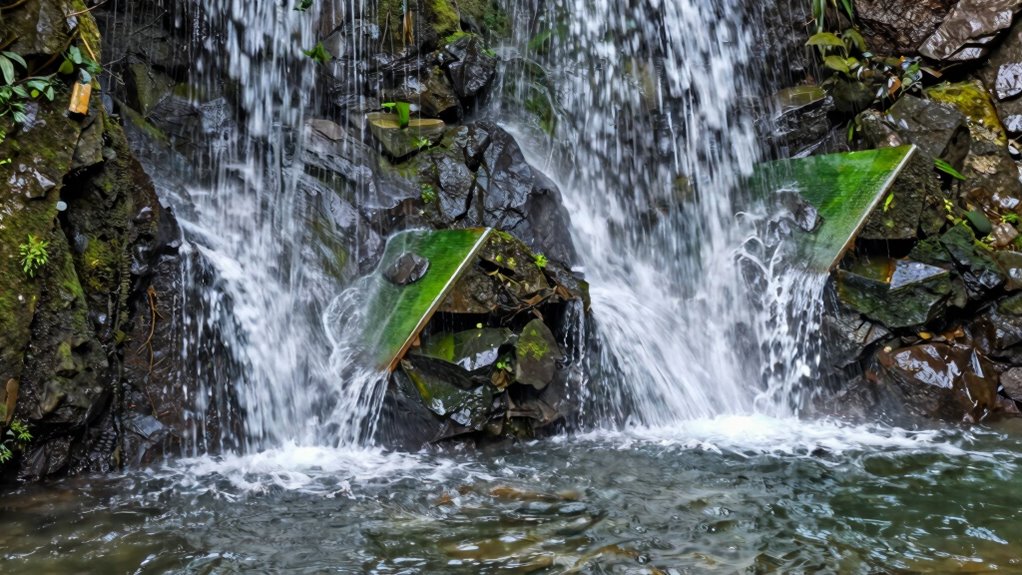
To add baffles, wings, or guide walls successfully, you need to focus on precise placement techniques that optimize flow control. Consider material compatibility carefully to guarantee durability and proper performance over time. Paying attention to these points helps you achieve effective modifications that improve your spillway’s efficiency.
Precise Placement Techniques
Proper placement of baffles, wings, and guide walls is essential for directing water flow efficiently and preventing erosion or turbulence. To achieve this, carefully position these features where they can guide water smoothly along curves or sharp drops, minimizing splash-out. Consider landscape integration by matching the materials and colors to your surroundings, creating a seamless look that enhances your overall aesthetic. Precise placement ensures the water follows the intended path, reducing turbulent spots and erosion risks. Use a combination of small adjustments and testing to find the most advantageous locations. Properly positioned guide structures not only improve function but also contribute to a cohesive, attractive landscape. This meticulous approach enhances both the performance and visual appeal of your waterfall or spillway.
Material Compatibility Considerations
Choosing the right materials for baffles, wings, and guide walls guarantees they work effectively with your landscape and water features. When considering material compatibility, focus on material durability and surface compatibility to make certain longevity and proper function. To select the best options, consider these key points:
- Match material durability with water exposure to prevent corrosion or deterioration over time.
- Ensure surface compatibility so the materials bond well without damaging existing structures.
- Choose materials resistant to environmental factors like UV rays, temperature changes, and chemical exposure.
Maintain and Monitor for Erosion and Safety Risks
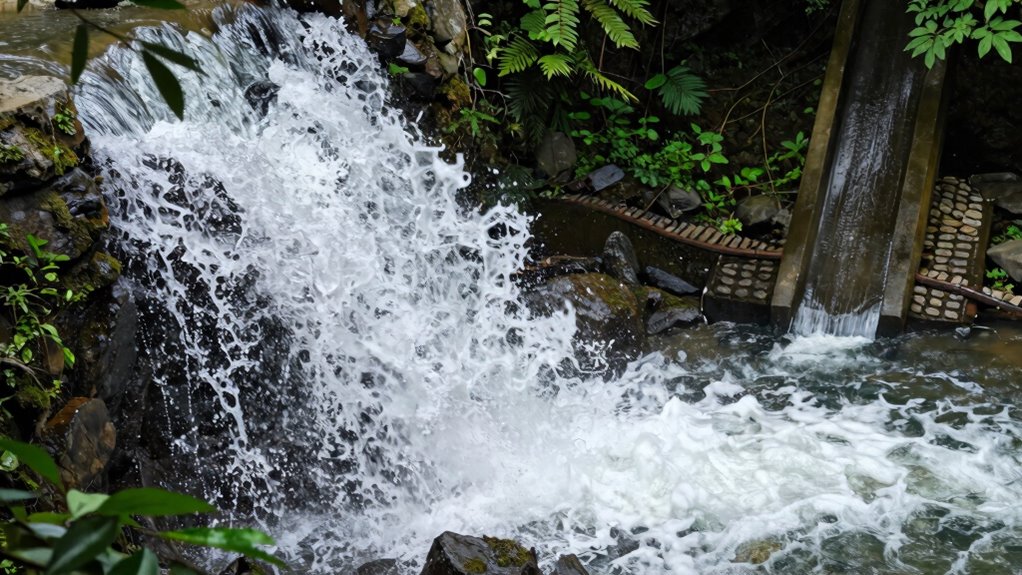
Regularly inspecting waterfalls and spillways is essential to identify signs of erosion and potential safety hazards before they worsen. Focus on erosion monitoring to spot areas where soil or rock is wearing away, and check vegetation management to ensure plants stabilize the soil. Healthy vegetation reduces erosion risks, so trim or plant new greenery as needed. Look for exposed foundations or cracking that could indicate instability. Use the table below to help organize your maintenance efforts:
| Action | Purpose |
|---|---|
| Erosion monitoring | Detect early signs of wear |
| Vegetation management | Prevent soil erosion and stabilize slopes |
| Regular inspections | Maintain safety and integrity |
Troubleshoot Common Splash-Out Problems
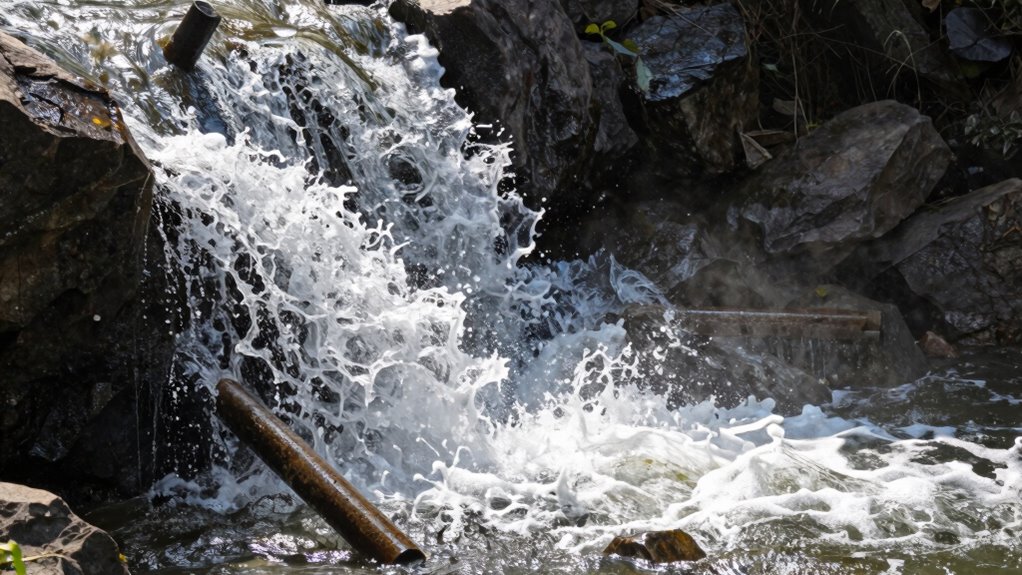
Monitoring erosion and maintaining vegetation help prevent instability, but even well-guarded waterfalls and spillways can experience splash-out issues. When water flow isn’t properly managed, it can cause excessive splashing, leading to erosion and safety concerns. To troubleshoot common splash-out problems, consider these steps:
- Adjust the water flow to reduce velocity, which minimizes splash reduction.
- Install splash pads or bavers to absorb impact and slow water as it hits the surface.
- Ensure the spillway slope is correct; a steeper slope can increase splash-out, so modify if necessary.
Cost-Effective Ways to Reduce Splash and Erosion
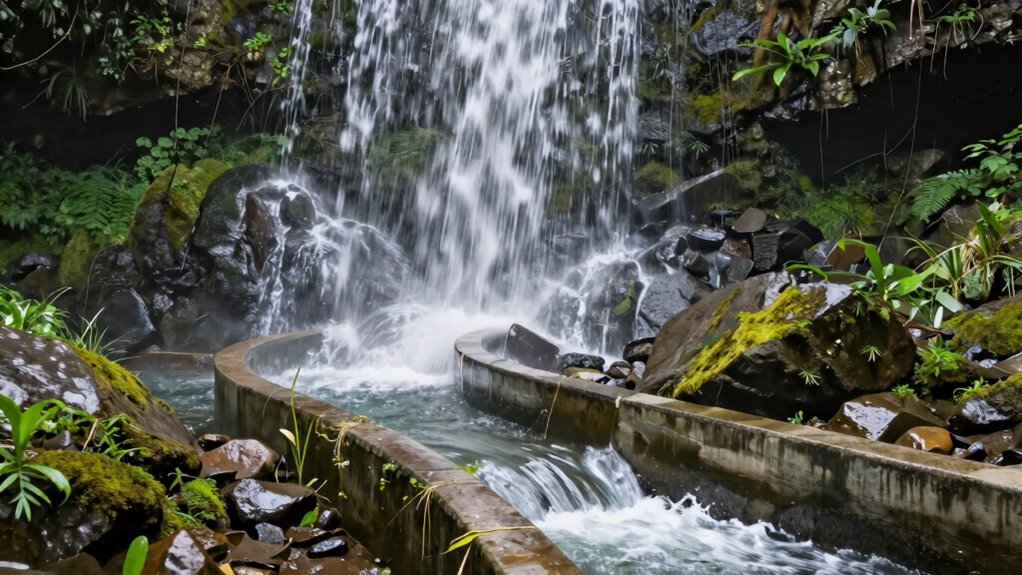
To effectively reduce splash and erosion without breaking the bank, focus on simple, affordable modifications that improve water flow management. Incorporate landscape integration by adding natural barriers like rocks, plants, or mulch at the spillway’s base to absorb impact and slow water. These elements help blend the structure into your existing landscape, providing aesthetic enhancement while reducing splash-out. Installing shallow slopes or terraced steps can also control flow speed and minimize erosion. Using gravel or small stones around the spillway creates a stable, cost-effective surface that disperses water evenly. These easy adjustments not only protect your pond or waterfall but also enhance its visual appeal, making it look more natural and cohesive within your outdoor space.
Best Practices for Long-Term Water Control and Safety
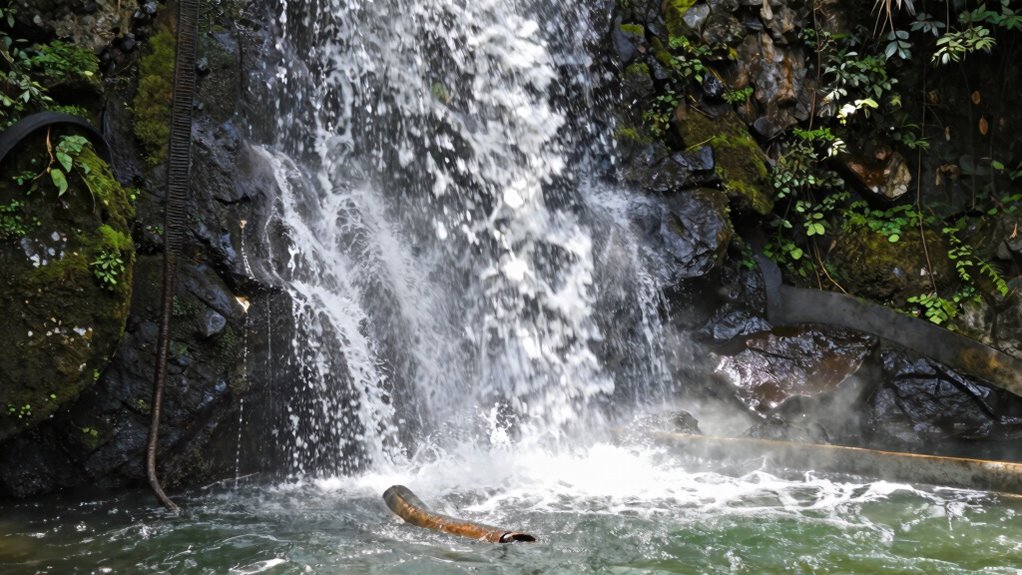
Implementing long-term water control and safety measures guarantees your pond or waterfall remains secure and sustainable over time. To do this effectively, focus on understanding hydrological cycles to predict water flow changes and prevent overflow issues. Additionally, prioritize water conservation to reduce unnecessary runoff and evaporation. Consider these best practices:
- Regularly inspect and maintain spillways and liners to prevent leaks and blockages.
- Install sensors or automated systems to monitor water levels and detect potential safety hazards.
- Design your system to accommodate seasonal variations, ensuring stability during droughts or heavy rains.
Frequently Asked Questions
What Are the Environmental Impacts of Splash-Out in Waterfalls?
Splash-out from waterfalls can harm the environment by disturbing wildlife and degrading water quality. You might notice animals abandoning their habitats or becoming stressed due to increased noise and vibrations. Additionally, excess splashed water can carry pollutants, leading to water contamination that affects aquatic life. To minimize these impacts, you should implement splash control measures, ensuring the ecosystem remains balanced and healthy.
How Do Climate Changes Influence Spillway Splash-Out Management?
Climate change is a rising tide that challenges spillway splash-out management, demanding urgent climate adaptation strategies. You must enhance flood resilience by designing spillways that can handle unpredictable, extreme weather events. Expect more intense storms and fluctuating water flows, making splash-out prevention more critical than ever. By proactively adjusting your infrastructure, you safeguard ecosystems and communities, turning a looming threat into an opportunity for resilient, sustainable water management.
Are There Specific Materials Better Suited for Reducing Splash in Spillways?
You should focus on material selection and surface textures to reduce spillway splash-out effectively. Opt for materials like textured concrete or specialized polymers that create rough or grooved surfaces, which help break up water flow and minimize splash. These materials resist erosion and improve water dissipation. By choosing surfaces designed to slow water velocity and encourage smooth flow, you can considerably lessen splash-out and protect your spillway infrastructure.
Can Natural Landscape Features Help Minimize Splash-Out Effectively?
Yes, natural landscape features can help minimize splash-out effectively. You can use natural barriers like rocks or embankments to absorb and redirect water flow, reducing splash. Additionally, planting vegetation buffers around spillways creates a soft barrier that slows water impact, preventing splash-out. These features work together to stabilize the area, protect surrounding structures, and enhance the spillway’s overall effectiveness in managing water flow without excessive splashing.
What Are the Legal Regulations Related to Spillway Splash Safety?
Did you know that over 80% of dam-related accidents stem from non-compliance with safety standards? You must understand that legal regulations regarding spillway splash safety are strict, requiring adherence to safety standards like barriers, proper signage, and regular inspections. Ensuring legal compliance minimizes risks, protects public safety, and helps avoid hefty fines. Always stay updated with local regulations and industry standards to keep your spillway safe and compliant.
Conclusion
By implementing these splash-out prevention tips, you’ll turn your waterfall or spillway into a fortress of efficiency. Don’t let splash-out sabotage your water control efforts—think of it as cutting through chaos like a hot knife through butter. With careful design, proper maintenance, and smart materials, you’ll guarantee your water features perform flawlessly for years to come. Remember, a well-managed spillway isn’t just good—it’s the heartbeat of a safe, sustainable water system.
NFL season / tailgating Picks
team gear
As an affiliate, we earn on qualifying purchases.