To prevent cracks during winter, start by evaluating your property’s vulnerable areas like pipes, roofs, and foundations. Insulate pipes, seal gaps, and cracks to keep cold air out, and drain outdoor irrigation systems to avoid ice expansion. Maintain your heating system and add weather stripping to doors and windows for extra protection. Regular inspections help catch issues early. For detailed steps, keep exploring to make sure you’re fully prepared for winter’s challenges.
Key Takeaways
- Conduct a thorough property inspection to identify vulnerabilities in roofing, foundation, and plumbing before winter begins.
- Prioritize sealing cracks and gaps around windows, doors, and foundation to prevent cold air infiltration and structural stress.
- Insulate pipes, roof, and exterior walls to minimize heat loss and prevent freeze-thaw damage.
- Clean gutters and ensure proper drainage to avoid ice dams and water accumulation that can cause cracks.
- Perform early repairs on any detected damages to prevent worsening and structural issues during winter conditions.
As an affiliate, we earn on qualifying purchases.
Assess Your Property’s Vulnerable Areas Before Winter
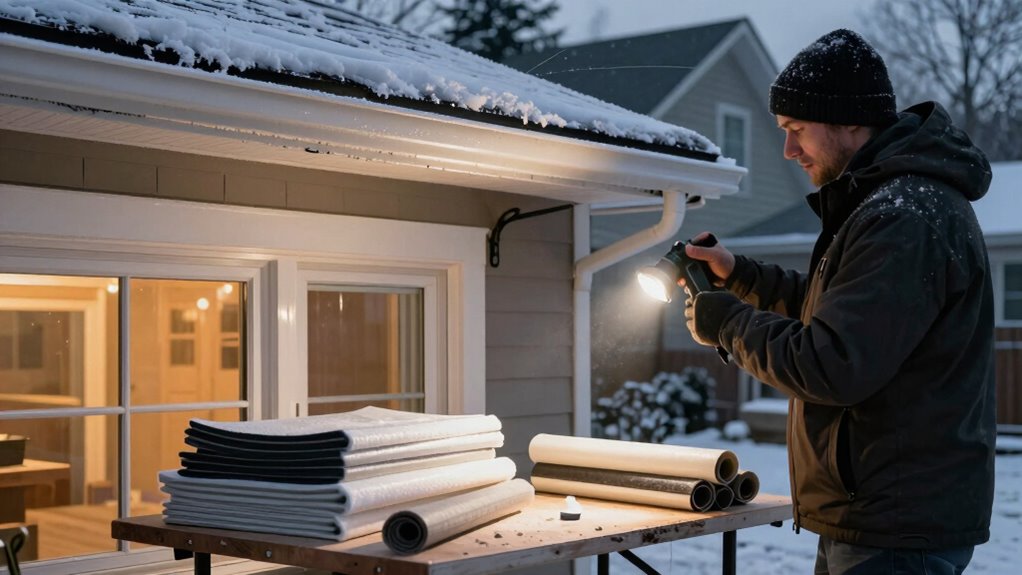
Before winter arrives, it’s essential to identify your property’s vulnerable areas to prevent damage and save on costly repairs. Start by inspecting your landscaping hazards, such as overgrown bushes, loose branches, or poorly maintained trees that could break under snow or ice. These hazards can cause structural damage or block pathways. Additionally, consider pest vulnerabilities—holes, gaps, or poorly sealed entry points that pests could use to invade your home during winter. Addressing these issues now helps prevent pests from seeking shelter inside when temperatures drop. Take a walk around your property to spot areas where water could collect or freeze, and fix or reinforce them. Conducting a tree health assessment can help identify weak branches or diseased trees that pose a risk during winter storms. Ensuring proper home insulation can also minimize heat loss and prevent pipes from freezing. By proactively evaluating these vulnerabilities, you reduce winter risks and protect your home’s integrity.
As an affiliate, we earn on qualifying purchases.
Identify Key Risks Like Pipes, Roofs, and Foundations
To winterize effectively, you need to identify key risks like vulnerable pipes, weak roofs, and unstable foundations. Protecting your plumbing prevents burst pipes, while securing your roof keeps leaks at bay. Reinforcing your foundation guarantees your home stays solid and safe through harsh weather. Proper airless paint spraying techniques can also help seal cracks and prevent further damage during winter. Additionally, understanding home structural integrity helps identify areas prone to damage and ensures comprehensive winterization.
Protecting Plumbing Systems
During winter, your plumbing system faces several risks that can lead to costly damage if not addressed. Freezing pipes are among the biggest threats, which is why pipe insulation is essential. Proper insulation keeps water inside your pipes above freezing temperatures, reducing the risk of cracks and bursts. Leak prevention is also critical; check for any drips or small leaks now, as they can worsen with cold weather. Insulate exposed pipes in basements, attics, and garages, and consider installing heat tape for added protection. Drain outdoor faucets and disconnect hoses to prevent water from freezing inside. Taking these steps helps safeguard your plumbing system from frost damage, preventing costly repairs and water damage when the temperature drops. Ensuring your plumbing system is well-maintained also reduces the risk of household hazards that can arise during winter months. Additionally, understanding preventative measures can help you effectively minimize potential winter-related plumbing issues. Regularly inspecting your plumbing system and winterizing procedures can further enhance your protection against cold-weather damage. Being aware of indoor air quality and ensuring proper ventilation can also help prevent issues like mold growth caused by trapped moisture during winter.
Securing Roof Integrity
As winter approaches, it’s essential to assess and secure your roof’s integrity to prevent costly damage. Start by inspecting your roof membrane for tears or punctures, which can let water seep in and cause leaks. Check shingles for loose or damaged pieces and perform shingle maintenance to keep your roof strong. Proper sealing and repair prevent ice dams and water intrusion. Additionally, understanding the importance of contrast ratio can help in choosing the right protective measures for your home’s exterior surfaces.
| Risk | Action | Tip |
|---|---|---|
| Roof membrane | Inspect for tears | Seal cracks promptly |
| Shingles | Replace damaged shingles | Ensure proper alignment |
| Overall roof | Clean gutters | Prevent ice buildup |
Prioritize these steps to protect your home from winter weather and ensure your roof remains sturdy through the cold season.
Reinforcing Foundation Stability
Since winter’s heavy snow and ice can put extra strain on your home, reinforcing foundation stability becomes essential. You need to assess soil stability around your property, as shifting or saturated soil can cause cracks or uneven settling. To prevent this, consider foundation reinforcement techniques like underpinning or installing piers to support weak spots. Proper drainage is vital to divert water away from the foundation, reducing freeze-thaw damage. Inspect for cracks or signs of movement and address them promptly. Adding soil stabilization measures, such as compaction or geotextiles, can further strengthen the foundation’s resilience. Additionally, utilizing water management strategies helps control moisture levels around your foundation, minimizing the risk of frost heave and soil shifting. Ensuring proper water extraction during heavy snowfall and rain can also prevent excess moisture from weakening soil stability. Implementing soil stabilization techniques can significantly enhance your home’s ability to withstand winter conditions. Taking these steps helps minimize the risk of structural damage caused by soil shifts or frost heave, ensuring your home remains solid and secure throughout the winter months.
As an affiliate, we earn on qualifying purchases.
How to Properly Insulate Pipes and Plumbing for Freezing Weather
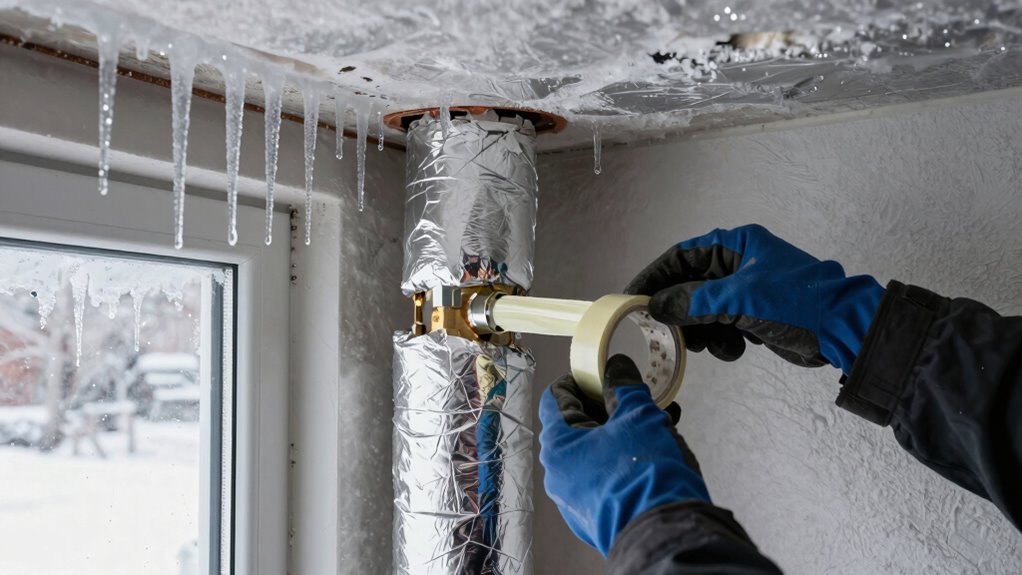
To safeguard your pipes from freezing, start by sealing any exposed sections to prevent drafts. Next, insulate your plumbing with affordable materials like foam sleeves or newspaper to keep the warm air in. Additionally, consider checking for vulnerable areas around your property that may need extra protection, especially in spots where pipes run through unheated spaces. You can also use insulation techniques to further enhance your protection and prevent costly repairs. Incorporating inclusive casting practices in your home improvement efforts can ensure that all members of your household benefit from safe and effective winterization methods. Remember that choosing mythology-inspired names or symbols can also serve as a reminder of strength and resilience during harsh weather. To maximize your efforts, regularly inspect your home’s insulation to identify and address potential weak spots. Finally, keep your indoor temperature steady to ensure your pipes stay warm and safe during cold weather.
Seal Exposed Pipes Easily
When temperatures drop, exposed pipes are vulnerable to freezing and bursting, which can lead to costly repairs. To prevent this, you need to focus on easy sealing of exposed pipes. Start by cleaning the pipes to remove dirt and debris, ensuring a good seal. Use foam pipe insulation or affordable pipe sleeves to cover exposed pipes, providing a barrier against the cold. For added protection, wrap vulnerable sections with weatherproof tape or self-adhesive tape designed for outdoor use. Remember, sealing is quick and effective if you act promptly. Here are simple steps to follow:
- Clean pipes thoroughly before sealing
- Apply foam insulation or sleeves snugly
- Use weatherproof tape for extra protection
- Proper filter sizing and flow can also help prevent issues caused by freezing conditions
Ensuring proper insulation techniques and material selection can significantly enhance your pipes’ resistance to freezing temperatures. Additionally, using environmentally friendly materials for insulation can reduce your ecological footprint. This easy sealing keeps your pipes safe from freezing, saving you money and stress. Additionally, maintaining consistent temperature regulation inside your home can help prevent pipes from freezing during cold snaps. Being proactive with winterizing measures ensures your plumbing stays secure throughout the season.
Insulate With Affordable Materials
After sealing exposed pipes, insulating them further can provide even better protection against freezing temperatures without adding to your budget. Affordable insulation options, like foam pipe sleeves, fiberglass wrap, or even DIY solutions such as old towels or newspapers, are effective weatherproofing methods. These materials help trap heat around your pipes, preventing ice formation and potential cracks. Wrap the insulation snugly around the pipes, especially in unheated areas like basements, garages, or crawl spaces. Secure with tape or zip ties to ensure it stays in place. Using inexpensive or recycled materials not only saves money but also enhances your winterizing efforts. Proper insulation is a simple, cost-effective step to keep your plumbing safe during cold weather.
Maintain Warm Indoor Temps
Wondering how to keep your indoor pipes from freezing without spending extra money? Maintaining warm indoor temperatures is key. First, check your thermostat placement—set it in a central, draft-free spot to ensure even heating. Keep indoor humidity levels balanced; too dry or too humid can affect your home’s warmth. To further prevent freezing, consider these tips:
- Use curtains or draft stoppers on windows and doors to retain heat.
- Keep interior doors open to promote airflow and even temperature distribution.
- Regularly monitor your thermostat and adjust it to stay above 55°F, especially in colder rooms.
- Incorporate free floating heating elements or space heaters in vulnerable areas for additional warmth.
As an affiliate, we earn on qualifying purchases.
Seal Gaps and Cracks to Keep Cold Air Out
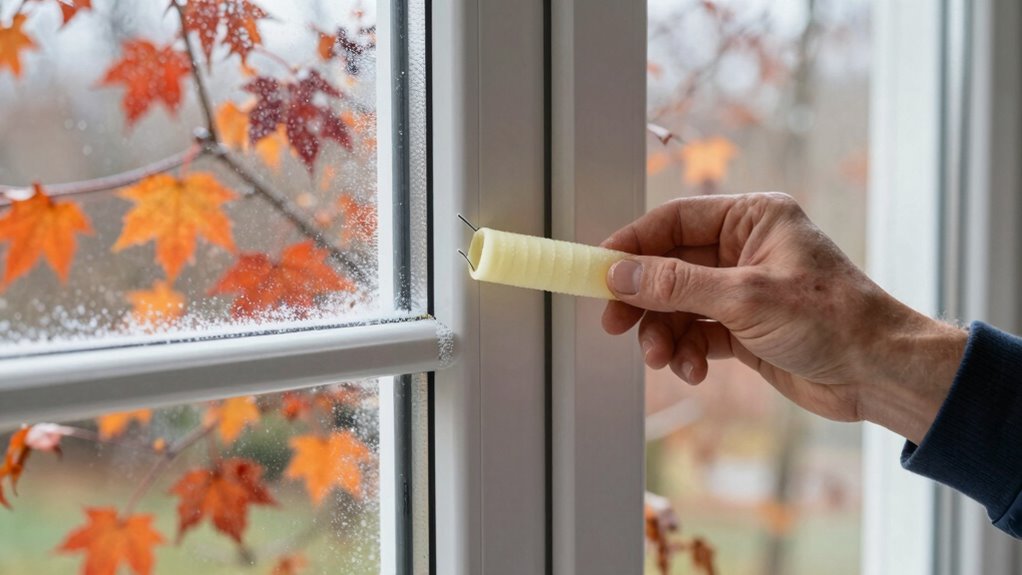
To keep cold air from sneaking inside your home, it’s essential to seal gaps and cracks around windows, doors, and other entry points. Drafting insulation helps identify areas where air escapes, making it easier to target sealing leaks effectively. Use weatherstripping around doors and windows to block drafts and prevent heat loss. Apply caulk to seal cracks in window frames, door frames, and any small gaps in your walls. Don’t forget to check utility outlets and vents for leaks. By sealing these leaks now, you’ll improve your home’s energy efficiency and stay warmer throughout winter. Taking these steps ensures cold air stays outside, reducing your heating costs and preventing drafts that can cause discomfort and potential damage over time. Understanding brewing science principles like heat transfer and insulation can also help you optimize your home’s overall thermal performance.
Drain and Winterize Outdoor Irrigation and Sprinkler Systems
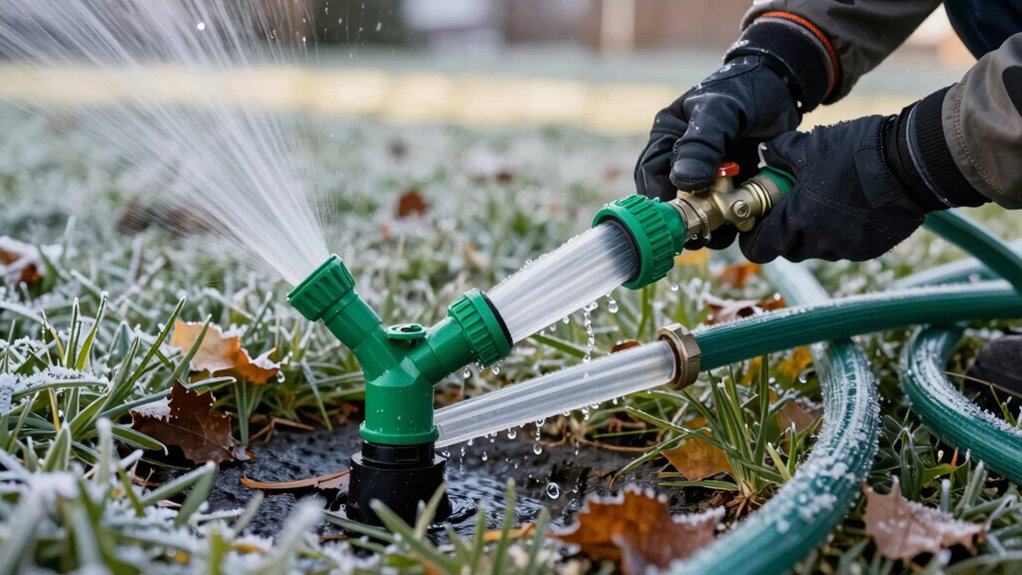
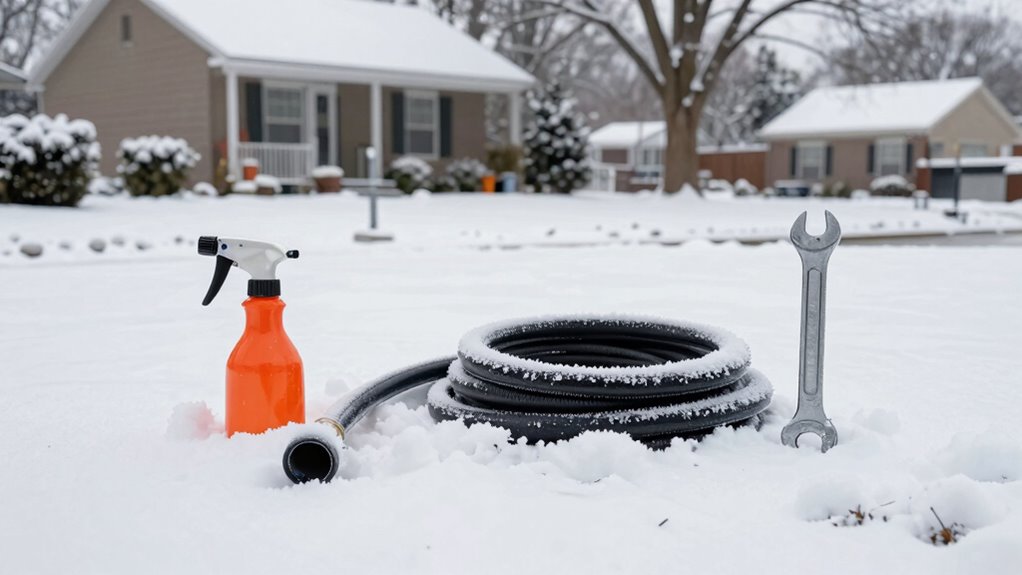
As winter approaches, it’s essential to drain and winterize your outdoor irrigation and sprinkler systems to prevent damage from freezing water. Proper drainage guarantees your system’s outdoor fixtures won’t crack or burst in cold weather. To do this effectively, you should:
- Turn off the main water supply and activate the system’s drain valves to release remaining water.
- Use an air compressor to blow out any residual water in the lines, ensuring frost protection.
- Cover or disconnect exposed components to shield them from harsh winter conditions.
Taking these steps minimizes the risk of cracks caused by expanding ice. Winterizing your irrigation system not only protects your outdoor fixtures but also saves you money on repairs come spring. Proper drainage is key to maintaining a durable, frost-resistant system year-round.
Protect Your Roof and Gutters to Prevent Ice Dams
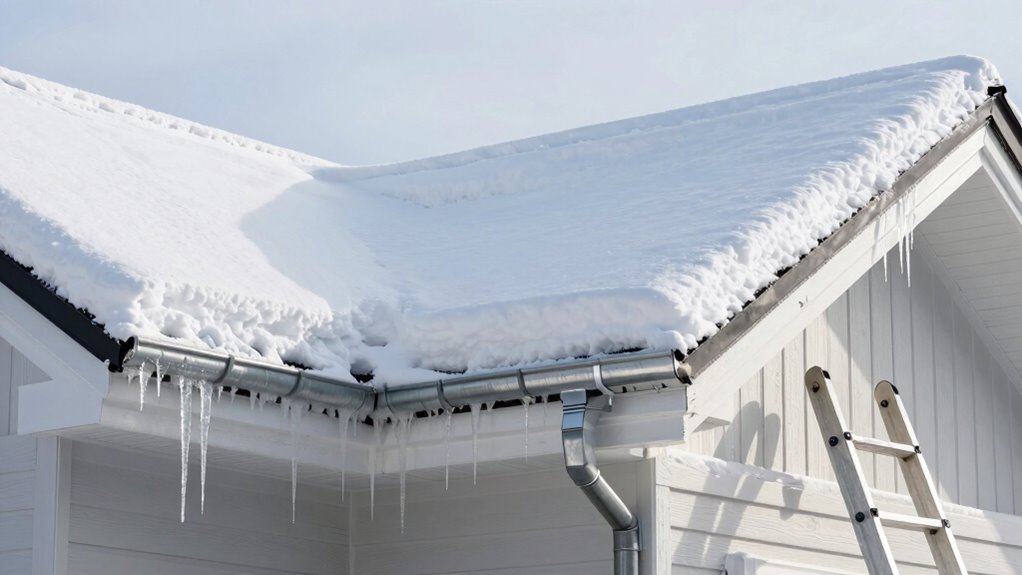
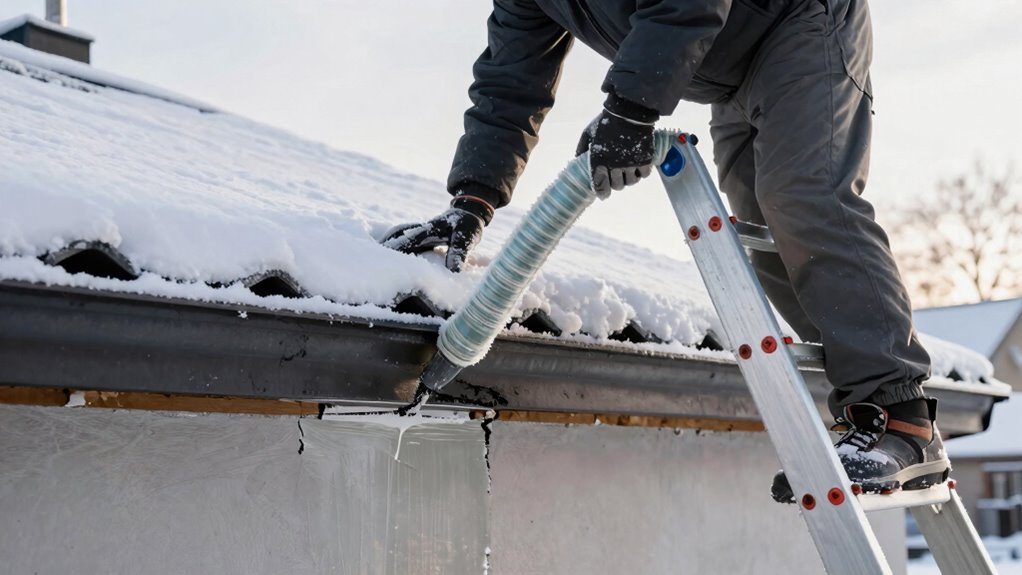
Protecting your roof and gutters is essential to prevent ice dams from forming during winter. Regular roof maintenance helps identify and repair damaged shingles or leaks that could allow heat to escape. Gutter cleaning is equally important; clear out leaves and debris to ensure proper drainage. When gutters are clogged, melting snow can’t flow away, leading to ice buildup along the eaves. This trapped ice can create ice dams, which force water under your shingles and cause leaks. To minimize this risk, inspect your roof for weak spots and keep gutters free of obstructions. Proper roof maintenance and gutter cleaning create a clear path for melting snow, reducing the chances of ice dams and protecting your home’s structure throughout winter.
Maintain Heating Systems and Ventilation for Reliable Warmth
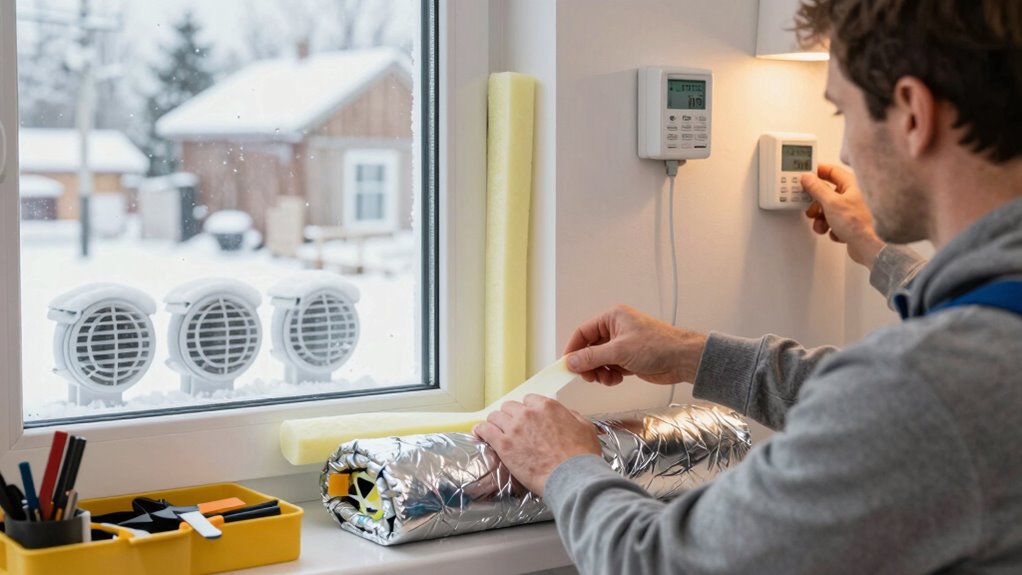
To keep your home warm and safe throughout winter, you need to regularly inspect your heating system for any issues. Making certain proper ventilation also helps prevent moisture buildup and maintains indoor air quality. By staying on top of these practices, you’ll ensure reliable warmth all season long.
Regular System Inspections
Regular system inspections are essential to guarantee your heating and ventilation systems operate efficiently and reliably throughout the winter. By routinely checking your equipment, you can spot issues early and prevent costly breakdowns. Consider performing system upgrades during inspections to improve energy efficiency and comfort. Staying on top of maintenance also enhances your emergency preparedness, ensuring you’re ready if a system failure occurs during a cold snap.
During inspections, focus on:
- Tightening connections and sealing drafts to boost efficiency
- Replacing filters to maintain airflow and indoor air quality
- Checking for signs of wear or corrosion that could cause future problems
Regular inspections save money, extend system lifespan, and keep your home warm when it matters most.
Proper Ventilation Practices
Maintaining proper ventilation is essential for guaranteeing your heating systems run efficiently and your home stays comfortable during winter. Good ventilation airflow prevents indoor air quality from declining, reducing mold, odors, and pollutants. When ventilation is optimized, warm air circulates properly, and moisture doesn’t accumulate, which helps prevent cracks caused by expansion and contraction.
Here’s a quick overview of effective practices:
| Ventilation Tip | Why It Matters | Result |
|---|---|---|
| Regularly open vents | Ensures fresh air flow | Improved indoor air quality |
| Use exhaust fans | Removes excess moisture | Reduces mold risk |
| Check duct integrity | Prevents air leaks | Consistent airflow |
| Maintain filters | Keeps air clean | Healthier indoor environment |
| Balance airflow | Avoids pressure imbalances | Home stays warm and safe |
Install Weather Stripping and Door Sweeps for Extra Insulation
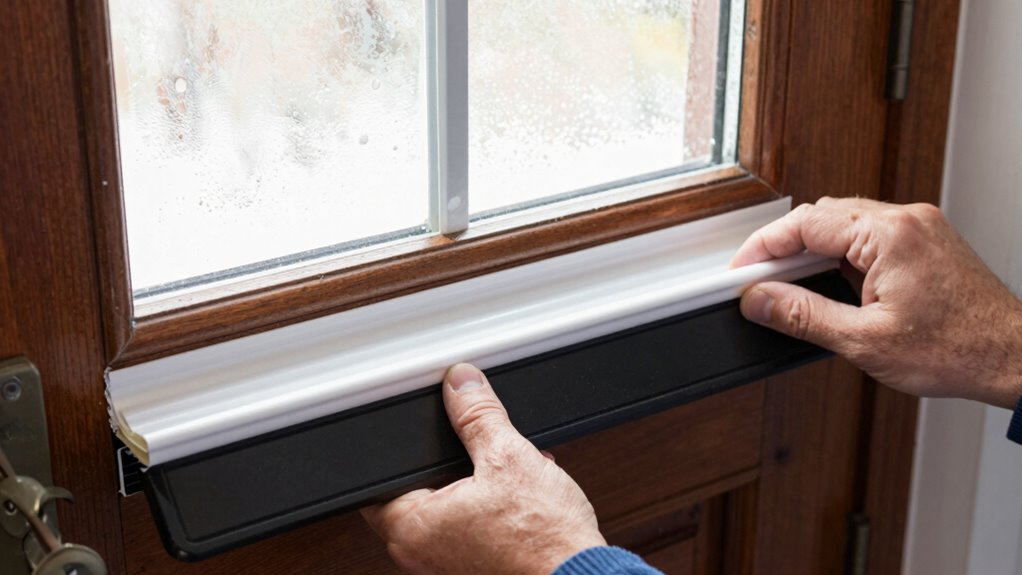
As temperatures drop, installing weather stripping and door sweeps becomes essential for keeping cold air out and warm air in. Drafting windows can make your home uncomfortably chilly, but sealing gaps with proper weather stripping reduces heat loss. When installing door sweeps, focus on the bottom of exterior doors to block drafts and moisture. Here are some tips to maximize insulation:
- Check for drafts around windows and seal gaps with weather stripping.
- Install door sweeps on all exterior doors to prevent cold air infiltration.
- Ensure door sweeps are snug and properly aligned for maximum effectiveness.
Schedule Regular Winter Checks to Catch Problems Early
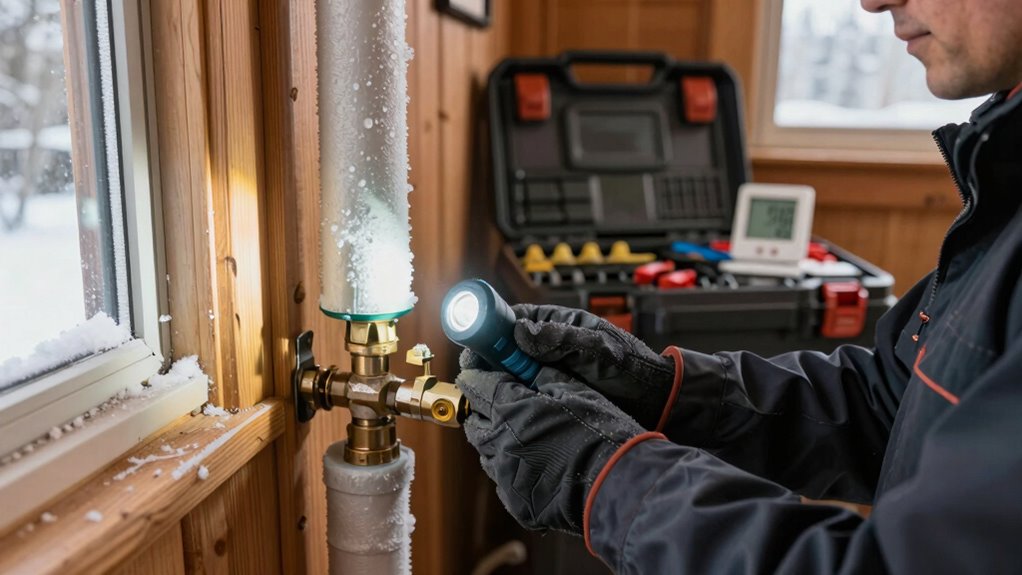
Scheduling winter checks early guarantees you catch potential problems before they worsen. Regular seasonal maintenance and property inspections help identify issues like leaks, drafts, or weakened roofs before they lead to costly damage. By scheduling these inspections periodically, you stay proactive and prevent cracks caused by ice expansion or moisture buildup. Consider the following checklist:
| Check Area | Action Required | Timing |
|---|---|---|
| Roof & Gutters | Clear debris, inspect for damage | Before winter begins |
| Windows & Doors | Seal gaps, add weather stripping | Early winter |
| Plumbing | Insulate pipes, check for leaks | Mid-winter |
| Exterior Walls | Inspect for cracks, repairs needed | Late winter |
This approach guarantees your property stays resilient throughout the season.
Inspect and Repair Hidden Damage After Winter Ends
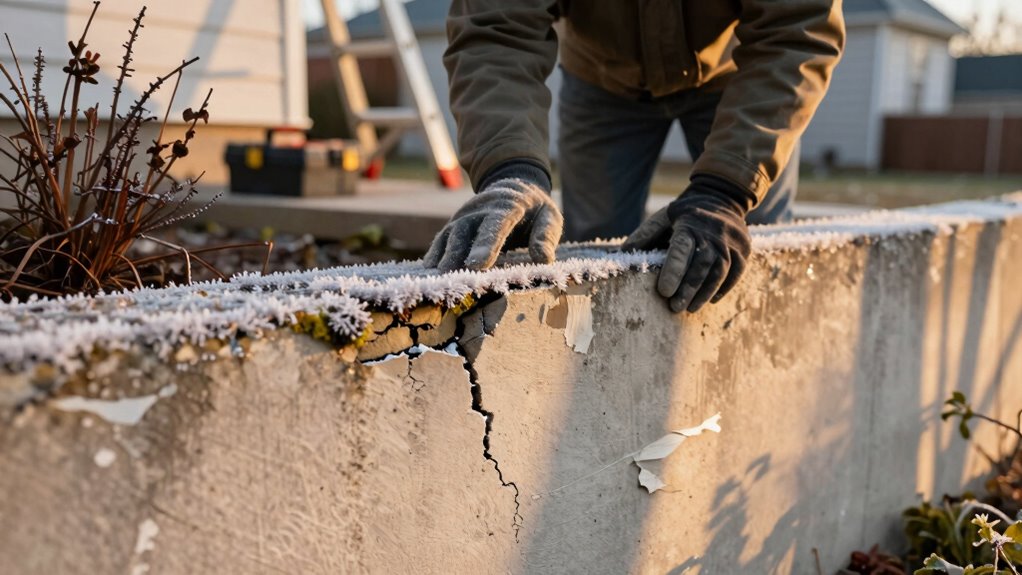
After winter ends, it is essential to thoroughly inspect your property for hidden damage that may have gone unnoticed during seasonal checks. A careful post winter inspection helps catch problems early before they worsen. Look for:
After winter, inspect your property carefully for hidden damage and address issues promptly to prevent further deterioration.
- Cracks in walls or foundation caused by freeze-thaw cycles
- Water damage or mold from ice melting and leaks
- Warped or damaged roofing or siding from snow buildup
Pay close attention to areas prone to hidden damage, like basements, attics, and around gutters. Addressing these issues promptly prevents cracks and further deterioration. Don’t overlook small signs of trouble—they often indicate underlying problems. Conduct your post winter inspection with a keen eye, and repair any damage immediately to keep your property strong and secure for the seasons ahead. This proactive step is key to winterizing successfully.
Frequently Asked Questions
When Is the Best Time to Start Winterizing My Property?
You should start winterizing your property in early fall, ideally before temperatures drop consistently below freezing. This is the perfect time for seasonal maintenance and a thorough property inspection to identify any vulnerabilities. By acting early, you prevent cracks and other winter damage. Don’t wait until it’s too cold; taking these proactive steps now helps ensure your property stays protected and in great shape throughout the winter months.
How Often Should I Check for New Vulnerabilities During Winter?
You should check for new vulnerabilities during winter every few weeks, especially after storms. Regular inspections help you identify issues early, ensuring your storm preparedness and emergency supplies are sufficient. Look for damaged insulation, leaks, or cracks that may have worsened due to freezing temperatures. Staying vigilant allows you to address problems promptly, preventing costly repairs and keeping your property safe throughout the season.
What DIY Tools Are Essential for Winterizing My Home?
You should keep essential DIY tools like a screwdriver, pliers, a utility knife, and a caulk gun handy for winterizing your home. Guarantee your tools are in good condition through regular tool maintenance to prevent accidents. Prioritize DIY safety by wearing gloves and eye protection. These tools help you seal leaks, insulate pipes, and close gaps, reducing winter damage while keeping your work safe and effective.
Are There Specific Materials Recommended for Sealing Cracks?
For sealing cracks, you should choose caulk types like silicone or polyurethane, which offer excellent flexibility and adhesion. These sealants provide high durability, ensuring your cracks stay sealed through winter’s harsh conditions. Consider using a weatherproof or exterior-grade caulk for long-lasting results. Properly clean and dry the surface before applying, and apply in a smooth, continuous bead to prevent gaps and cracks from reappearing.
How Can I Tell if My Insulation Is Sufficient for Winter?
Think of your home’s insulation as a cozy blanket—if it’s thick enough, you stay warm effortlessly. To assess this, do an insulation assessment or use thermal imaging to spot cold spots and drafts. These tools reveal gaps or thin areas that might let heat escape. If you notice uneven warmth or high energy bills, it’s a sign you need better insulation, helping prevent costly winter surprises.
Conclusion
By following these steps, you’ll markedly reduce the risk of costly cracks and damage during winter. Did you know that frozen pipes cause over $1 billion in damages annually? Taking proactive measures now not only saves you money but also keeps your home safe and warm all season long. Stay diligent, inspect regularly, and winterize thoroughly—you’ll enjoy peace of mind knowing your property is prepared for even the coldest weather.