If your pool water stays cloudy, four main issues could be the cause: poor filtration, chemical imbalances, debris buildup, or temperature problems. Make sure your pump and filter are running properly and clean to improve circulation. Check and adjust your water’s pH, alkalinity, and sanitizer levels to fix chemical issues. Regularly remove debris and monitor temperature to prevent algae growth. Keep these tips in mind, and you’ll uncover more ways to achieve perfectly clear water.
Key Takeaways
- Imbalanced pH or low sanitizer levels can cause water to turn cloudy and unsafe.
- Poor filtration or circulation allows debris and particles to accumulate, reducing clarity.
- Warm water promotes algae growth, which can cloud the pool and affect water quality.
- Debris, oils, and organic contaminants can introduce particles that cloud the water if not regularly removed.
- Inadequate chemical adjustments or infrequent testing lead to imbalances that cause persistent cloudiness.
Why Does My Pool Water Look Cloudy? Common Causes Explained
Cloudy pool water is a common issue that can stem from several underlying causes. One key factor is water temperature, which influences algae growth and chemical reactions, making the water appear dull and murky. If the water gets too warm, algae can thrive, compromising pool safety and clarity. Proper chemical balance is also essential; imbalanced pH or insufficient sanitizer levels can lead to cloudy water and unsafe swimming conditions. Poor filtration and circulation further contribute by allowing debris and particles to accumulate, reducing water clarity. Regularly testing and adjusting chemicals, maintaining appropriate water temperature, and ensuring your pool’s filtration system operates efficiently are crucial steps. Additionally, understanding water chemistry helps in diagnosing and preventing cloudiness. Proper filtration systems are vital for maintaining clarity, as they remove particles that cause cloudiness. Analyzing factors like chemical levels can help identify the root causes of cloudiness early. Implementing regular maintenance routines can significantly reduce the chances of water becoming cloudy. Consistent monitoring of water quality parameters ensures that all aspects of water treatment are balanced. Addressing these causes helps keep your pool safe, clear, and inviting for swimmers.
How to Improve Filtration and Circulation to Clear Your Pool
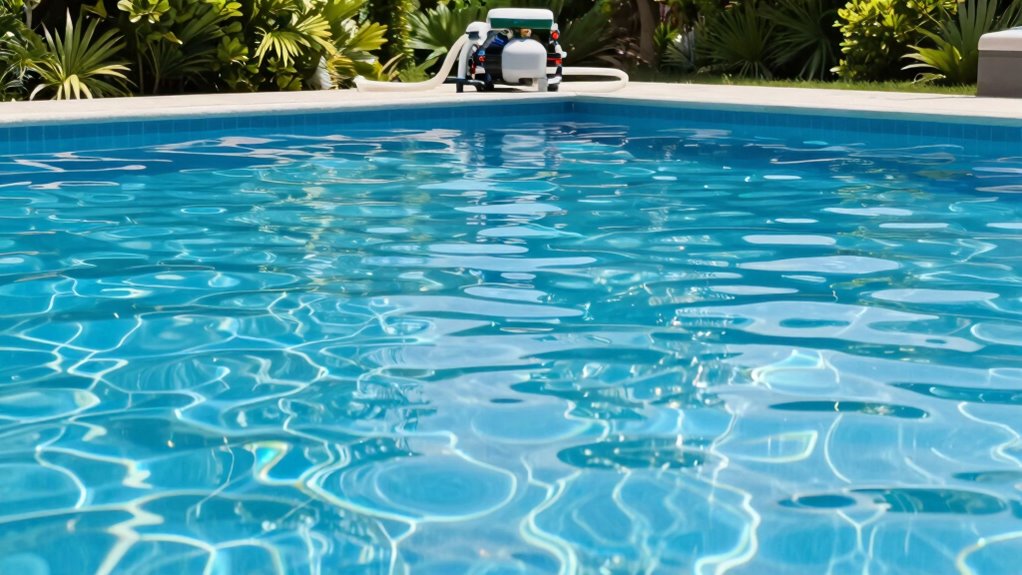
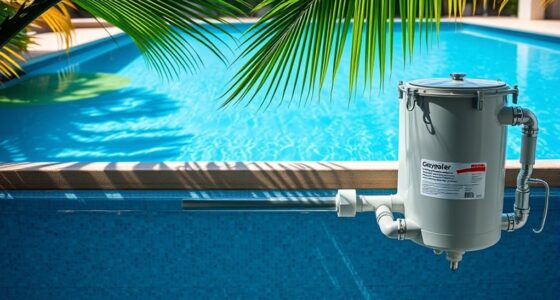
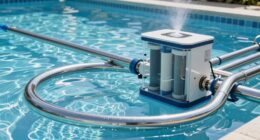
To effectively improve filtration and circulation, start by checking that your pool’s pump and filter are functioning properly and running for an adequate amount of time each day. A well-maintained pool pump ensures water moves efficiently through your filtration system, removing debris and contaminants. Make sure your pool pump operates long enough—typically 8-12 hours daily—so water gets properly filtered. Inspect your filtration system for clogs or buildup, and clean or backwash it regularly. Upgrading to a higher-capacity pump or filter can also boost circulation, helping clear cloudiness faster. Proper circulation prevents stagnation, distributes chemicals evenly, and ensures your pool water stays clear. Regularly monitoring and maintaining your cabling and mounting kits is also essential to prevent issues that could disrupt your filtration system. Additionally, ensuring proper wiring and installation practices can reduce electrical problems that may impair pump performance. Consistent maintenance of these components is key to maintaining sparkling, transparent water.
How Chemical Imbalances Make Pool Water Murky: And How to Fix Them
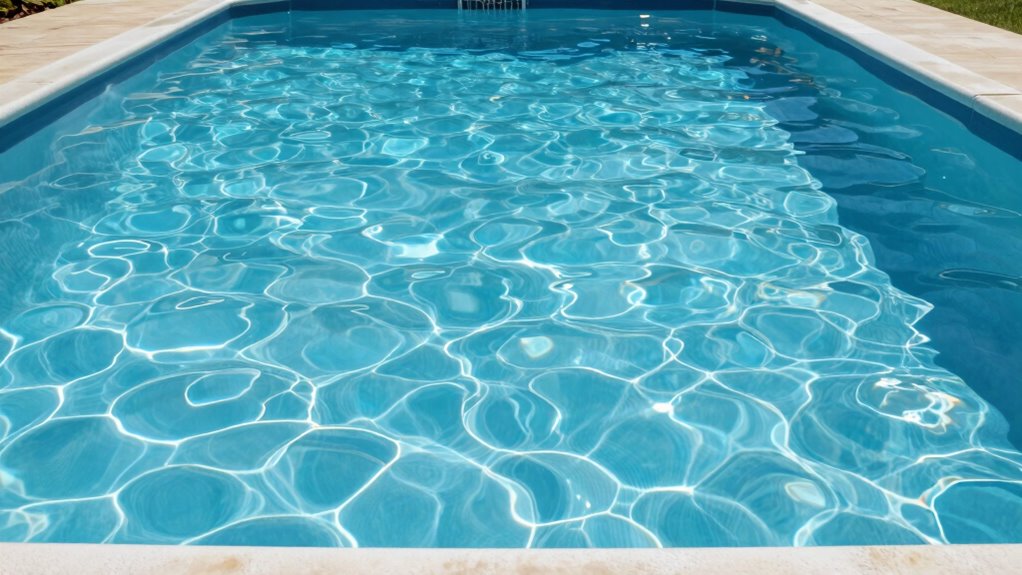
Chemical imbalances are a common cause of murky pool water because they disrupt the natural clarity and balance of your pool. When your water’s chemical levels are off, it can lead to cloudiness and algae growth. To fix this, focus on proper chemical balancing and pH adjustment. Here are three key steps:
Chemical imbalances cause murky water by disrupting clarity and promoting algae growth.
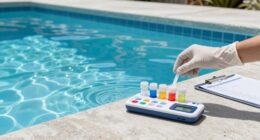
- Test your water regularly to identify imbalances in pH, alkalinity, and chlorine levels.
- Adjust the pH by adding pH increasers or decreasers to keep it between 7.2 and 7.6, promoting clear water.
- Maintain proper chemical levels to prevent algae and bacteria, which can cause murkiness. Regularly testing water chemistry helps maintain the right chemical balance and prevents future cloudiness. Proper water maintenance also ensures a safer swimming environment. Staying vigilant about water quality monitoring can catch issues early and restore clarity more quickly. Consistent chemical adjustments are essential for long-term clarity and preventing recurring issues. Correcting these imbalances restores clarity and keeps your pool inviting.
Removing Debris and Contaminants That Cloud Your Pool Water

Even when your chemical levels are balanced, debris and contaminants can still turn your pool water murky. Regular debris removal keeps leaves, dirt, and bugs out of your pool, preventing cloudiness. Contaminant control involves filtering out oils, lotions, and sweat that can introduce invisible particles, making water appear dull. Use a skimmer net daily to remove floating debris and a pool vacuum for settled dirt. Maintain your filter system to guarantee peak performance. Additionally, proper circulation helps distribute chemicals evenly and prevents stagnation, further maintaining clear water. Ensuring proper circulation also minimizes water stagnation, which can contribute to cloudiness and algae growth.
Frequently Asked Questions
How Often Should I Test My Pool Water?
You should test your pool water at least twice a week to keep it crystal clear. Regular pool water testing helps you monitor the chemical balance and spot issues early. If your pool gets heavy use or after a storm, test more frequently. Maintaining proper chemical levels guarantees healthy, clear water and prevents cloudiness. Consistent chemical balance monitoring is key to a safe, inviting pool all season long.
What Are the Best Pool Clarifiers to Use?
Think of pool clarifiers as your pool’s personal detox. The best clarifiers, like algaecides or flocculants, help you cut through murkiness by clumping tiny particles together. For ideal pool maintenance and water chemistry, choose clarifiers compatible with your pool type. Always follow the instructions, and consider testing your water afterward to guarantee clarity. Using the right clarifier restores your pool’s sparkle and keeps it inviting.
Can Algae Cause Cloudiness Even With Proper Chemicals?
Yes, algae growth can cause cloudiness even if you maintain proper chemicals. When algae thrive, they release particles that make your water look murky. Plus, if there’s a chemical imbalance, your sanitizer might not effectively kill algae, allowing it to spread. Regularly check your chemical levels, especially chlorine and pH, to prevent algae buildup. Keep your filtration system clean, and promptly address any signs of algae to keep your water clear.
How Long Does It Take to See Clear Water After Treatment?
Once you treat your pool, you’ll see clarity in about 24 to 48 hours, provided you maintain proper chemical balance and filtration efficiency. The key is consistent circulation and cleaning, which helps particles settle and clears the water. If you notice persistent cloudiness, double-check your chemicals and filter system. Patience pays off—trust the process, and soon your pool will sparkle with pristine, perfectly balanced, crystal-clear water.
Are There Eco-Friendly Options for Pool Water Clarification?
Yes, you can opt for eco-friendly options for pool water clarification. You might use natural filtration systems like sand or biological filters, which reduce reliance on chemicals. Additionally, eco-friendly chemicals such as mineral-based clarifiers or enzyme treatments help improve water clarity without harming the environment. These alternatives are safe for swimmers and promote sustainable pool maintenance, ensuring your water stays clear while minimizing ecological impact.
Conclusion
Keeping your pool crystal clear isn’t just about aesthetics—it’s essential for safety and health. Did you know that poor filtration and chemical imbalances are the top causes of cloudy water? By maintaining proper circulation, balancing chemicals, and removing debris, you can enjoy sparkling, inviting water all season long. Staying on top of these simple steps guarantees your pool stays inviting and safe, so you can take the plunge whenever you want—without worry.