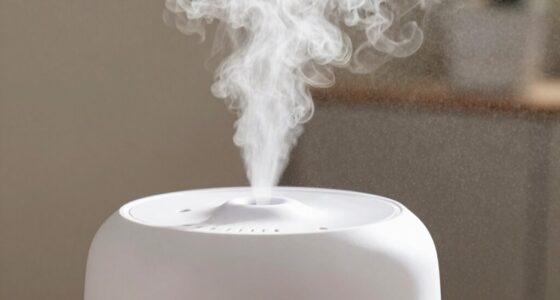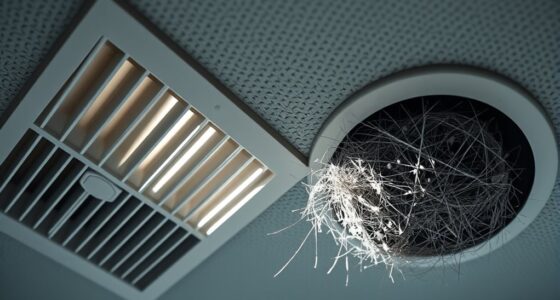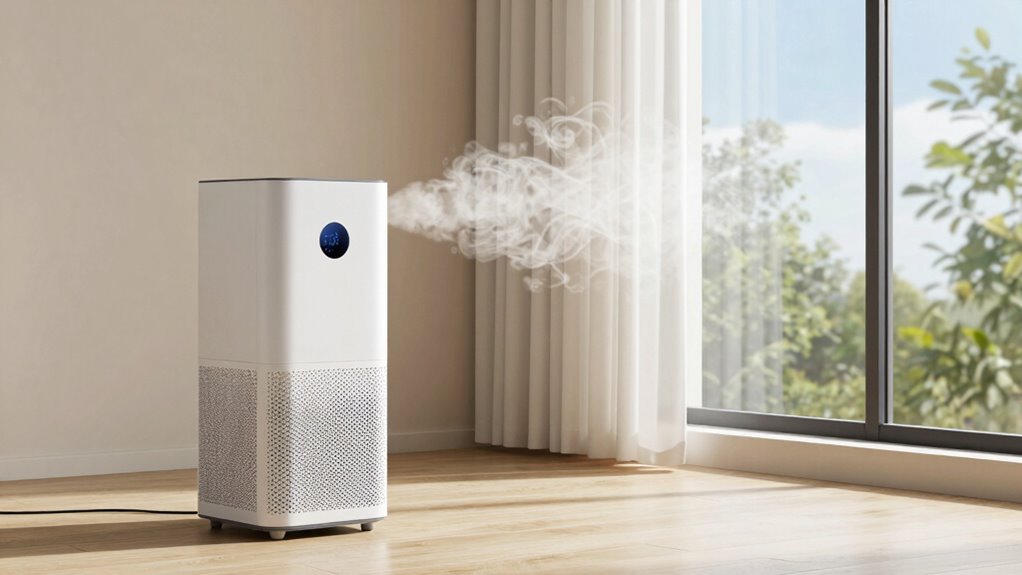

Air purification involves removing or neutralizing airborne pollutants like dust, allergens, bacteria, and odors using devices like HEPA filters, activated carbon filters, and UV sterilizers. Better airflow, on the other hand, focuses on improving the movement and circulation of air through strategic placement of fans, vents, and windows, preventing stagnation and ensuring fresh air reaches all areas. Understanding these differences helps you create a healthier indoor space; keep exploring to learn how both strategies work together effectively.

Get cleaning gear delivered free with Prime
- Fast, free delivery on millions of items
- Prime Video, Amazon Music and more included
- Member-only deals all year
Key Takeaways
- Air purification primarily removes or neutralizes airborne pollutants, while better airflow focuses on improving air movement and circulation.
- Purification techniques include filters and sterilizers; airflow strategies involve fans, vents, and airflow patterns.
- Air purification enhances air quality by targeting specific contaminants; improved airflow prevents stagnation and disperses pollutants.
- Effective purification ensures cleaner air at a microscopic level; better airflow maintains overall ventilation efficiency and comfort.
- Combining both strategies creates a comprehensive indoor air quality system, addressing both contamination and air movement.
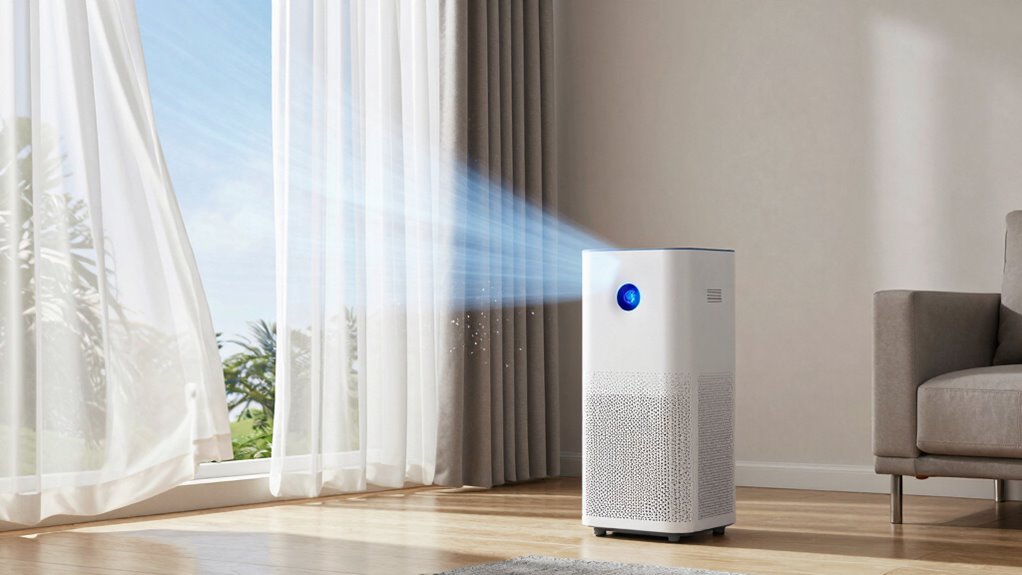
When it comes to creating a healthier indoor environment, you often have to choose between improving air purification and enhancing airflow. Both approaches are vital, but understanding their differences helps you make smarter decisions for your space. Air purification primarily focuses on removing contaminants from the air, like dust, allergens, bacteria, and odors. To achieve this, you might use air filtration techniques such as HEPA filters, activated carbon filters, or UV sterilizers. These methods trap or neutralize pollutants, ensuring the air you breathe is cleaner and safer. However, air purification isn’t just about filtering out particles; controlling humidity also plays a crucial role. Proper humidity levels prevent mold growth and reduce dust mite populations, which can worsen allergies and respiratory issues. Humidity control, therefore, complements air filtration techniques by maintaining optimal moisture levels, making the environment less hospitable to airborne pathogens and allergens.
On the other hand, enhancing airflow emphasizes moving air effectively through the space. Good airflow prevents the stagnation of indoor air, reducing the buildup of indoor pollutants and moisture. When you focus on airflow, you’re improving ventilation, which helps circulate fresh air from outside and dilute indoor contaminants. Proper airflow can be achieved through strategic placement of fans, vents, and windows, ensuring air moves smoothly without creating drafts or excessive energy use. Unlike air purification, which targets specific pollutants, better airflow maintains overall air quality by constantly refreshing the environment. It also helps regulate temperature and humidity, preventing hot spots or damp areas that could foster mold growth or discomfort. Additionally, understanding air circulation helps optimize how effectively these strategies work together. Incorporating airflow patterns into your design can further enhance the efficiency of your ventilation system and improve overall air distribution. To maximize these benefits, considering air movement principles can ensure that your indoor environment remains consistently comfortable and healthy. When properly managed, air exchange can significantly improve indoor air quality by continually replacing stale air with fresh outdoor air. Incorporating ventilation efficiency can also reduce energy consumption while maintaining high air quality standards.
As an affiliate, we earn on qualifying purchases.
Frequently Asked Questions
How Do I Know Which Solution Is Best for My Home?
To choose the best solution for your home, consider your air quality needs and ventilation effectiveness. If you notice allergies, odors, or airborne pollutants, an air purifier can help. However, if your home feels stuffy or stale, improving airflow with better ventilation is key. Assess your space and symptoms to decide whether to prioritize purification or airflow, ensuring you create a healthier, more comfortable environment.
Can Air Purification and Better Airflow Be Used Together Effectively?
Yes, air purification and better airflow can work together effectively to improve your home’s air quality. By integrating these systems, you guarantee cleaner air while maintaining proper circulation, reducing pollutants, allergens, and humidity. Proper system integration allows both components to complement each other, optimizing airflow and filtration. This combined approach creates a healthier, more comfortable environment, ensuring your home’s air quality remains high and well-balanced.
What Are the Maintenance Costs for Air Purifiers Versus Airflow Systems?
You’ll find that air purifiers often have higher maintenance costs due to filter replacements, which need periodic changing to keep them effective. Energy consumption varies; purifiers may use more electricity, especially high-efficiency models. Airflow systems generally have lower ongoing costs, mainly for occasional filter checks. Overall, consider both filter replacement expenses and energy use when comparing maintenance costs for air purifiers versus airflow systems.
Do Different Room Sizes Require Different Air Quality Solutions?
Yes, different room sizes do require different air quality solutions. Larger rooms with greater volume need systems with higher airflow capacity to guarantee proper air circulation, while smaller spaces can be effectively managed with lower-capacity units. Matching the system to your room volume helps maintain healthy air quality and prevents stale air. So, consider your room’s size and airflow needs to choose the right solution for ideal air circulation.
Are There Health Benefits Unique to Each Approach?
You might find that air purification offers unique health benefits, like allergy relief and odor elimination, by filtering out allergens and pollutants. Conversely, better airflow improves ventilation, reducing airborne contaminants more quickly and lowering infection risks. Studies show that proper airflow can decrease airborne bacteria by up to 80%. Both approaches support better health, but purification targets specific irritants, while airflow enhances overall ventilation and freshness.
As an affiliate, we earn on qualifying purchases.
Conclusion
Think of air purification as a shield, guarding you from unseen enemies, while better airflow is the wind that keeps your space alive and vibrant. Both are crucial—one clears the fog, the other keeps the breeze flowing. Without either, your environment becomes like a garden left in silence, lacking vitality. To truly breathe easy, embrace both as the twin wings that lift your home’s health, ensuring your sanctuary remains a place where life and clarity flourish together.
As an affiliate, we earn on qualifying purchases.
As an affiliate, we earn on qualifying purchases.
Halloween Picks
halloween
As an affiliate, we earn on qualifying purchases.