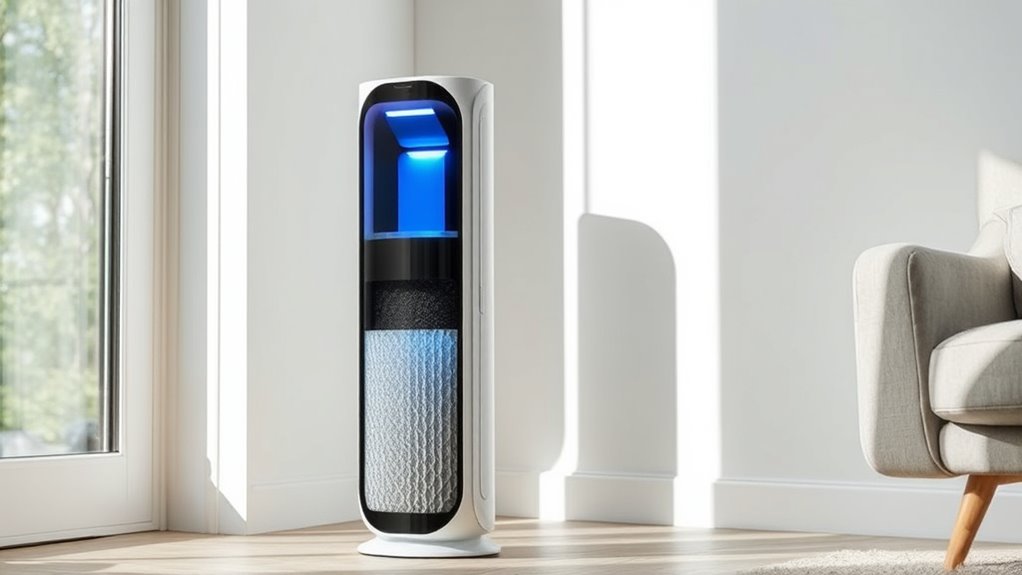

Understanding HEPA, UV, and activated carbon filters helps you choose the right air purifier for your needs. HEPA filters trap 99.97% of tiny particles like dust and pollen, improving allergen removal. UV filters use light to deactivate bacteria and viruses, offering microbial protection. Activated carbon filters absorb odors and VOCs, keeping your air fresh. Combining these filters boosts overall air quality—keep exploring to learn how to optimize your purifier’s performance for healthier indoor air.
Key Takeaways
- HEPA filters remove at least 99.97% of airborne particles, effectively capturing allergens like dust, pollen, pet dander, and mold spores.
- UV filters use ultraviolet light to deactivate bacteria, viruses, and microorganisms, enhancing microbial air cleanliness.
- Activated carbon filters absorb odors, gases, and VOCs, helping eliminate smoke, cooking smells, and chemical fumes.
- Proper maintenance, including regular filter replacement or cleaning, is essential to sustain the effectiveness of all filter types.
- Combining HEPA, UV, and activated carbon filters in an air purifier provides comprehensive removal of particles, microbes, and pollutants for healthier indoor air.
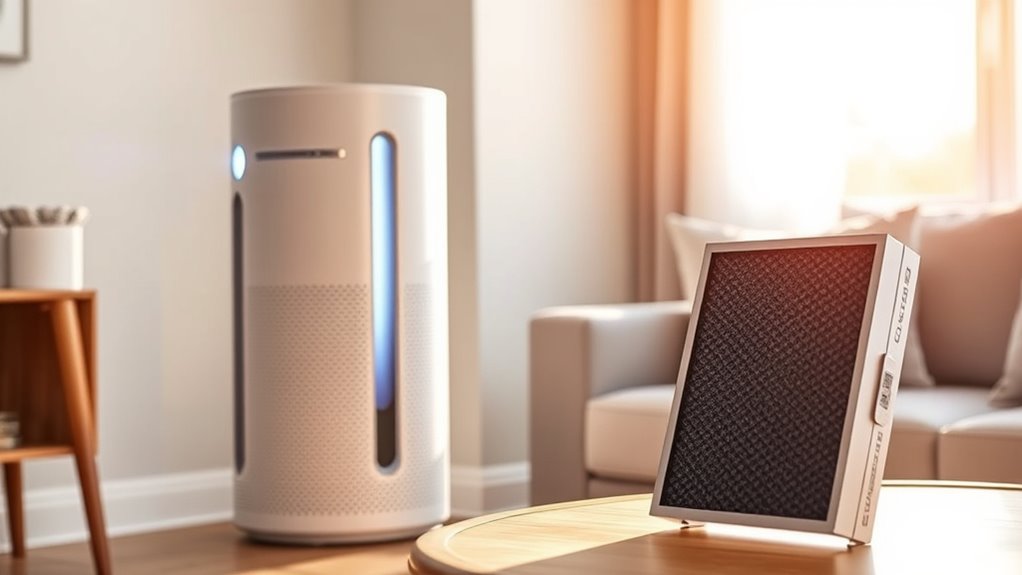
Have you ever wondered how to improve the air quality in your home or office? One effective way is by using an air purifier, but understanding how different filters work can seem overwhelming. The key is to choose the right type for your needs and keep it functioning efficiently through proper purifier maintenance. This is especially important when dealing with indoor allergens, such as dust, pollen, pet dander, and mold spores, which can considerably impact your health and comfort.
Indoor allergens are common culprits behind allergies and respiratory issues. An air purifier equipped with a HEPA filter is highly effective at capturing these tiny particles. HEPA filters are designed to trap at least 99.97% of airborne particles as small as 0.3 microns, including many indoor allergens. To keep your purifier working effectively, regular purifier maintenance is essential. This means changing or cleaning the HEPA filter according to the manufacturer’s instructions, usually every 6 to 12 months. Neglecting this step can decrease the filter’s effectiveness, allowing allergens to circulate freely and lowering your air quality.
Regular HEPA filter maintenance is essential to effectively remove indoor allergens.
UV filters work differently by using ultraviolet light to deactivate bacteria, viruses, and other microorganisms. They’re especially useful if you’re concerned about biological contaminants or if someone in your home has immune sensitivities. However, UV filters alone don’t remove particles like dust or pollen, so they’re most effective when combined with other types of filters. Proper purifier maintenance includes replacing UV bulbs periodically because over time, their germicidal effectiveness diminishes. Keeping UV components in good condition ensures that your air purifier continues to protect against microbial growth and enhances overall air cleanliness.
Activated carbon filters target odors, gases, and volatile organic compounds (VOCs), making them ideal if you’re dealing with smoke, cooking smells, or chemical fumes. They work by adsorbing these pollutants onto their porous surface, but they can become saturated over time. Regular purifier maintenance involves replacing or reactivating activated carbon filters to prevent odors from lingering. Depending on usage, this might mean changing the filter every 3 to 6 months. Maintaining these filters ensures that odors are effectively neutralized and that VOC levels stay low in your indoor environment.
Ultimately, selecting an air purifier with the right combination of filters and staying vigilant with purifier maintenance is vital for improving indoor air quality. Regularly inspecting and replacing filters not only prolongs the life of your device but also guarantees it performs at its best, providing you with cleaner, healthier air. By understanding how HEPA, UV, and activated carbon filters work and committing to routine upkeep, you can considerably reduce indoor allergens and create a safer, more comfortable space for everyone.
Frequently Asked Questions
How Do HEPA Filters Perform With Pet Dander?
HEPA filters excel at removing pet dander because of their high efficiency, capturing particles as small as 0.3 microns. You’ll notice improved air quality quickly since HEPA filter efficiency is designed for pet allergen removal. Regularly replacing or cleaning the filter guarantees it maintains peak performance. With a HEPA filter, you can breathe easier, especially if you or your family are sensitive to pet allergens.
Can UV Filters Eliminate Viruses Effectively?
UV filters act like a superhero squad, zapping viruses with their ultraviolet rays. Their effectiveness in virus removal can be impressive, especially when designed for air purification. UV effectiveness depends on the exposure time and intensity, making them highly capable of inactivating many airborne viruses. Keep in mind, they work best alongside filters like HEPA, providing a powerful shield against harmful pathogens in your space.
What Is the Lifespan of Activated Carbon Filters?
Your activated carbon filter typically lasts about 3 to 6 months, but this can vary based on usage and air quality. To maintain peak performance, you should monitor for signs of saturation, like decreased odor absorption. Regular carbon filter replacement is essential, and factors such as indoor pollution levels and filter size influence the filter lifespan. Check your purifier’s guidelines for the most accurate replacement schedule.
Are Air Purifiers Safe for Children and Pets?
Yes, air purifiers are generally safe for children and pets when used correctly. You should choose models with child safety features, such as lockable controls and safe filters. Keep the purifier in a well-ventilated area and make sure filters are replaced as recommended. By doing so, you protect your child’s safety and pet safety, reducing allergens and pollutants without risking exposure to harmful fumes or electrical hazards.
Do Different Filter Types Work Best Together?
You can absolutely get the most out of your air purifier by combining different filters for filter synergy. Using HEPA, UV, and activated carbon filters together tackles a wider range of pollutants, but keep in mind maintenance considerations—each requires regular cleaning or replacement. Think of it as a well-oiled machine; when all parts work in harmony, your indoor air quality improves considerably. Just stay on top of upkeep for ideal results.
Conclusion
Choosing the right air purifier depends on your needs, whether it’s HEPA filters for allergens, UV for germs, or activated carbon for odors. Remember, a chain is only as strong as its weakest link, so consider combining filters for peak air quality. Investing in clean air isn’t just a luxury—it’s a necessity for health and well-being. As the saying goes, “An ounce of prevention is worth a pound of cure,” so start purifying today.