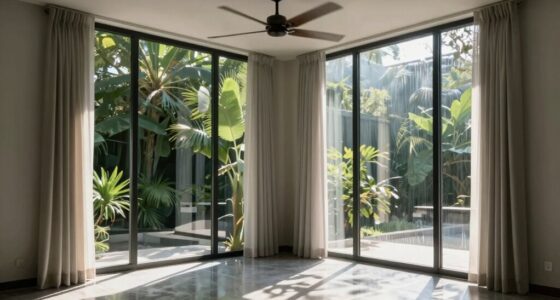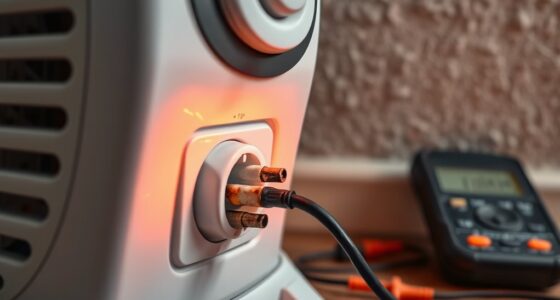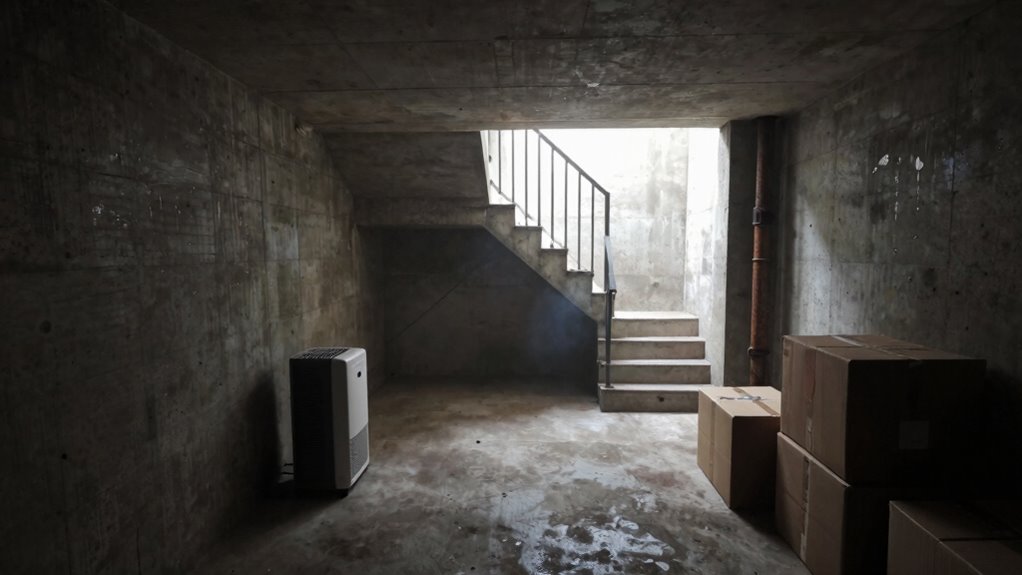

Your basement air feels different from upstairs because of poor ventilation and higher humidity levels, which can cause the air to become stale, damp, and heavy. Limited air circulation allows pollutants, moisture, and musty odors to build up, making the space feel oppressive. Up in the main living areas, better airflow and climate control keep the air fresh and balanced. If you want to understand how to improve your basement’s air, keep exploring these solutions.
Key Takeaways
- Basements often have limited air circulation, causing stale, damp, or musty air compared to upstairs levels.
- Higher humidity levels underground lead to a heavier, oppressive feeling in basement air.
- Poor ventilation in basements allows pollutants, mold spores, and moisture to accumulate more than upstairs.
- Basement walls and floors can retain moisture, influencing air quality and making it feel different.
- Temperature fluctuations and inadequate airflow make basement air feel cooler and less fresh than upstairs.
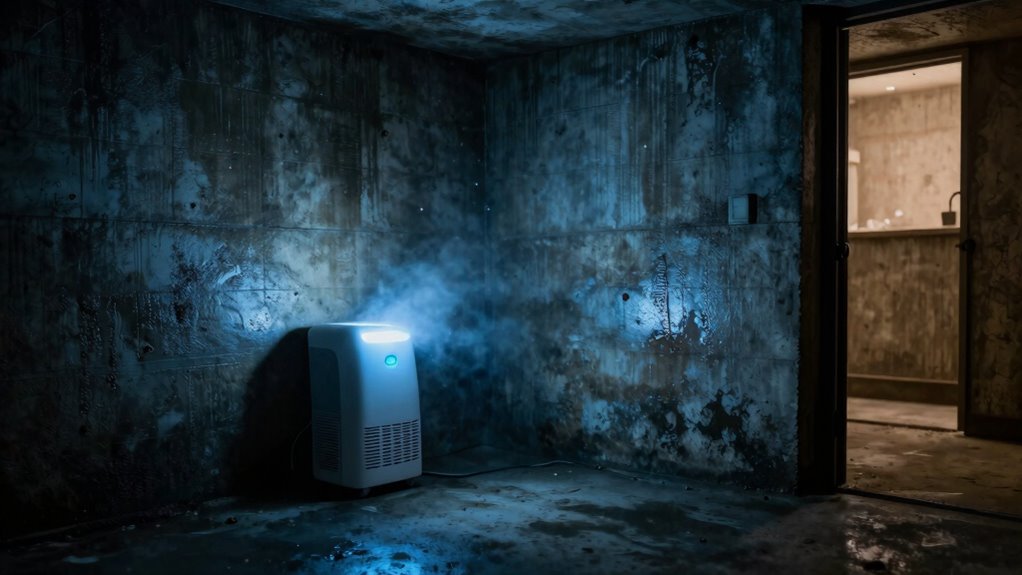
Basement air can feel noticeably different from the air in the rest of your home, often due to unique environmental factors. Unlike upstairs areas, basements tend to have limited air circulation, which can cause the air to feel stale or stuffy. Since air doesn’t move as freely in the basement, pollutants and moisture can accumulate more easily, leading to an uncomfortable environment. When air isn’t circulating well, you might notice a damp smell or a feeling of heaviness that doesn’t occur on the main floors. Improving air circulation is essential because it helps bring fresh air into the space and pushes out stale, contaminated air. Using fans or installing vents can make a significant difference, ensuring that air moves more effectively throughout the basement. Proper air circulation not only improves comfort but also reduces the buildup of mold spores, dust, and other allergens that can thrive in poorly ventilated areas. Additionally, air exchange systems can help maintain a healthier indoor environment by continuously replacing stale indoor air with fresh outdoor air. Proper ventilation is crucial because it helps prevent the buildup of indoor pollutants and reduces the risk of moisture-related issues. Enhancing air quality can also be achieved through regular cleaning and reducing sources of indoor pollution, which further improves the environment. Humidity control plays a vital role in why your basement air feels different. Basements are naturally prone to higher humidity levels because they are often below ground, where moisture from the soil seeps in. Excess humidity creates a damp environment, which can cause musty odors and promote mold growth. When humidity levels are unchecked, the air can feel heavy and oppressive, making the space less inviting. To combat this, you need to manage moisture actively. Dehumidifiers are highly effective tools—they extract excess moisture, helping to maintain a balanced humidity level that keeps the air feeling fresh and dry. Ventilation systems that include exhaust fans or air exchange units can also help reduce humidity by replacing moist air with drier, outside air. Additionally, ensuring proper insulation can help minimize temperature fluctuations that contribute to condensation and moisture buildup. Proper moisture management is essential to prevent the development of mold and structural damage, making your basement safer and more comfortable. Keeping humidity in check not only improves comfort but also protects your home’s structure and your health by preventing mold and mildew. Ultimately, the way air circulates and the level of humidity in your basement are interconnected factors that influence how the air feels. When air isn’t moving properly, moisture tends to linger, making the space feel damp and uncomfortable. Conversely, good air circulation combined with humidity control can transform your basement into a more pleasant, healthier environment. You can start by installing simple solutions like fans, vents, and dehumidifiers, then regularly monitoring humidity levels to keep them within a healthy range. By taking these steps, you’ll notice a significant difference in how the air feels, making your basement a more comfortable and safer part of your home.
basement dehumidifier for moisture control
As an affiliate, we earn on qualifying purchases.
As an affiliate, we earn on qualifying purchases.
Frequently Asked Questions
Can Basement Air Quality Affect My Home’s Overall Health?
Yes, your basement air quality can impact your home’s overall health. Poor air circulation in the basement can trap moisture, mold, and Radon risks, which might then spread upward, affecting living spaces. Ensuring proper ventilation and testing for Radon helps reduce these dangers. By maintaining good air quality in your basement, you protect your entire home from potential health issues caused by airborne contaminants.
How Often Should I Test Basement Air for Mold?
You should test your basement air regularly, ideally every 3 to 6 months, especially if you notice a persistent basement odor or suspect mold spores. Frequent testing helps catch mold early before it impacts your health or spreads. If you detect mold spores or a musty smell, increase testing frequency and consider professional inspection. Regular checks keep your basement safe and prevent mold from affecting your home’s air quality.
Does Basement Humidity Impact Upstairs Air?
Think of your home as a living organism—what happens in the basement can ripple upstairs. Yes, basement humidity impacts upstairs air, influencing odors and overall dampness control. When the basement is humid, moisture can travel upward, affecting air quality and creating musty smells. Managing basement humidity levels helps prevent odors and maintains a healthier environment upstairs. Proper ventilation and dehumidifiers are your allies in keeping dampness in check.
Are There Specific Pollutants Common in Basement Air?
Yes, basement air often contains specific pollutants like basement allergens, mold spores, and radon exposure. These pollutants thrive in damp, poorly ventilated spaces, causing potential health issues. You might notice increased allergy symptoms or respiratory problems. To improve air quality, guarantee proper ventilation, control humidity, and test for radon regularly. Taking these steps helps reduce potential health risks and makes your basement air safer and more comfortable.
Can Ventilation Improvements Balance Air Differences?
Yes, ventilation improvements can balance air differences. By enhancing air circulation with properly designed ventilation systems, you guarantee fresh air flows evenly throughout your home, including the basement. This helps reduce stale air, humidity, and pollutants, creating a more consistent indoor environment. Regularly using exhaust fans, air purifiers, or installing an HVAC system with good ventilation features improves overall air quality and comfort upstairs and downstairs alike.
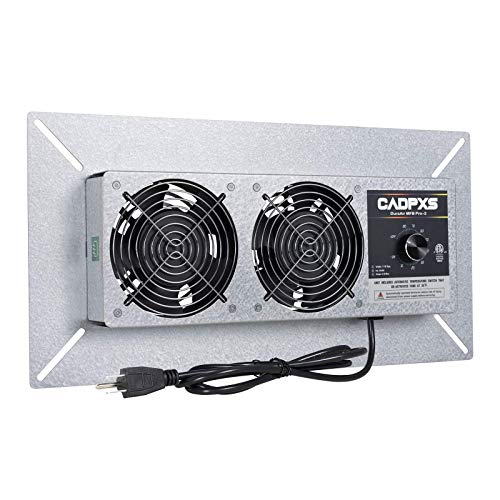
CADPXS Crawlspace Ventilation Fan, Crawlspace Fan Vent with Humidistat
- High airflow capacity: 220 CFM airflow for effective ventilation
- Dual fan design: Two fans with grounded power cord
- Versatile application: Suitable for crawl spaces, basements, garages, attics, hydroponics
As an affiliate, we earn on qualifying purchases.
As an affiliate, we earn on qualifying purchases.
Conclusion
Understanding why your basement air feels different from upstairs helps you take better control of your home’s environment. Did you know that indoor air can be up to five times more polluted than outdoor air? By addressing factors like poor ventilation and moisture, you can improve your basement’s air quality. Taking these simple steps not only makes your space more comfortable but also healthier for you and your family, so don’t overlook your basement’s unique needs.
air exchange system for basement
As an affiliate, we earn on qualifying purchases.
As an affiliate, we earn on qualifying purchases.
As an affiliate, we earn on qualifying purchases.