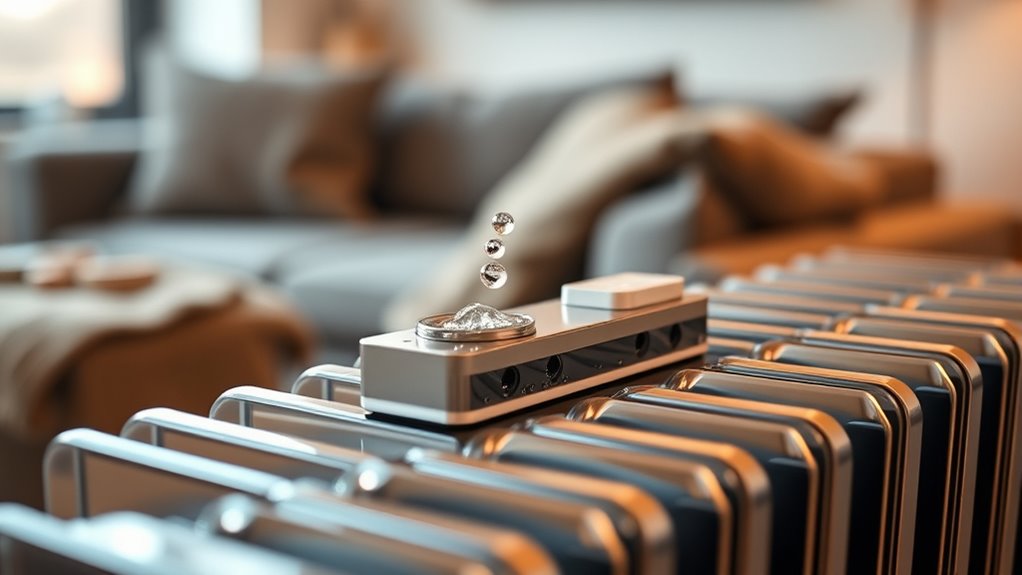

To quiet the gurgling in your hydronic radiators, start by turning off your heating system and letting the radiators cool. Use a radiator key or screwdriver to slowly open the bleed valve at the top of each radiator, listening for a hissing sound as trapped air escapes. Once a steady water stream flows, close the valve tightly. Afterward, check and adjust your boiler’s pressure if needed. If gurgling persists, you’ll discover more effective solutions ahead.

Get cleaning gear delivered free — and shop member deals
- Fast, free delivery on millions of items
- Access to Prime Big Deal Days deals on October 6–7
- Prime Video, Amazon Music and more included
Key Takeaways
- Turn off the heating and allow the radiator to cool before bleeding to prevent scalding and ensure accurate bleeding.
- Use a radiator key or flathead screwdriver to open the bleed valve slowly, releasing trapped air causing gurgling sounds.
- Place a cloth or small container under the valve to catch escaping water and monitor for steady water flow.
- After bleeding, check and adjust the boiler pressure to the recommended level to prevent future airlocks and noises.
- Regularly bleed your radiators and maintain proper pressure to keep the system quiet and prevent gurgling sounds.
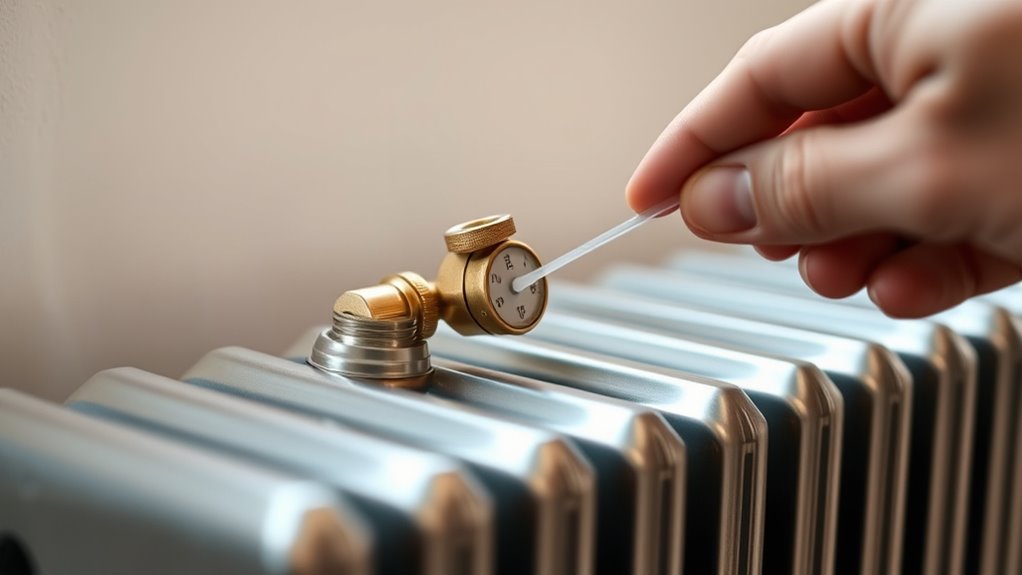
If your hydronic radiator isn’t heating properly, trapped air could be the culprit. Airlocks removal is often the solution when your radiator makes gurgling sounds or feels cold at the top. When air gets trapped inside the system, it blocks the flow of hot water, preventing efficient heat distribution. To fix this, you’ll want to bleed the radiator to release the trapped air and restore proper circulation. Before you start, check the pressure gauge on your boiler. Sometimes, airlocks cause pressure drops, so pressure balancing becomes necessary to guarantee the entire system functions smoothly.
Begin by turning off the heating system and allowing the radiator to cool. Locate the bleed valve, which is typically a small valve at the top of the radiator. You’ll need a radiator key or a flathead screwdriver, depending on your setup. Place a cloth or a small container underneath the valve to catch any water that might escape. Carefully turn the bleed valve slowly counterclockwise. You’ll hear a hissing sound as trapped air escapes. Keep the valve open until a steady stream of water starts to flow out without sputtering. Once that happens, tighten the valve securely.
Bleeding the radiator helps with airlocks removal, but it’s also essential to check the pressure afterward. If the pressure drops below the recommended level, you’ll need to top up the system using your filling loop or valve. Maintaining proper pressure is vital because if it’s too low, air can re-enter the system, causing the same issues again. Conversely, over-pressurizing can lead to leaks or excessive strain on the boiler components. After bleeding, always check the pressure gauge and adjust accordingly to keep the system balanced. Regular maintenance, including bleeding and pressure checks, can help prevent airlocks from forming in the first place.
Sometimes, if your radiator continues to gurgle or remains cold at the top after bleeding, it indicates an ongoing airlock or imbalance in pressure. In such cases, you might need to repeat the process or consult a professional for a more thorough pressure balancing. Properly balanced pressure allows hot water to circulate evenly throughout the system, preventing airlocks from forming in the first place. Ensuring your hydronic system is properly maintained can significantly reduce noise issues and improve heating efficiency. Properly balanced pressure allows hot water to circulate evenly throughout the system, preventing airlocks from forming in the first place. Regular maintenance, including bleeding and pressure checks, helps keep your radiators quiet and functioning efficiently. This prevents noise issues and guarantees your home stays warm without unnecessary disruptions.
As an affiliate, we earn on qualifying purchases.
Frequently Asked Questions
How Often Should I Bleed My Radiators?
You should bleed your radiators about once a year, or whenever you notice cold spots or gurgling sounds. During radiator maintenance, check the air vent placement to make certain it isn’t blocked. Regularly bleeding your radiators helps prevent air buildup, which can cause noise and reduce efficiency. Keep to a consistent radiator maintenance schedule to keep your system running smoothly and quietly, avoiding the gurgling noise altogether.
Can Bleeding Radiators Improve Heating Efficiency?
Think of your radiator as a team player; trapped air can slow it down, reducing its efficiency. Bleeding your radiators removes this air, immediately boosting radiator efficiency. When you release air trapped inside, hot water can circulate freely, providing better heat and saving energy. So, yes, regular bleeding keeps your heating system running smoothly, ensuring your home warms up faster and more evenly.
What Tools Do I Need to Bleed Hydronic Radiators?
You’ll need a radiator key or a flat-head screwdriver for air venting during radiator maintenance. A cloth or small container helps catch any water that drips. Turn off your heating first, then carefully open the bleed valve to release trapped air. This process quiets the gurgling sounds and improves efficiency. Always have these tools ready to keep your hydronic radiators functioning smoothly and effectively.
Is It Safe to Bleed Radiators Myself?
Yes, it’s generally safe to bleed your radiators yourself if you follow proper DIY repair steps. Just turn off the heating and wait for the system to cool down, then use the right tools like a radiator key or screwdriver. If you’re unsure or uncomfortable, it’s best to seek professional service to avoid any risks. Doing it yourself can save money, but knowing your limits ensures safety and proper functioning.
How Can I Tell if My Radiator Has Trapped Air?
You’ll know your radiator has trapped air when it starts making those annoying air bubbles or radiator noise, especially gurgling sounds. If your heating isn’t warm enough or if sections stay cold while others are hot, trapped air is likely the culprit. To confirm, gently tap the radiator—if it sounds hollow or uneven, trapped air is probably present. Bleeding the radiator should clear up the noise and improve heat flow.
As an affiliate, we earn on qualifying purchases.
Conclusion
Now that you’ve learned how to bleed your radiators and silence that annoying gurgle, the real test begins. Will you notice the difference immediately, or will the quietness slowly settle in over time? One thing’s for sure—ignoring these small issues could lead to bigger problems down the line. Stay vigilant, and don’t be surprised if your radiator’s new silence reveals even more secrets waiting to be uncovered. The next step could change everything.
As an affiliate, we earn on qualifying purchases.
As an affiliate, we earn on qualifying purchases.
Fall Picks
fall essentials
As an affiliate, we earn on qualifying purchases.