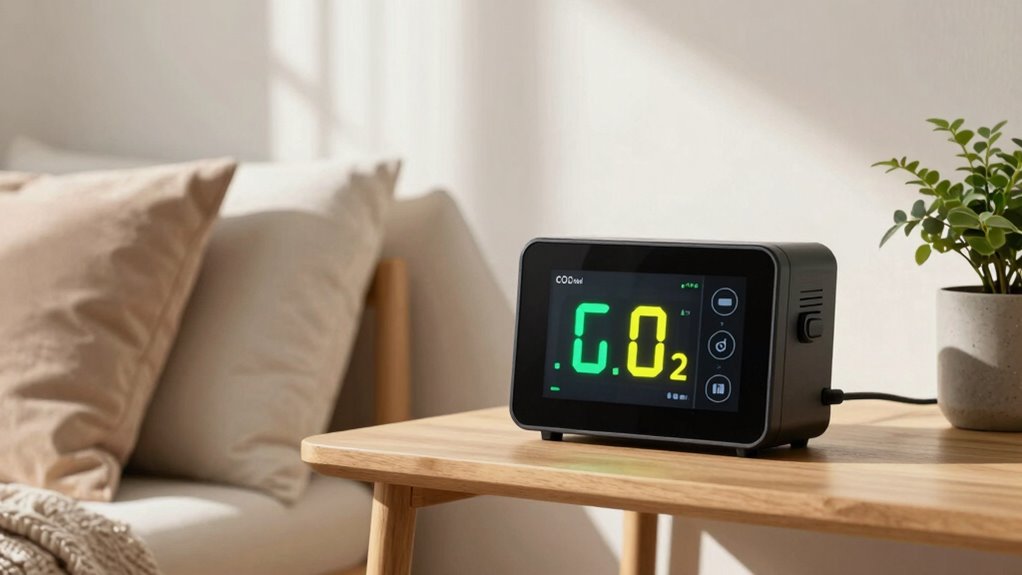
If your room feels stuffy, high CO2 levels caused by poor ventilation are likely to blame. Using a CO2 monitor, you can easily measure air quality and identify when fresh air is needed. These monitors detect stale air by measuring CO2 concentration, signaling you to increase airflow. Choosing a model with accurate sensors and easy-to-understand displays helps you maintain a healthier space. Keep reading to discover practical tips for using CO2 levels to improve your room’s air quality effectively.
Key Takeaways
- CO2 monitors detect elevated indoor CO2 levels, indicating poor ventilation and stale air buildup.
- Using CO2 readings helps identify when to increase airflow for a fresher, healthier environment.
- Proper calibration and placement of monitors ensure accurate detection of room air quality.
- Maintaining CO2 below 800-1000 ppm prevents stuffiness and reduces health issues.
- Real-time CO2 data enables proactive ventilation adjustments to improve indoor air quality effectively.
Why Do Rooms Feel Stuffy, and How Can CO2 Monitors Help?
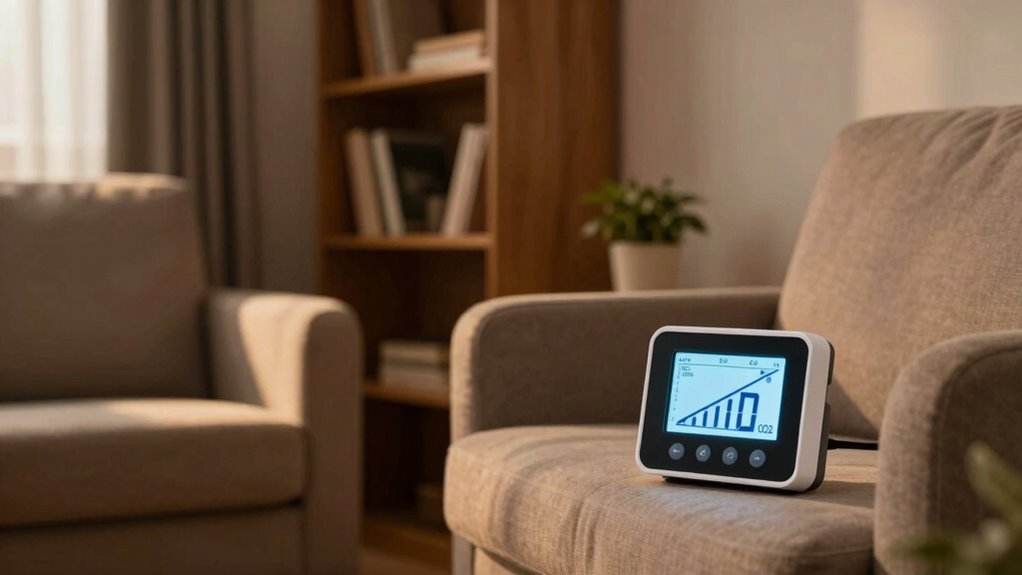
When a room feels stuffy, it’s often because the air inside has high levels of carbon dioxide (CO2), which results from breathing and other sources. Poor air quality can make you feel uncomfortable, tired, or even cause headaches, impacting your indoor health. CO2 buildup signals that fresh air isn’t circulating properly, leading to stale, suffocating conditions. By using a CO2 monitor, you can easily track the air quality in your space and identify when ventilation is needed. This device provides real-time data, helping you take quick action to improve airflow. Proper ventilation is essential for maintaining good indoor air quality, as it helps remove excess CO2 and refresh the environment. Ultimately, maintaining good indoor air quality with a CO2 monitor ensures a healthier, more comfortable environment where you can breathe easier and stay alert.
How Do CO2 Monitors Detect When Air Is Stale?
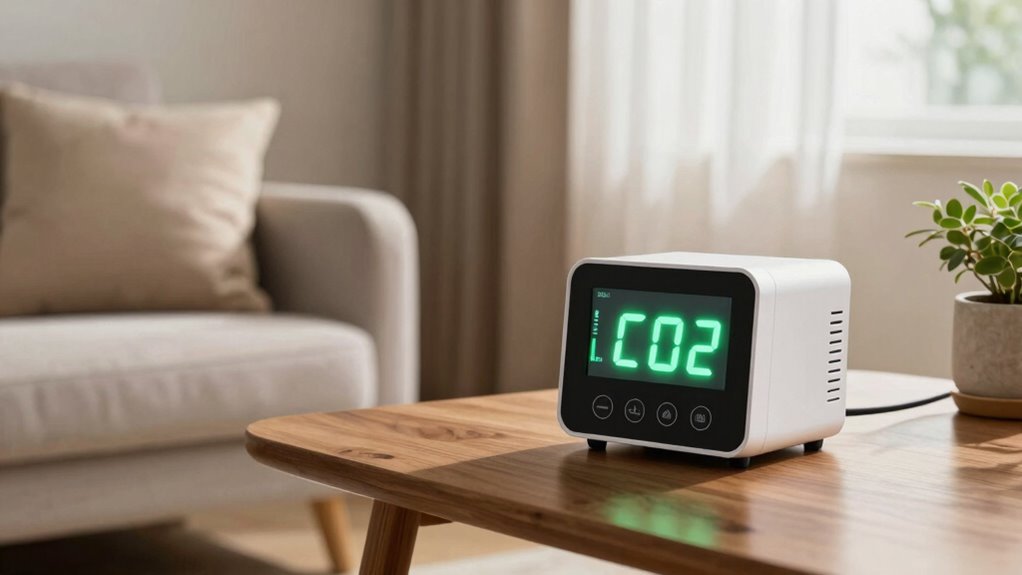
Ever wondered how a CO2 monitor knows when your air is becoming stale? It detects the level of carbon dioxide, a key indicator of poor air exchange. When you breathe, CO2 builds up indoors; the monitor measures this to determine air quality. Proper sensor calibration is essential so that readings stay accurate over time. If the sensor isn’t calibrated correctly, it might misjudge stale air, leading to false alarms or complacency. Some monitors use infrared sensors, which detect CO2 levels precisely. If CO2 rises beyond a certain threshold, the device signals that the air is becoming stale. This process ensures you’re alerted before the room feels stuffy, making ventilation timely and effective. Additionally, maintaining sensor calibration is vital for consistent accuracy in detecting stale air, especially since sensor drift can cause measurements to become unreliable over extended use. Regular performance checks help ensure the monitor functions correctly and provides reliable readings, preventing air quality issues from going unnoticed.
What Features Should You Consider When Choosing a CO2 Monitor?
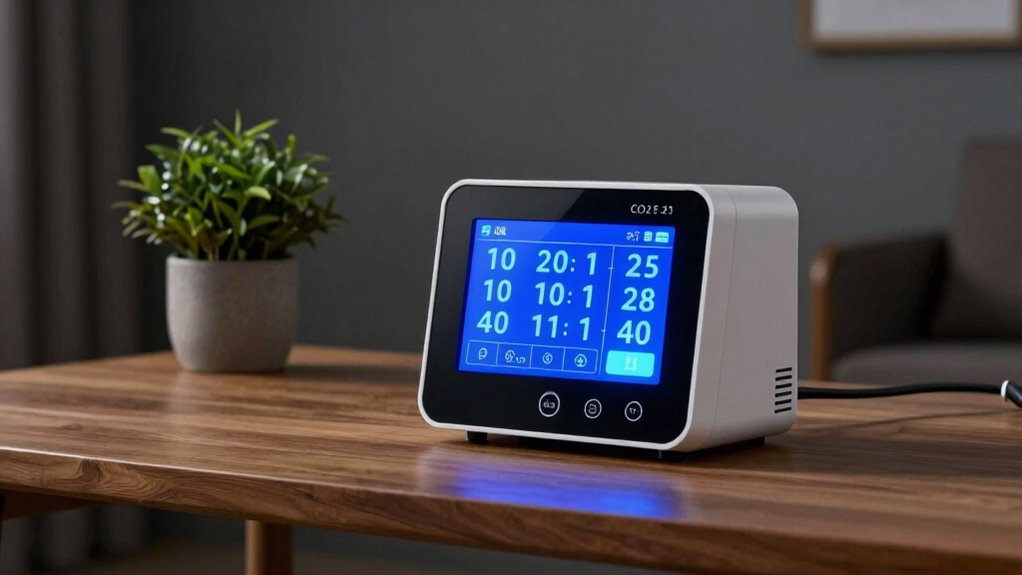
Choosing the right CO2 monitor involves evaluating key features that guarantee accurate and reliable air quality readings. First, consider sensor accuracy—look for devices with precise detection capabilities to ensure trustworthy results. A highly accurate sensor helps you identify stale air before it becomes a problem. Next, assess the user interface; an intuitive display makes it easy to read and interpret data quickly. Features like clear digital readouts, alerts, and simple controls streamline monitoring and help you respond promptly. Additionally, check for durability, power options, and connectivity features if needed. Prioritizing sensor accuracy and a user-friendly interface guarantees you can effectively monitor indoor air quality and maintain a healthy environment with confidence. Regular maintenance and calibration can further enhance the sensor performance and ensure consistent, reliable readings over time. Incorporating real-time data can also help you make immediate adjustments to improve air quality. Moreover, understanding the importance of indoor air quality can motivate better maintenance and monitoring practices to ensure a healthier environment. Paying attention to air exchange rates can further optimize air quality management in your space.
How Can CO2 Readings Guide You to Improve Ventilation?
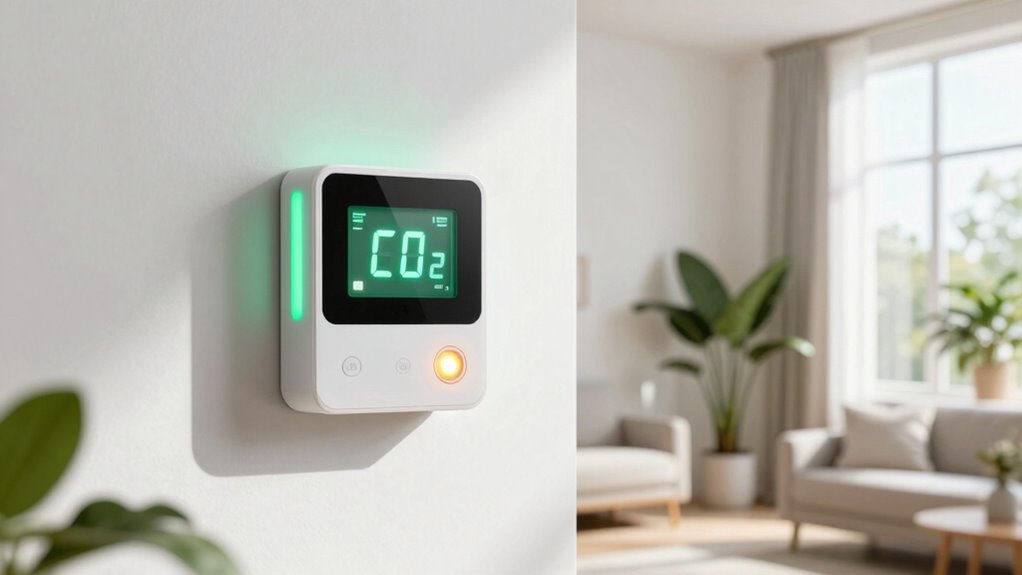
Have you noticed your indoor air feeling stale or stuffy? CO2 readings can help you assess indoor air quality and guide your ventilation strategies. When CO2 levels rise, it indicates that the room isn’t ventilating well enough, and stale air is building up. By monitoring these levels regularly, you can identify times when airflow needs boosting. Adjust ventilation by opening windows, increasing HVAC circulation, or using exhaust fans during peak occupancy. Maintaining *ideal* CO2 levels—typically below 800-1000 ppm—ensures fresh air replaces stale air effectively. Using real-time data, you can fine-tune your ventilation efforts, preventing stuffiness and reducing indoor pollutants. Understanding future economies and how they might influence building design and air quality standards can help you stay ahead of emerging indoor air quality solutions. Additionally, incorporating CO2 monitors as part of your indoor air management can provide precise insights, enabling smarter ventilation decisions and long-term health benefits. Being aware of air quality trends allows you to adapt your strategies proactively and maintain optimal indoor environments. Moreover, considering energy-efficient ventilation systems can optimize airflow while minimizing energy consumption, ensuring a sustainable approach to indoor air quality.
What Types of CO2 Monitors Are Available, and How Do You Maintain Them?
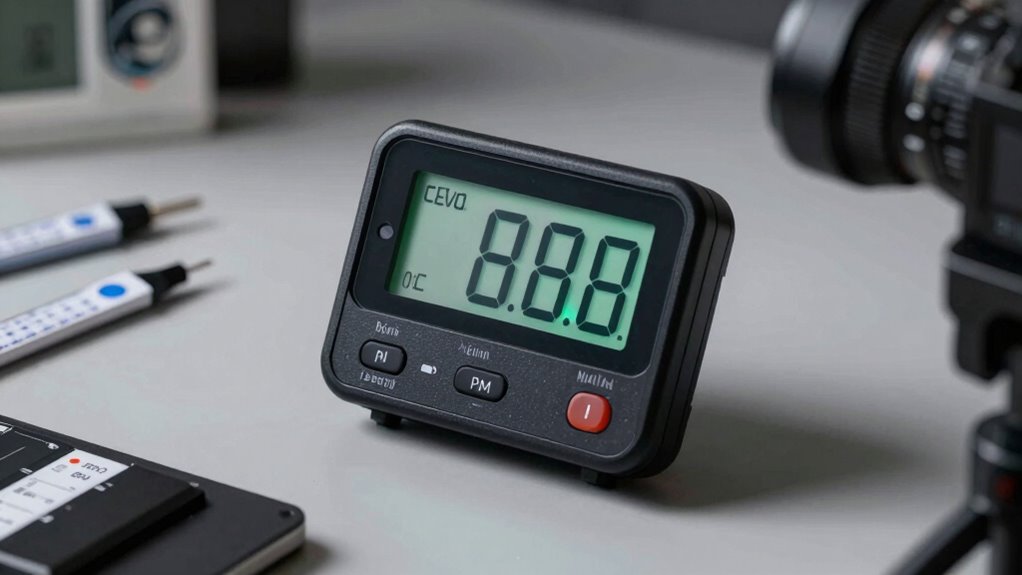
There are several types of CO2 monitors available to suit different needs, from simple consumer devices to advanced professional-grade instruments. These vary in sensor placement, accuracy, and features. To keep your monitor reliable, regular calibration procedures are essential. Proper sensor placement ensures accurate readings; avoid placing monitors near vents or windows. You might choose non-dispersive infrared (NDIR) sensors for precision or portable monitors for convenience. Maintenance involves periodic calibration, either using calibration gases or following the manufacturer’s instructions. Some monitors have automatic calibration features, reducing your effort. Keep your device clean and protected from dust and extreme temperatures to extend its lifespan. sensor placement is crucial for obtaining trustworthy data, and understanding the types and maintenance requirements helps you choose the right monitor and keep it functioning at its best. Additionally, air purifier maintenance dos and don’ts can inform proper environment setup to prevent false readings. Regularly checking your monitor’s sensor calibration ensures ongoing accuracy and reliable data over time. Furthermore, understanding how sensor degradation can impact measurements will help you identify when it’s time for recalibration or replacement.
Frequently Asked Questions
Can CO2 Monitors Detect Other Indoor Air Pollutants?
No, CO2 monitors can’t detect other indoor air pollutants directly. They primarily measure carbon dioxide levels to assess air quality and indoor pollution. If CO2 levels are high, it indicates poor ventilation, which can lead to a buildup of indoor pollutants like VOCs, dust, or mold. To improve overall air quality, consider using additional sensors designed for specific pollutants, ensuring a healthier indoor environment.
How Accurate Are Consumer-Grade CO2 Monitors?
Did you know that consumer-grade CO2 monitors can be accurate within ±50 ppm? While they’re useful for tracking ventilation, accuracy concerns exist, especially if you don’t calibrate them regularly. Proper calibration is essential because sensor drift can lead to misleading readings. So, if you want reliable data, make sure to follow calibration instructions and understand that some models may have limitations compared to professional devices.
Are There Any Health Risks Associated With High CO2 Levels?
High CO2 levels can pose health risks, especially if indoor air quality drops markedly. You might experience headaches, dizziness, or fatigue, and prolonged exposure could affect your concentration and overall well-being. Carbon dioxide dangers increase when ventilation is poor, making it essential to monitor indoor air quality regularly. Using a CO2 monitor helps you stay aware of these risks, allowing you to improve ventilation and maintain safe, healthy indoor environments.
How Often Should I Calibrate My CO2 Monitor?
You might wonder how often you should calibrate your CO2 monitor to make certain of accurate readings. Typically, sensor calibration should be done monthly or as recommended by the manufacturer. Skipping calibration can lead to inaccurate measurements, leaving you in the dark about your environment’s true air quality. Regular measurement frequency keeps your monitor reliable, so you can confidently address any issues before they become a health risk.
Do CO2 Levels Vary Throughout the Day?
Yes, indoor air variability causes daily CO2 fluctuations. You’ll notice levels rise when more people are in the room, especially during the day, and decrease when everyone leaves or air circulates. These daily co2 fluctuations are normal and reflect how your space is used. Monitoring helps you understand these patterns, so you can improve ventilation and keep air quality healthy throughout the day.
Conclusion
So, next time your room feels like a swamp, don’t just blame the weather—check your CO2 levels. With a simple monitor, you’ll finally understand why everyone’s breathing like they’ve just run a marathon. No more excuses: your stuffy room is crying out for fresh air, and now you’ve got the tool to fix it. Because nothing says “welcome” like clean, breathable air—unless you’re into living in a greenhouse.