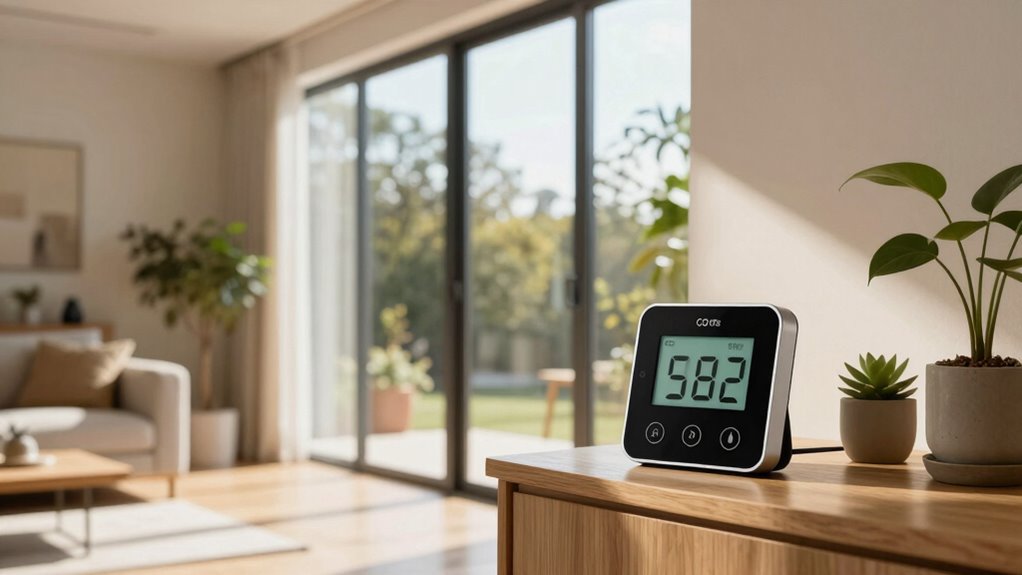

A CO2 monitor helps you maintain a healthier, more comfortable home by signaling when ventilation is needed, especially during busy times or seasons when air quality drops. It prevents stuffy rooms, reduces headaches, and keeps the air fresh. By monitoring CO2 levels, you can save energy and lower utility bills by avoiding unnecessary fan or HVAC use. Keep an eye on these levels to guarantee safety and comfort—stay with us to learn more.
Key Takeaways
- Detect poor ventilation early to prevent stuffy, uncomfortable indoor environments and protect health.
- Optimize ventilation timing to balance air quality and energy efficiency, reducing utility costs.
- Serve as an early warning system for indoor air pollution and ensure safe, healthy living spaces.
- Promote better habits by increasing awareness of indoor air quality and ventilation needs.
- Support long-term health and safety, especially for vulnerable individuals, through continuous air quality monitoring.
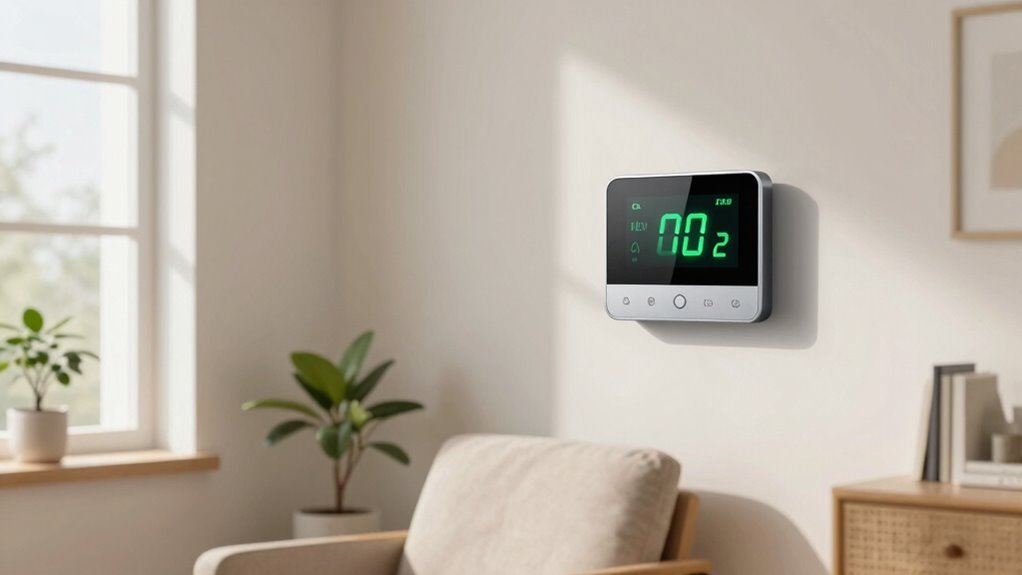
Have you ever wondered how the air quality in your home affects your health and comfort? It’s easy to overlook, but the quality of the air you breathe daily directly influences how you feel, your energy levels, and even your overall well-being. That’s where CO2 monitors come into play—they give you a clear picture of indoor air quality, especially concerning carbon dioxide levels. When CO2 levels rise, it usually signals poor ventilation, which can lead to stuffy rooms, fatigue, or headaches. By keeping an eye on these levels, you can make smarter decisions about when to open windows or improve your home’s ventilation system.
A key benefit of using CO2 monitors is that they help you optimize your home’s energy efficiency. When you know the air quality is good, you can avoid unnecessarily running fans or air purifiers, saving energy and reducing utility bills. Conversely, if the monitor shows high CO2 levels, you’ll know it’s time to ventilate—without wasting energy on overuse of climate control systems, like air conditioning or heating. This balance ensures that your home remains comfortable while also being mindful of energy consumption. It’s a smart approach that benefits both your wallet and the environment.
Many households focus on heating and cooling to improve comfort, but without proper ventilation, indoor air quality can decline rapidly. CO2 monitors serve as an early warning system, alerting you when ventilation is needed. This way, you avoid the trap of over-reliance on HVAC systems to mask stale air, which can actually lead to higher energy use and even increase your carbon footprint. Instead, you get a simple, real-time readout that encourages natural or mechanical ventilation when necessary. It’s a straightforward way to maintain a healthier indoor environment without sacrificing energy efficiency. Proper ventilation also reduces indoor pollutants, further supporting a healthier living space.
Furthermore, understanding your home’s air quality can help you create a safer space, particularly if you’re sensitive to airborne pollutants or have vulnerable family members. CO2 levels are an easy proxy for overall ventilation health, which impacts not just comfort but also long-term health. When you actively monitor and manage your indoor air quality, you’re taking a proactive step toward a healthier, more energy-efficient home. Regularly checking indoor air quality can help you identify issues before they become serious problems, ensuring a safer environment for everyone. Additionally, maintaining proper ventilation helps prevent the buildup of other indoor pollutants, further enhancing your home’s safety. Incorporating air quality monitoring into your routine also increases awareness and promotes better habits for a healthier living space. It empowers you to make informed choices that benefit your daily life, save money, and reduce environmental impact—all with a simple device that keeps you aware of what’s happening in your home’s air.
CO2 monitor for indoor air quality
As an affiliate, we earn on qualifying purchases.
As an affiliate, we earn on qualifying purchases.
Frequently Asked Questions
How Often Should I Calibrate My CO2 Monitor at Home?
You should calibrate your CO2 monitor every 6 to 12 months to maintain sensor accuracy. Calibration frequency depends on how often you use the device and the manufacturer’s recommendations. Regular calibration ensures your monitor provides precise readings, helping you better manage indoor air quality. Keep an eye on any calibration alerts, and if your sensor starts giving inconsistent results, recalibrate sooner to guarantee reliable data.
Can CO2 Monitors Detect Other Harmful Indoor Gases?
CO2 monitors primarily detect carbon dioxide levels, but some advanced models use gas detection technology to identify other harmful indoor gases like VOCs or formaldehyde. If you’re concerned about overall indoor air quality, look for monitors with multi-gas detection capabilities. These devices help you maintain a healthier environment by alerting you to various pollutants, ensuring your home stays safe and well-ventilated.
Are There Any Health Risks From False CO2 Readings?
False CO2 readings can pose health risks if you rely solely on them, leading you to neglect proper ventilation strategies. While indoor plant benefits include natural air purification, they don’t replace effective ventilation. Poor readings might cause you to overlook poor air quality, risking headaches or fatigue. To stay safe, regularly check your monitor, guarantee good airflow, and combine it with other air quality measures for a healthier home environment.
What’s the Ideal CO2 Level for a Healthy Home Environment?
The ideal CO2 level for a healthy home environment is below 800 ppm. Maintaining good indoor air quality involves using ventilation strategies like opening windows or running exhaust fans to reduce CO2 buildup. By monitoring CO2 levels with a detector, you can guarantee proper airflow. Keeping levels low helps prevent stuffiness, fatigue, and potential health issues, creating a comfortable, healthier living space for you and your family.
Do CO2 Monitors Require a Wi-Fi Connection to Function Properly?
Think of your CO2 monitor as a vigilant lighthouse; it doesn’t need Wi-Fi to shine its light, but connecting guarantees updates and data access. Most models don’t require Wi-Fi to function properly, though some may depend on it for remote monitoring. Keep calibration frequency in mind—regular calibration maintains accuracy, regardless of Wi-Fi dependency. So, whether connected or offline, your monitor stays alert and reliable.
As an affiliate, we earn on qualifying purchases.
Conclusion
Using a CO2 monitor at home isn’t just about air quality — it’s about your health and comfort. Did you know that indoor CO2 levels above 1,000 ppm can cause drowsiness and decreased concentration? By keeping an eye on these levels, you create a safer, more comfortable environment for yourself and your loved ones. Investing in a CO2 monitor means you’re taking a simple step that can markedly boost your home’s air quality and your well-being.
As an affiliate, we earn on qualifying purchases.
indoor air quality monitor with alerts
As an affiliate, we earn on qualifying purchases.
As an affiliate, we earn on qualifying purchases.