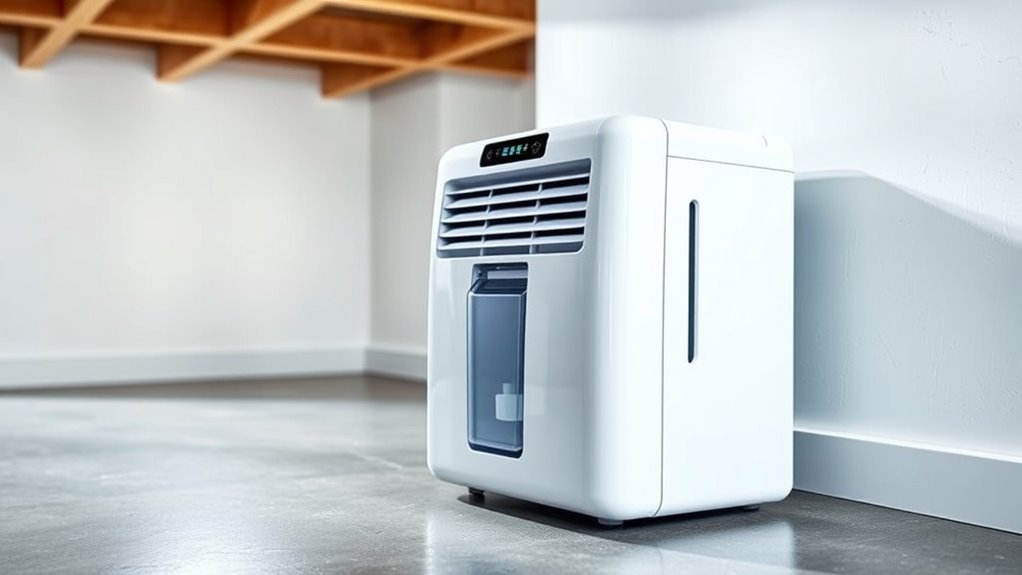
To pick the right dehumidifier size, consider your space’s size and moisture level. For small rooms like bathrooms, a 30-40 pint unit usually works well, while larger areas or basements may need 50-70+ pints. Factors like high humidity or poor ventilation also impact size needs. Choosing the correct capacity keeps moisture in check, saves energy, and prevents wear on the device. Keep going to discover tips for selecting the perfect model for your needs.
Key Takeaways
- Match the dehumidifier’s pint capacity to your room size and moisture level for effective humidity control.
- Small rooms like bathrooms typically need 30-40 pints, while larger spaces may require 50-70+ pints.
- Consider environmental factors such as humidity levels and ventilation to determine the appropriate capacity.
- An overpowered unit in a small space causes frequent cycling and energy waste; an underpowered one fails to dehumidify effectively.
- Regular maintenance ensures optimal performance and extends the lifespan of your dehumidifier.
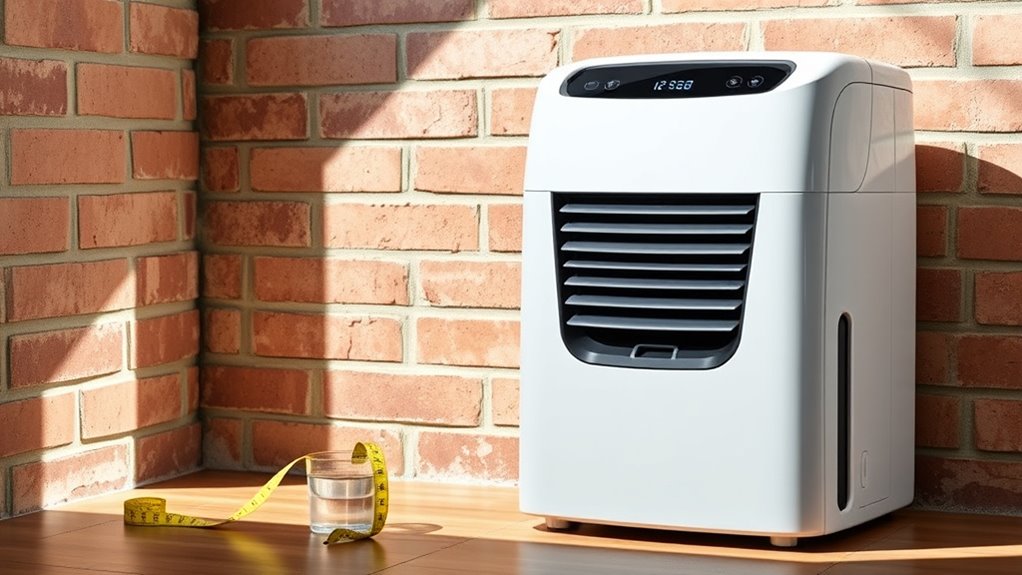
Choosing the right dehumidifier size is essential to effectively control moisture levels in your space. When selecting a unit, you need to take into account the pint capacity, which determines how much moisture it can remove from the air each day. Picking the right size ensures you’re not wasting energy on an oversized model or struggling with inadequate dehumidification from a too-small unit. An appropriately sized dehumidifier not only enhances energy efficiency but also minimizes unnecessary wear and tear, reducing your maintenance needs over time.
Start by evaluating the size and humidity levels of your space. For a small room, such as a bathroom or closet, a dehumidifier with a capacity of 30-40 pints is usually sufficient. If you’re dealing with a basement or a larger area with persistent dampness, consider units with 50-70 pints or more. Remember, a unit that’s too powerful for a small room might cycle on and off frequently, wasting energy and increasing your utility bills. Conversely, an undersized unit won’t keep humidity in check, leading to mold growth and potential damage.
Evaluate your space’s size and humidity to choose an appropriately sized dehumidifier.
It’s important to recognize that the environment plays a role in your selection. High humidity levels, poor ventilation, or ongoing water intrusion demand a unit with a higher pint capacity. Conversely, well-ventilated and climate-controlled spaces might require less powerful models. To maximize energy efficiency, choose a dehumidifier that matches your room’s moisture load. Many modern models feature built-in humidistats, allowing you to set precise target levels, which helps prevent overuse and saves energy. Furthermore, understanding how indoor air quality can be impacted by moisture levels emphasizes the importance of selecting the correct unit size.
Maintaining your dehumidifier is key to keeping it running efficiently. Regularly clean or replace filters, check for blockages, and clear the water collection bucket or drainage system. A well-maintained unit consumes less power and prolongs its lifespan. Additionally, follow the manufacturer’s maintenance tips, such as inspecting coils and vents, to ensure optimal performance. When the unit is appropriately sized and properly maintained, it uses less energy, reduces strain on its components, and requires fewer repairs, all of which contribute to better energy efficiency and lower operating costs.
Frequently Asked Questions
How Often Should I Run My Dehumidifier Daily?
You should run your dehumidifier daily until humidity levels stay between 30-50%. Keep an eye on humidity readings and adjust run time as needed. Proper dehumidifier placement is vital for efficiency; place it in a central, unobstructed spot for even moisture removal. If the air feels damp or musty, run it longer. Regularly monitor humidity levels to prevent excess moisture and guarantee peak performance.
Can a Dehumidifier Be Too Powerful for a Small Room?
Think of a dehumidifier that’s too powerful for your small room like bringing a sledgehammer to a nail. It can remove too much moisture, making the air uncomfortably dry and possibly causing damage to furniture or belongings. To avoid this, match the power capacity to your room size. A smaller, appropriately sized dehumidifier ensures ideal moisture control without over-drying, giving you a comfortable, balanced environment.
Do Dehumidifiers Require Special Maintenance or Filters?
Yes, dehumidifiers require regular filter maintenance and occasional special cleaning to keep them running efficiently. You should check and clean the filters regularly, replacing them when needed, to prevent dust buildup. Some models might need special cleaning of components like coils or drainage systems. Staying on top of filter maintenance and performing any recommended cleaning guarantees your dehumidifier works effectively, prolongs its lifespan, and maintains good air quality in your space.
How Does Humidity Affect Health and Comfort?
High humidity can make your air quality worse, leading to discomfort and health issues like allergies or respiratory problems. It also promotes mold growth, which can cause allergies and asthma. By controlling humidity levels with the right dehumidifier, you improve air quality and prevent mold, making your space healthier and more comfortable. Keeping humidity in check helps you breathe easier and reduces potential health risks associated with excess moisture.
Are There Energy-Efficient Dehumidifier Models Available?
Yes, plenty of energy-efficient models are available, helping you save money and reduce environmental impact. Did you know that some eco-friendly options consume up to 30% less power than older models? These energy-efficient dehumidifiers use advanced technology to maximize performance while minimizing energy use. By choosing eco-friendly options, you not only keep your home comfortable but also contribute to a greener planet.
Conclusion
Choosing the right dehumidifier size might seem simple, but it’s like finding the perfect fit for your space—sometimes, the right capacity shows itself when you least expect it. When you trust your instincts and consider your specific needs, everything aligns naturally. Remember, a well-chosen dehumidifier isn’t just about comfort; it’s about creating a healthier environment. After all, sometimes the best solutions come from paying attention to the quiet signs around you.