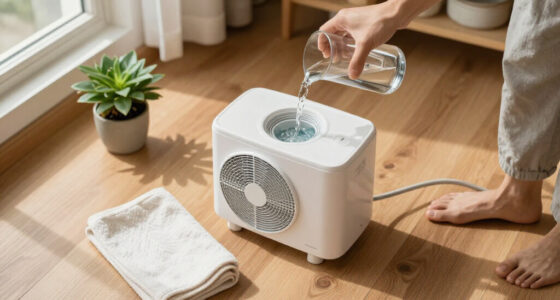
Choosing between a pump and no-pump dehumidifier depends on your drainage needs and installation preferences. No-pump models are simpler to set up, relying on gravity to drain moisture and needing accessible drainage locations. Pump units actively move water to higher or distant drains, offering more flexibility but requiring more complex installation. Considering your space, convenience, and long-term maintenance can help you decide, and you’ll discover key tips for making the best choice as you explore further.

Get cleaning gear delivered free with Prime
- Fast, free delivery on millions of items
- Prime Video, Amazon Music and more included
- Member-only deals all year
Key Takeaways
- Pump dehumidifiers actively pump water to distant or higher drains, offering flexible placement options.
- No-pump units rely on gravity, limiting drainage to nearby, lower-positioned drains.
- No-pump models are easier to install but may require manual water removal or fixed drainage setups.
- Pump systems involve initial setup and electrical connections but reduce ongoing maintenance.
- Consider your space layout and drainage accessibility to choose the most practical dehumidifier type.
pump dehumidifier with drainage hose
As an affiliate, we earn on qualifying purchases.
As an affiliate, we earn on qualifying purchases.
How Do Pump and No-Pump Dehumidifiers Actually Work?
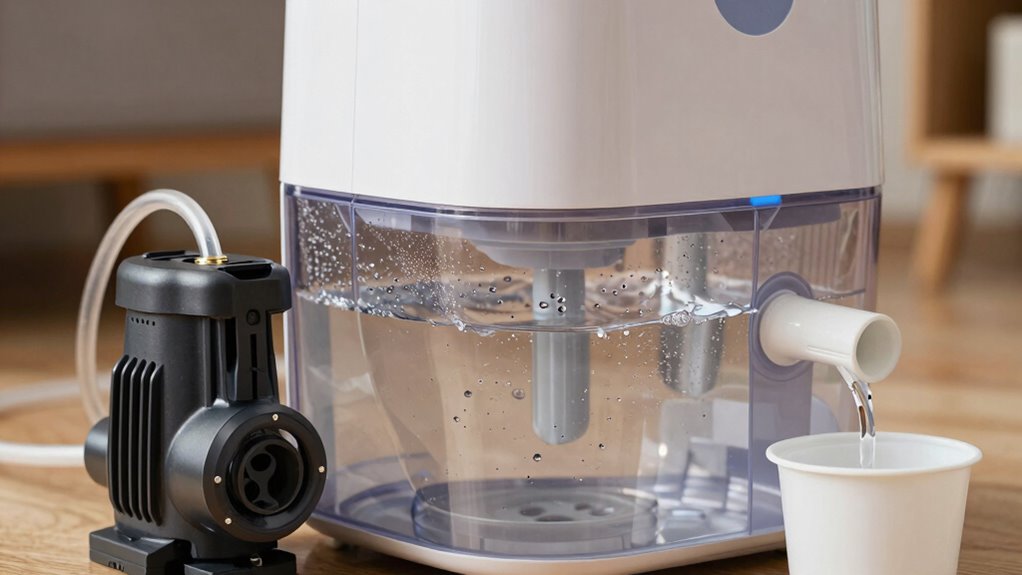
To understand how pump and no-pump dehumidifiers work, it’s important to know that both types pull moisture from the air but handle water removal differently. No-pump dehumidifiers typically rely on a gravity drain, which means you need a drain hose positioned below the unit, offering limited drainage flexibility. This setup is usually straightforward to install but can restrict where you place the dehumidifier. Pump models, on the other hand, actively pump water to a higher or distant drain, giving you more drainage options. While they provide greater drainage flexibility, pump units tend to have a more complex installation process due to the pump mechanism and wiring needs. Understanding these differences helps you choose a system that fits your space and drainage preferences. Additionally, dehumidifier maintenance is an important factor to consider for long-term performance and efficiency. Proper maintenance can also prevent issues related to drainage system clogging or failure, ensuring reliable operation over time. Regularly inspecting and cleaning the drainage components can help maintain optimal performance and extend the lifespan of your dehumidifier. Furthermore, proper installation practices are essential to maximize efficiency and prevent potential water damage. Being aware of water flow management can also aid in preventing leaks and water-related issues, especially with no-pump models.
no-pump dehumidifier with gravity drain
As an affiliate, we earn on qualifying purchases.
As an affiliate, we earn on qualifying purchases.
Which Is Easier to Install: Pump or No-Pump Dehumidifiers?
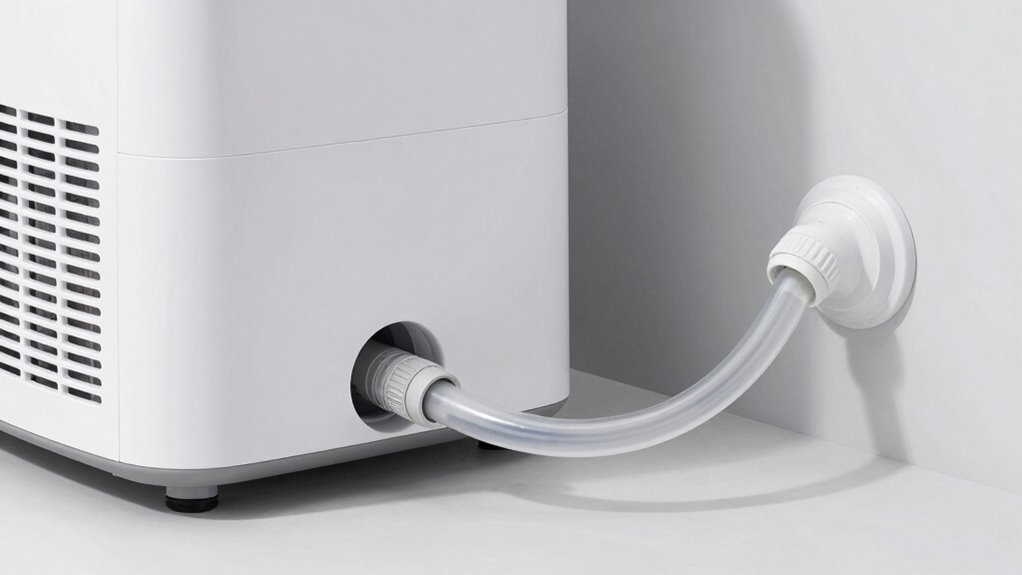
No-pump dehumidifiers are generally easier to set up because they rely on gravity for water drainage. You don’t need extra components or electrical connections, making installation straightforward. This simplicity improves installation complexity and setup flexibility, especially in spaces where running a drain line is challenging.
No-pump dehumidifiers offer simple, flexible setup without extra components or electrical connections.
With no-pump units, you can:
- Place the unit anywhere near a drain or floor drain
- Avoid wiring or additional plumbing
- Move or reposition easily without reconnecting complex parts
In contrast, pump dehumidifiers require more setup steps, including installing the pump and connecting power, which adds to the installation complexity. Overall, no-pump models are typically quicker and easier to install, especially if you prioritize simple setup flexibility.
best dehumidifier for basement drainage
As an affiliate, we earn on qualifying purchases.
As an affiliate, we earn on qualifying purchases.
What Do I Need to Know About Maintaining Each Type?
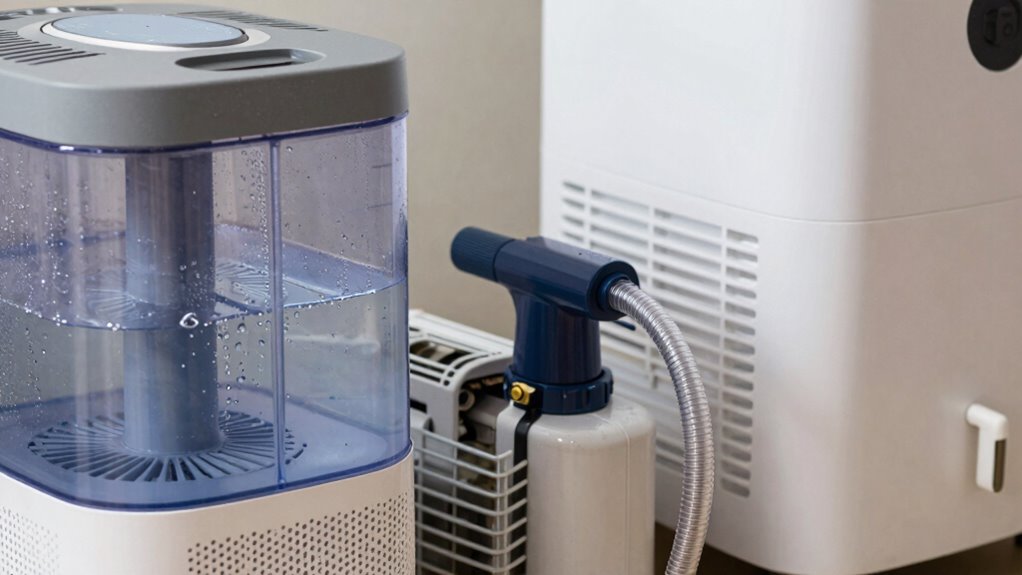
Maintaining dehumidifiers involves different considerations depending on the type you choose. For no-pump models, regular maintenance tips include cleaning filters, checking for dust buildup, and ensuring proper airflow. Troubleshooting guides can help you identify issues like reduced efficiency or strange noises. Pump models require similar upkeep, but you’ll also need to inspect the pump and drainage hose regularly for clogs or leaks. Confirm the pump is functioning correctly to avoid water backup. Both types benefit from keeping the unit in a well-ventilated area and following manufacturer instructions. Proper maintenance prevents breakdowns and extends the lifespan of your dehumidifier. Additionally, understanding drainage options can help you choose the best setup for your needs, and being aware of pump operation ensures reliable performance. Regularly monitoring dehumidifier efficiency can also help detect early signs of issues before they become costly repairs. To optimize performance, it’s helpful to familiarize yourself with maintenance schedules specific to your model. Staying informed about common dehumidifier issues can also aid in quick troubleshooting and repair.
As an affiliate, we earn on qualifying purchases.
Which Dehumidifier Saves You More Money Over Time?
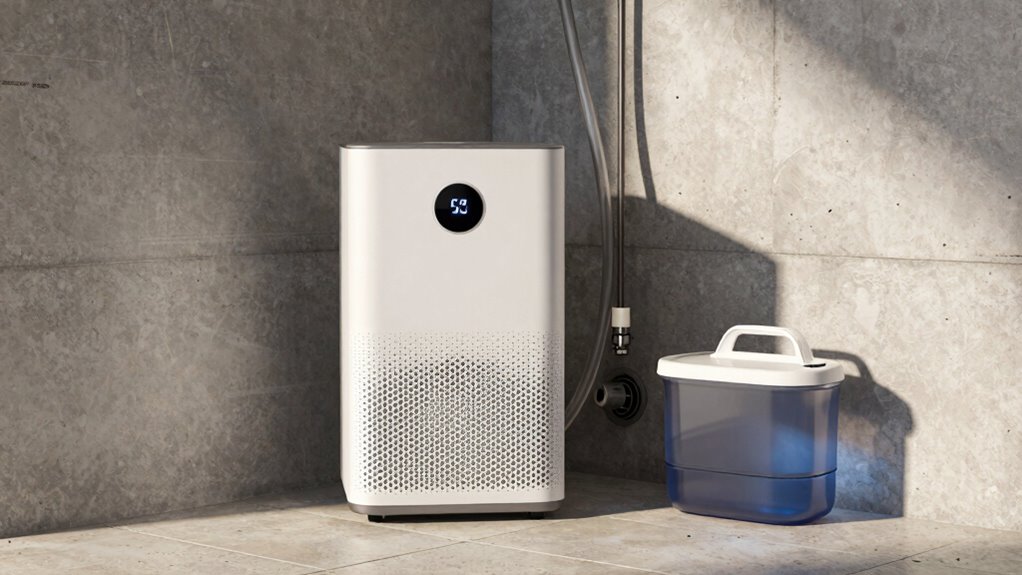
Choosing the most cost-effective dehumidifier depends on how you use and maintain it over time. To maximize long-term savings, consider models with better cost efficiency, which reduce energy consumption and maintenance costs. While a pump dehumidifier may have higher upfront costs, it often saves money by avoiding water bucket replacements and reducing operational hassle. Conversely, no-pump units typically have lower initial prices but may lead to higher maintenance over time. Your choice should balance these factors:
- Energy-efficient features lower electricity bills
- Reliable drainage systems reduce ongoing maintenance
- Durability extends device lifespan, saving replacement costs
- Understanding dream symbolism can also help in making smarter choices about appliances and their impact on your environment and well-being. Additionally, selecting units with efficient drainage options can significantly influence ongoing costs and convenience. Incorporating smart features that adapt to humidity levels can further enhance efficiency and savings.
Implementing proper maintenance routines can further enhance the efficiency and longevity of your dehumidifier, leading to greater savings over time.
Being aware of energy-saving features can help you choose models that maximize efficiency during use, further lowering your costs.
How to Choose the Best Drainage System for Your Home?

Selecting the right drainage system for your dehumidifier can considerably impact its convenience and efficiency. Start by exploring your drainage options—manual bucket emptying, gravity drainage, or a condensate pump. Consider how often you’ll need to empty the bucket and whether a continuous drain suits your lifestyle. Installation considerations are key; gravity drainage requires an appropriate downward slope and a nearby drain, while a condensate pump needs power and a secure placement. Think about your home’s layout and accessibility, as well as your comfort with installation tasks. If you prefer minimal maintenance, a pump system might be best, but it comes with additional costs. Additionally, understanding home soundproofing principles can help you reduce noise from your dehumidifier and other appliances, creating a quieter living environment. Evaluating the initial setup and ongoing maintenance requirements of each drainage option can ensure you select the most practical solution for your needs. Considering drainage efficiency can also help you choose the most effective system for your home. Keep in mind that compact design options are available for homes with limited space, which can influence your choice. To make an informed decision, researching installation complexity can help you determine which drainage system aligns with your DIY skills and home setup. Weigh these drainage options and installation considerations carefully to choose a system that aligns with your home setup and personal preferences.
Frequently Asked Questions
Can a Dehumidifier With a Pump Operate Continuously?
Yes, a dehumidifier with a pump can operate continuously, but you need to take into account maintenance requirements. Regularly check the pump for clogs or leaks to ensure smooth operation. You should also inspect the drainage system to prevent overflows or malfunctions. Continuous operation is convenient, but staying on top of maintenance helps avoid potential issues and keeps your dehumidifier running efficiently, especially when it’s designed for nonstop use.
Are There Noise Differences Between Pump and No-Pump Models?
You’ll notice noise level differences between pump and no-pump models. Pump models tend to be louder because of the additional motor and tubing, which can affect operational quietness. If you prefer a quieter environment, a no-pump dehumidifier generally operates more silently. However, some high-quality pump models now feature quieter components, so consider your noise sensitivity and space when choosing. Ultimately, the noise difference depends on the model and its design.
What Are the Power Consumption Differences?
You’ll notice that pump models generally consume about 10-15% more power than no-pump units, impacting your energy efficiency. This difference can lead to higher operational costs over time, especially if you run your dehumidifier frequently. While the pump adds convenience by automatically draining water, it’s essential to weigh this against the increased energy use and cost implications to choose the most efficient option for your needs.
Is Professional Installation Recommended for Pump Systems?
Yes, professional installation is recommended for pump systems. Proper installation considerations guarantee the pump functions correctly, preventing leaks or failures. While it may add to initial cost implications, hiring a professional guarantees safety and reliability, reducing potential future repairs. You’ll also benefit from expert advice on ideal placement and maintenance. Ultimately, investing in professional installation helps you avoid costly mistakes and ensures your dehumidifier operates efficiently.
How Does Drain Hose Length Affect Performance?
You’ll want to take into account drain hose length carefully, as longer hoses can reduce flow and cause leaks if not flexible enough. Keep the hose as short and flexible as possible to ensure efficient drainage. Also, pay attention to the installation height; placing the drain below the dehumidifier helps gravity do its work, preventing water backup or pump strain. Properly managing these factors keeps your dehumidifier running smoothly.
Conclusion
Did you know that choosing the right drainage system can save you up to 30% on your dehumidifier’s energy costs? Whether you opt for a pump or no-pump model, understanding their differences helps you make smarter decisions. With proper maintenance and installation, your dehumidifier will run efficiently and save you money in the long run. So, consider your home’s needs carefully and select the drainage system that works best for you.
Halloween Picks
halloween
As an affiliate, we earn on qualifying purchases.