A dual-fuel HVAC system combines a heat pump with a gas furnace to give you flexible, efficient heating and cooling. It switches seamlessly based on outside weather and your comfort preferences, using electricity when temperatures are milder and switching to gas during colder months. This setup can help lower your energy bills while maintaining reliable indoor comfort. To discover how this system can benefit your home, explore further details below.
Key Takeaways
- Dual-fuel HVAC systems combine heat pumps and gas furnaces for versatile, energy-efficient home heating and cooling.
- They switch seamlessly between electric heat pump and gas furnace based on weather and cost efficiency.
- Installation costs are higher due to the need for integrating two systems, requiring professional setup.
- These systems adapt to climate and energy prices, optimizing performance and reducing utility bills over time.
- Proper installation and maintenance ensure maximum efficiency, durability, and long-term savings.
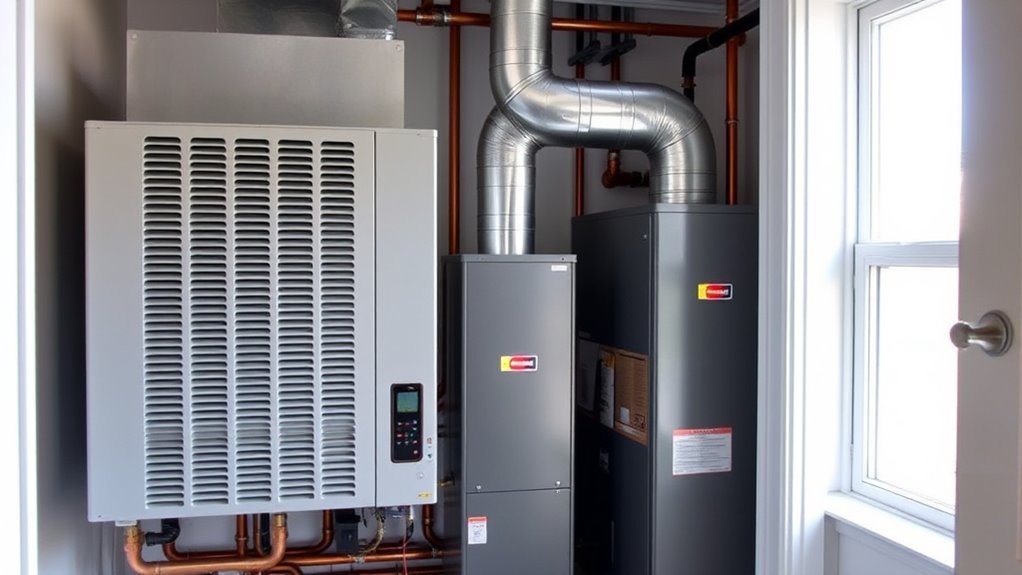
Are you looking for an energy-efficient way to heat and cool your home? If so, a dual-fuel HVAC system might be exactly what you need. These systems combine a heat pump with a gas furnace, allowing you to switch seamlessly between the two depending on the weather and your comfort preferences. The primary advantage here is energy efficiency. During milder temperatures, the heat pump handles heating and cooling because it uses electricity to transfer heat, which consumes less energy than burning gas. When temperatures drop considerably, the gas furnace kicks in to provide reliable warmth without overworking the heat pump. This hybrid setup ensures your home stays comfortable while optimizing energy use, leading to lower utility bills over time.
A dual-fuel HVAC system combines a heat pump and gas furnace for energy-efficient, seamless heating and cooling tailored to your climate.
One of the key factors to weigh when evaluating a dual-fuel system is the installation costs. While the initial investment might be higher than a standard single-system setup, it’s important to recognize the long-term savings and benefits. Installing a dual-fuel system typically involves integrating two different units— the heat pump and the gas furnace— which can increase upfront expenses. However, many homeowners find that the energy savings on heating and cooling justify these initial costs. The installation process might be more complex than replacing a single HVAC unit, especially if your home isn’t already set up for a dual-fuel system. You’ll need a professional technician to assess your existing ductwork, electrical connections, and fuel supply to guarantee compatibility. Although this can add to the installation costs, proper setup is vital for maximizing efficiency and system longevity.
Furthermore, the versatility of a dual-fuel system means it can adapt to your climate and energy prices. If electricity is cheaper than natural gas in your area, the system will favor the heat pump most of the year. Conversely, in regions with colder winters, the gas furnace provides dependable heating during the coldest months. This adaptability allows you to tailor your energy consumption to your local rates and weather patterns, which can result in notable savings. Keep in mind that although the initial costs might seem steep, many homeowners find that the savings on energy bills and increased comfort levels make the investment worthwhile. Plus, modern dual-fuel systems are designed for durability and ease of maintenance, helping you get the most out of your investment for years to come.
In short, if you’re aiming for a balanced approach to home comfort that emphasizes energy efficiency, a dual-fuel HVAC system offers a smart, flexible solution. Just be prepared for the higher installation costs upfront, and work with a qualified professional to guarantee your system is installed correctly. The long-term benefits—lower energy bills, increased comfort, and a more sustainable home—make it a compelling choice for many homeowners seeking efficiency and reliability. Additionally, advancements in heat pump technology improve performance and reduce operational costs, further enhancing the value of dual-fuel systems.
Frequently Asked Questions
How Do Dual-Fuel Systems Impact Overall Energy Efficiency?
You’ll see better energy savings with dual-fuel systems because they switch between a heat pump and gas furnace for maximum efficiency. This reduces your environmental impact by lowering energy consumption and emissions. You benefit from efficient heating in winter and cooling in summer, which helps cut utility bills. Overall, dual-fuel systems provide a smarter, more sustainable way to manage your home’s climate control while supporting eco-friendly choices.
Are Dual-Fuel HVAC Systems Cost-Effective for Small Homes?
Think of a dual-fuel HVAC system like a versatile tool in your home. For small homes, it can be cost-effective because you’ll save on energy bills with the heat pump during milder weather, offsetting higher installation costs. While initial costs are higher, the long-term cost savings on energy make it worthwhile, especially if you experience cold winters. This system adapts, saving you money over time.
What Maintenance Is Required for Dual-Fuel Systems?
You need to regularly check and replace the system filter to guarantee efficient airflow and prevent strain on your dual-fuel system. Additionally, it’s important to monitor refrigerant levels in the heat pump, as low levels can reduce cooling efficiency. Schedule professional inspections annually to verify that components like the heat pump and gas furnace are functioning correctly, and to keep refrigerant levels balanced, ensuring your system runs smoothly year-round.
Can Dual-Fuel Systems Be Integrated With Smart Home Technology?
Yes, dual-fuel systems can be seamlessly synchronized with smart home systems. You’ll enjoy the convenience of smart home integration, enabling remote monitoring and control of your HVAC. Imagine adjusting your temperature, scheduling maintenance, or checking system status from anywhere. This smart synergy simplifies system management, enhances efficiency, and elevates your comfort. With compatible smart technology, you make your dual-fuel system more intelligent, intuitive, and integrated into your modern lifestyle.
How Do Dual-Fuel Systems Perform During Extremely Cold Weather?
During extremely cold weather, dual-fuel systems perform efficiently by switching to the gas furnace as an emergency backup when heat pumps struggle to maintain warmth. This fuel switching ensures consistent comfort and energy savings. You benefit from seamless temperature regulation and reliable heating, even in harsh conditions, as the system automatically shifts between heat pump and gas furnace, optimizing performance and reducing energy costs during severe cold spells.
Conclusion
Dual‑fuel HVAC systems offer an efficient way to switch between heat pumps and gas furnaces, saving you money and reducing energy consumption. Did you know that using a dual‑fuel system can cut heating costs by up to 30% compared to traditional setups? By combining these technologies, you get reliable, cost-effective heating year-round. Embracing this system means you’re making a smart choice for your comfort and the environment.