When choosing between ductless and ducted HVAC systems, consider your home’s size, existing ductwork, and your energy goals. Ductless units are easier to install, more efficient, and offer customizable zoning for individual rooms, making them ideal for quick upgrades or smaller spaces. Ducted systems work well in larger homes with existing ducts but can be more costly and invasive to install. To make the best decision for your home, explore the factors that could influence your choice further.
Key Takeaways
- Ductless systems offer easier installation, higher energy efficiency, and room-by-room zoning, making them ideal for quick upgrades or smaller spaces.
- Ducted systems suit larger homes with existing ductwork and provide centralized control, but involve higher installation costs.
- Consider home layout and infrastructure—ductless units are less invasive, while ducted systems are better for homes with extensive duct systems.
- Energy savings are significant with ductless units due to eliminating duct losses, whereas ducted systems may require duct sealing and maintenance for optimal efficiency.
- Your choice depends on budget, home design, installation time, and desired control over individual room temperatures.
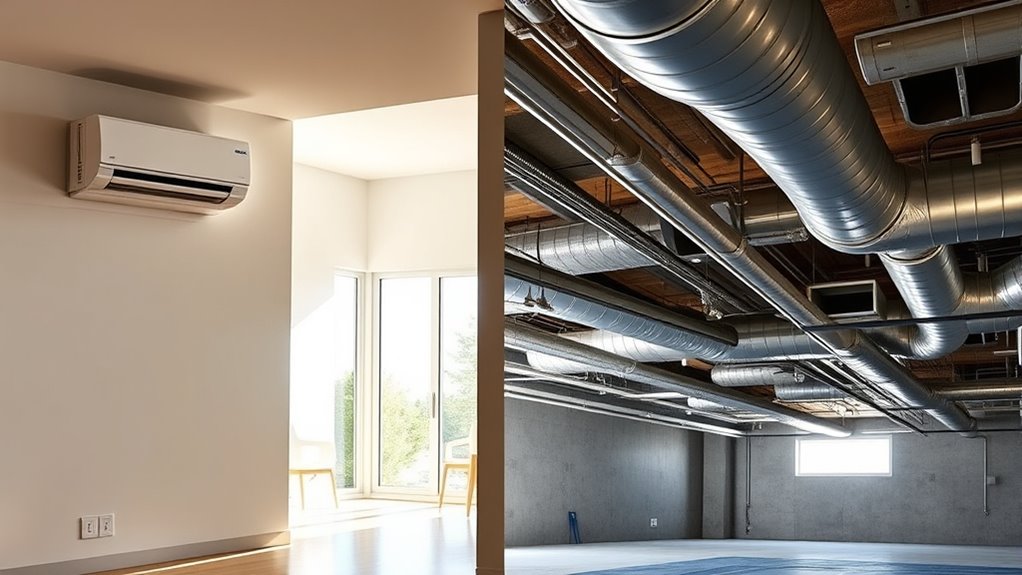
Choosing HVAC systems involves evaluating various factors to ensure optimal comfort and efficiency in your home. When deciding between ductless and ducted systems, you need to consider how each option impacts your energy bills and installation process. Ducted systems, which use a network of ducts to distribute conditioned air, are often found in older homes or new constructions with existing ductwork. They tend to be more familiar, but their installation complexity can be high, especially if your home lacks existing ducts or if the layout is complicated. This complexity can drive up installation costs and extend the time needed to get your system up and running. On the other hand, ductless systems, also known as mini-splits, offer a different approach. They are generally easier to install because they don’t require ductwork. Instead, they consist of a small outdoor unit connected directly to one or more indoor units, making the installation process faster and less invasive. This simplicity can be a significant advantage if you’re looking for a quick upgrade or if your home doesn’t have existing ducts. Additionally, the ability to customize zoning with ductless systems allows for greater flexibility in managing individual room temperatures.
Energy efficiency is another vital factor to contemplate. Ductless systems typically provide higher energy efficiency because they eliminate duct losses, which can account for up to 30% of energy consumption in ducted systems. If you’re aiming to reduce your energy bills and improve overall efficiency, a ductless system might be the better choice. Plus, since ductless units allow for zoning, you can control temperatures room-by-room, avoiding unnecessary heating or cooling in unoccupied spaces. Conversely, ducted systems can be optimized for efficiency through proper insulation and sealing of ducts, but they often lose energy through leaks and poorly insulated ducts. If your home already has a well-maintained duct system, a ducted setup might still be a viable option, especially if you prioritize centralized control and aesthetics. Moreover, the choice between these systems can influence your home’s overall energy consumption, which is a crucial aspect of sustainable living.
Ultimately, your choice depends on your home’s structure, your budget, and your priorities for energy savings and ease of installation. If you want a straightforward, less invasive installation and higher energy efficiency, ductless systems offer compelling benefits. However, if you prefer a centralized system, especially for larger homes or with existing ducts, a ducted system could work well. Carefully weigh the installation complexity and potential energy savings of each option to make an informed decision that aligns with your comfort and efficiency goals.

Albott 12,000 BTU Mini Split Air Conditioner and Heater SEER2 18, 115V
- All-in-One Comfort Control: Cooling, heating, dehumidifying, fan modes
- Customizable Settings: 24-hour timer and sleep mode
- Energy-Efficient Performance: SEER2 18 inverter heat pump
As an affiliate, we earn on qualifying purchases.
As an affiliate, we earn on qualifying purchases.
Frequently Asked Questions
How Long Do Ductless HVAC Units Typically Last?
Ductless HVAC units typically last 10 to 15 years with proper maintenance. You’ll benefit from their energy efficiency, which can lower ongoing costs, but keep in mind that maintenance costs may increase as they age. Regular filter changes and professional inspections help extend their lifespan. If you stay on top of maintenance, you’ll maximize your unit’s durability and keep your energy bills manageable for years to come.
Can Ductless Systems Improve Indoor Air Quality?
Did you know that poor indoor air quality can cause health issues for 9 out of 10 people? Ductless systems can definitely improve your indoor air quality by offering advanced air filtration and ventilation enhancement. They help remove allergens, dust, and pollutants more effectively than traditional systems. Plus, their ability to target specific zones means you get cleaner, healthier air where you need it most, making your home safer and more comfortable.
Are Ductless Systems Suitable for Large or Multi-Story Homes?
Ductless systems are suitable for multi-story homes, especially if you value multi-zone efficiency and want to address space constraints. They allow you to control temperatures in different areas independently, making them ideal for large or multi-story layouts. Plus, their compact design fits into tight spaces, providing efficient comfort without extensive ductwork. This flexibility helps you customize your home’s climate control while saving space and energy.
What Is the Typical Installation Time for Ducted Systems?
You can expect the installation of ducted systems to take about 1 to 3 days, depending on your home’s size and complexity. Interestingly, ducted setups often require more extensive labor, involving sealing and insulating ducts, which can extend the timeline. The installation timeline hinges on factors like existing infrastructure and labor requirements, so planning ahead ensures a smoother process and maximum comfort once your system’s up and running.
Do Ductless Units Require Regular Filter Replacements?
Yes, ductless units do require regular filter maintenance. You should clean or replace the filters every 1-3 months to guarantee ideal air quality and system efficiency. Regular filter maintenance helps remove dust, allergens, and pollutants, improving indoor air quality. Neglecting this task can reduce airflow, strain the unit, and decrease its lifespan. Staying on top of filter replacements keeps your ductless system running smoothly and maintains healthy indoor air.

Klimaire 3 Ton Inverter Heat Pump System – 36,000 BTU Central Ducted HVAC
- High-Efficiency Inverter Heat Pump: Advanced variable-speed inverter technology
- Reliable Year-Round Heating & Cooling: Consistent airflow and balanced comfort
- Enhanced Comfort & Airflow Control: ECM blower, TXV, defrost, anti-cold air
As an affiliate, we earn on qualifying purchases.
As an affiliate, we earn on qualifying purchases.
Conclusion
When deciding between ductless and ducted HVAC systems, consider your home’s size, budget, and energy needs. Ductless units are up to 30% more energy-efficient, saving you money over time. Remember, a study shows that properly installed ductless systems can reduce energy bills by up to 50%. So, weigh your options carefully—choosing the right system can improve comfort and cut costs markedly. Make an informed decision to enjoy a cooler, more efficient home all year round.

Rellytech Mini Split AC/Heating System – 19 SEER2 9000 BTU Mini Split AC Unit Inverter Heating and Cooling, 115v Energy Efficient Ductless Air Conditioner Up to 550sq.ft, 24H Timer, Installation Kit
- Powerful 9,000 BTU Cooling & Heating: Covers up to 550 sq.ft.
- Multiple Operating Modes: Cooling, heating, fan, dry modes
- Energy-Efficient ECO Mode: Optimizes energy use
As an affiliate, we earn on qualifying purchases.
As an affiliate, we earn on qualifying purchases.

Albott 2 Zone Mini Split AC/Heating System, 12K+12K BTU 25 SEER2
- High Efficiency: Up to 25 SEER2 energy savings
- Independent Room Control: Separate temperature control for each unit
- Room Coverage: 9000 BTU for 400 sq.ft., 12000 BTU for 550 sq.ft.
As an affiliate, we earn on qualifying purchases.
As an affiliate, we earn on qualifying purchases.