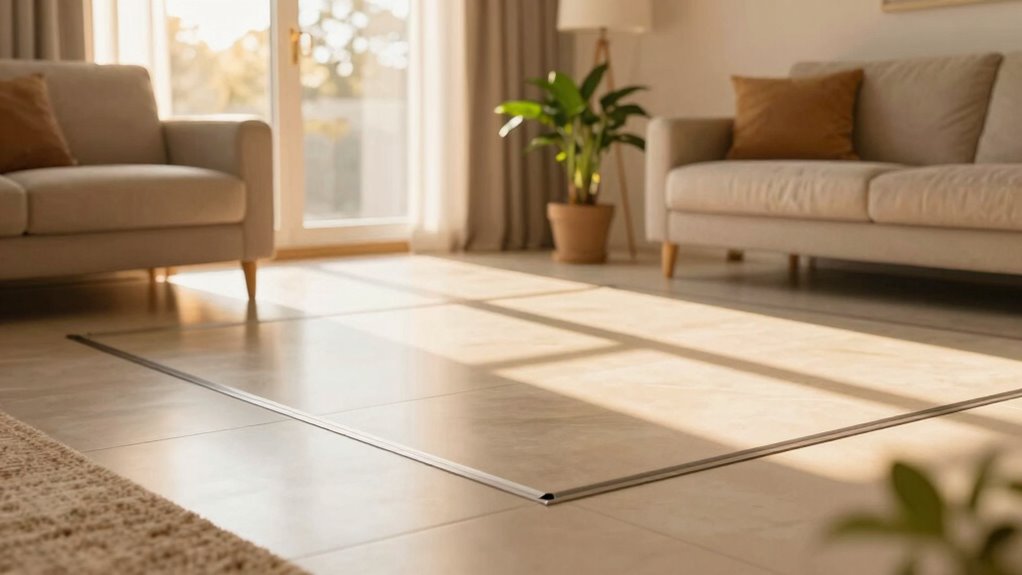

Radiant floor heating is an easy, efficient way to warm your home from the ground up. It works by distributing heat directly through cables or pipes beneath your floors, creating cozy, even warmth. You can choose electric or water-based systems, depending on your space and budget. Installation is straightforward, but proper planning guarantees it runs smoothly. Keep your system well-maintained for best results, and you’ll uncover more tips to make it work perfectly.
Key Takeaways
- Radiant floor heating distributes warm air directly through embedded electric cables or water pipes beneath the floor.
- It provides consistent, gentle heat that radiates upward for enhanced comfort and even temperature distribution.
- Installation involves preparing the floor, laying out mats or pipes, and may require removing existing flooring.
- Benefits include energy efficiency, reduced drafts, quiet operation, and zoning flexibility for different areas.
- Proper maintenance, calibration, and insulation improve system efficiency and extend its lifespan.
What Is Radiant Floor Heating and How Does It Work?

Have you ever wondered how warm floors can make a room feel so cozy? Radiant floor heating works by distributing heat directly through your floor surface, creating a comfortable environment. It relies on thermal conductivity, which is the material’s ability to transfer heat efficiently. The better the material’s thermal conductivity, the faster and more evenly the warmth spreads. One of its biggest advantages is zoning flexibility—you can control different areas independently, customizing comfort levels for each space. This means you can keep your living room warm and cool down the bathroom if needed, without affecting the entire house. The system typically uses electric cables or water pipes embedded beneath the floor, providing consistent, gentle heat that radiates upward and envelops the room in warmth. thermal conductivity is a crucial factor that influences the system’s efficiency and effectiveness. Additionally, understanding the heat transfer process can help you better appreciate how radiant floor heating delivers such a comfortable and efficient heat distribution. Proper insulation beneath the system also plays a vital role in optimizing energy efficiency, ensuring minimal heat loss and maximum comfort.
Why Choose Radiant Floor Heating for Your Home?

Choosing radiant floor heating can substantially enhance your home’s comfort and efficiency. Unlike traditional systems, it provides even, consistent warmth that feels natural underfoot. This system is highly energy efficient because it heats the room directly from the floor, reducing heat loss and lowering your energy bills. With radiant heating, you can set lower thermostat temperatures and still enjoy cozy warmth, leading to significant cost savings over time. It also eliminates drafts and cold spots, creating a more comfortable living space. Plus, radiant floor heating operates quietly and requires less maintenance than conventional radiators or forced-air systems. Implementing energy-efficient heating can further optimize your home’s comfort and cost savings. The use of high-quality projectors can further enhance your home environment, providing immersive viewing experiences that complement your comfortable living space. Incorporating sustainable natural pool design principles can also contribute to a healthier, more eco-friendly backyard. Additionally, proper insulation plays a crucial role in maximizing the efficiency of radiant floor heating systems. Maintaining regular gear inspection ensures that your heating system remains in optimal working condition, preventing unexpected failures. Overall, it’s a smart, cost-effective choice that improves comfort while helping you save on energy costs.
Factors to Consider Before Installing Radiant Floor Heating
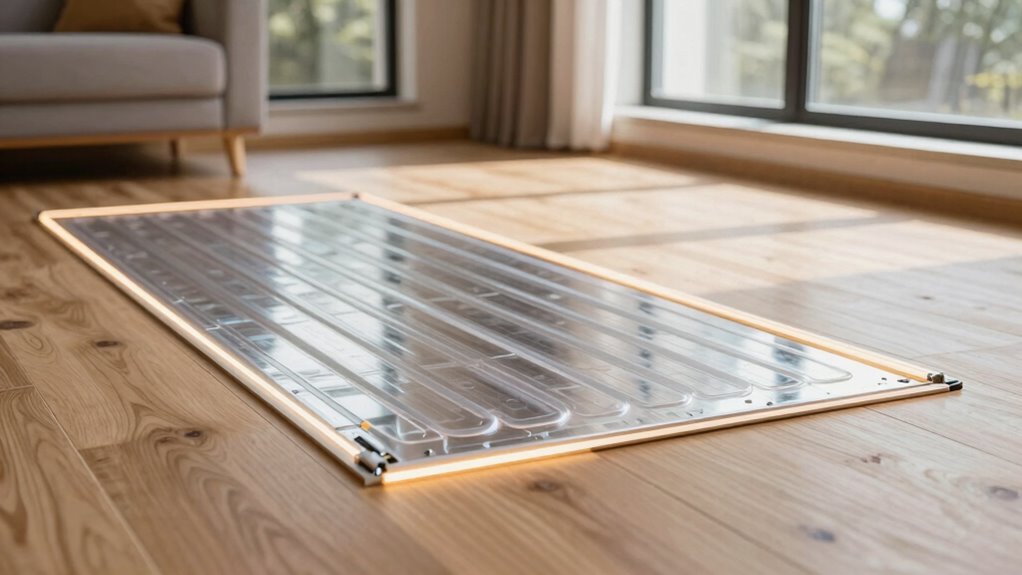
Before installing radiant floor heating, it’s essential to evaluate your home’s insulation and existing flooring materials, as these factors considerably impact the system’s efficiency and effectiveness. Good insulation reduces heat loss, ensuring your heated floors warm your space without wasting energy. Some flooring materials, like tile or concrete, conduct heat better, increasing energy efficiency, while carpet or wood may require adjustments. Additionally, consider installation costs; while radiant heating can be a worthwhile investment, the complexity of your flooring and insulation can influence overall expenses. Proper preparation helps you avoid costly modifications later. By assessing these factors beforehand, you can optimize energy efficiency, reduce operational costs, and ensure a smooth, successful installation that keeps your home warm and comfortable. Understanding heat transfer methods also helps in selecting the best flooring and insulation options for your radiant heating system. Recognizing the insulation quality of your home is especially important, as it plays a crucial role in maintaining consistent warmth and reducing energy consumption. Furthermore, evaluating your existing home insulation can significantly influence the overall performance of your radiant heating system, leading to better energy conservation. Being aware of heat transfer principles can guide you in making informed decisions about system design and material choices for optimal results. Additionally, understanding sound transmission properties of different flooring options can help in reducing noise transfer between rooms.
Electric vs. Hydronic Radiant Floor Heating: Which Is Better?

When deciding between electric and hydronic radiant floor heating, understanding their differences can help you make the best choice for your home. Electric systems are typically easier to install and have better thermostat compatibility, allowing you to control the temperature precisely. They’re also more energy-efficient for small spaces or spot heating, making them ideal if you want quick, localized warmth. Hydronic systems use heated water circulated through tubing, which can be more energy-efficient for large areas due to lower operating costs over time. However, they require a more complex installation. Consider your energy efficiency goals and how much control you want over your heating zones. Both systems can be effective, but your choice depends on your space size, budget, and desired level of thermostat compatibility. Understanding energy efficiency can help inform your decision further, especially when evaluating the long-term operational costs. Additionally, assessing the installation complexity is important to determine whether a DIY approach is feasible or professional help is needed. Knowing the system maintenance requirements can also influence your choice, as some systems may require more ongoing care than others. Moreover, considering the initial setup costs can aid in making a financially sound decision that aligns with your budget.
What to Expect During the Installation of Radiant Floor Heating

Installing radiant floor heating involves a series of carefully planned steps that transform your space into a warm, comfortable environment. The installation timeline varies depending on your home’s size and system type but generally takes a few days. During this process, you’ll notice that material preparation is vital—this includes laying out the heating mats or pipes, ensuring they’re properly positioned and secure. Expect the installer to remove existing flooring if needed, then install insulation and the heating system. The installation is methodical, focusing on precise placement to maximize efficiency. Proper material handling and careful planning can help prevent installation issues and ensure optimal performance. Additionally, system design plays a crucial role in achieving consistent heat distribution throughout your space. A detailed installation plan helps keep the project organized and on schedule. Throughout, clear communication helps you understand each stage and what to anticipate. Trusted Businesses and services can help ensure your installation goes smoothly and meets quality standards.
How to Maintain and Optimize Your Radiant Floor Heating System

Maintaining and enhancing your radiant floor heating system guarantees it operates efficiently and lasts longer. Regularly check your thermostat calibration to ensure it accurately reflects your desired temperature. An improperly calibrated thermostat can cause uneven heating or energy waste. Additionally, consider insulation improvement around your floors and walls to prevent heat loss. Better insulation keeps warmth within your space, reducing the workload on your system and lowering energy bills. Keep an eye on the system’s pressure and flow rates, addressing any issues promptly. Cleaning or replacing filters as needed also helps maintain ideal operation. Staying informed about current U.S. tax laws and potential incentives can help offset installation or upgrade costs, making improvements more affordable. Understanding system performance metrics can help you identify potential issues early and optimize efficiency. By staying proactive with thermostat calibration and insulation improvement, you’ll maximize comfort and energy efficiency while extending your radiant floor heating system’s lifespan.
Frequently Asked Questions
How Long Does It Take to Heat a Room With Radiant Floor Heating?
It typically takes about 30 minutes to a few hours to heat up a room with radiant floor heating, depending on factors like insulation, room size, and initial temperature. The heat-up time increases if the room is colder or poorly insulated. Once the system turns on, you’ll notice the room temperature gradually rises as the floor warms, providing consistent, comfortable heat over time.
Can I Install Radiant Floor Heating in an Existing Home?
Yes, you can install radiant floor heating in an existing home. You’ll explore retrofit options like installing slim mats or hydronic systems over existing floors. Be aware of installation challenges such as limited space, existing flooring removal, and possible ceiling height adjustments. It’s essential to plan carefully and possibly consult a professional to guarantee your retrofit is successful and efficient without disrupting your home’s structure.
Is Radiant Floor Heating Safe for Children and Pets?
Think of radiant floor heating as a gentle hug for your home—completely safe for children and pets. You can rest assured that child safety and pet protection are built into its design, with low surface temperatures that prevent burns. As long as you follow manufacturer guidelines and avoid overheating, radiant heating offers a cozy, safe environment, making it an excellent choice for families wanting comfort without worry.
What Is the Typical Lifespan of Radiant Floor Heating Systems?
Radiant floor heating systems typically last 25 to 35 years, thanks to their system durability. You’ll find that with proper maintenance, like checking for leaks or ensuring the thermostat functions well, they can reach the upper end of this range. Regular upkeep helps prevent issues, making sure your system runs efficiently and lasts longer. Overall, investing in quality components and routine checks maximizes your system’s lifespan.
How Much Can I Expect to Save on Energy Bills?
You can expect to save up to 15-20% on energy bills with radiant floor heating. This system offers better energy savings compared to traditional heating methods, thanks to its efficient heat distribution. A cost comparison shows that, although installation costs may be higher upfront, the long-term savings on energy bills make it a smart investment. You’ll enjoy cozy warmth while reducing your energy expenses over time.
Conclusion
Ready to enjoy cozy, efficient warmth all year round? Radiant floor heating offers comfort without the clutter of traditional systems, making it a smart choice for your home. By understanding how it works and choosing the right type, you can create a warm, inviting space that lasts. Isn’t investing in your comfort and energy savings worth taking the first step? Embrace the warmth—your future self will thank you.