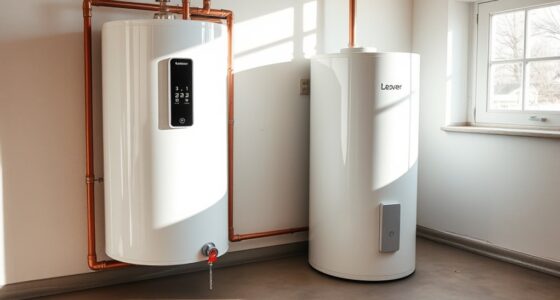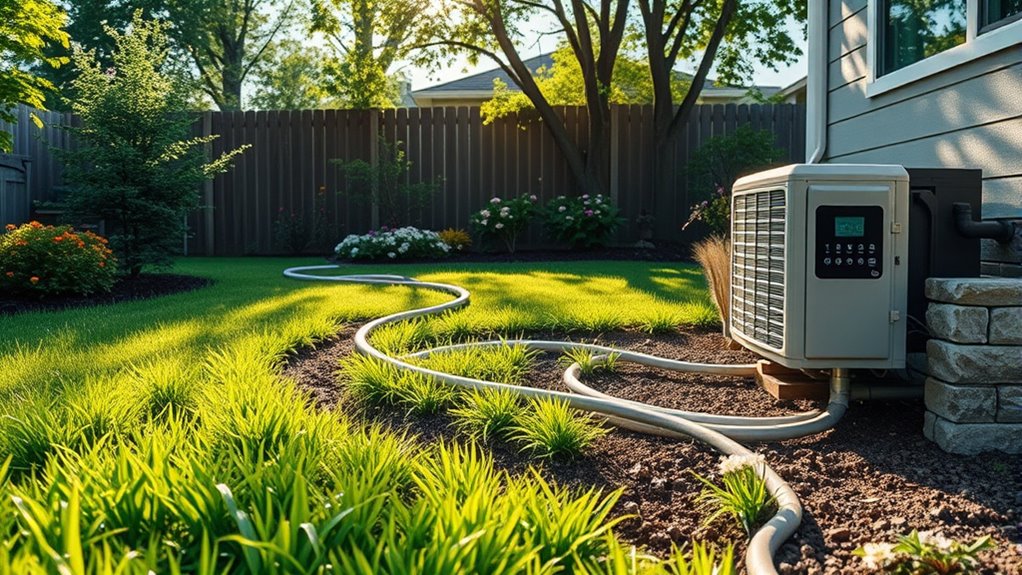

Geothermal heat pumps use the stable temperatures underground to efficiently heat and cool your home, offering an eco-friendly and cost-effective alternative to traditional systems. Installing one involves burying underground loops in a site assessment that considers land and soil conditions. While the process can take a few days and involve significant upfront costs, long-term savings, durability, and environmental benefits make geothermal heat pumps a smart choice. Keep exploring to discover how this renewable energy solution can transform your home comfort.
Key Takeaways
- Geothermal heat pumps use underground loops to efficiently transfer Earth’s stable temperature for home heating and cooling.
- Installation involves site assessment, trenching or drilling, and professional setup, typically taking a few days to a week.
- They significantly reduce energy costs by leveraging Earth’s thermal energy, cutting heating and cooling bills by up to 60%.
- These systems are durable, require minimal maintenance, and promote environmental sustainability through lower carbon emissions.
- Incentives and long-term savings make geothermal heat pumps a cost-effective, eco-friendly home heating solution.
Have you ever wondered how to cut your energy bills while reducing your carbon footprint? One effective way is by installing a geothermal heat pump. These systems tap into the Earth’s stable underground temperature to heat and cool your home, offering significant cost savings over traditional HVAC systems. But understanding the installation process and how it impacts your finances is vital to making an informed decision.
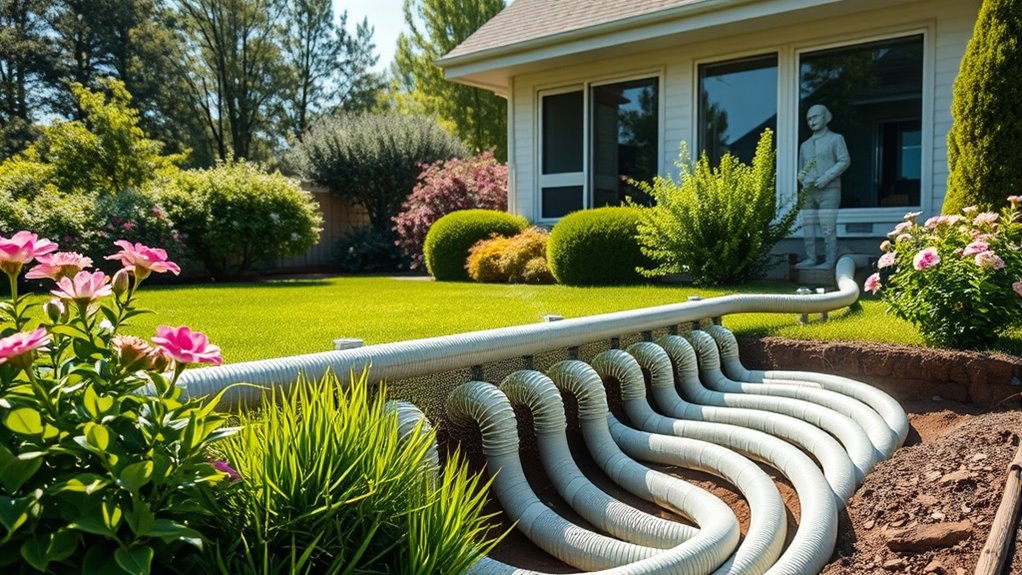
When considering a geothermal heat pump, the first aspect to focus on is the installation process. Unlike conventional systems that require ductwork or external units, geothermal systems involve burying loops underground, either horizontally or vertically. You’ll need to work with professionals who specialize in geothermal installation to guarantee proper setup. The process begins with a site assessment, where they evaluate your property’s land and soil conditions to determine the most suitable loop configuration. Once the plan is finalized, drilling or trenching begins, which can be an intensive process but is essential for the system’s efficiency. After laying the loops, the heat pump itself is installed inside your home, typically in a utility room or basement. This entire process can take a few days to a week, depending on the complexity and land size. While the upfront costs may seem high, the long-term benefits often outweigh the initial investment.
Installing a geothermal heat pump involves burying underground loops and working with professionals to ensure optimal efficiency.
Cost savings are one of the biggest advantages of choosing a geothermal heat pump. Because these systems leverage the Earth’s consistent underground temperatures, they consume less energy compared to traditional heating and cooling units. As a result, your monthly energy bills tend to drop considerably. Many homeowners see reductions of 30% to 60% on heating and cooling costs, which can lead to substantial savings over the lifespan of the system. Plus, because geothermal heat pumps are highly durable and require less maintenance, you avoid frequent repairs and replacements, further boosting your savings. Additionally, some regions offer tax credits or incentives for installing renewable energy systems like geothermal heat pumps, which can offset the initial installation expenses. Being aware of local store hours can help ensure timely scheduling of installation appointments and inspections.
While the installation process might seem intimidating at first, working with experienced professionals makes it manageable. They will guide you through every step, from site assessment to final setup, ensuring your system operates efficiently. The promise of lower energy bills, reduced environmental impact, and increased home comfort makes geothermal heat pumps a smart investment. Over time, the combination of cost savings and environmental benefits makes this technology an appealing choice for energy-conscious homeowners looking to harness the Earth’s natural energy.
Frequently Asked Questions
What Is the Typical Lifespan of a Geothermal Heat Pump System?
A geothermal heat pump system typically lasts around 20 to 25 years, but with proper system maintenance, you can extend its lifespan even further. Regularly inspecting and servicing the system helps prevent issues and keeps it running efficiently. Technological advancements continue to improve durability and efficiency, ensuring your investment lasts longer. By staying proactive with maintenance, you maximize the system’s longevity and enjoy reliable, eco-friendly heating for many years.
How Much Land Area Is Needed for a Residential Geothermal System?
You’ll need about a quarter to a half-acre of land for a residential geothermal system, which surprisingly isn’t much considering the “massive” energy savings it offers. The land requirements depend on your system’s size and type, but the footprint is generally modest. So, while it might look like a big commitment, in reality, your system’s land needs are pretty manageable, making it a smart, space-efficient choice.
Can Geothermal Heat Pumps Be Installed in Existing Homes?
Yes, you can install geothermal heat pumps in existing homes, but you’ll face retrofit challenges like limited space and ensuring existing systems are compatible. You might need to modify your current setup or add new components, which can increase costs. It’s essential to consult with a professional who can evaluate your home’s specific needs and determine how to integrate the geothermal system smoothly, minimizing disruptions and maximizing efficiency.
What Are the Main Factors Influencing Installation Costs?
Installation costs are primarily influenced by initial installation expenses and system size. You’ll find that larger systems require more extensive excavation and installation, boosting costs. Factors like soil type, land layout, and access also play vital roles in price variation. Budgeting for these basics helps you understand the total expense, ensuring you’re prepared for the upfront investment needed to harness geothermal energy efficiently.
How Does Climate Affect Geothermal Heat Pump Efficiency?
Climate variability and seasonal temperature notably impact your geothermal heat pump’s efficiency. In regions with extreme seasonal temperature changes, your system works harder to maintain a comfortable indoor climate, reducing efficiency. Conversely, stable, moderate climates allow your heat pump to operate more effectively, saving energy. To maximize efficiency, consider local climate patterns when planning your installation, and ensure your system is properly designed for seasonal fluctuations.
Conclusion
Harnessing the Earth’s steady embrace with geothermal heat pumps is like tapping into a hidden well of endless warmth beneath your feet. As you embrace this sustainable energy source, you become a steward of the planet’s quiet power, transforming your home into a sanctuary of comfort and eco-consciousness. With each cycle, you’re not just heating your house—you’re dancing in harmony with nature’s ancient, unwavering heartbeat, forging a future where warmth and sustainability grow hand in hand.