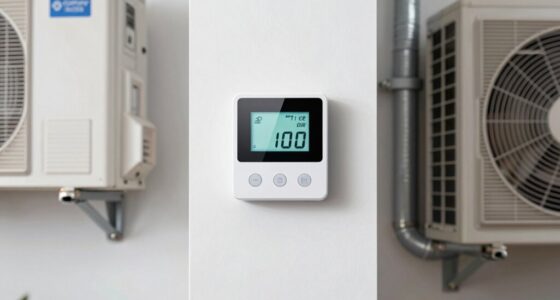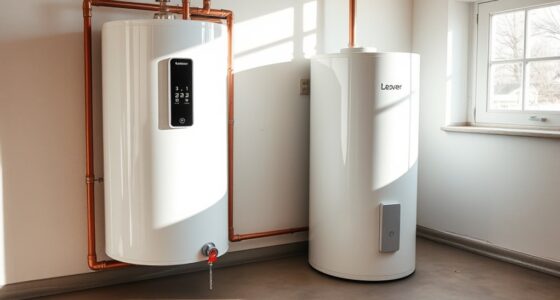
To choose between geothermal and air-source heat pumps, consider your climate, budget, and long-term goals. Geothermal systems have higher upfront costs but offer more consistent efficiency and eco-friendliness, making them ideal if you want to decrease your carbon footprint and plan for the long haul. In milder climates or with a tighter budget, air-source units are more affordable and easier to install, but their performance drops in extreme weather. Keep exploring to find the best fit for your home.
Key Takeaways
- Assess your climate: geothermal systems excel in extreme temperatures, while air-source pumps are suitable for milder conditions.
- Consider initial costs versus long-term savings: geothermal has higher upfront expenses but lower operating costs.
- Evaluate installation complexity and space availability: geothermal requires underground loops; air-source is simpler to install.
- Prioritize environmental impact: geothermal offers lower carbon footprint and greenhouse emissions.
- Match system choice to budget and commitment: geothermal suits those seeking sustainability and long-term savings; air-source is budget-friendly and easier to implement.
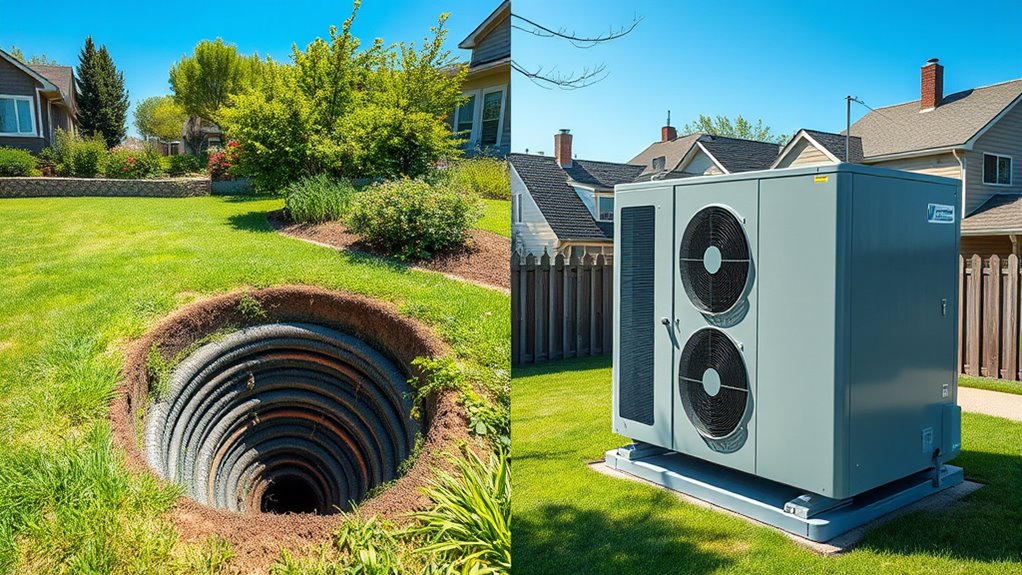
Are you trying to decide between a geothermal and an air-source heat pump for your home? Making this choice involves weighing several factors, especially the cost comparison and environmental impact. Both systems are energy-efficient options that can help reduce your utility bills, but they differ markedly in upfront costs and ecological footprint. Geothermal heat pumps tend to have higher initial installation expenses because they require underground loops or boreholes. However, over time, their operating costs are usually lower because they tap into the stable temperatures of the ground, leading to more consistent and efficient heating and cooling. Air-source heat pumps are generally less expensive to install since they rely on external air, which is easier to access and doesn’t involve extensive excavation or drilling. The trade-off is that they may be less efficient during extremely cold or hot weather, potentially increasing energy consumption in those conditions.
Geothermal systems have higher upfront costs but lower long-term operating expenses and environmental impact.
When considering environmental impact, geothermal systems are often the more eco-friendly choice. They use renewable thermal energy stored underground, which results in lower greenhouse gas emissions compared to traditional heating and cooling methods. Since they operate using the earth’s natural heat, they have a smaller carbon footprint over their lifespan. Additionally, refrigerant management is crucial for maintaining their eco-friendliness, as some refrigerants can contribute to greenhouse gases if not properly handled.
Meanwhile, air-source heat pumps, while still more environmentally friendly than fossil fuel-based systems, have a somewhat higher environmental impact. Their efficiency can decrease as outdoor temperatures drop, which can lead to increased energy use and emissions if the system needs to work harder to maintain comfort levels. Additionally, some air-source models use refrigerants that can contribute to greenhouse gases if not properly managed.
Your decision should also consider the long-term savings and environmental benefits. Geothermal systems, despite their higher initial costs, can pay off over time through lower energy bills and reduced emissions. They often come with longer warranties and require less maintenance, adding to their appeal. On the other hand, air-source heat pumps are more budget-friendly upfront and suitable for climates with milder winters. They’re easier to install and can be a practical choice if you want a quicker, less invasive upgrade.
Ultimately, your choice depends on your budget, local climate, and environmental priorities. If you’re committed to minimizing your carbon footprint and willing to invest more initially, geothermal could be the better option. If you prefer a more affordable installation with decent efficiency, especially in milder climates, an air-source heat pump might suit you best. Assess your climate, financial situation, and environmental goals carefully to make the right decision for your home.
Frequently Asked Questions
How Long Do Geothermal and Air-Source Heat Pumps Typically Last?
Geothermal heat pumps typically last 20 to 25 years, while air-source units usually last 10 to 15 years. You’ll find that geothermal systems often have higher efficiency ratings, saving you money long-term. Additionally, geothermal pumps operate more quietly, resulting in lower noise levels compared to air-source models. Proper maintenance can extend their lifespan, ensuring you get the most value from your investment.
Are There Specific Climate Conditions Better Suited for Each Type?
Ever wondered which climate suits each heat pump best? Geothermal systems excel in diverse climates because of their climate adaptability, maintaining efficiency year-round. Air-source heat pumps work best in moderate climates, where seasonal efficiency is maximized without extreme cold or heat. If you face harsh winters or hot summers, geothermal provides more consistent performance, whereas air-source units are ideal for milder conditions. Choose based on your local weather patterns for ideal comfort and savings.
What Are the Initial Installation Costs for Geothermal Versus Air-Source?
You’ll find that installation costs for geothermal heat pumps are notably higher upfront compared to air-source systems. Geothermal requires extensive ground loop installation, which can be costly, often ranging from $10,000 to $30,000. In contrast, air-source heat pumps have lower initial expenses, typically between $3,000 and $8,000, because they don’t require underground work. Your choice depends on your budget and willingness to invest in long-term energy savings.
How Do Maintenance Requirements Differ Between the Two Systems?
Ever wondered if maintenance differs between these systems? You’ll find that air-source heat pumps typically require more frequent filter maintenance and refrigerant checks due to exposure to the elements, while geothermal systems need less upkeep thanks to their underground components. With geothermal, you mainly focus on checking loops and pumps periodically. In contrast, air-source units demand regular filter replacements and refrigerant inspections to keep them running efficiently.
Can Existing HVAC Systems Be Easily Upgraded to Heat Pumps?
You can upgrade your existing HVAC system to a heat pump, but system compatibility matters. Some units may face retrofit challenges, especially if the current system isn’t designed for heat pump integration. You’ll need to assess your ductwork, electrical capacity, and space. Consulting a professional helps guarantee smooth installation, avoids costly modifications, and confirms that your current setup can support the new heat pump efficiently.
Conclusion
Ultimately, choosing between geothermal and air-source heat pumps depends on your climate, budget, and long-term goals. Both systems have their merits, so weigh your options carefully. Remember, “A wise man builds his house on a solid foundation.” Investing in the right heat pump means comfort and savings for years to come. Take your time, do your research, and choose the system that best fits your needs. Your future self will thank you.