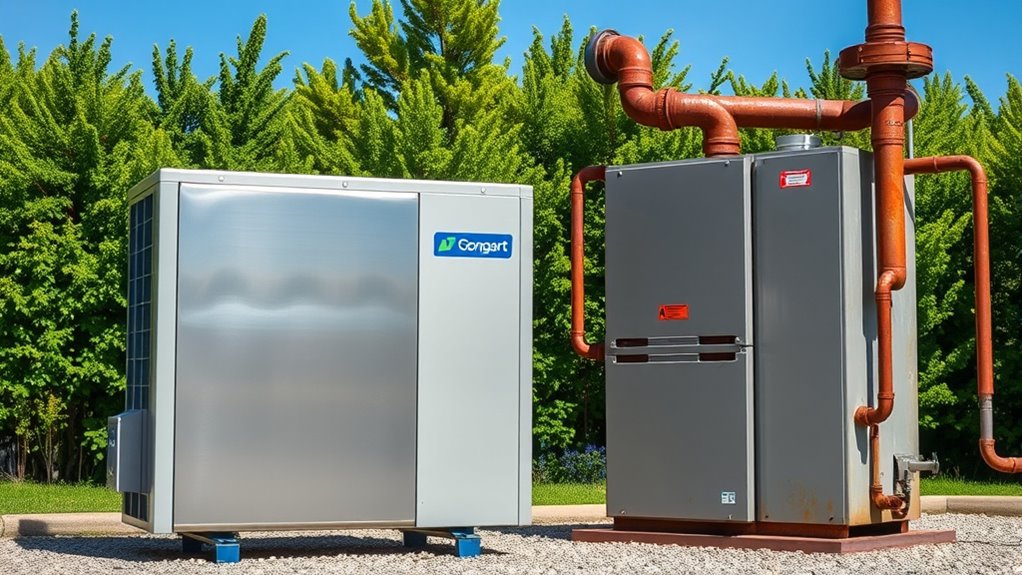

Heat pumps offer a more sustainable and energy-efficient way to heat your home by transferring heat with electricity rather than burning fossil fuels like traditional furnaces. They can reduce your carbon footprint and lower utility bills over time, especially as electricity sources become greener. While initial costs may be higher, the long-term savings and environmental benefits make them a smart choice. To discover how you can make your home more eco-friendly, keep exploring these options.
Key Takeaways
- Heat pumps enable full electrification of heating, reducing reliance on fossil fuels and supporting decarbonization efforts.
- Traditional furnaces emit greenhouse gases, making heat pumps a more environmentally friendly option.
- Transitioning to heat pumps aligns with sustainable energy goals by utilizing renewable electricity.
- Higher upfront costs of heat pumps can be offset by long-term energy savings and incentives.
- Modern advancements improve heat pump performance in cold climates, enhancing their role in decarbonized heating systems.

When choosing a heating system for your home, understanding the differences between heat pumps and traditional furnaces is essential. One of the key factors to weigh is energy efficiency, which directly impacts your utility bills and environmental footprint. Heat pumps are generally more energy-efficient because they transfer heat rather than generate it through combustion. This means they use less electricity to produce the same amount of heat, helping you save money in the long run. Traditional furnaces, on the other hand, burn fuel like natural gas or oil, which can be less efficient and more costly over time. While initial installation costs for heat pumps might be higher, their superior energy efficiency often results in lower operating expenses, making them a more economical choice over the lifespan of the system.
Heat pumps are more energy-efficient, using less electricity and saving money over time compared to traditional furnaces.
Installation costs are another important aspect to gauge. Heat pumps tend to have a higher upfront price because they require more complex equipment and sometimes additional modifications to your home’s existing infrastructure. For example, air-source heat pumps need outdoor units, and ground-source (or geothermal) models require extensive ground loop installations. These costs can be a deterrent initially, but many homeowners find that the energy savings and potential incentives or rebates offset the initial investment. Traditional furnaces usually have lower installation costs because they are simpler systems, and many homes already have the necessary ductwork. However, they might incur higher operational costs over time, especially if fuel prices increase.
Deciding between a heat pump and a furnace also involves considering climate and your specific needs. Heat pumps work efficiently in moderate climates but can struggle in extremely cold weather unless they are specialized models. Modern advancements have improved their cold-weather performance, making them viable options for more regions. Furnaces, on the other hand, can reliably produce heat regardless of outdoor temperatures, but they tend to be less environmentally friendly due to fossil fuel consumption and emissions.
In terms of electrification and decarbonization, heat pumps are often the better choice because they can run entirely on renewable electricity, considerably reducing your carbon footprint. Traditional furnaces contribute to greenhouse gas emissions, which is a growing concern as communities aim for cleaner energy solutions. Moving toward heat pumps aligns with broader efforts to decarbonize heating and shift toward sustainable energy use, making them a forward-looking choice for environmentally conscious homeowners.
Ultimately, your decision should weigh both upfront costs and long-term benefits. While heat pumps might require a higher initial investment, their energy efficiency, environmental benefits, and potential savings make them a compelling option for those looking to modernize their home heating while supporting decarbonization efforts.
Frequently Asked Questions
How Do Heat Pumps Perform in Extremely Cold Climates?
In extremely cold climates, heat pumps still perform well, but their cold climate performance can vary. Modern cold climate heat pumps are designed to maintain high heat pump efficiency even at very low temperatures, often down to -15°F or lower. While they might need backup heating sources during extreme cold snaps, advancements have markedly improved their reliability and efficiency, making them a good option for year-round heating in cold regions.
What Is the Long-Term Cost Comparison Between Heat Pumps and Furnaces?
Think of your heating system as a garden—long-term costs shape its health. Heat pumps often save you money with lower operational and maintenance costs, making them a cost-effective choice over time. While initial investments may be higher, the ongoing savings in energy bills and fewer repairs can balance the scales, providing substantial cost savings in the long run compared to traditional furnaces.
Are Heat Pumps Suitable for Large or Multi-Story Homes?
Heat pumps can be suitable for large or multi-story homes, but their effectiveness depends on system size and configuration. For large home heating, you might need multiple units or a zoned system to guarantee even comfort across all floors. Modern heat pumps are designed to handle multi-story homes effectively, especially if professionally installed and properly sized, making them a viable option for efficient large home heating.
How Environmentally Friendly Are Traditional Furnaces?
Imagine a home that uses an old furnace emitting high carbon emissions. Traditional furnaces are less environmentally friendly because they rely on fossil fuels, producing more carbon emissions and consuming less energy efficiency. These systems contribute considerably to air pollution and climate change. Upgrading to more efficient, cleaner options can reduce your carbon footprint and improve energy efficiency, making your home greener and more sustainable for the environment.
Can Heat Pumps Replace Furnaces Entirely in Existing Homes?
Yes, heat pumps can replace furnaces entirely in your existing home, but you should consider furnace replacement and retrofit challenges. Heat pumps are efficient and eco-friendly, yet installing them may require upgrades to your electrical system or insulation. If your home’s size or climate presents challenges, professional assessment helps guarantee a smooth shift. Overall, they’re a viable, sustainable alternative that can meet your heating needs effectively.
Conclusion
Think of choosing between a heat pump and a traditional furnace like picking a trusty steed for a journey. The heat pump is your modern, eco-friendly companion, ready to take you further with less fuel and cleaner energy. The furnace, while familiar, is like an old carriage—reliable but less efficient. Embracing heat pumps means riding into a greener future, leaving behind the smoke of the past and steering toward a sustainable horizon.