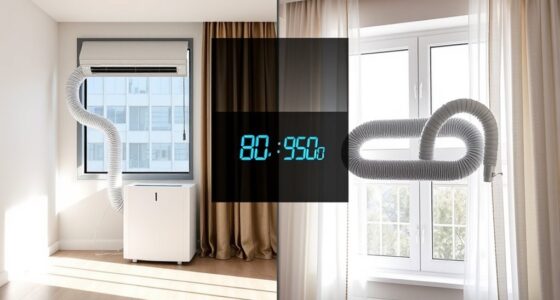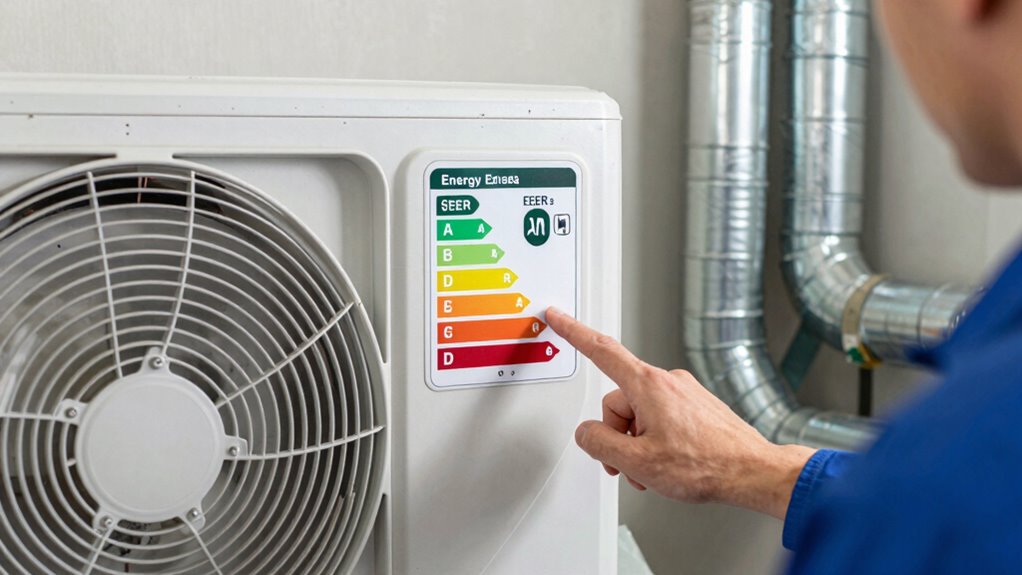

To understand HVAC efficiency ratings without the technical jargon, focus on the basics: higher ratings mean your system uses less energy and saves you money over time. For example, a higher SEER or AFUE indicates better performance and lower utility bills. Consider your climate and home size to pick the right balance of cost and efficiency. If you want to get a clear picture of what these ratings really mean, keep exploring for simple explanations and tips.

Get cleaning gear delivered free with Prime
- Fast, free delivery on millions of items
- Prime Video, Amazon Music and more included
- Member-only deals all year
Key Takeaways
- Focus on relative differences between ratings (e.g., higher SEER or AFUE usually means better efficiency).
- Understand that higher ratings often cost more upfront but save money over time through lower energy bills.
- Match system efficiency to your climate and home size for optimal performance and cost-effectiveness.
- Use ratings as simple indicators to compare how well systems convert energy into heating or cooling.
- Remember that the highest rating isn’t always necessary; choose a balance between cost, savings, and your specific needs.
Understanding HVAC efficiency ratings is essential when choosing a heating and cooling system because these ratings directly impact energy consumption and operating costs. When you’re shopping for a new unit, it’s easy to feel overwhelmed by the technical jargon and complex numbers. But grasping the basics can help you make smarter decisions that maximize energy savings and assure good system performance.
Most efficiency ratings are expressed as a number or ratio, like SEER for air conditioners or AFUE for furnaces. These ratings tell you how well the system converts energy into cooling or heating. For example, a higher SEER score means your air conditioner uses less electricity to produce the same amount of cooling, leading to lower energy bills. Similarly, a higher AFUE indicates a furnace’s ability to convert fuel into heat efficiently. Instead of getting lost in the specifics, focus on these ratings as simple indicators of how well a system performs relative to its energy use.
Efficiency ratings like SEER and AFUE show how well systems convert energy into heating or cooling.
It’s also helpful to compare these ratings across models, rather than obsessing over absolute numbers. For instance, if you’re choosing between two air conditioners with SEER ratings of 16 and 20, know that the 20-rated unit will likely save you more on energy costs over time. Although it might be pricier upfront, the improved efficiency can pay off through reduced utility bills. Keep in mind that these ratings aren’t just about saving money—they also contribute to a more sustainable environment by reducing your carbon footprint. Additionally, understanding the energy efficiency ratings can guide you toward options that are more environmentally friendly and sustainable in the long run.
Another way to understand efficiency ratings is to take into account how they relate to your climate and home size. If you live somewhere hot, a higher SEER is beneficial because it keeps energy use low during extended cooling periods. Conversely, in milder climates, a slightly lower rating might still deliver excellent system performance without overpaying for extra efficiency you won’t fully utilize. Think about your specific needs and how the system’s efficiency will match your lifestyle, rather than just chasing the highest possible rating. Being aware of climate considerations can help you select a unit that offers the best balance between cost and performance. Recognizing the relationship between climate and efficiency can help you make more tailored choices that maximize comfort and savings.
Ultimately, the goal is to find a balance between initial cost, energy savings, and system performance. Efficiency ratings give you a straightforward way to compare different units, helping you choose a system that’s not only effective but also economical to run. When you understand what these ratings mean, you can confidently select a heating or cooling system that keeps your home comfortable while keeping your energy bills in check. Additionally, understanding HVAC efficiency ratings can guide you toward options that are more environmentally friendly and sustainable in the long run. This knowledge can also help you better negotiate with contractors or advocates to ensure you’re getting a system that truly meets your needs.
As an affiliate, we earn on qualifying purchases.
Frequently Asked Questions
How Often Should I Check My HVAC System’s Efficiency Ratings?
You should check your HVAC system’s efficiency ratings during a seasonal check or annual energy audit. Doing so helps guarantee your system runs smoothly and efficiently. Regular inspections, especially before peak seasons, can identify issues early and improve performance. If you notice unusual energy bills or system problems, schedule a professional energy audit sooner. Staying proactive keeps your system efficient, saving you money and extending its lifespan.
Do Higher Efficiency Ratings Always Mean Lower Energy Bills?
Ever wonder if higher efficiency ratings always mean lower bills? Not necessarily. While a more efficient HVAC system can boost energy savings and reduce your costs in the long run, other factors like usage habits and system size matter too. A high rating doesn’t guarantee instant savings but can lead to significant cost implications over time. Ultimately, choosing a system suited to your home maximizes efficiency and keeps your energy bills in check.
Are There Specific Brands Known for Better Efficiency Ratings?
Yes, some brands are known for better efficiency ratings, thanks to strong brand reputation and innovation trends. You should look into brands like Trane, Lennox, and Carrier, which consistently lead in energy-efficient technology and customer satisfaction. These companies invest in innovation to improve efficiency, making their units more reliable and cost-effective over time. Choosing a well-regarded brand guarantees you get a system that performs well and saves you money.
How Do Efficiency Ratings Affect My System’s Maintenance Needs?
Efficiency ratings directly impact your system’s energy consumption and maintenance needs. Higher-rated systems usually operate more smoothly, requiring less frequent maintenance because they experience less strain and wear. Conversely, lower-rated units may need more frequent tune-ups and repairs, increasing your overall maintenance frequency. By choosing an efficient system, you reduce energy costs and keep maintenance manageable, ensuring your HVAC runs reliably and efficiently for longer periods.
Can Efficiency Ratings Change Over the Lifespan of an HVAC Unit?
Yes, efficiency ratings can change over your HVAC unit’s lifespan due to efficiency degradation. As your system ages, parts wear out and performance drops, leading to lower efficiency. Comparing its current efficiency to its original rating helps you understand its lifespan. Regular maintenance can slow efficiency degradation, but eventually, your unit may need replacement to maintain peak performance. Keep an eye on these changes for better energy management.
As an affiliate, we earn on qualifying purchases.
Conclusion
Understanding HVAC efficiency ratings might seem like decoding a foreign language, but it’s really just about grasping the basics. Think of these ratings as a map guiding you to smarter, more cost-effective choices—like a compass pointing north. Once you get the hang of it, you’ll see through the jargon and make better decisions for your home. It’s like tuning an instrument—you’ll get a clear, harmonious system that keeps your comfort steady and your bills in check.
As an affiliate, we earn on qualifying purchases.
As an affiliate, we earn on qualifying purchases.
Halloween Picks
halloween
As an affiliate, we earn on qualifying purchases.