To maintain your HVAC filters, check them every one to three months and replace or clean as needed, especially if you notice decreased airflow, dust buildup, or musty odors. Turn off your system before handling the filter, and always follow the manufacturer’s instructions for installation. Consider more frequent changes if you have pets or allergies. Keeping up with these practices will help your system run efficiently and improve indoor air quality — learn more to keep your home comfortable.

Get cleaning gear delivered free — and shop member deals
- Fast, free delivery on millions of items
- Access to Prime Big Deal Days deals on October 6–7
- Prime Video, Amazon Music and more included
Key Takeaways
- Replace or clean filters every 1 to 3 months, or more frequently if you have pets or allergies.
- Turn off the HVAC system before removing or replacing filters to prevent dust dispersal.
- Check for reduced airflow, dust buildup, or musty odors as signs a filter needs changing.
- Ensure filters are properly installed with airflow arrows pointing in the correct direction.
- Keep a record of replacement dates and store spare filters to maintain consistent filter maintenance.
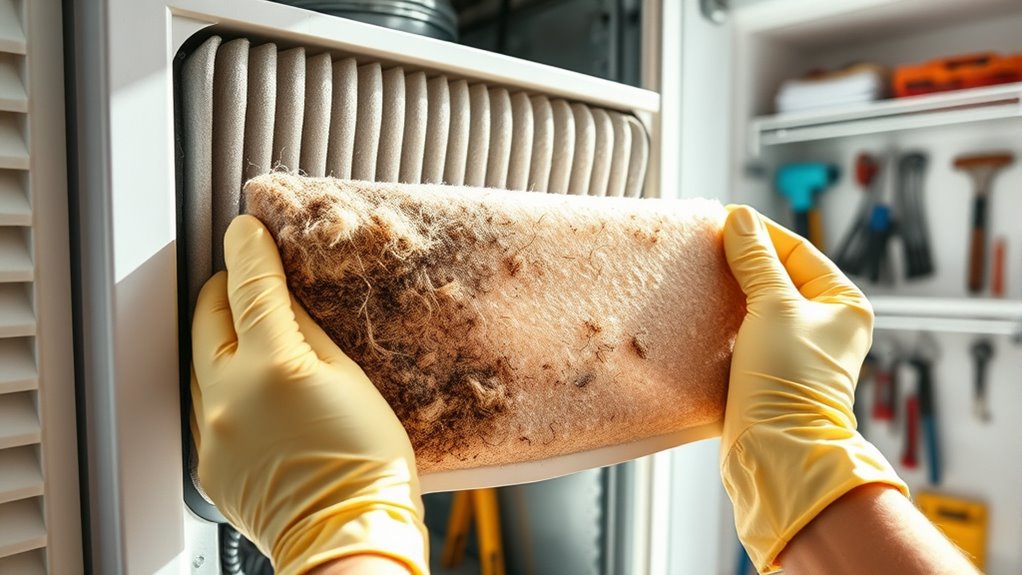
Have you ever wondered how to keep your HVAC system running efficiently and your indoor air clean? One of the most important steps is understanding your filter types and knowing the right replacement tips. Your HVAC filter acts as a barrier, trapping dust, pollen, pet dander, and other airborne particles, which helps improve air quality and protect your system from dust buildup. With so many filter types available—fiberglass, pleated, electrostatic, HEPA, and washable filters—it’s essential to choose the right one for your needs. Fiberglass filters are affordable and basic, but they need frequent changes. Pleated filters offer better filtration and last longer, making them a popular choice for many households. Electrostatic filters generate static electricity to attract particles, providing a good balance between efficiency and cost. HEPA filters are the most effective for capturing tiny particles but may require a compatible system and can be more expensive. Washable filters are eco-friendly and economical over time, but they need regular cleaning to maintain performance. Additionally, selecting filters with appropriate airflow resistance ensures your HVAC operates efficiently without overworking the system.
Knowing when to change your filter is equally essential. A general rule of thumb is to replace or clean your filter every 1 to 3 months. However, this can vary based on factors like household size, presence of pets, allergy sensitivities, and whether anyone smokes indoors. If you notice reduced airflow from your vents, increased dust settling on surfaces, or musty odors, it’s a sign your filter needs attention sooner. During peak seasons like winter and summer when your HVAC runs more frequently, inspecting and replacing filters more often can prevent strain on your system. Also, if you have pets that shed or members of your household with allergies, more frequent changes are recommended.
When it comes to replacement tips, always turn off your HVAC system before handling the filter. Remove the filter carefully, avoiding dust dispersal, and check the manufacturer’s instructions to guarantee correct installation. Make sure the filter’s airflow arrows point in the right direction—usually towards the furnace or air handler. If it’s dirty or clogged, it’s time to replace it. Keep a record of the date you change your filter to stay on schedule. Store spare filters in a clean, dry place for quick access. Regularly inspecting your filters and adhering to the recommended replacement schedule can extend the life of your HVAC system, improve indoor air quality, and save you money on energy bills. Ultimately, understanding your filter types and following proper replacement tips keep your home comfortable, healthy, and energy-efficient.
As an affiliate, we earn on qualifying purchases.
Frequently Asked Questions
Can I Clean and Reuse My HVAC Filters?
Yes, you can clean and reuse your HVAC filters if they’re reusable filters made for filter cleaning and filter reuse. Remove the filter and gently wash it with water or a vacuum to remove dust and debris. Make sure it’s completely dry before reinstalling. Keep in mind, however, that some filters are designed for single use, so check your filter type before attempting cleaning and reuse to guarantee peak performance and air quality.
How Do I Choose the Right Filter for My System?
You choose the right filter by considering your home’s air quality needs and your HVAC system’s specifications. Look for a filter with the right MERV rating to improve air quality without overburdening your system. Check the filter’s lifespan to make certain it lasts long enough between replacements. Always match the filter size to your system’s requirements, and opt for a higher-quality filter if you want better air purification.
Are There Filters Suitable for Allergies or Asthma?
If you suffer from allergies or asthma, you want filters that trap allergens, pollen, and dust effectively. Look for allergy-friendly materials like HEPA filters, which are known for air purifier compatibility and high filtration efficiency. These filters capture tiny particles, improve indoor air quality, and reduce allergy symptoms. Regularly replacing them keeps your system running smoothly, providing cleaner, healthier air for you to breathe comfortably every day.
What Are the Signs of a Failing HVAC Filter?
You’ll notice your HVAC filter is failing if airflow decreases, your energy bills rise, or you see more dust and allergies in your home. If your filter’s lifespan has exceeded recommended months, it’s likely less effective. Allergy filters can help, but once they clog or become discolored, it’s time to replace them. Regularly checking your filter guarantees peak performance and better indoor air quality.
How Does Filter Maintenance Impact Energy Efficiency?
Did you know that proper filter maintenance directly boosts your HVAC system’s energy efficiency? When you regularly check and replace filters, you prevent airflow restriction, which forces your system to work harder, wasting energy. This not only extends the filter lifespan but also keeps your home comfortable. By maintaining filters, you reduce energy costs and guarantee your HVAC runs smoothly, saving you money and preventing unnecessary wear.
As an affiliate, we earn on qualifying purchases.
Conclusion
Now that you know how to care for your HVAC filters, think of them as the gatekeepers to your home’s air quality. Regular maintenance and timely changes keep your system running smoothly, like a well-oiled machine. When you stay on top of filter care, you’re shielding your family from dust and allergens, creating a fresh, breathable sanctuary. Keep your filters happy, and they’ll keep your home feeling clean and vibrant, no matter the season.
As an affiliate, we earn on qualifying purchases.
As an affiliate, we earn on qualifying purchases.
Fall Picks
fall essentials
As an affiliate, we earn on qualifying purchases.