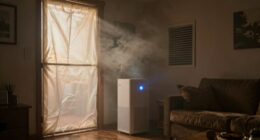
To improve your indoor air quality, you can use HEPA filters to trap tiny particles, UV lights to neutralize bacteria and viruses, and guarantee your ventilation system provides fresh air exchange. Regularly maintaining and monitoring these systems ensure they work effectively. Combining these solutions creates a multi-layer defense, making your home healthier. Keep exploring to discover how these methods work together for ideal indoor air safety and health.
Key Takeaways
- Combining HEPA filters, UV lights, and proper ventilation creates an effective multi-layer strategy to improve indoor air quality.
- Regular maintenance and timely filter replacements ensure HEPA filters and UV lights operate at peak efficiency.
- Continuous air quality monitoring helps detect pollutants and triggers necessary system adjustments.
- Properly functioning ventilation systems exchange stale indoor air with fresh outdoor air, reducing pollutant buildup.
- Active management of these solutions ensures a healthier indoor environment and minimizes indoor air pollution risks.
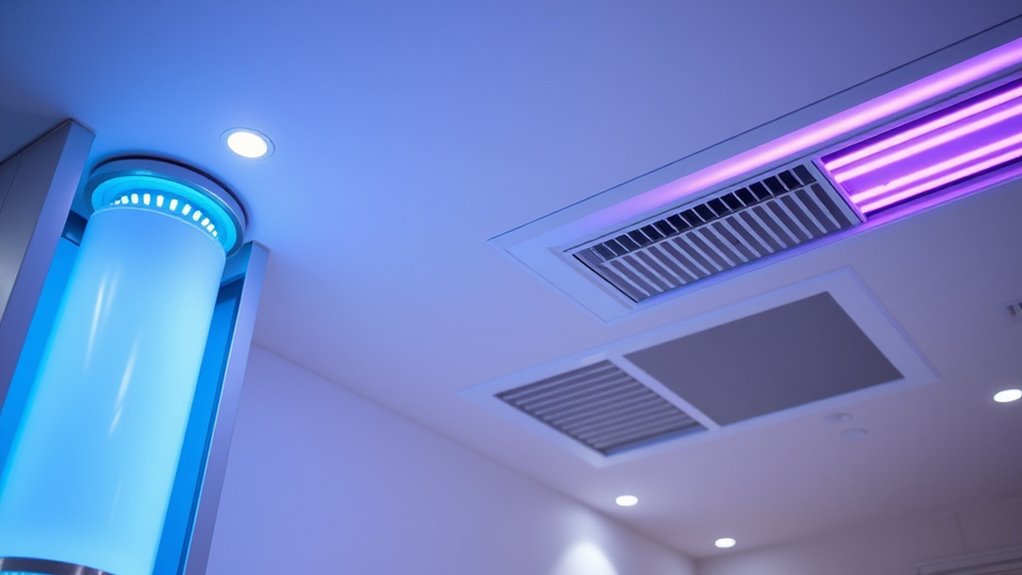
Have you ever wondered how clean the air inside your home truly is? Many people don’t realize that indoor air quality can markedly impact your health, especially with pollutants like dust, pollen, pet dander, and even bacteria lurking around. Fortunately, there are effective solutions like HEPA filtration, UV lights, and proper ventilation that can make a real difference. But to keep these systems working at their best, you need to understand the importance of regular air purifier maintenance and air quality monitoring. These practices ensure you’re not just installing equipment, but actively maintaining a healthy environment.
When you invest in an air purifier, especially one with a HEPA filter, regular maintenance is essential. HEPA filters capture tiny particles, but over time, they become clogged and less effective. You should check the manufacturer’s guidelines for filter replacement intervals, typically every 6 to 12 months, depending on usage. Cleaning or replacing filters as recommended keeps the purifier functioning at peak performance, ensuring pollutants don’t bypass the system. Neglecting air purifier maintenance means your home’s air quality could decline without you realizing it, allowing harmful particles to circulate freely. To stay ahead of this, air quality monitoring becomes invaluable. By using air quality monitors, you can get real-time data on pollutants and allergen levels in your home. These devices alert you when air quality drops, prompting you to check and maintain your air purifier or increase ventilation. Monitoring helps you identify sources of pollution and take targeted actions, rather than guessing or waiting for symptoms to appear.
Regularly maintain HEPA filters and monitor air quality to ensure your home stays clean and healthy.
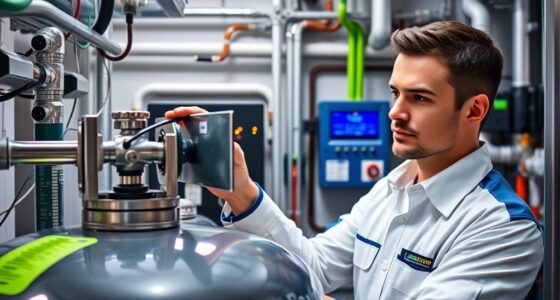
Proper ventilation plays a critical role in indoor air quality. It’s not just about opening a window occasionally; it’s about designing a system that continuously exchanges stale indoor air with fresh outdoor air. Ventilation systems can include exhaust fans, energy recovery ventilators (ERVs), or balanced ventilation units that filter incoming air. Regularly inspecting and maintaining these systems guarantees they operate efficiently, preventing the buildup of indoor pollutants. When combined with HEPA filtration and UV lights— which kill bacteria and viruses—you create a multi-layer defense that greatly improves air quality. UV lights, when properly installed, disinfect the air by neutralizing microorganisms that pass through the system, further reducing health risks. Incorporating **Ventilation systems** that are properly maintained ensures continuous fresh air flow and enhances overall air quality.
In essence, maintaining your indoor environment involves a proactive approach. Regular air purifier maintenance and air quality monitoring keep your systems running smoothly and provide peace of mind. Coupled with effective ventilation, these measures ensure that the air you breathe inside your home remains clean, fresh, and safe for everyone. Taking these steps not only protects your health but also creates a more comfortable and healthier living space for you and your family.
Frequently Asked Questions
How Often Should HEPA Filters Be Replaced for Optimal Performance?
You should replace HEPA filters every 6 to 12 months for peak performance, depending on your filter’s lifespan and usage. Regular replacement ensures the filter maintains its efficiency in capturing airborne particles. Keep an eye on any decrease in air quality or airflow, which could indicate it’s time for a replacement. Following a consistent replacement schedule helps keep indoor air clean and healthy.
Can UV Lights Eliminate All Airborne Pathogens Effectively?
Think of UV lights as the wizard in your air quality castle—powerful but not invincible. UV efficacy can markedly reduce airborne pathogens, but it might not eliminate all. Factors like exposure time, pathogen type, and air circulation influence results. So, while UV lights are a strong tool, relying solely on them isn’t enough for perfect safety. Combine them with good ventilation and filtration for the best protection against airborne pathogens.
What Is the Ideal Ventilation Rate for Different Indoor Spaces?
You should aim for an air exchange rate that meets or surpasses ventilation standards for your space. For example, offices typically require about 4-6 air changes per hour, while healthcare settings may need 12 or more. Adjust your ventilation to ensure fresh air flows continuously, reducing indoor pollutants and maintaining healthy air quality. Always consider room size and occupancy to optimize air exchange and meet recommended standards effectively.
Are There Health Risks Associated With UV Air Purification Systems?
Many believe UV air purification systems are completely safe, but potential UV light hazards exist if safety precautions aren’t followed. Exposure to UV rays can cause skin and eye irritation or damage. To guarantee UV safety, you should verify the system is properly enclosed and installed by professionals. When used correctly, UV lights effectively reduce harmful microbes without posing significant health risks. Always follow manufacturer guidelines for safe operation.
How Do Indoor Plants Compare to Mechanical Filtration in Air Quality Improvement?
Indoor plants offer natural plant benefits like increasing humidity and removing some airborne toxins, but they can’t match mechanical filtration‘s efficiency in improving air quality. Mechanical filtration systems, like HEPA filters, actively trap dust, allergens, and pollutants, providing cleaner air faster. While plants enhance overall ambiance and boost well-being, combining them with mechanical filtration creates a more holistic approach to indoor air quality, maximizing health benefits.
Conclusion
Improving your indoor air quality is easier than you think with HEPA filters, UV lights, and proper ventilation. Did you know that indoor air can be up to five times more polluted than outdoor air? By using these solutions, you create a healthier environment for yourself and your loved ones. Don’t wait—take action today to breathe cleaner, safer air every day. Your lungs will thank you for making these simple yet effective changes.