When choosing an indoor air quality monitor, focus on sensors that detect PM2.5 particles for deep lung health, VOC sensors for harmful chemicals from household products, and CO₂ sensors to gauge ventilation effectiveness. These key sensors help you identify pollution sources, improve air quality, and create a healthier environment. Understanding which sensors matter most allows you to make better choices for your space—keep going to get all the details you need.
Key Takeaways
- PM2.5 sensors detect fine particles that penetrate deep into lungs, indicating pollution sources and air quality risks.
- VOC sensors identify odorless chemicals from household products, crucial for detecting chemical exposure indoors.
- CO2 sensors monitor ventilation effectiveness, signaling poor airflow and potential buildup of indoor pollutants.
- Combining PM2.5, VOC, and CO2 sensors provides a comprehensive assessment of indoor air quality.
- Sensor accuracy and proper calibration are essential for reliable readings and effective air quality management.
What Do Indoor Air Quality Sensors Measure?
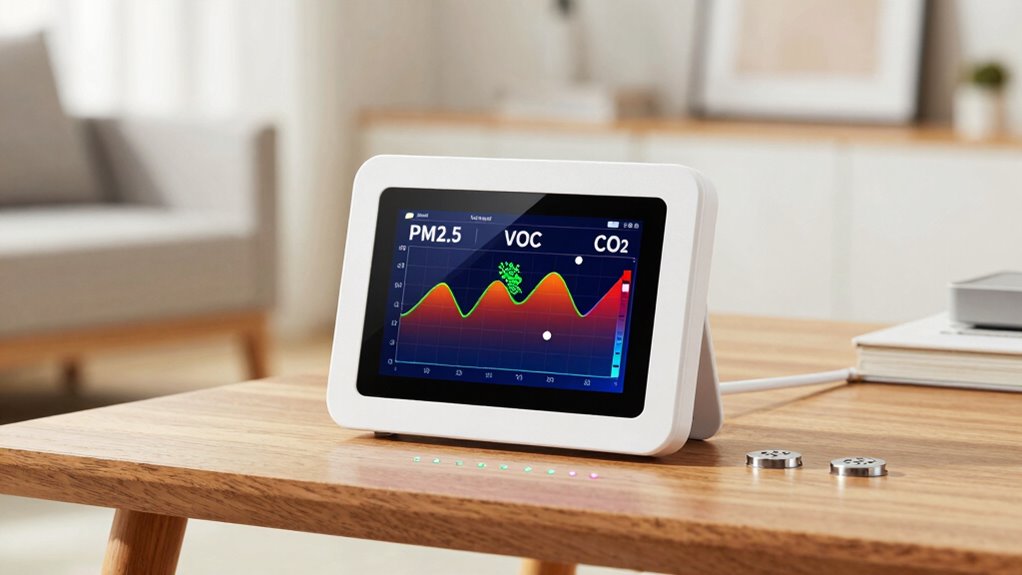
Indoor air quality sensors measure a variety of pollutants and environmental factors that directly impact your health and comfort. These sensors detect airborne contaminants like volatile organic compounds (VOCs), carbon dioxide (CO2), and particulate matter, including PM2.5. They also monitor humidity and temperature levels, which influence air quality. By providing real-time data, these sensors help you optimize air filtration and ventilation strategies. For example, if CO2 levels rise, you know it’s time to increase fresh air intake. Similarly, detecting high VOC levels can prompt you to improve filtration or reduce indoor chemical sources. Understanding what these sensors measure allows you to take targeted actions to create a healthier, more comfortable indoor environment. Indoor pollutants can originate from various sources, including microplastics in dust and household chemicals, emphasizing the importance of comprehensive air quality monitoring. Additionally, many sensors now incorporate advanced detection technologies to improve accuracy and reliability in diverse indoor settings. Incorporating real-time data analysis enables more effective responses to changing indoor conditions and enhances overall air quality management. Moreover, understanding the specific pollutants being measured helps prioritize which mitigation strategies to implement for optimal indoor health.
Why PM2.5 Is Key to Healthy Indoor Air
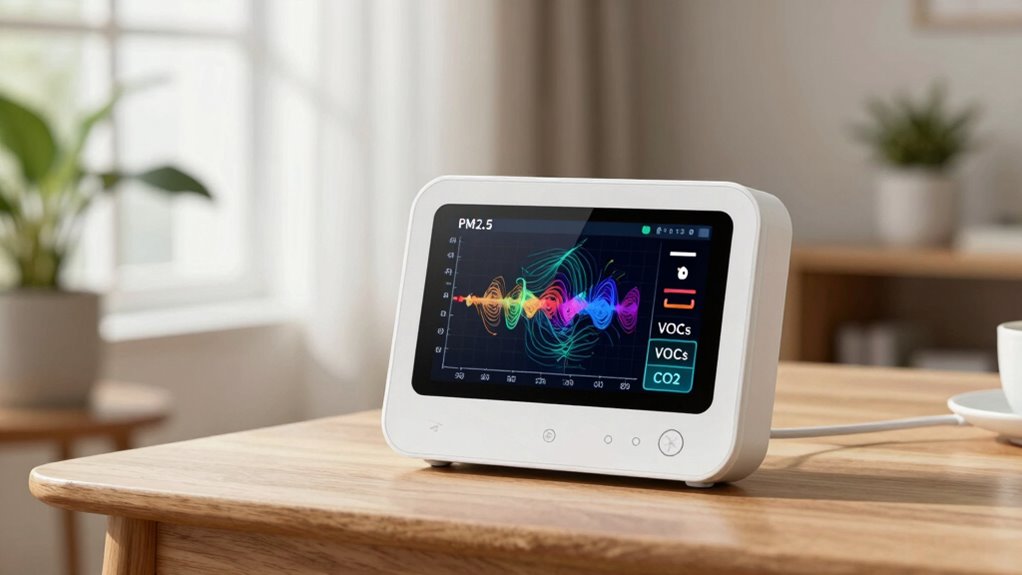
Have you ever wondered why PM2.5 particles are so important for indoor air quality? These tiny particles, less than 2.5 micrometers in diameter, can penetrate deep into your lungs and even enter your bloodstream. They’re a major concern because they often exceed air quality standards, especially in poorly ventilated spaces. Monitoring PM2.5 levels helps you identify sources of pollution and take action to improve air health. Accurate sensor calibration is essential to guarantee your device provides reliable readings. Without proper calibration, you might underestimate or overestimate PM2.5 concentrations, leading to misguided decisions. Prioritizing PM2.5 monitoring allows you to maintain a healthier indoor environment and reduce exposure to harmful particles. Recognizing the importance of **air quality standards** can guide you in choosing appropriate monitoring devices. Detecting passive voice in your writing can further enhance clarity and engagement. Additionally, understanding the accuracy of sensors is crucial for making informed decisions about indoor air quality management. Being aware of sensor calibration practices ensures your readings stay trustworthy. Moreover, selecting sensors that meet established performance benchmarks helps ensure your monitoring remains dependable.
How VOC Sensors Detect Harmful Chemicals
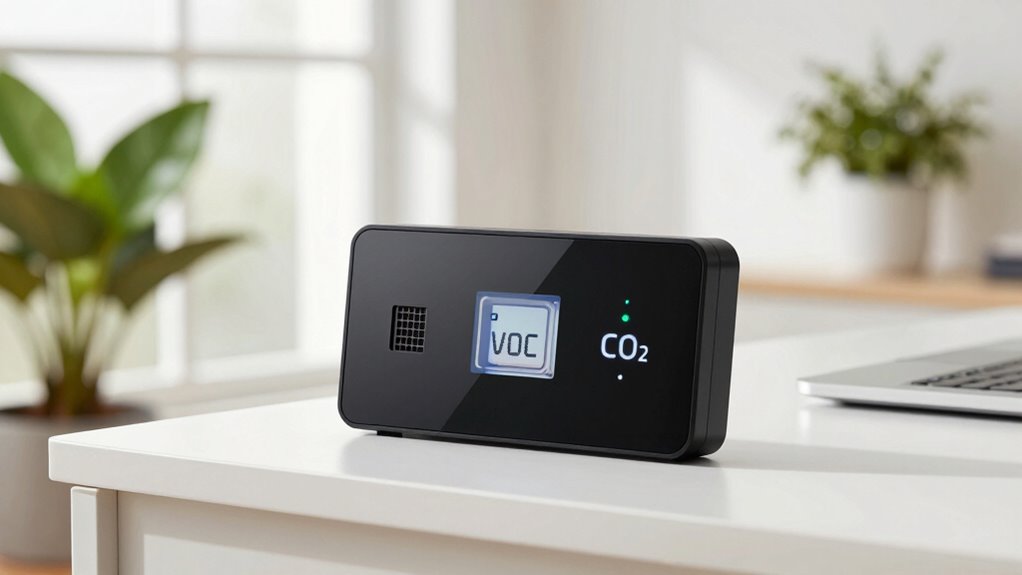
Ever wondered how VOC sensors detect harmful chemicals in the air? It all comes down to chemical sensing. VOC detection relies on sensors that identify volatile organic compounds by reacting to their chemical properties. These sensors typically use materials like metal oxide semiconductors or photoionization detectors, which change their electrical resistance or generate a signal when exposed to VOCs. When harmful chemicals are present, the sensor’s electrical properties shift, alerting you to unsafe air quality levels. This process allows the monitor to provide real-time data on VOC concentrations, helping you identify sources of chemical emissions. chemical sensing is a fundamental principle that enables accurate detection of airborne pollutants. Accurate chemical sensing is essential for maintaining healthy indoor environments, especially since many VOCs are invisible and odorless but can pose health risks over time. The development of advanced sensor materials continues to improve detection sensitivity and specificity, making indoor air quality monitors more reliable.
The Role of CO2 Sensors in Monitoring Air Quality
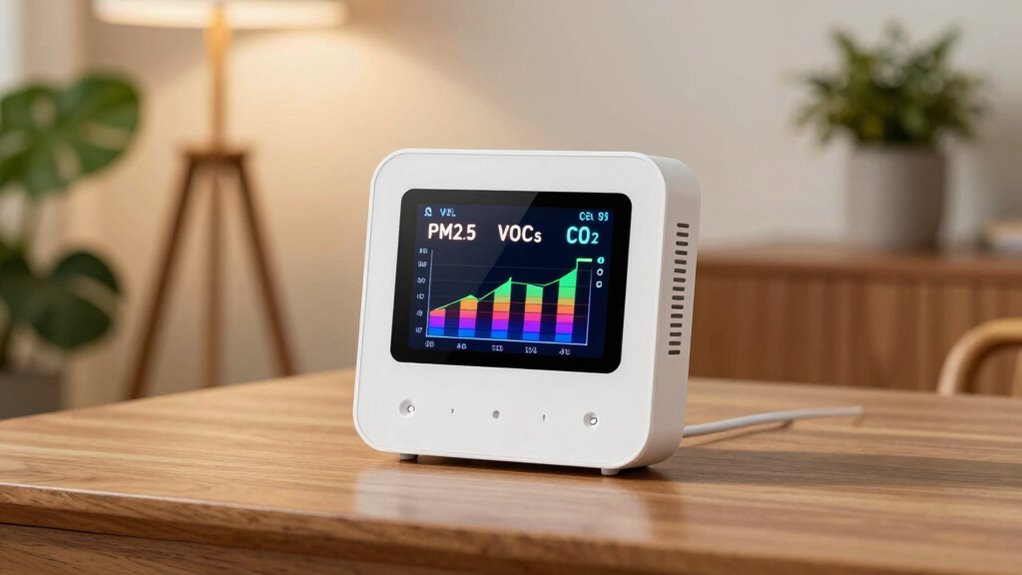
While VOC sensors help identify chemical pollutants, monitoring carbon dioxide levels provides a different perspective on indoor air quality. CO2 monitoring reveals how well your space is ventilated, indicating whether fresh air is circulating effectively. Elevated CO2 levels often signal poor indoor ventilation, which can lead to stuffiness, reduced alertness, and increased buildup of indoor contaminants. By keeping an eye on CO2 levels, you can take action to improve airflow, such as opening windows or adjusting HVAC systems. This helps maintain a healthier environment and prevents the indoor air from becoming stale or contaminated. Moreover, air quality monitoring enables you to identify ventilation issues proactively before they impact health. Regularly assessing indoor air quality can help you implement targeted improvements. Fundamental to this process is understanding the ventilation system in your space, which directly influences CO2 levels. CO2 sensors empower you to optimize ventilation, promoting better air quality and overall comfort inside your home or workspace. Additionally, consistent CO2 monitoring can help prevent health issues related to poor air quality, ensuring a safer indoor environment and supporting ventilation assessment efforts for optimal indoor conditions.
Which Air Quality Sensors Matter Most for Your Home?
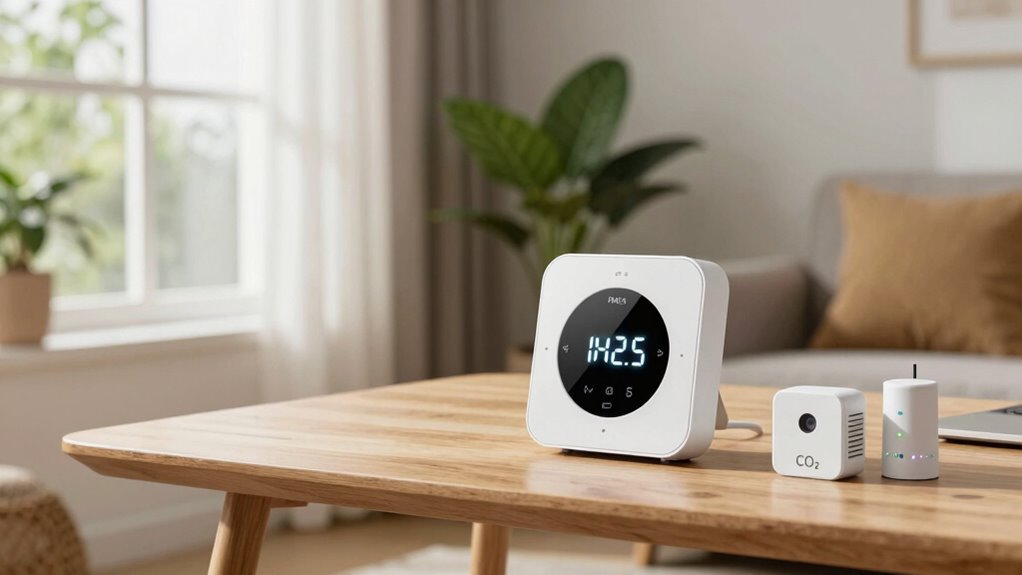
When choosing air quality sensors for your home, consider which pollutants they detect most important to you, like VOCs, particulate matter, or CO2. You’ll also want sensors that provide accurate and reliable readings over time. Picking the right sensors guarantees you get a clear picture of your indoor environment and can take effective action. Additionally, look for devices that incorporate humidity control basics to help maintain optimal indoor air conditions. Ensuring your sensors can monitor indoor air fluctuations can further improve your understanding of your home’s air quality over different times and activities. Recognizing sensor reliability is crucial to trust the data you receive and make informed decisions. Incorporating sensor calibration can also enhance long-term accuracy and confidence in your readings. Paying attention to sensor maintenance can help sustain consistent performance and prolong device lifespan.
Key Pollutants Detected
Have you considered which pollutants most affect your home’s air quality? Radon detection is *essential* since this odorless, radioactive gas can accumulate unnoticed and pose serious health risks. A monitor with radon sensors helps you identify dangerous levels and take action. Humidity sensors also matter because high humidity fosters mold growth and dust mites, impacting respiratory health. Proper humidity control keeps moisture levels balanced, maintaining a healthier indoor environment. Controlling moisture levels keeps your indoor environment healthier. Other key pollutants include PM2.5, VOCs, and CO2, but understanding radon and humidity gives you a solid foundation for a safer home. Additionally, vetted doomsday robots can provide insights into comprehensive emergency preparedness, ensuring your home remains safe during unexpected events. Recognizing air quality sensor capabilities allows you to better interpret the data and respond appropriately to potential hazards.
Sensor Accuracy and Reliability
Choosing the right indoor air quality sensors depends heavily on their accuracy and reliability, as these factors determine how well the monitor detects pollutants and provides trustworthy data. Proper sensor calibration guarantees measurements stay precise over time, reducing errors that could mislead you about your indoor environment. Consistent data collection is vital for tracking air quality trends and recognizing pollution spikes. Reliable sensors maintain data consistency, allowing you to make informed decisions about ventilation or air purification. Look for monitors with built-in calibration features or easy calibration procedures, which help sustain accuracy. Ultimately, dependable sensors give you confidence in your air quality readings, ensuring you can identify issues early and take appropriate actions to improve your home’s indoor air quality.
How to Choose the Right Air Quality Monitor for Your Needs
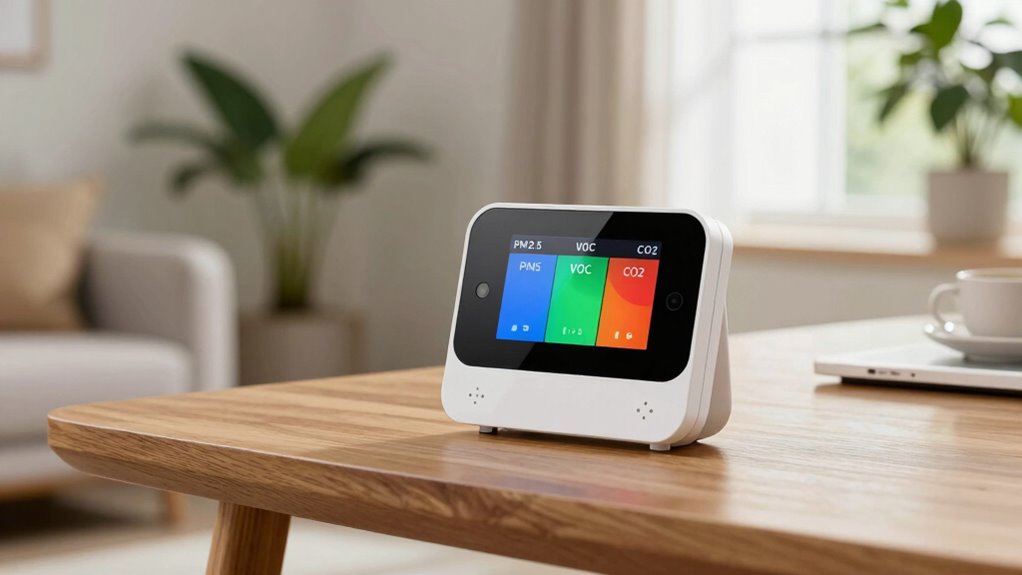
Are you unsure how to pick the best air quality monitor for your home or workplace? Start by considering your main concerns: do you need real-time updates on pollutants, or just a general overview? Next, think about these factors:
- Compatibility with your smart home system to enable seamless automation
- Budget considerations to find a device that balances features and affordability
- Sensor types like PM2.5, VOC, or CO2 based on what you want to monitor most
- Ease of use and app integration for simple setup and ongoing monitoring
Frequently Asked Questions
How Often Should Indoor Air Quality Sensors Be Calibrated?
You should calibrate your indoor air quality sensors at least once a year to guarantee accuracy. The sensor lifespan and calibration frequency vary depending on the device and sensor type, but annual calibration helps maintain reliable readings. Regular calibration accounts for sensor drift over time, so check your manufacturer’s recommendations and consider more frequent calibration if you notice inconsistent data or if your environment changes often.
Can Sensors Detect Multiple Pollutants Simultaneously?
Yes, sensors can detect multiple pollutants simultaneously through multi-pollutant detection and sensor integration. Many modern air quality monitors combine sensors for PM2.5, VOCs, and CO2 into a single device, allowing you to get thorough readings at once. This integration simplifies monitoring, helps you identify various indoor air issues quickly, and guarantees you maintain a healthier environment by addressing multiple pollutants with a single device.
What Are the Limitations of Current Air Quality Sensors?
Like a cautious sailor, you face sensors with limited sensitivity, risking missed pollutants or false alarms. Current air quality sensors sometimes struggle with data reliability, especially in complex environments. Their limitations include slower response times, difficulty detecting low concentrations, and interference from other chemicals. These flaws mean you can’t always depend on them to give a full picture, leaving you vulnerable to unseen hazards in your indoor air.
Are There Any Maintenance Requirements for Air Quality Monitors?
You’ll need to perform regular maintenance on your air quality monitor to keep it accurate. Check the sensor lifespan and replace sensors as recommended by the manufacturer, usually every 1-2 years. Additionally, calibration frequency is key—most devices benefit from periodic calibration, often quarterly or biannually. Keeping up with these tasks ensures your monitor provides reliable readings and maintains ideal performance over time.
How Do Sensor Placements Affect Accuracy and Readings?
While it might seem subtle, sensor placement truly shapes your readings. Proper sensor placement considers environmental factors like airflow, height, and nearby sources, ensuring accurate readings. Keep sensors away from vents, open windows, or direct sunlight, as these can skew data. Position them at breathing zone level, ideally in central areas, to get a true picture of your indoor air quality. Thoughtful placement helps you make better decisions for healthier air.
Conclusion
Choosing the right indoor air quality sensors isn’t just about technology—it’s about understanding how these measurements impact your health. While PM2.5, VOCs, and CO2 each offer unique insights, research suggests that monitoring PM2.5 levels often provides the clearest indicator of immediate air quality concerns. By focusing on these key sensors, you can better detect pollution sources and create a healthier environment. Trusting in thorough monitoring truly makes a difference for your well-being.