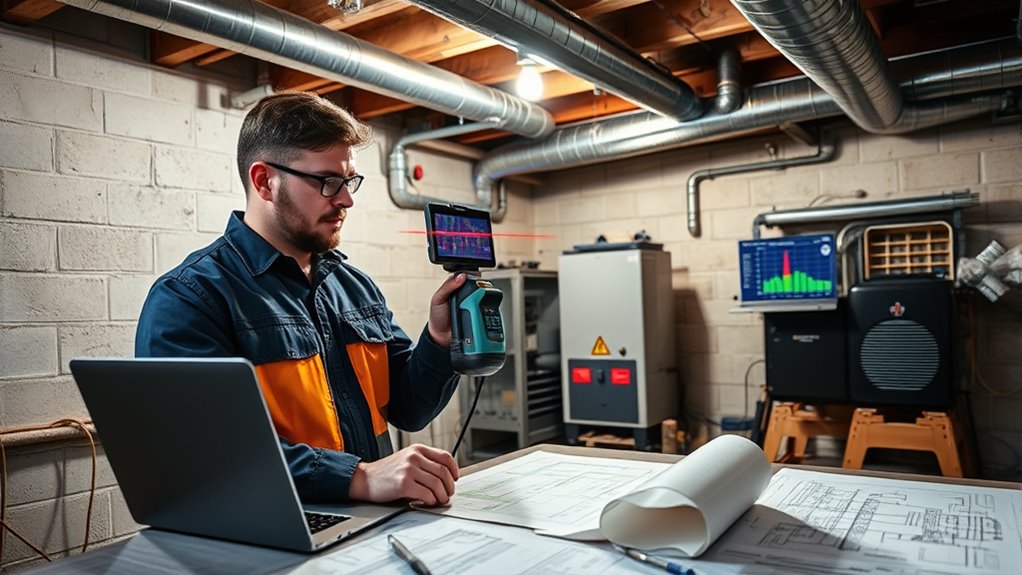

To plan a 2025‑ready HVAC upgrade, start with accurate load calculations by analyzing your home’s insulation, window orientation, climate, and occupancy patterns. This helps you select the right system size, preventing over or under-sizing. Next, evaluate your ductwork for leaks, damage, and efficiency. Sealing or replacing ducts improves performance. Partner with experienced contractors who perform these assessments precisely—continue exploring to discover how these steps optimize your upgrade for energy efficiency and comfort.
Key Takeaways
- Conduct detailed load calculations considering insulation, window orientation, climate, and occupancy to size your HVAC properly.
- Inspect and evaluate existing ductwork for leaks, damage, and proper insulation to ensure efficient airflow and comfort.
- Seal or replace compromised ducts to prevent energy loss and improve system performance.
- Hire experienced contractors to perform precise load calculations and duct assessments tailored to your home’s needs.
- Incorporate energy-efficient features like variable-speed fans and smart thermostats to future-proof your HVAC system.

Are you considering upgrading your HVAC system but unsure where to start? One of the most critical steps is understanding load calculations and duct evaluation, which set the foundation for a successful, energy-efficient upgrade. Properly evaluating your home’s heating and cooling needs ensures you select an system that offers ideal energy efficiency, reducing long-term costs and environmental impact. Before diving into equipment choices, you need to analyze your current infrastructure and determine the actual load your new system must handle.
Understanding load calculations and duct evaluation is essential for a successful, energy-efficient HVAC upgrade.
Begin with load calculations, which involve analyzing factors like insulation levels, window orientation, local climate, and occupancy patterns. This process helps you determine the right size for your new HVAC unit—avoiding the pitfalls of over- or under-sizing. An oversized system cycles on and off more frequently, wasting energy and wearing out faster, while an undersized one struggles to maintain comfort. Accurate load calculations guarantee your system operates efficiently, saving you money over its lifespan. Additionally, reviewing signs of spoilage in your current system components can prevent future issues and ensure optimal performance.
Alongside load assessments, duct evaluation plays a crucial role. Ductwork that’s leaky, poorly insulated, or improperly sized can considerably diminish energy efficiency, leading to increased utility bills and uneven temperature distribution. When planning your upgrade, inspect existing ducts for damage, blockages, or gaps. If ducts are outdated or compromised, replacing or sealing them can maximize system performance. Properly designed and sealed ducts ensure conditioned air reaches every corner of your home without leaks, which is essential for maintaining comfort and reducing energy waste.
Choosing the right contractor is equally crucial. Your contractor selection should prioritize experience, transparency, and a solid track record of designing efficient HVAC systems. An experienced contractor will perform precise load calculations and duct assessments, tailoring the system to your home’s unique needs. They should also educate you on energy-efficient features, like variable-speed fans or smart thermostats, that can further enhance your system’s performance. Don’t hesitate to ask for references or review recent projects, ensuring you’re partnering with someone who values quality and efficiency.
In the planning phase, focus on integrating the results of load calculations and duct evaluations into your overall upgrade plan. This approach guarantees that your new HVAC system is appropriately sized, energy-efficient, and capable of delivering consistent comfort. Remember, a well-planned upgrade isn’t just about installing new equipment; it’s about maximizing your home’s entire heating and cooling infrastructure. Selecting the right contractor and thoroughly evaluating your existing ductwork and load needs set the stage for an effective, future-ready HVAC upgrade that will serve you reliably for years to come.
Frequently Asked Questions
How Often Should Load Calculations Be Updated?
You should update load calculations every 5 to 10 years or after significant changes like renovations or new zoning strategies. Regular seasonal maintenance helps catch issues early, ensuring your system runs efficiently. As your home’s needs evolve, staying current with load calculations guarantees your HVAC system remains properly sized for ideal comfort and energy savings, especially when implementing zoning strategies that require precise airflow adjustments.
What Are Common Signs of Inadequate Duct Design?
If your home’s airflow feels more like a gentle breeze than a steady gust, your duct design might be lacking. Signs include uneven heating or cooling, excessive noise, or high energy bills. To fix this, prioritize duct sealing and airflow optimization. When ducts are properly sealed and balanced, you’ll enjoy consistent comfort—no more hot or cold spots—and your system runs more efficiently, saving you money and frustration.
Can Existing Ducts Be Modified for a 2025‑Ready System?
Yes, you can modify existing ducts for a 2025-ready system by exploring duct modifications and retrofit options. You’ll want to evaluate the ductwork’s size, insulation, and layout to determine what adjustments are necessary. Retrofitting might include sealing leaks, resizing ducts, or adding insulation to improve efficiency and airflow. Consulting an HVAC professional ensures your modifications meet current standards and prepare your system for future energy and load demands.
How Do Energy Codes Impact HVAC Upgrades?
Energy codes substantially impact your HVAC upgrades by requiring compliance with efficiency standards, promoting renewable integration, and encouraging smart controls. You need to make certain your system meets these standards, which can involve upgrading components or adding smart controls for better energy management. Incorporating renewable energy sources, like solar, may also be necessary. Staying current with these codes helps you avoid penalties and ensures your system is future-proof and environmentally friendly.
What Budget Considerations Are Typical for These Upgrades?
Imagine the warm comfort of a well-maintained home, as you map out your upgrade. You’ll need to contemplate cost estimation for new equipment, ductwork, and installation, which can vary widely. Budget planning involves setting aside funds for unexpected issues and future-proofing features. Typically, these upgrades could range from a few thousand to tens of thousands, so it’s wise to prioritize essential improvements and explore financing options to keep costs manageable.
Conclusion
Planning your 2025-ready HVAC upgrade is like planting a sturdy tree—you need strong roots, which are your load calculations and duct evaluations. When you carefully assess your system’s needs now, you set the stage for a future that’s comfortable and efficient. Think of this process as laying a solid foundation—once it’s in place, your upgraded system will stand tall against the tests of time, keeping your home cozy and energy-smart for years to come.