
To reduce breakdowns with predictive maintenance, you need to use accurate sensors calibrated regularly to guarantee reliable data. Combine this with advanced diagnostic algorithms that analyze real-time information to detect early signs of wear or failure. This smart approach allows you to forecast issues before they happen and schedule maintenance proactively. If you want to discover how these tools work together to keep your equipment running smoothly, keep exploring further.
Key Takeaways
- Proper sensor calibration ensures accurate data, reducing false alarms and missed warnings, enabling reliable predictive maintenance.
- Diagnostic algorithms analyze sensor data to detect early signs of equipment wear, preventing unexpected failures.
- Combining historical data with advanced models improves failure predictions, allowing maintenance during scheduled downtime.
- Automated monitoring and alert systems streamline maintenance workflows, enhancing operational efficiency and safety.
- Integrating precise sensors and intelligent diagnostics minimizes breakdowns, reduces costs, and maximizes equipment uptime.
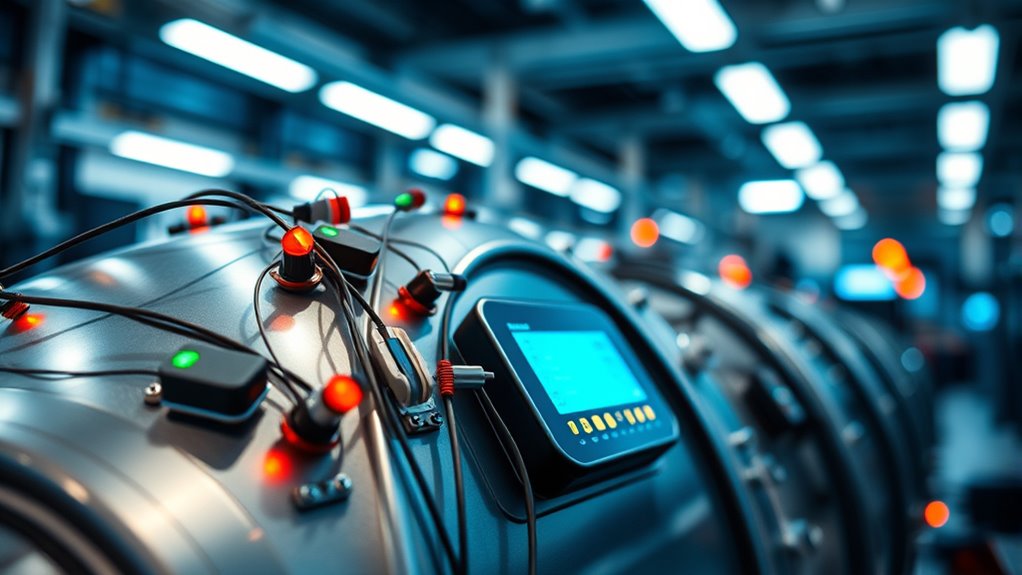
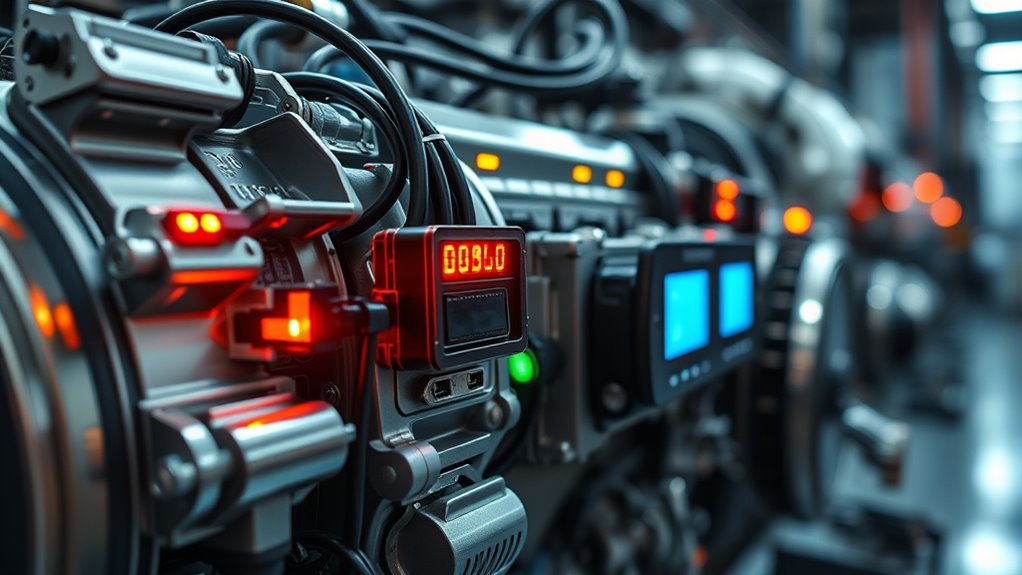
Have you ever wondered how industries prevent costly equipment failures before they happen? The answer often lies in the sophisticated use of sensors and diagnostic algorithms that enable predictive maintenance. These tools allow you to monitor equipment health continuously, catching issues early before they escalate into major problems. At the core of this process is sensor calibration, which guarantees that the data collected accurately reflects the equipment’s condition. When sensors are properly calibrated, you can trust the readings they provide, making your maintenance decisions more precise. Faulty or misaligned sensors can lead to false alarms or missed warnings, so regular calibration is essential to maintain the integrity of your monitoring system. Once sensors are correctly calibrated, they generate a stream of data that diagnostic algorithms analyze in real time. These algorithms sift through vast amounts of sensor information to identify patterns indicative of wear, fatigue, or other signs of impending failure. They can detect subtle changes that might escape human observation, allowing you to intervene proactively rather than reactively. For example, if a vibration sensor detects an abnormal increase in oscillations, the diagnostic algorithms might recognize this as an early sign of bearing wear. This early warning gives you valuable time to schedule maintenance, avoiding unplanned downtime and reducing repair costs. Additionally, advancements in Honda Tuning have shown how performance upgrades can also benefit vehicle diagnostics by integrating sensors for real-time monitoring. The power of diagnostic algorithms extends beyond simple threshold alerts. Many systems employ advanced predictive models that learn from historical data, improving their accuracy over time. These models can forecast when a component is likely to fail, helping you plan maintenance activities during scheduled downtime rather than during critical operations. This proactive approach not only minimizes disruptions but extends the lifespan of your equipment. Additionally, integrating sensor calibration and diagnostic algorithms into your maintenance strategy means you can automate much of the monitoring process. Automated alerts notify you immediately when sensors detect anomalies, streamlining your maintenance workflow. You gain better control over your assets, optimize resource allocation, and enhance safety by preventing catastrophic failures. Ultimately, combining accurate sensor calibration with intelligent diagnostic algorithms transforms maintenance from a reactive task into a strategic, data-driven process. It empowers you to make informed decisions, reduces unexpected breakdowns, and increases operational efficiency. In today’s competitive landscape, leveraging these technologies isn’t just an advantage — it’s a necessity. By investing in reliable sensors and sophisticated algorithms, you can keep your equipment running smoothly, saving time, money, and stress while maintaining peak productivity.
Frequently Asked Questions
How Much Does Predictive Maintenance Implementation Typically Cost?
Predictive maintenance implementation costs vary based on your equipment, data needs, and scale. You should conduct a thorough cost analysis to estimate expenses, including sensors, software, and integration. Budget considerations are vital, as initial investments can be significant but often lead to long-term savings through fewer breakdowns and maintenance costs. Typically, small to medium-sized businesses might spend tens of thousands, while larger operations could invest hundreds of thousands for exhaustive systems.
What Are the Challenges in Integrating Sensors Into Existing Equipment?
Integrating sensors into existing equipment can feel like fitting a square peg into a round hole. You face retrofit challenges that include sensor calibration to guarantee accurate data and compatibility issues with old machinery. You might need to modify or upgrade components, which can be time-consuming and costly. The key is careful planning and selecting adaptable sensors to minimize disruptions and guarantee seamless integration.
How Accurate Are Current Diagnostic Sensors in Predicting Failures?
Current diagnostic sensors are quite accurate in predicting failures, especially when properly calibrated and set with appropriate failure thresholds. Regular sensor calibration ensures their readings stay precise, reducing false positives or negatives. When you fine-tune these thresholds based on equipment data, you improve prediction accuracy, catching issues early. While no sensor is perfect, advances have markedly boosted reliability, helping you prevent unexpected breakdowns and optimize maintenance schedules.
What Industries Benefit Most From Predictive Maintenance Strategies?
You’ll find that industries like manufacturing, energy, and transportation benefit most from predictive maintenance strategies. They rely heavily on industrial automation, where sensor calibration guarantees accurate data collection. This allows you to detect potential failures early, reducing downtime and saving costs. By integrating advanced sensors and diagnostics, you can optimize equipment performance, extend asset lifespan, and maintain operational efficiency across these sectors.
How Is Data Privacy Maintained With Extensive Sensor Networks?
Imagine your data as a valuable treasure; you protect it fiercely. You guarantee data privacy with extensive sensor networks through sensor encryption, which keeps information secure during transmission. Additionally, data anonymization masks personal details, preventing misuse. These methods act like a digital shield, allowing you to benefit from predictive maintenance without compromising privacy. By combining sensor encryption and anonymization, you confidently safeguard sensitive info while optimizing equipment performance.
Conclusion
Think of predictive maintenance as your trusty lighthouse, guiding you safely through stormy seas. By harnessing sensors and diagnostics, you can spot trouble before it hits, steering clear of costly breakdowns. Embrace these tools to keep your operations smooth and reliable, like a well-oiled machine. With proactive care, you’re not just avoiding failures—you’re illuminating the path to efficiency and success. Let technology be your guiding light in the world of maintenance.