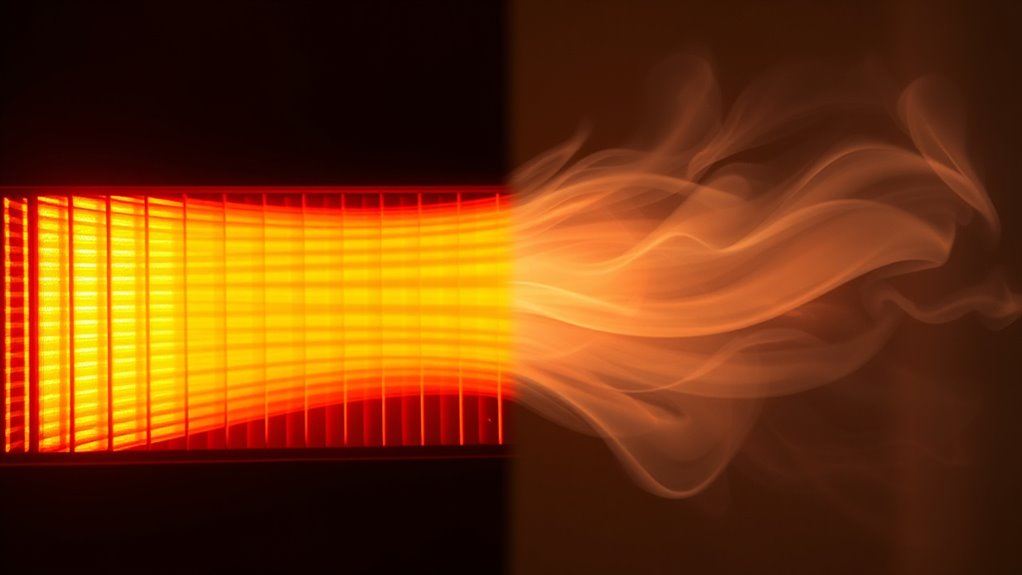

Radiant heat feels warmer because it directly warms your skin and surrounding surfaces, creating a cozy, natural sensation similar to sunlight. Unlike convection systems that mainly heat the air, radiant systems heat objects and people directly, making you feel warmer at lower temperatures. This efficient heating method provides more consistent comfort and avoids drafts. To understand how these systems compare and why one feels better, keep exploring the key differences and benefits.

Get cleaning gear delivered free — and shop member deals
- Fast, free delivery on millions of items
- Access to Prime Big Deal Days deals on October 6–7
- Prime Video, Amazon Music and more included
Key Takeaways
- Radiant heat warms objects and surfaces directly, creating a cozy sensation even at lower air temperatures.
- Convection heats the air, which can cause drafts and uneven warmth, making it feel less comfortable.
- Radiant systems produce consistent, sunlight-like warmth that feels natural and more inviting.
- Convection heating often requires higher temperatures, leading to less perceived warmth despite similar air temps.
- The direct heating of surfaces in radiant systems enhances comfort and can make spaces feel warmer overall.
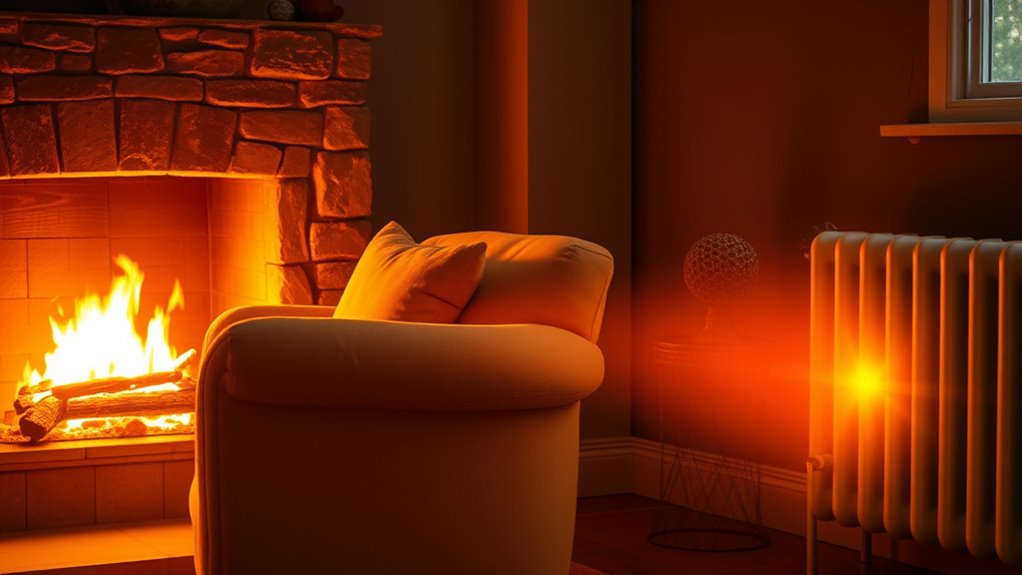
Have you ever wondered how different heating methods impact a space? When choosing between radiant and convection heat, understanding their effects on indoor comfort and energy efficiency can help you make an informed decision. Both systems aim to warm your environment, but they do so in fundamentally different ways, which influences how warm you feel and how efficiently the heat is distributed.
Radiant heating works by emitting infrared radiation that directly heats objects and people in a room. Instead of warming the air, it warms surfaces like floors, walls, and furniture, which then radiate heat back into the space. This method creates a cozy, consistent warmth that many find more comfortable because it feels similar to sunlight. When you sit near a radiant heater, you notice an immediate warmth, even if the air temperature isn’t extremely high. Because radiant systems target specific surfaces and objects, they often provide better indoor comfort without the drafts or uneven heat distribution typical of some convection systems.
Radiant heating emits infrared radiation that warms surfaces and objects, creating cozy, sunlight-like comfort without drafts.
Convection heating, on the other hand, relies on warming the air itself. Heaters, radiators, or hot air vents blow or circulate warm air throughout the space, which then rises and fills the room. While this can quickly raise the overall temperature, it often results in uneven heating—warmer near the source and cooler farther away. You might experience drafts or temperature fluctuations, especially if the system isn’t well-balanced. Despite this, convection systems tend to be easier to install and can cover larger areas efficiently, making them popular for whole-home heating.
In terms of energy efficiency, radiant heating often wins because it directly heats objects and people, reducing heat loss through air circulation. Since you don’t need to heat the entire volume of air to feel warm, radiant systems can operate at lower temperatures, thereby saving energy. Additionally, because radiant heat feels more natural and comfortable, you may set your thermostat lower, which further conserves energy. Conversely, convection systems might require higher temperatures and continuous operation to maintain comfort, leading to increased energy consumption.
Your perception of warmth is also influenced by how each system distributes heat. Radiant heat tends to create a uniform, gentle warmth that feels more natural, which is why it often feels warmer at lower air temperatures. Convection heating can sometimes feel less comfortable because of drafts or uneven heat distribution, even if the air temperature reads the same. Interestingly, some recent advancements in AI technology aim to optimize heating systems for better energy efficiency and comfort. Ultimately, if your goal is to maximize indoor comfort and energy efficiency, radiant heating provides a more consistent and natural warmth, making your space feel cozier without wasting energy.
As an affiliate, we earn on qualifying purchases.
Frequently Asked Questions
How Does Humidity Affect Perceived Warmth From Radiant and Convection Heat?
Humidity impact greatly influences perceived warmth from both radiant and convection heat. When humidity is high, your body struggles to cool itself through sweating, making you feel warmer regardless of the heat source. Radiant heat may feel more intense because it heats your skin directly, while convection heat’s effect is amplified in humid conditions, making the environment feel even hotter. So, humidity can markedly enhance the sensation of warmth from both types of heat.
Can Radiant Heat Be Harmful to Skin or Eyes?
Radiant heat can be harmful to your skin and eyes if you’re exposed to intense or prolonged sources. Skin sensitivity varies, so some people might experience burns or irritation. For your eyes, direct exposure can cause discomfort or damage over time. Always avoid staring directly at high-intensity radiant heaters, and use protective gear if necessary. Prioritize eye safety and monitor your skin’s response to prevent potential harm from radiant heat exposure.
Which Heating Method Is More Energy-Efficient in Large Spaces?
You’ll find radiant heating more energy-efficient in large spaces because it directly heats objects and people, reducing heat loss through insulation effects. This targeted approach minimizes wasted energy, leading to significant energy savings. Plus, because it warms surfaces rather than the air, it maintains comfort even at lower temperatures. Don’t let high energy bills hold you back—choose radiant heat for a smarter, more efficient way to stay warm.
How Quickly Does Each Heating Type Heat up a Room?
Radiant heaters warm up a room faster, providing instant radiant comfort as they directly heat objects and people, not the air. Convection heaters take longer because they rely on warming the air, which then circulates throughout the space. If you want quick warmth, radiant heat offers rapid comfort, while convection is better for sustained, even heating over time. Your choice depends on how quickly you need the room to feel cozy.
Are There Health Risks Associated With Prolonged Exposure to Either Heat Type?
Prolonged exposure to radiant or convection heat can pose health risks, especially if you’re sensitive. About 10% of people report skin irritation after extended radiant heat use, and bright radiant sources can harm your eyes if not shielded properly. Convection heaters, meanwhile, can dry out your skin and airways. To stay safe, make certain proper ventilation and avoid direct, prolonged contact with heat sources.
As an affiliate, we earn on qualifying purchases.
Conclusion
So, next time you step outside on a chilly day, notice how the sun’s radiant heat warms your skin instantly—it’s like a secret hug from the universe. Coincidentally, the warmth you feel from a cozy fireplace or heater also comes from convection, but you barely notice it’s working behind the scenes. Understanding these differences helps you choose the right heat source—sometimes, it’s the unseen warmth that makes all the difference.
underfloor radiant heating system
As an affiliate, we earn on qualifying purchases.
As an affiliate, we earn on qualifying purchases.
As an affiliate, we earn on qualifying purchases.
Fall Picks
fall essentials
As an affiliate, we earn on qualifying purchases.