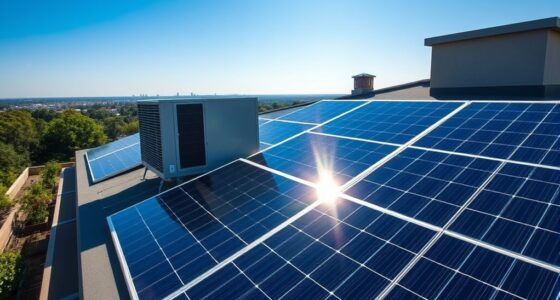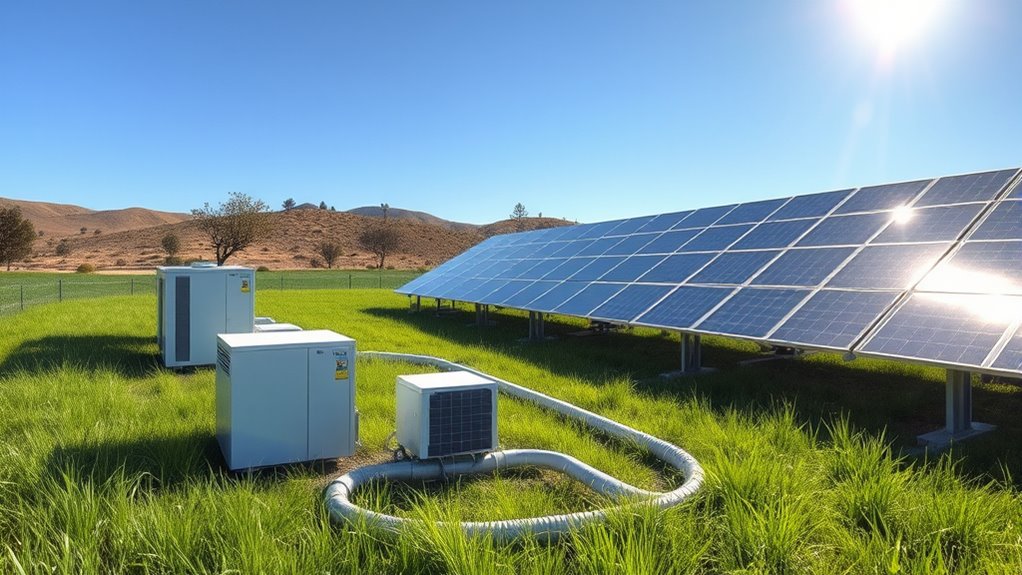

Renewable HVAC solutions like geothermal and solar power help you save energy, cut costs, and reduce your environmental impact. Geothermal systems use underground loops to efficiently heat and cool your home, while solar panels generate clean electricity to power these systems. Combining both offers a sustainable way to lower your utility bills and carbon footprint. Keep exploring, and you’ll discover how these innovative options can transform your comfort and energy savings in the long run.
Key Takeaways
- Geothermal heat pumps harness earth’s stable temperatures for efficient heating and cooling, reducing energy consumption and operational costs.
- Solar integration provides clean electricity to power HVAC systems, decreasing reliance on fossil fuels and lowering greenhouse emissions.
- Combining geothermal and solar solutions offers a sustainable, cost-effective approach with long-term savings and environmental benefits.
- Proper sizing and professional installation are essential to maximize system efficiency and ensure optimal performance.
- Many regions offer incentives, rebates, and technological advancements making renewable HVAC options increasingly accessible.
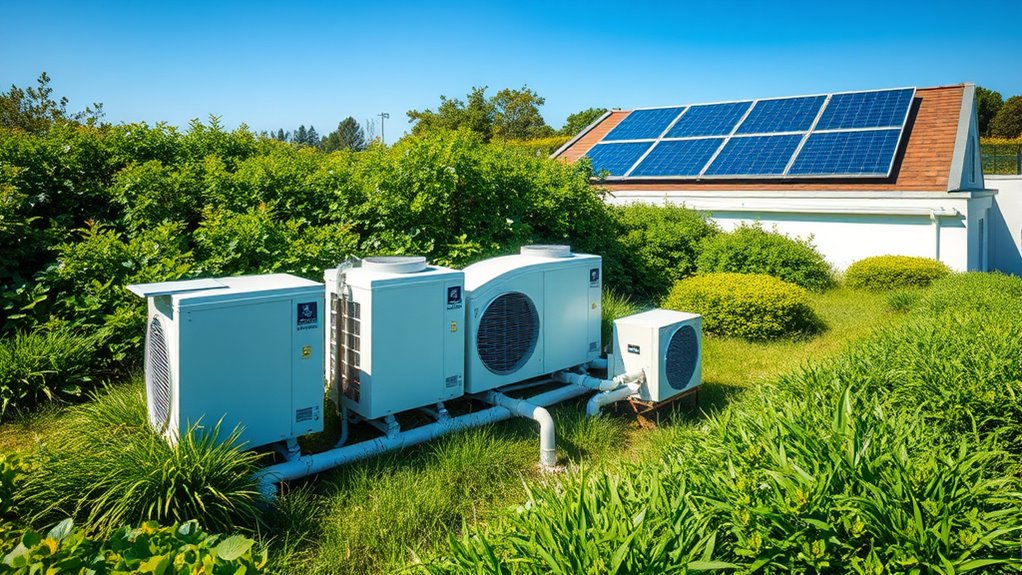
As more people seek sustainable ways to heat and cool their buildings, renewable HVAC solutions are gaining traction as an eco-friendly alternative to traditional systems. Among these options, geothermal heat pumps stand out because of their impressive geothermal efficiency. Unlike conventional systems that rely on burning fossil fuels or electric resistance heating, geothermal systems tap into the stable temperature of the earth to provide heating in winter and cooling in summer. By exchanging heat with the ground through a series of underground loops, these systems deliver consistent performance while using considerably less energy. The geothermal efficiency allows you to reduce your carbon footprint and lower utility bills, making it a smart choice for environmentally conscious homeowners and businesses alike.
Renewable HVAC solutions like geothermal heat pumps reduce energy use and environmental impact effectively.
In addition to geothermal technology, solar integration offers another powerful way to maximize renewable HVAC benefits. Solar panels can generate clean electricity to power heat pumps, reducing reliance on the grid and further decreasing greenhouse gas emissions. When combined with geothermal systems, solar integration creates a synergistic effect: solar energy supplies the power needed for the heat pump, enabling nearly all of your heating and cooling needs to be met sustainably. This combination can lead to substantial savings over time, especially as solar panel costs continue to decline and efficiency improvements enhance energy output. Plus, with the right system design, you can incorporate battery storage to guarantee energy availability even during cloudy days or at night, boosting your system’s reliability.
Implementing these renewable solutions often involves an initial investment, but the long-term savings are compelling. Geothermal efficiency means fewer operational costs, and solar integration amplifies those savings by reducing your dependence on fossil fuels. Additionally, many regions offer incentives or rebates for installing renewable HVAC systems, helping offset upfront expenses. As you consider these options, keep in mind that proper sizing and professional installation are essential to maximize performance. A well-designed geothermal and solar system will operate efficiently, last decades, and provide a stable, eco-friendly climate control solution for your property.
Ultimately, embracing renewable HVAC options like geothermal and solar integration aligns with a sustainable lifestyle. Not only do you benefit from lower energy bills, but you also contribute to reducing harmful emissions and conserving natural resources. As technology advances and costs continue to drop, these systems are becoming more accessible and practical for a wider range of properties. By choosing renewable HVAC solutions, you’re making a proactive step toward a greener future, enjoying comfort while minimizing your environmental impact. Incorporating cost-effective technologies can further enhance the affordability and appeal of these systems.
Frequently Asked Questions
What Are the Initial Costs of Geothermal Versus Solar HVAC Systems?
You’ll find that geothermal systems typically have higher initial costs due to complex installation challenges and underground work, often ranging from $10,000 to $30,000. Solar HVAC systems usually cost less upfront, around $5,000 to $15,000, depending on system size and installation complexity. While geothermal costs are higher initially, they often save more on long-term energy bills. Comparing these, consider your budget and long-term savings to make the best choice.
How Long Do Geothermal and Solar HVAC Systems Typically Last?
Like the mythical phoenix, your geothermal and solar HVAC systems can rise to the occasion for decades. Typically, geothermal systems last 25-30 years, while solar components often endure 25-30 years as well. Their durability depends on technology lifespan, quality, and maintenance. You can expect these renewable options to serve you reliably, making them wise investments that stand the test of time—just like legends that echo through history.
Are There Government Incentives for Installing Renewable HVAC Solutions?
Yes, you can take advantage of government rebates and tax credits when installing renewable HVAC solutions. These incentives help offset the upfront costs and make eco-friendly systems more affordable. You should check with local, state, and federal programs, as they often offer significant financial benefits for geothermal and solar HVAC systems. Acting now can save you money and contribute to a greener environment.
How Do Maintenance Requirements Compare Between Geothermal and Solar Systems?
You’ll find that geothermal systems generally require less maintenance than solar systems because they have high system durability and fewer moving parts. Geothermal units need seasonal adjustments for the best performance, but these are minimal compared to solar systems, which may need regular cleaning and monitoring of panels. Overall, geothermal’s durability means fewer repairs, making it a low-maintenance choice, while solar systems need more active upkeep to stay efficient.
Can These Systems Work Effectively in Extreme Weather Conditions?
Did you know that geothermal systems can operate efficiently in temperatures as low as -40°F? You’ll find that both geothermal and solar systems offer excellent weather resilience, but system adaptability varies. Geothermal is highly reliable in extreme cold or heat, while solar panels may see reduced efficiency during heavy snow or overcast days. Overall, these renewable options are designed to withstand harsh conditions and keep your home comfortable year-round.
Conclusion
By embracing geothermal and solar HVAC options, you’re opening the door to a greener, more sustainable home. These solutions are like a gust of fresh air—powerful, natural, and invigorating. As the sun and earth work silently in your favor, you’re not just heating or cooling; you’re nurturing the planet while saving money. So, take the leap into renewable energy and let your home become a shining beacon of eco-friendly innovation—where comfort and conservation dance in harmony.