
Cooling a room just by lowering the temperature doesn’t guarantee comfort because humidity and airflow play key roles. If you overlook these factors, you might still feel sticky or stuffy, even if it’s cooler. Managing humidity helps you feel cooler and fresher, while good air circulation ensures even cooling and reduces stuffiness. Achieving true comfort requires balancing temperature, humidity, and airflow — learn how these elements work together to fill the comfort gap.

Get cleaning gear delivered free with Prime
- Fast, free delivery on millions of items
- Prime Video, Amazon Music and more included
- Member-only deals all year
Key Takeaways
- Effective cooling requires managing humidity and air circulation, not just lowering the temperature.
- High humidity can make a cooler room feel uncomfortable and oppressive.
- Poor airflow creates uneven cooling and stale environments, reducing overall comfort.
- Combining humidity control with proper air movement enhances perceived coolness and comfort.
- A balanced approach addresses all factors, filling the “comfort gap” for a truly cool environment.
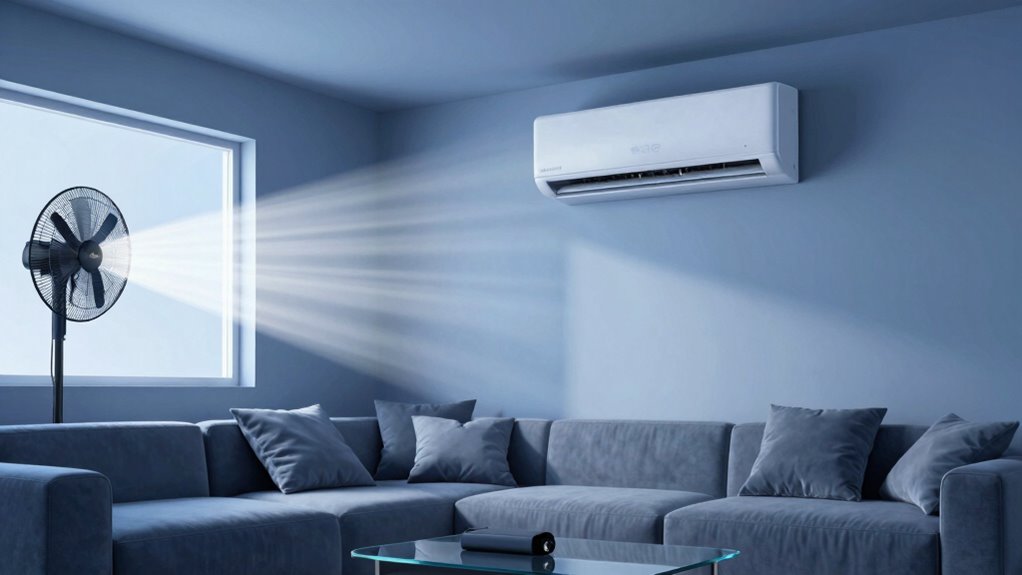
Have you ever felt comfortable in a room that’s just slightly cooler, only to realize it’s not quite enough to truly cool it well? That’s because lowering the temperature alone doesn’t always guarantee comfort. To truly make a space feel cool and inviting, you need to pay attention to factors like humidity control and air circulation. These elements often get overlooked but are essential in bridging the gap between simply cooling a room and cooling it effectively. For instance, air quality management can significantly influence how comfortable you feel in a cooled environment.
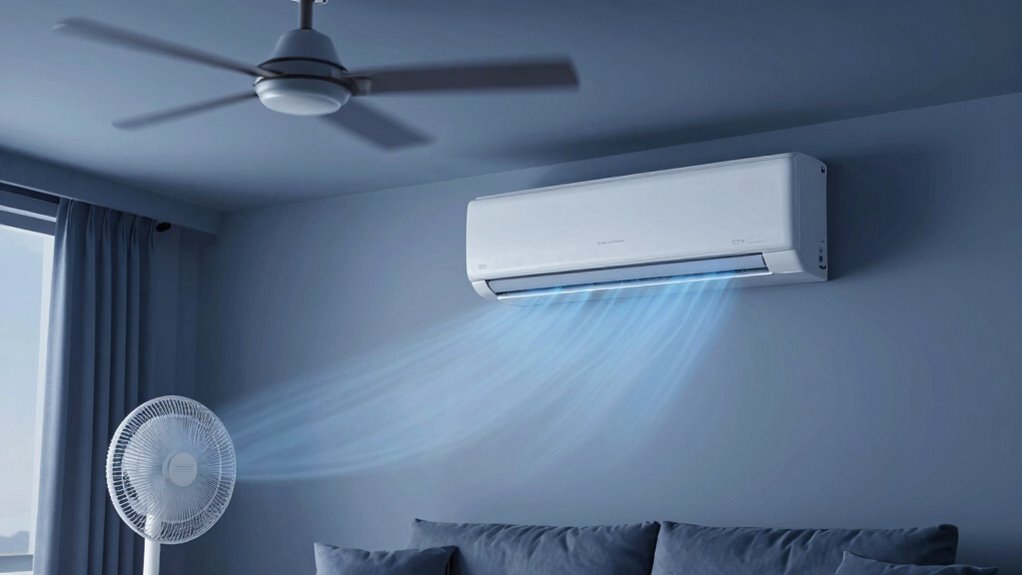
Humidity control plays a critical role in how cool you feel. Even if the air temperature drops, high humidity can make the space feel sticky and oppressive. When moisture levels are high, your body struggles to cool itself through sweat evaporation, making the room feel warmer than it actually is. By managing humidity, you ensure that the air remains dry enough to enhance the cooling effect. Dehumidifiers or air conditioners with dehumidification features help remove excess moisture, making the room feel cooler and more comfortable without needing to lower the temperature excessively. The ability to control indoor humidity effectively can dramatically improve overall comfort. Additionally, understanding the impact of humidity on thermal comfort can help you optimize your cooling strategies. Proper ventilation not only improves comfort but also maintains a healthier indoor environment, especially when heat and moisture are managed effectively.
Air circulation is equally important. Without proper airflow, cold air can settle in one spot while stagnant warm air lingers elsewhere, creating uneven comfort. Good air circulation distributes cooled air evenly throughout the room, preventing hot pockets and ensuring that every corner benefits from the cooling process. Fans, ceiling or oscillating, help promote this movement, making the environment more comfortable without necessarily changing the temperature settings on your AC. Additionally, well-placed vents or air registers can facilitate better airflow, reducing stale, stuffy feelings and creating a more invigorating atmosphere. Proper ventilation plays a vital role in maintaining a healthy indoor environment, especially when trying to improve overall comfort.
You might be tempted to focus solely on turning down the thermostat, but that approach often falls short if humidity and air circulation aren’t addressed. An overly humid room can feel warmer despite a lower temperature, and poor air movement can leave some areas feeling stuffy and uncomfortable. When you combine effective humidity control with good air circulation, you create a cooling environment that genuinely feels comfortable. You won’t need to crank the AC down to extreme levels, which can save energy and prolong your equipment’s lifespan.
In the end, true comfort comes from a balanced approach. Lowering the temperature is just one piece of the puzzle. To fill the comfort gap, you need to think about humidity and airflow, making sure the cooled air is dry and well-distributed. When these elements work together, you’ll find that the room feels cooler, fresher, and more inviting—without the discomfort that often comes with just “cooling” a space.
As an affiliate, we earn on qualifying purchases.
Frequently Asked Questions
How Do I Measure if My Room Is Cooled Effectively?
You can measure if your room cools effectively by checking the thermostat accuracy and ventilation effectiveness. Use a reliable thermometer to compare room temperature with your thermostat setting; a discrepancy indicates poor cooling. Also, guarantee proper ventilation by opening windows or fans to promote airflow. If the room feels warm despite the thermostat reading, it’s time to adjust your cooling system or improve ventilation for better comfort.
What Are Common Misconceptions About Room Cooling Efficiency?
Many people believe energy myths, thinking that bigger AC units cool faster or use less energy, which isn’t true. You might also have cost misconceptions, assuming running your AC constantly is cheaper than using a programmable thermostat. In reality, efficient cooling depends on proper sizing and settings. Understanding these misconceptions helps you optimize your cooling system, save energy, and reduce costs without sacrificing comfort.
Does Room Size Always Determine the Best Cooling Method?
Did you know that a room’s insulation can be more important than size when choosing a cooling method? While larger rooms often need powerful units, poor insulation can make cooling ineffective regardless of size. You should consider your room’s insulation and the latest cooling technology to find the best solution. Smaller rooms with great insulation might only need a fan, while bigger, poorly insulated spaces benefit from advanced air conditioning systems.
How Does Humidity Affect Perceived Comfort During Cooling?
Humidity markedly impacts your perceived comfort during cooling. High humidity makes the perceived temperature feel warmer, causing discomfort even if the room’s actual temperature is low. To improve comfort, focus on humidity control through dehumidifiers or air conditioning with humidity management features. Lowering humidity helps you feel cooler and more comfortable, reducing the gap between actual and perceived temperature. Proper humidity control ensures your cooling efforts feel effective and comfortable.
Are There Health Risks Associated With Overcooling a Room?
Overcooling a room can pose health risks, like dry skin, respiratory issues, or even hypothermia in extreme cases. You might think a cooler room improves comfort, but it can disturb your body’s temperature balance and worsen air quality, leading to discomfort or illness. Maintaining a proper temperature balance is key to safe, comfortable cooling, ensuring air quality remains high without risking health.
As an affiliate, we earn on qualifying purchases.
Conclusion
So, while a gentle breeze might keep your room from feeling warm, aiming for a truly invigorating coolness transforms your space into a serene retreat. By investing a little extra effort, you can bridge that subtle comfort gap, turning an okay environment into a cozy sanctuary. Think of it as fine-tuning a melody—you might get by with just a note or two, but harmonizing everything creates a truly delightful experience. Your perfect cool haven awaits.
air conditioner with dehumidification
As an affiliate, we earn on qualifying purchases.
As an affiliate, we earn on qualifying purchases.
As an affiliate, we earn on qualifying purchases.
Halloween Picks
halloween
As an affiliate, we earn on qualifying purchases.