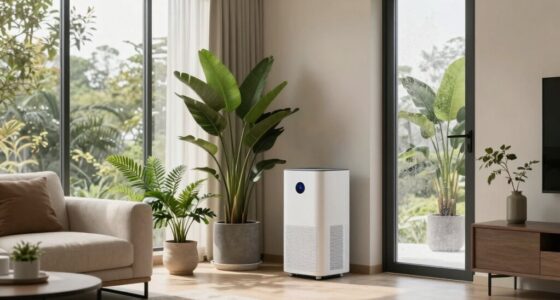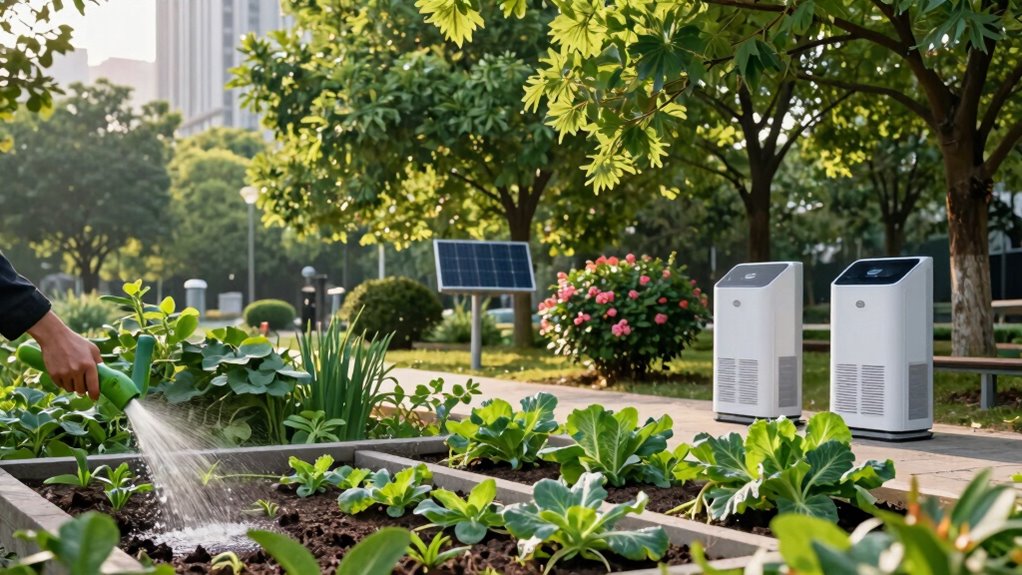

To improve your indoor air quality easily, start with simple steps like opening windows for fresh air and regularly cleaning to reduce dust and allergens. Use houseplants such as snake plants or pothos to naturally filter toxins, and consider a compact air purifier with a HEPA filter for extra help. Avoid chemical-laden products and scented candles that emit harmful fumes. These manageable changes can make a big difference—if you keep exploring, you’ll find even more effective ways to breathe easier.

Get cleaning gear delivered free with Prime
- Fast, free delivery on millions of items
- Prime Video, Amazon Music and more included
- Member-only deals all year
Key Takeaways
- Incorporate low-maintenance indoor plants like snake plants or pothos for natural air purification.
- Use a simple air purifier with HEPA filters in main living areas and bedrooms.
- Ensure proper ventilation by opening windows during cleaning and cooking routines.
- Minimize chemical pollutants by choosing natural cleaning products and avoiding scented items.
- Regularly dust and vacuum to reduce dust mites and allergens without complex systems.

Ever wonder how you can make the air you breathe cleaner and healthier? It’s simpler than you might think. Small, straightforward changes can markedly improve your indoor air quality without overcomplicating your daily routine. One effective method is adding indoor plants to your space. Not only do they bring a touch of nature indoors, but they also naturally filter out common indoor pollutants like formaldehyde, benzene, and trichloroethylene. Plants like snake plants, pothos, and peace lilies are particularly good at purifying the air and require minimal maintenance. Putting a few in your living room or office can make a noticeable difference, creating fresher air for you to breathe. Additionally, choosing air-purifying plants known for their ability to remove specific toxins can enhance this effect even further. Incorporating indoor air quality strategies like these can lead to healthier indoor environments. Regularly caring for your indoor plants can also contribute to better humidity levels, which supports overall air quality and respiratory health. Moreover, understanding the science of air filtration helps you select the most effective plants and devices for your space.
Adding indoor plants like snake plants and peace lilies naturally purifies your home’s air effortlessly.
Alongside indoor plants, air purifiers are a powerful tool to improve air quality. Modern air purifiers are compact, easy to operate, and effective at capturing airborne particles such as dust, pet dander, pollen, and even some bacteria and viruses. When choosing an air purifier, look for one with HEPA filters, as they can remove particles as small as 0.3 microns with high efficiency. Using an air purifier in your main living areas or bedrooms helps reduce allergens and pollutants that might otherwise linger in the air. It’s a simple step that can make a big impact, especially if you or someone in your household suffers from allergies or respiratory issues. Incorporating air quality monitoring devices can help you keep track of your indoor air and identify areas for improvement.
You don’t need to overhaul your entire space to see improvements. Keep your home well-ventilated by opening windows when possible, especially during cleaning or after cooking, to allow fresh air to circulate. Regularly dust and vacuum to minimize dust mites and other allergens. Avoid smoking indoors or using heavily scented candles and air fresheners, which can introduce volatile organic compounds (VOCs) into your environment. If possible, choose natural cleaning products to reduce chemical pollutants. Establishing simple routines like these can significantly impact your indoor environment over time. Ensuring proper ventilation is crucial for diluting indoor pollutants and maintaining good air quality.
Making small adjustments like incorporating indoor plants and using air purifiers, combined with good habits like ventilation and reducing chemical use, can considerably enhance your indoor air quality. These steps are manageable, affordable, and effective, and they don’t require extensive time or effort. Improving your air isn’t about complicated solutions; it’s about making smarter, healthier choices that fit seamlessly into your routine. By doing so, you create a safer, more comfortable environment where you and your loved ones can breathe easier every day.
As an affiliate, we earn on qualifying purchases.
Frequently Asked Questions
Do Indoor Plants Significantly Improve Air Quality?
Indoor plants, especially certain plant varieties, can considerably improve air quality through natural air purification. They absorb toxins like formaldehyde and benzene, releasing oxygen and freshening your space. While they aren’t a complete solution, adding varieties like snake plants or pothos can make a noticeable difference. Keep in mind, proper care and placement enhance their air-purifying benefits, making your indoor environment healthier without overcomplicating your routine.
How Often Should I Replace Air Filters?
You should replace your air filters every 1 to 3 months to maintain good air quality. Regular filter maintenance guarantees your HVAC system runs efficiently, preventing dust and pollutants from circulating. Keep an eye on air quality monitoring devices; if levels rise, consider replacing filters sooner. Consistent filter changes help reduce allergens and improve indoor air, making your space healthier without overcomplicating your routine.
Can Air Purifiers Eliminate All Pollutants?
Air purifiers can’t eliminate all pollutants, but they do considerably improve air quality. Keep in mind, air purifier limitations include their effectiveness against gases and tiny particles like viruses or bacteria. To maximize pollutant elimination, choose a purifier with a HEPA filter for particles and activated carbon for odors and gases. Regular maintenance, like replacing filters, ensures your device continues to perform at its best without overcomplicating your air quality efforts.
Are Natural Ventilation Methods Effective?
Yes, natural ventilation methods are effective when you focus on passive cooling and air exchange. By opening windows and vents strategically, you allow fresh air to enter and stale air to exit, reducing indoor pollutants. This simple approach boosts air quality without complex systems. Regularly using natural ventilation helps maintain a healthier environment, especially when combined with other straightforward practices like keeping spaces clean and minimizing indoor pollutants.
What Common Household Items Pollute Indoor Air?
Common household items that pollute indoor air include cleaning products, air fresheners, and candles, which release volatile organic compounds (VOCs). Indoor pollutant sources like these can considerably impact air quality. When you use household cleaning products, guarantee proper ventilation by opening windows or turning on exhaust fans. Opt for natural or fragrance-free options whenever possible, and avoid overusing products that emit strong fumes, helping you breathe cleaner air daily.
As an affiliate, we earn on qualifying purchases.
Conclusion
By blending basic changes with bold choices, you can breathe easier and enjoy cleaner air. Clear the clutter, curb emissions, and cultivate a cleaner climate around you. Every small step adds a significant splash of freshness, transforming your space into a sanctuary of serenity. So, take simple strides today—smile at the scent of a safer, sweeter atmosphere, and savor the satisfying sense of a healthier, happier home. Your air, your sanctuary, your fresh start.
As an affiliate, we earn on qualifying purchases.
compact air purifier with HEPA filter
As an affiliate, we earn on qualifying purchases.
As an affiliate, we earn on qualifying purchases.
Halloween Picks
halloween
As an affiliate, we earn on qualifying purchases.