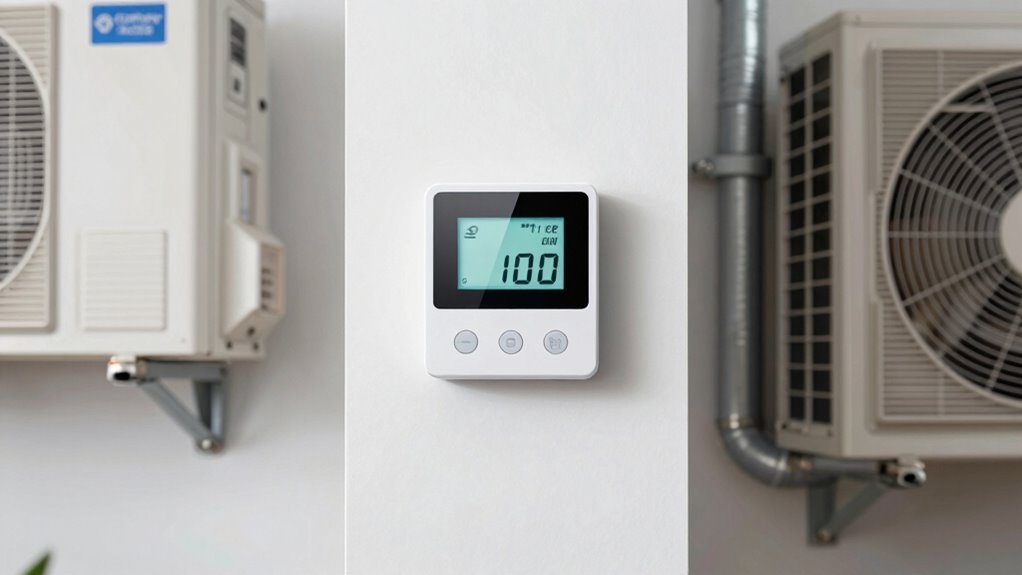

Heat pumps differ from traditional HVAC systems because they transfer heat rather than generate it, often requiring a specialized thermostat for proper control. Compatibility guarantees your thermostat can handle the reversing valve, auxiliary heat, and smart features needed for efficient operation. Using the right thermostat prevents malfunctions, optimizes comfort, and reduces energy costs. If you want to learn how to ensure your thermostat works perfectly with your heat pump, keep exploring these important details.
Key Takeaways
- Heat pumps require thermostats with specific control features like auxiliary heat and reversing valve control for proper operation.
- Compatibility involves correct wiring terminals (e.g., O or B for reversing valve) and voltage matching (typically 24V).
- Standard thermostats may lack advanced controls needed for efficient heat pump cycling and energy savings.
- Proper compatibility ensures reliable communication between the thermostat and heat pump system, preventing malfunctions.
- Upgrading to a compatible thermostat enhances system efficiency, comfort, and integrates smoothly with smart home features.
How Do Heat Pumps Differ From Traditional HVAC Systems?
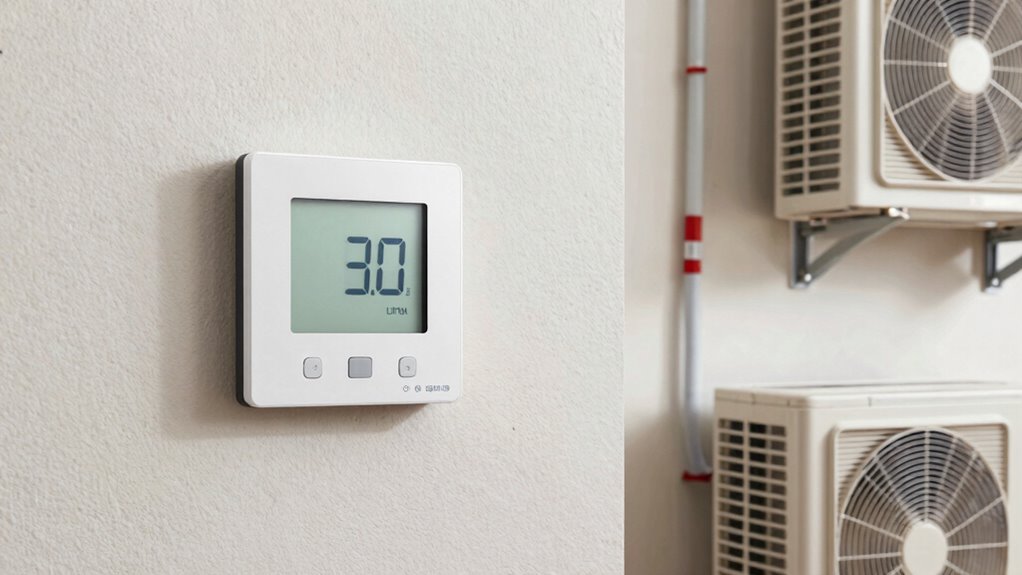
Heat pumps differ from traditional HVAC systems primarily because they can both heat and cool a space using the same unit. This dual functionality enhances energy efficiency since they transfer heat rather than generate it, reducing energy consumption and lowering utility bills. Unlike conventional systems that rely on separate heating and cooling units, heat pumps adapt to seasonal needs seamlessly. This flexibility also contributes to system longevity because fewer components are needed, decreasing wear and tear over time. Properly maintained, heat pumps can last longer than traditional HVAC systems while maintaining high performance. Their ability to efficiently switch between heating and cooling not only saves energy but also extends the lifespan of the equipment, making them a smart choice for long-term comfort and cost savings. Additionally, understanding cycling confidence can help users operate their heat pumps more effectively and maintain optimal performance over time.
Why Is Compatibility Important When Choosing a Thermostat for a Heat Pump?
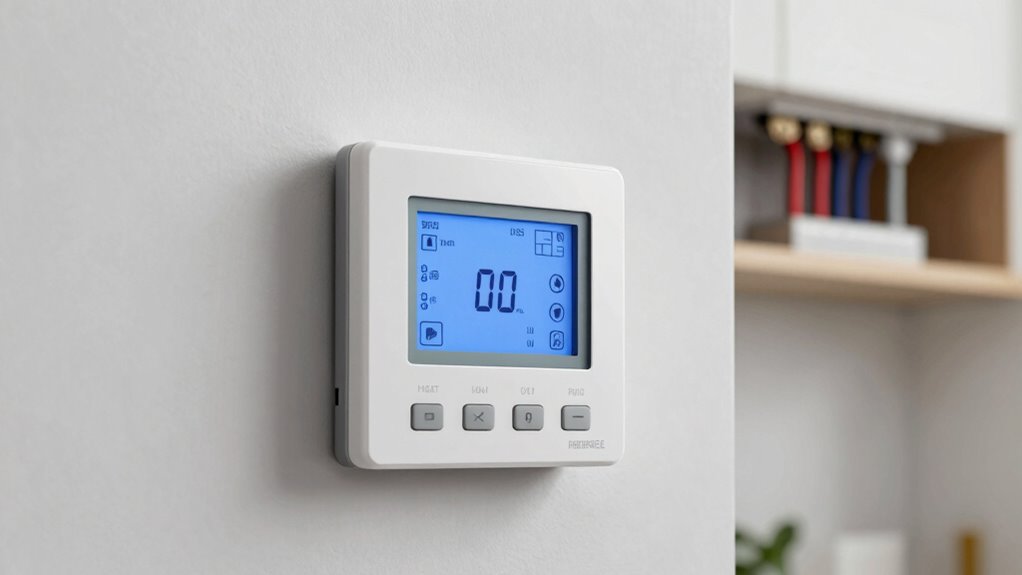
Choosing a compatible thermostat guarantees you have proper control over your heat pump system. It helps you manage your home’s temperature accurately and efficiently. Without compatibility, you risk unreliable performance and less comfort. Additionally, selecting the right thermostat ensures compatibility with smart home protocols, enabling seamless integration with other devices. A compatible thermostat can also support energy-saving features, helping you reduce utility costs and promote eco-friendly living. Being aware of device/dock limitations can prevent potential frustrations and ensure your system functions as intended. Understanding battery and power requirements is also crucial to ensure reliable operation and long-term performance of your thermostat and heat pump system. Moreover, considering system compatibility with your existing setup can streamline installation and enhance overall system efficiency.
Proper System Control
Since not all thermostats are designed to work seamlessly with heat pumps, confirming compatibility is crucial for proper system control. A compatible thermostat helps optimize energy efficiency by accurately managing heating and cooling cycles specific to heat pump operations. It also offers a user interface tailored for heat pump features, making it easier to set schedules and adjust settings precisely. Without proper control, your system may cycle inefficiently or fail to respond correctly, leading to higher energy bills and uncomfortable temperatures. Choosing a thermostat designed for heat pumps ensures smooth communication between components, giving you reliable control over your home’s climate. Additionally, understanding thermostat compatibility can prevent potential system malfunctions and extend the lifespan of your heat pump. Being aware of system compatibility ensures that your heat pump operates as intended and maintains optimal performance. This compatibility ultimately maximizes system performance and helps you save on energy costs while maintaining comfort. Proper system control is essential for leveraging the full benefits of your heat pump investment.
Accurate Temperature Management
Without compatibility, your thermostat may struggle to accurately measure and regulate your home’s temperature, leading to inconsistent comfort levels. A compatible thermostat ensures precise temperature management, so your heat pump responds correctly to your settings. This precision helps optimize energy efficiency, reducing unnecessary energy consumption and lowering utility bills. When your thermostat communicates effectively with your heat pump, it maintains steady, comfortable temperatures without constant adjustments. Proper compatibility also prevents short cycling or overheating, which can compromise user comfort. By choosing a thermostat designed for heat pumps, you gain better control over your home’s climate, ensuring consistent comfort while maximizing energy efficiency. Additionally, understanding system compatibility is essential for seamless operation and avoiding potential malfunctions. Being aware of HVAC system requirements can help prevent costly repairs and extend the lifespan of your equipment. Recognizing control system integration can further enhance the overall performance and responsiveness of your heating and cooling setup. In short, compatibility is key to achieving reliable temperature management and a more comfortable, cost-effective home environment. An understanding of technical specifications can also aid in selecting the right thermostat for your specific heat pump model.
What Features Should a Thermostat Have for Heat Pump Compatibility?
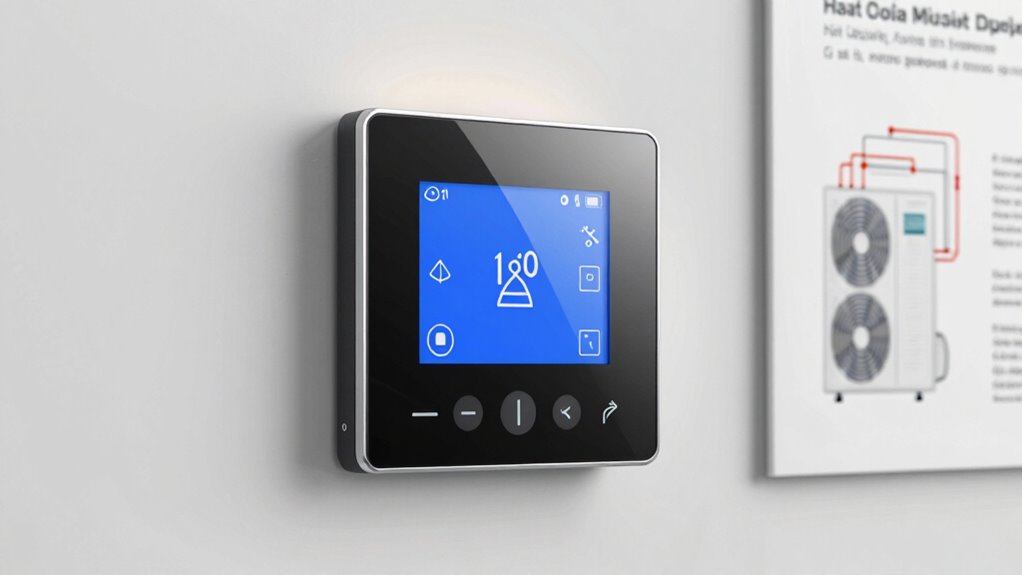
To guarantee your heat pump operates efficiently and reliably, your thermostat should have specific features designed for heat pump compatibility. Look for a thermostat with advanced controls that optimize energy efficiency, such as adaptive algorithms and smart scheduling. A user-friendly interface is essential, making it easy to set and adjust your preferences without hassle. Additionally, a compatible thermostat should include a dedicated heat pump mode, auxiliary heat control, and diagnostic features to monitor system health. Incorporating smart home integration can further enhance system management and convenience. Ensuring proper system diagnostics helps identify issues early and maintains optimal performance. Selecting a thermostat with energy-saving features can significantly reduce your overall energy consumption while maintaining comfort. Proper system compatibility ensures your heat pump functions seamlessly with the thermostat, avoiding potential malfunctions or inefficiencies. Moreover, choosing a thermostat with reliable communication protocols ensures consistent operation and reduces connectivity issues.
How to Check if Your Existing Thermostat Works With a Heat Pump?
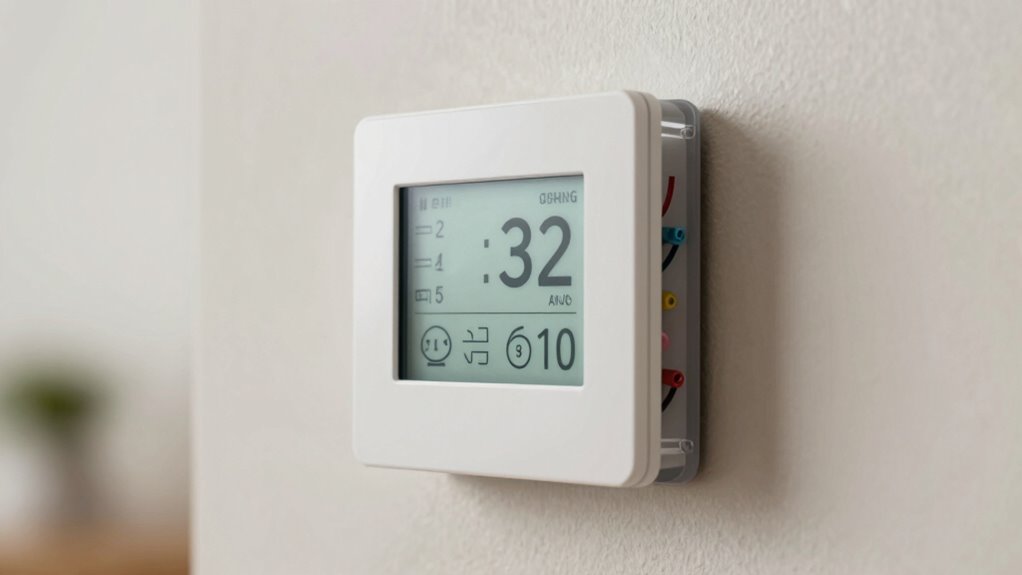
Wondering if your existing thermostat works with a heat pump? First, check the thermostat wiring. Look for terminals labeled “W,” “Y,” and “O” or “B,” which are common in heat pump systems. Make sure your wiring matches the heat pump’s requirements. Next, verify voltage compatibility—most heat pump thermostats operate on 24V systems. If your thermostat is designed for low-voltage systems, it should work, but double-check the specifications. If your thermostat has a separate “O” or “B” terminal for reversing valve control, confirm it’s compatible with your heat pump model. If unsure, consult your thermostat’s manual or contact an HVAC professional. Ensuring proper wiring and voltage match is vital to avoid malfunctions and to make sure your heat pump operates efficiently.
Key Settings to Optimize Your Heat Pump Thermostat
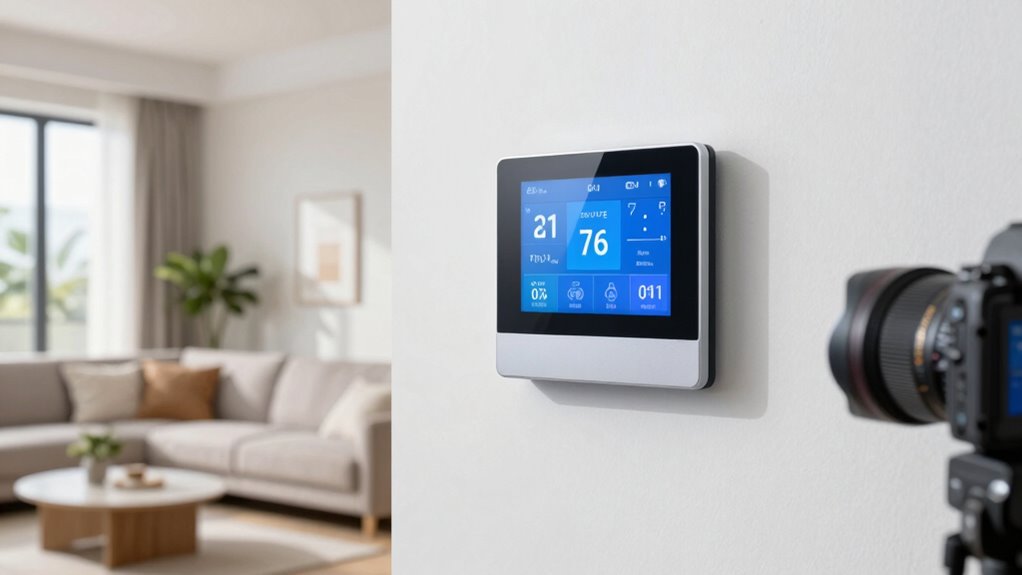
To get the most out of your heat pump, you should set appropriate temperature ranges that keep your home comfortable without wasting energy. Using smart scheduling features allows you to automatically adjust settings based on your daily routine, saving you money. By fine-tuning these key settings, you optimize your system’s performance and efficiency. Additionally, understanding home safety considerations can help prevent accidents and ensure a secure living environment for everyone. Recognizing the importance of thermostat compatibility ensures that your heat pump functions correctly with your control system, enhancing overall safety and reliability.
Set Appropriate Temperature Ranges
Setting the right temperature range on your heat pump thermostat is essential for maintaining comfort and efficiency. Proper temperature calibration guarantees your system runs smoothly without overworking, preventing energy waste. Aim for a comfortable indoor temperature, typically between 68°F and 72°F during winter and 75°F to 78°F in summer, depending on your preferences. Adjust the settings to match your climate and household needs. Don’t forget humidity control—keeping humidity levels around 40-50% helps enhance comfort and can reduce the load on your heat pump. Properly set temperature ranges also prevent short cycling, which can strain your system and increase energy bills. Regularly review and fine-tune these settings to optimize performance and maintain a cozy, efficient home environment. Understanding optimal comfort levels can help you make informed adjustments for better energy efficiency and personal satisfaction. Additionally, monitoring and adjusting for system performance ensures your heat pump operates at peak effectiveness, extending its lifespan and reducing maintenance costs. Keeping an eye on energy consumption patterns can further support eco-friendly operation and lower your utility bills.
Utilize Smart Scheduling Features
Smart scheduling features on your heat pump thermostat can considerably enhance comfort and energy savings. By setting your system to automatically adjust temperatures based on your daily routine, you guarantee ideal performance without manual intervention. This is a key aspect of energy optimization, helping you save on energy costs while maintaining a comfortable home. To maximize benefits, consider these tips:
- Program your thermostat to lower heating or cooling during work hours and increase comfort before you arrive home.
- Use different schedules for weekdays and weekends to match your lifestyle.
- Enable adaptive or learning features that automatically refine schedules over time for better efficiency.
Implementing smart scheduling ensures your heat pump runs efficiently, reducing waste and keeping your home just right.
What Are the Best Smart Thermostats for Heat Pump Systems?
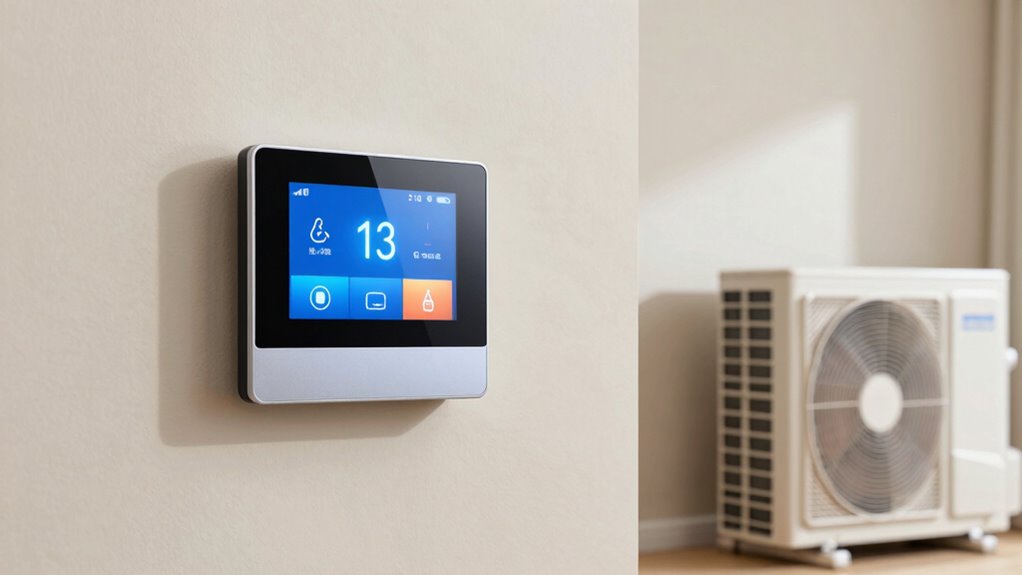
Choosing the right smart thermostat for your heat pump system can substantially improve energy efficiency and comfort. Look for models specifically compatible with heat pumps, as they can maximize operation and prevent issues like short cycling. Popular options include the Ecobee SmartThermostat, known for its user-friendly interface and advanced features, and the Nest Learning Thermostat, which adapts to your habits for efficient heating and cooling. These thermostats offer intuitive controls and easy setup, making it simple to manage your system effectively. Prioritize models with compatibility for auxiliary heat control and advanced sensors, ensuring superior performance. The best smart thermostat should seamlessly integrate with your heat pump, enhance energy savings, and provide a straightforward user experience.
Troubleshooting Common Heat Pump Thermostat Compatibility Issues
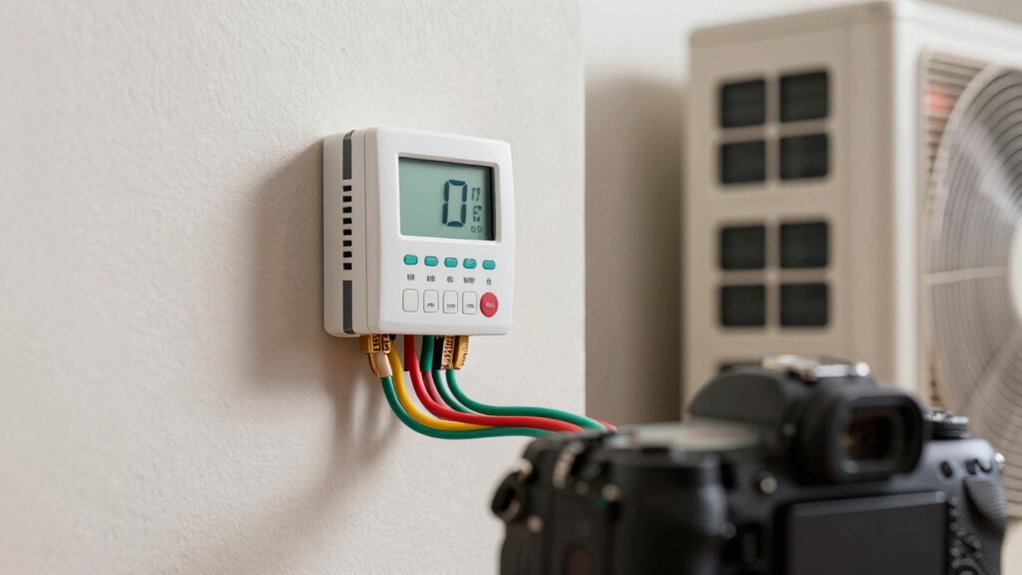
Even the most compatible smart thermostats can encounter issues with heat pump systems. Common problems often stem from incorrect sensor calibration or incompatible voltage requirements. To troubleshoot, start by checking the sensor calibration to ensure accurate temperature readings, as miscalibration can cause erratic operation. Also, verify the thermostat’s voltage requirements match your heat pump’s specifications; mismatched voltages can prevent proper communication.
- Confirm the wiring connections are correct and secure, especially the control wiring for heat pumps.
- Use a multimeter to test voltage levels at the thermostat and ensure they align with manufacturer specs.
- Check for any firmware updates that might address compatibility issues.
Addressing these issues can resolve most thermostat compatibility problems with heat pumps.
When Is It Time to Upgrade Your Thermostat for Better Performance?
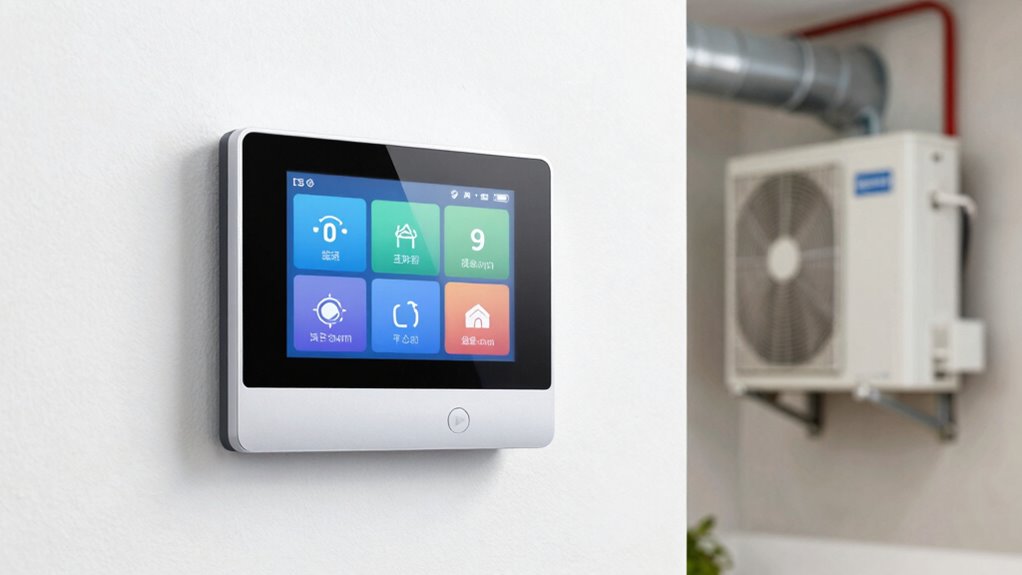
Knowing when to upgrade your thermostat can markedly improve your home’s comfort and energy efficiency. If your current thermostat is outdated or difficult to use, it may be time for an upgrade. A modern thermostat with an intuitive user interface makes programming and adjusting settings easier, helping you optimize energy efficiency. If you notice inconsistent temperatures, higher utility bills, or difficulty controlling your heating and cooling, these are signs your thermostat isn’t performing well. Upgrading can also provide better compatibility with heat pumps, especially if your system is newer or has advanced features. Additionally, smart thermostats offer remote access and learning capabilities, further boosting energy savings and convenience. When these issues arise, upgrading your thermostat is a smart step toward better performance and lower energy costs.
Tips for Choosing the Right Thermostat for Your Heat Pump System
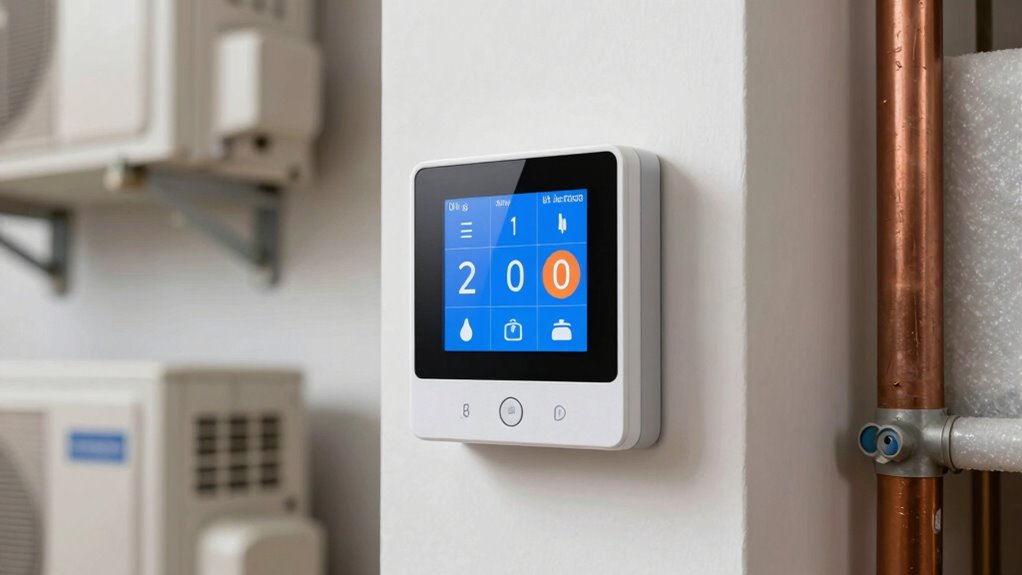
Selecting the right thermostat for your heat pump system guarantees ideal performance and energy efficiency. To make the best choice, consider how the thermostat’s features align with your needs. Look for models with a user interface that’s easy to navigate, so adjusting settings feels seamless. Verify compatibility with your heat pump to avoid operational issues. A smart thermostat can optimize energy efficiency by learning your schedule and adjusting temperature settings automatically. Additionally, check if the thermostat offers remote access via smartphone, giving you control from anywhere. Finally, choose a device that supports advanced features like zoning or multi-stage heating and cooling. These options help maximize comfort while reducing energy costs. Picking the right thermostat ensures your heat pump runs smoothly and efficiently year-round.
Frequently Asked Questions
Can a Non-Programmable Thermostat Work With Heat Pumps?
Yes, a non-programmable thermostat can work with heat pumps, but you might face compatibility issues. Not all thermostat types are designed for heat pumps, especially older models. Heat pumps often require specialized thermostats to control heating and cooling efficiently. If you use a standard thermostat, you may lose some features like scheduling or energy savings. For ideal performance, check if your thermostat is compatible with heat pump systems before installing.
Are There Specific Brands Best Suited for Heat Pump Compatibility?
Some brands are better suited for heat pump compatibility, making thermostat selection easier. Look for brands like Honeywell, ecobee, or Nest, which offer models specifically designed for heat pump systems. These brands guarantee better brand compatibility and seamless operation. When choosing a thermostat, prioritize those with features tailored for heat pumps, like auxiliary heat control and multi-stage heating, to optimize your system’s efficiency and comfort.
How Does a Thermostat’s Wiring Differ for Heat Pump Systems?
You’ll notice wiring for heat pump thermostats is more complex due to additional components like reversing valves and defrost controls. This wiring involves extra wires such as O/B for heat pump operation, which can cause compatibility challenges. You need to guarantee your thermostat supports heat pump systems and correctly connects these wires. Proper wiring is essential for efficient operation and avoiding malfunctions, so double-check compatibility and follow manufacturer instructions carefully.
Do All Smart Thermostats Support Heat Pump Optimization Features?
Think of some smart thermostats as sailors steering a storm—they’re equipped, but not all handle every wave. Not all support heat pump optimization features due to smart thermostat limitations, especially in managing specific heat pump settings. You need to check each model’s capabilities to guarantee it can fine-tune your system. Otherwise, you might miss out on energy savings and optimal comfort, like sailing without the full compass.
What Is the Typical Cost Difference Between Compatible and Incompatible Thermostats?
You’ll usually find compatible thermostats cost about $50 to $150 more than incompatible ones, mainly due to advanced heat pump features. The cost comparison shows that installation expenses can also increase if professional setup is required for compatibility. While the upfront price might be higher, investing in a compatible thermostat ensures better efficiency and control for your heat pump system, potentially saving you money on energy bills long-term.
Conclusion
Upgrading your thermostat can make a big difference in your heat pump’s performance and efficiency. By understanding compatibility and choosing the right features, you guarantee your system runs smoothly all year round. Don’t settle for less—are you ready to optimize your comfort and savings? Taking the time to select the right thermostat means better control, energy savings, and peace of mind. Your perfect indoor climate is just a smart choice away.