To prevent expensive repairs, choose surge protectors that are properly installed and suited to your HVAC system’s electrical needs. Focus on effective grounding to safely divert excess voltage and evaluate your power environment to select protectors with the right energy capacity. Whole-house protectors at your panel offer primary defense, while plug-in options provide additional safety. Keep these considerations in mind, and you’ll discover how to better safeguard your HVAC system against power surges.
Key Takeaways
- Conduct a power surge analysis to determine surge frequency and severity for proper protector selection.
- Choose surge protectors with adequate energy capacity (joules) and fast response times for severe surge events.
- Ensure all surge protectors are properly grounded to effectively divert excess voltage into the earth.
- Install whole-house surge protectors at the main panel for primary external surge defense.
- Regularly inspect and maintain surge protection devices to ensure continuous, reliable HVAC system protection.
When it comes to safeguarding your HVAC system, choosing the right surge protector is vital. A proper surge protector not only shields your equipment from sudden voltage spikes but also prolongs its lifespan and helps you avoid costly repairs. To do this effectively, you need to understand the importance of grounding techniques and power surge analysis. Grounding techniques ensure that excess electrical energy is safely directed into the ground, preventing it from damaging sensitive components in your HVAC system. When selecting a surge protector, look for one that offers a solid grounding connection, as this is the foundation for effective surge suppression. Poor grounding can render even the best surge protector useless, leaving your system vulnerable to power surges caused by lightning strikes, grid fluctuations, or other electrical disturbances.
Power surge analysis plays a vital role in determining the right level of protection needed for your HVAC system. This involves evaluating the electrical environment of your property, including the frequency and intensity of power surges your area experiences. Conducting a power surge analysis helps you choose a surge protector with the appropriate clamping voltage and energy absorption capacity. If your location is prone to frequent or severe surges, you’ll want a protector with a higher joule rating and faster response time to effectively absorb and dissipate surge energy. This analysis empowers you to select a device that offers ideal protection tailored to your specific circumstances, rather than settling for a generic, one-size-fits-all solution.
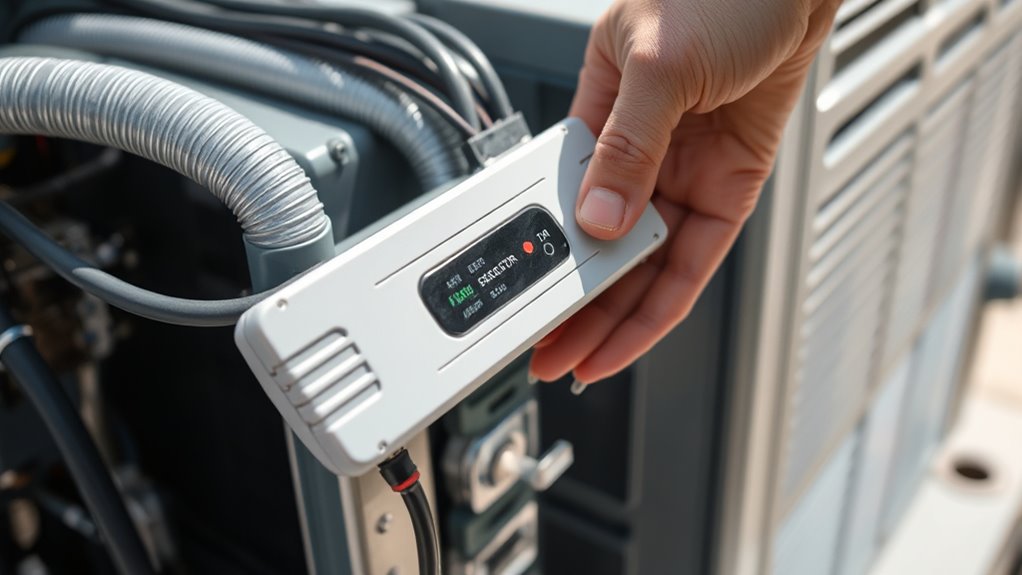
In addition to grounding techniques and surge analysis, consider the type of surge protector you install. Whole-house surge protectors are often recommended because they guard against external surges before they reach your HVAC system. These devices are typically installed at your main electrical panel and provide a first line of defense. For added protection, especially for sensitive components within your HVAC system, plug-in surge protectors designed specifically for HVAC units can provide an extra layer of security. Always verify that your chosen surge protector is compatible with your HVAC system’s power requirements and is certified by relevant safety standards.
Ultimately, selecting the right surge protector involves a combination of understanding your electrical environment and ensuring proper installation techniques. By focusing on grounding techniques and conducting a thorough power surge analysis, you can considerably reduce the risk of damage caused by electrical surges. This proactive approach not only prevents expensive repairs but also gives you peace of mind that your HVAC system remains reliable and protected under all conditions.
Frequently Asked Questions
How Often Should Surge Protectors for HVAC Systems Be Replaced?
You should replace surge protectors for HVAC systems every 3 to 5 years, following your electrical standards and maintenance schedules. Regular inspections help identify wear or damage, ensuring continued protection against power surges. If you notice signs of deterioration, like frequent tripping or visible damage, replace them sooner. Adhering to these guidelines keeps your system protected, prevents costly repairs, and maintains *best* performance over time.
Can Surge Protectors Prevent All Types of Electrical Damage?
Surge protectors can’t prevent all types of electrical damage, just as shields can’t stop every storm. While they guard against power surges from lightning strikes and electrical fires, they won’t protect against wiring faults or power outages. You need extensive safety measures, including regular inspections and proper grounding, to fully shield your HVAC system from unpredictable electrical threats. Think of surge protectors as part of your overall defense, not the entire fortress.
Are There Specific Brands Recommended for HVAC Surge Protectors?
You should look for trusted brand recommendations like Tripp Lite, Siemens, or Eaton, known for their surge protector durability. These brands offer reliable products specifically designed for HVAC systems, helping prevent costly electrical damage. When choosing a surge protector, prioritize durability and compatibility with your system. Investing in quality brands guarantees your HVAC unit stays protected from power surges, extending its lifespan and reducing repair costs over time.
Do Outdoor HVAC Units Require Different Surge Protection Compared to Indoor Units?
Outdoor HVAC units do require different surge protection than indoor units because outdoor protection needs to handle weather elements and electrical surges from lightning, while indoor units focus on electrical noise and power fluctuations. You should choose surge protectors with robust outdoor ratings for outdoor units, making certain they’re waterproof and weather-resistant. Indoor compatibility is vital for indoor units, so pick protectors designed for indoor use to prevent damage and guarantee longevity.
How Do I Know if My Surge Protector Is Still Functioning Properly?
You can tell if your surge protector is still working by checking its indicators; many have LED lights that show proper operation. Alternatively, you should regularly test surge devices using a dedicated tester or follow the manufacturer’s testing instructions. If the indicators are off or the device fails testing, it’s time to replace the surge protector to guarantee your HVAC system stays protected from power surges.
Conclusion
Choosing the right surge protector for your HVAC system can save you money and prevent costly repairs. Did you know that a single lightning strike can cause over $10,000 worth of damage to an unprotected system? By investing in quality surge protection, you’re not only safeguarding your equipment but also avoiding unexpected expenses. Stay proactive, select the right device, and enjoy peace of mind knowing your HVAC system is well protected against power surges.