Whole-house fans can be a better option than air conditioning when your climate is dry, moderate, and features cool evenings. They naturally cool your home by pulling in fresh outdoor air and venting out hot indoor air, using less energy and reducing costs. These fans are quieter and improve air quality, especially with proper installation and maintenance. To see if they’re right for your home, discover more about their benefits and conditions.
Key Takeaways
- Whole-house fans use less energy and are more cost-effective than traditional air conditioning, especially in suitable climates.
- They effectively cool homes during moderate weather by pulling in outdoor air and venting indoor heat.
- Suitable for regions with dry, cool nights and open floor plans, offering quieter operation than some AC units.
- Proper installation, airflow management, and maintenance maximize performance and energy savings.
- They provide a natural, environmentally friendly cooling alternative, reducing reliance on energy-intensive air conditioning.
How Do Whole-House Fans Cool Your Home Naturally

Whole-house fans cool your home naturally by pulling in fresh, cool outdoor air and venting out warm indoor air. This process improves indoor air quality by replacing stale indoor air with cleaner, outdoor air, reducing pollutants and odors. Unlike air conditioning, which recirculates indoor air, a whole-house fan continuously exchanges air, promoting healthier living conditions. Proper installation and regular maintenance can ensure noise levels remain minimal, so it won’t disrupt your daily activities or sleep. You can enjoy a quieter environment compared to some mechanical cooling options. Additionally, understanding child development can help households create healthier living spaces that support mental and physical well-being, and considering proper maintenance can extend the lifespan and efficiency of your fan. Regularly inspecting and cleaning the fan components can help maintain optimal energy efficiency and noise reduction. Incorporating regional climate considerations can further optimize the fan’s effectiveness based on your local environment. Being aware of ventilation best practices can also enhance overall indoor air quality and comfort.
Is a Whole-House Fan Right for Your Climate and Home?
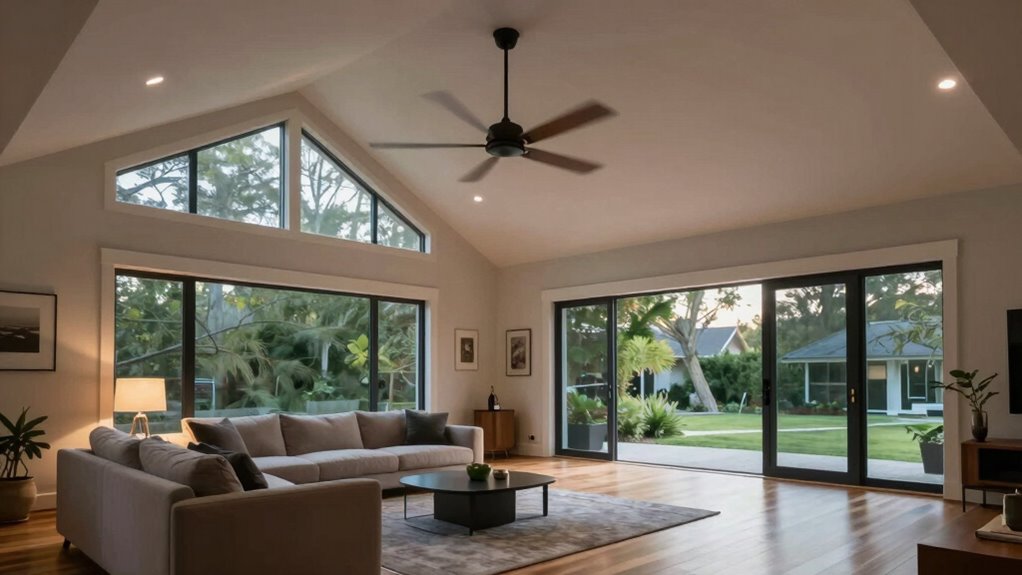
You need to contemplate if a whole-house fan fits your climate and home design. Factors like your area’s temperature swings, humidity levels, and your home’s layout can impact its effectiveness. Plus, you’ll want to weigh the energy savings against your home’s specific needs. Additionally, understanding the content formats that work best for your household can help you make an informed decision. Considering contrast ratio can also influence how well your home is ventilated and cooled efficiently. Evaluating your home’s ventilation needs can further determine if a whole-house fan will provide optimal comfort and air quality. Recognizing climate considerations can be crucial when deciding if a whole-house fan is suitable for your environment. It’s also important to assess the humidity levels in your area, as high humidity can reduce the effectiveness of such fans.
Climate Compatibility Considerations
Before installing a whole-house fan, it’s important to contemplate whether your climate supports its effective use. If your environment features dry, moderate temperatures, you’ll likely benefit from improved outdoor airflow and humidity control. However, if your region experiences high humidity or frequent temperature drops at night, a whole-house fan might not be ideal. Consider these factors:
- Consistent cool evenings that allow for effective nighttime ventilation
- Low outdoor humidity to prevent moisture buildup inside
- Climate conditions that support natural airflow without risking indoor humidity issues
- The ventilation effectiveness of your home, which can influence how well the fan performs in different climates
In humid climates, the fan may struggle to control moisture levels, leading to potential mold growth. Ensuring your climate aligns with these considerations will help you maximize the fan’s benefits while maintaining healthy indoor air quality.
Home Design Factors
Evaluating your home’s design is key to determining if a whole-house fan will work effectively. Your interior decor and ceiling height influence airflow and noise levels. Homes with open floor plans and higher ceilings (above 9 feet) promote better air circulation with a fan. Low ceilings may restrict airflow and cause noise to bounce around.
| Home Features | Impact on Whole-House Fan Use |
|---|---|
| Open floor plan | Enhances airflow, improves cooling efficiency |
| Low ceiling height | Limits effectiveness, increases noise |
| Interior decor style | Minimal decor reduces obstructions |
If your home has tall ceilings and an open layout, a whole-house fan can be a great fit. Conversely, intricate decor or low ceilings might reduce its benefits.
Energy Efficiency Benefits
Considering your climate and home design can help determine if a whole-house fan will save energy and reduce cooling costs. Whole-house fans are energy-efficient compared to traditional air conditioning, especially when paired with insulation improvements. They use less electricity and can be powered by solar power, reducing your carbon footprint. When your home is well-insulated, air exchange is more effective, maximizing the fan’s cooling benefits without losing conditioned air. Proper home insulation enhances overall efficiency and ensures the fan’s cooling effect is maintained. Additionally, ensuring proper airflow management within your home can significantly improve the performance of a whole-house fan. Proper ventilation strategies further optimize air circulation, making the system more effective and energy-efficient. Properly managing air exchange is essential for achieving maximum efficiency from your whole-house fan. Incorporating climate considerations can help you determine the best times to operate the fan and optimize energy savings. Here’s how they boost efficiency:
- Use minimal energy, lowering your utility bills
- Can be powered by solar panels, reducing reliance on grid electricity
- Work best in climates with cool evenings, reducing the need for AC during hot days
What Are the Main Benefits of Using a Whole-House Fan?
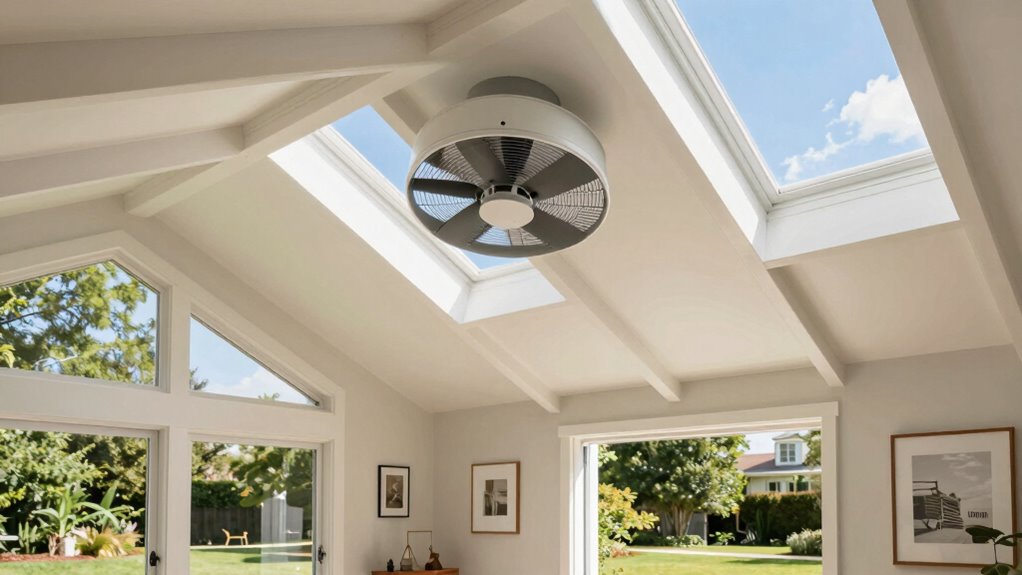
Are you looking for an energy-efficient way to cool your home and improve indoor air quality? Whole-house fans are a smart choice. They help ventilate your home by pulling fresh outdoor air in and pushing stale indoor air out, which boosts indoor air quality naturally. This process reduces reliance on air conditioning, saving you money on energy bills. Plus, whole-house fans operate quietly, so noise considerations rarely interfere with your daily activities or sleep. Unlike air conditioners that run constantly, these fans work mainly during cooler evenings and mornings, providing effective cooling without excessive noise or energy use. Additionally, understanding the microplastics in dust and their impact on indoor air quality can motivate better home ventilation practices, including the use of whole-house fans. Incorporating sustainable ventilation methods like these can also support environmental conservation efforts. For example, proper maintenance of your whole-house fan ensures optimal performance and indoor air quality. Overall, they offer a simple, eco-friendly way to maintain a healthier, more comfortable home environment. A well-maintained home ventilation system can further enhance indoor air quality and reduce pollutants.
What Should You Consider Before Installing a Whole-House Fan?
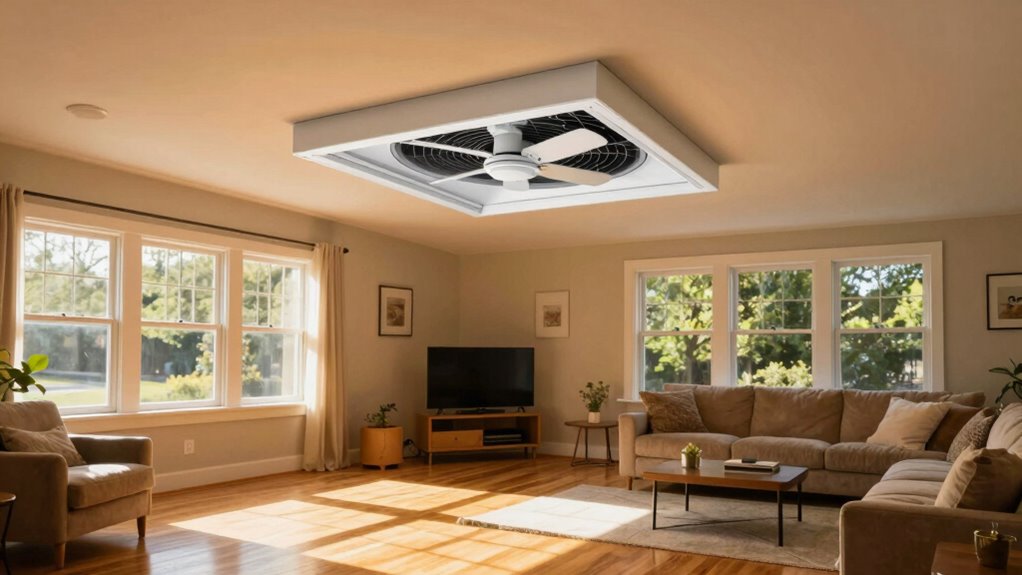
Before installing a whole-house fan, it’s important to assess your home’s layout and ventilation needs. Proper planning ensures effective cooling and energy savings. Consider your home’s existing ventilation strategies; if your home isn’t well-ventilated, the fan won’t perform effectively. Also, evaluate insulation improvements, as better insulation helps retain cool air longer and reduces the workload on your fan. Think about the placement of windows and attic access points to maximize airflow. Additionally, check for potential airflow obstructions and secure proper sealing around ducts and vents. These considerations help you determine if a whole-house fan is suitable and how to enhance its performance, ensuring you enjoy comfort without compromising energy efficiency. Incorporating filter sizing/flow best practices can further optimize airflow and prevent potential issues. Furthermore, understanding airflow dynamics can guide you in making informed decisions about installation and operation. For optimal results, regularly monitor airflow and make adjustments as needed to maintain efficiency.
How to Use and Maintain Your Whole-House Fan for Best Results
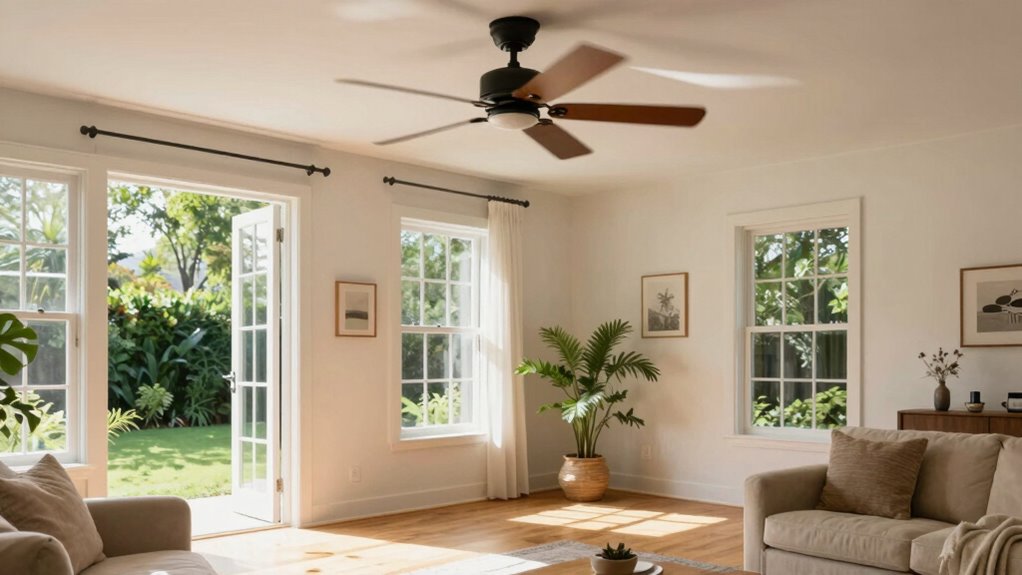
Using your whole-house fan effectively involves timing it correctly and performing regular maintenance to keep it running smoothly. Start by setting your thermostat lower than outdoor temperatures in the evening to encourage airflow. Before turning on the fan, guarantee all windows and doors are open to maximize ventilation. Proper fan installation is vital for safety and efficiency, so double-check that it’s securely mounted and wired correctly. Regularly clean the fan blades and vents to prevent dust buildup, which can reduce performance. Adjust your thermostat settings based on outdoor conditions; during cooler evenings, lower the thermostat to enhance cooling. By following these tips, you’ll improve airflow, extend your fan’s lifespan, and enjoy ideal comfort and energy savings.
How Do Costs and Energy Savings Compare: Whole-House Fans vs. Air Conditioning
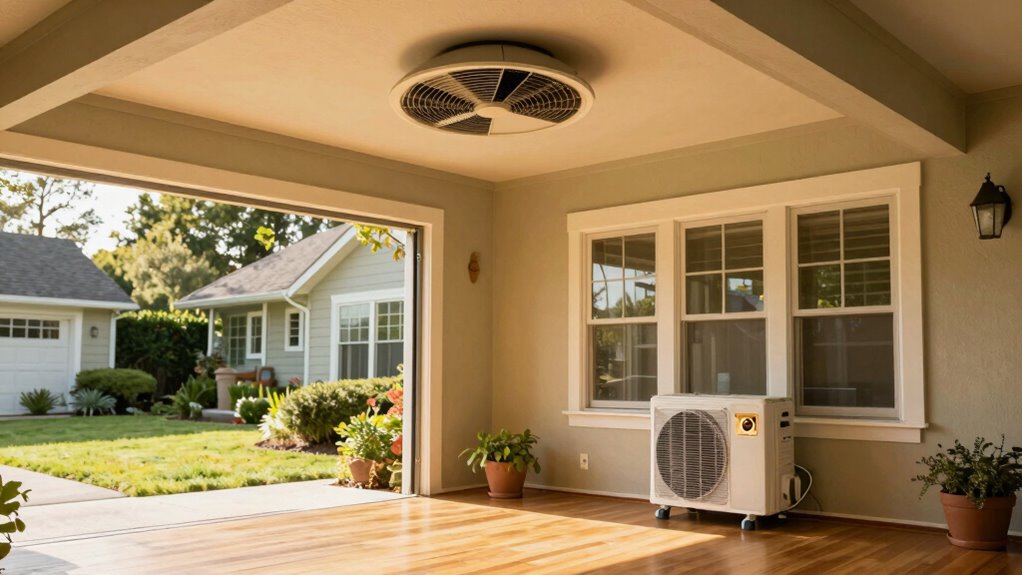
When comparing costs and energy savings, whole-house fans typically offer a more economical alternative to air conditioning. The cost comparison shows that installing and operating a whole-house fan can considerably lower your energy bills. You’ll spend less on electricity because fans use far less energy than central air systems. This leads to notable energy savings, especially during mild weather. Imagine cooling your home without running a high-energy AC unit all day.
- Reduced electricity bills thanks to lower energy consumption
- Lower installation and maintenance costs
- Less strain on your utility provider during peak hours
Frequently Asked Questions
Can Whole-House Fans Help Reduce Allergy Symptoms?
Yes, whole-house fans can help reduce allergy symptoms by improving ventilation effectiveness. By pulling in fresh air and exhausting airborne allergens like pollen, dust, and pet dander, you create a cleaner indoor environment. This reduces the buildup of allergens that often trigger allergy flare-ups. Regular use of a whole-house fan can make your home less hospitable to allergens, providing relief and improving your overall comfort during allergy season.
Are There Noise Concerns With Installing a Whole-House Fan?
You might notice noise levels with a whole-house fan, but many models operate quietly enough not to disturb your daily activities. Installation concerns can be addressed by professional setup, ensuring the fan is properly fitted and soundproofed if needed. Keep in mind that some noise is inevitable, but choosing a high-quality, well-reviewed fan minimizes disruptions. Overall, with proper installation, noise shouldn’t be a major concern for your comfort.
How Long Does It Take to Install a Whole-House Fan?
Installing a whole-house fan typically takes about one to three days, depending on your home’s size and complexity. Your installation timeline can be facilitated by choosing an experienced contractor, who can efficiently handle the work. You’ll want to discuss your needs upfront, so they can plan the proper placement and wiring. Selecting a professional ensures a smooth process and a properly functioning fan that cools your home effectively.
Can a Whole-House Fan Be Used During Humid Weather?
You can use a whole-house fan during humid weather, but it’s not always ideal. Humidity management is key, and these fans are most effective when outdoor air is drier than inside. In fact, in dry climates, they can reduce cooling costs by up to 90%. However, during high humidity, ventilation efficiency drops, risking indoor moisture build-up. Use them early mornings or evenings to maximize benefits and minimize humidity issues.
What Safety Precautions Are Necessary When Operating a Whole-House Fan?
When operating a whole-house fan, you should prioritize electrical safety by ensuring the fan’s wiring is intact and properly grounded. Always turn off the power before maintenance or cleaning to prevent shocks. Regular fan maintenance, like cleaning blades and checking for debris, keeps it running smoothly and safely. Keep children and pets away during operation, and never operate the fan if you notice electrical issues or strange noises.
Conclusion
Think of your home as a garden; a whole-house fan is like a gentle breeze that revitalizes it naturally, while air conditioning is a heavy rain that cools but can drown your plants. By choosing the breeze over the rain, you keep your home vibrant, energy-efficient, and comfortable. Embrace the air flow, and let your home thrive with a simple, eco-friendly solution that restores balance, just like a invigorating wind on a warm day.