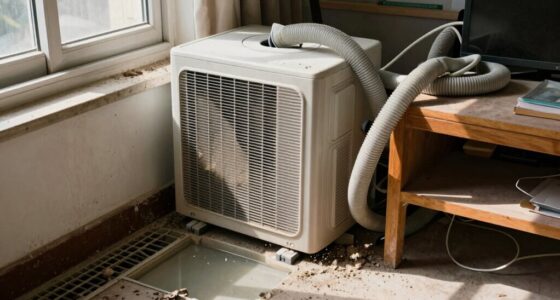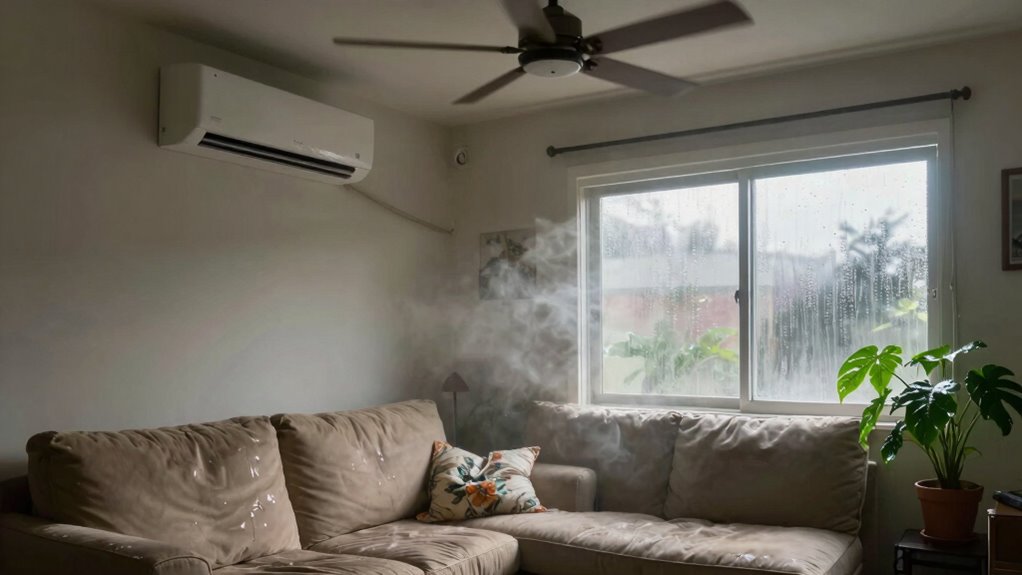

If your home feels muggy despite running the air conditioner, it’s likely due to high indoor humidity, poor insulation, or inadequate ventilation. Moisture from outside, leaks, or trapped humid air can make your space damp and sticky. Also, if your HVAC system isn’t well-maintained or filters are dirty, it can’t remove moisture effectively. Addressing these issues improves comfort and keeps your home cooler and drier, and there’s more to uncover if you keep exploring.

Get cleaning gear delivered free — and shop member deals
- Fast, free delivery on millions of items
- Access to Prime Big Deal Days deals on October 6–7
- Prime Video, Amazon Music and more included
Key Takeaways
- High indoor humidity levels prevent effective sweat evaporation, making the home feel sticky despite air conditioning.
- Poor insulation allows outdoor moisture to infiltrate, increasing indoor humidity and dampness.
- Inadequate ventilation traps moist air, especially in areas like kitchens and bathrooms.
- Dirty or inefficient HVAC systems reduce dehumidification, causing a muggy environment.
- External leaks or cracks let moisture seep in, raising indoor humidity despite AC use.
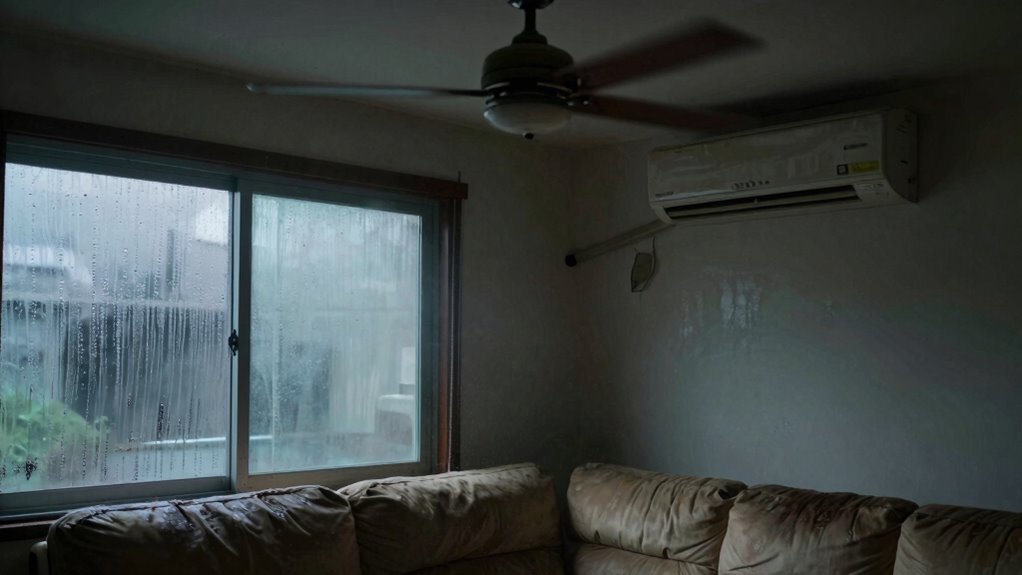
Even with your air conditioner running, your home can still feel muggy if certain factors aren’t addressed. One of the main issues is often related to humidity levels. Even when your AC is cooling the air, high indoor humidity can make the space feel damp and uncomfortable. If the air inside is humid, it prevents your body from evaporating sweat efficiently, resulting in that sticky, muggy feeling. To combat this, you might need to use a dehumidifier or ensure your existing HVAC system has a proper dehumidification setting. Managing humidity levels is essential for comfort, especially during humid seasons, because lowering excess moisture makes the cooled air feel even more revitalizing and crisp. Additionally, humidity control devices can help maintain optimal moisture levels and improve overall comfort.
High indoor humidity can make your home feel damp and uncomfortable despite air conditioning.
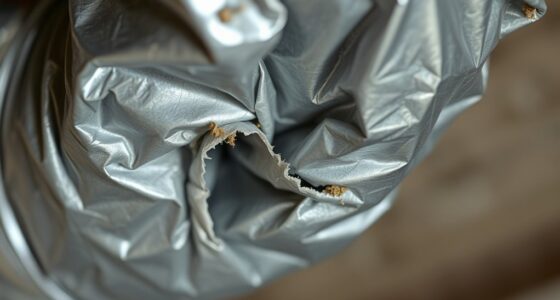
Another significant factor that contributes to a muggy home is the insulation quality. If your home isn’t properly insulated, cool air from your air conditioner can escape, or warm, humid air can seep in from outside. This constant exchange of air makes it difficult for your AC to maintain a consistent, comfortable temperature and humidity level. Poor insulation creates a cycle where your AC works harder without effectively lowering the indoor humidity, leaving your space feeling damp despite the cooling efforts. Upgrading or repairing insulation can help seal leaks, keeping conditioned air inside and preventing outdoor humidity from penetrating your home. Proper building envelope improvements can further enhance the effectiveness of your climate control systems. Sometimes, ventilation systems may also need to be improved to facilitate better airflow and moisture removal. Additionally, addressing air leakage can significantly reduce unwanted moisture ingress. Regularly inspecting for and sealing leaks can also prevent additional humidity from entering your home through small gaps or cracks.
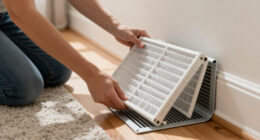
Beyond humidity levels and insulation, other issues can also contribute to that muggy feeling. For instance, inadequate ventilation can trap moist air inside, especially in areas like bathrooms or kitchens where moisture is generated frequently. If your home lacks proper airflow, the humidity can accumulate, making the air feel heavy and moist even with the AC on. Regularly ventilating these spaces or installing exhaust fans helps reduce moisture buildup. Additionally, dirty filters or outdated HVAC systems can impair the cooling process, making it harder for your AC to dehumidify the air properly. Routine maintenance, like changing filters and servicing your system, ensures it functions effectively to keep humidity levels in check. Improving air circulation throughout your home can also help disperse moist air more efficiently and prevent localized dampness.
In essence, addressing humidity levels, improving insulation quality, and maintaining good airflow are key to preventing that muggy feeling. Even with your air conditioning running, neglecting these factors means you’re fighting a losing battle against moisture and discomfort. By focusing on these areas, you’ll create a cooler, drier environment that feels as good as it looks on the thermostat.
As an affiliate, we earn on qualifying purchases.
Frequently Asked Questions
Can Humidity Levels Affect Air Conditioning Efficiency?
Yes, humidity levels can affect your air conditioning efficiency. When humidity is high, your AC has to work harder to remove moisture from the air, which can strain the system. Proper humidity control improves indoor air quality and makes your home feel cooler and more comfortable. If humidity isn’t managed well, your AC may struggle to maintain the desired temperature, leading to increased energy use and less effective cooling.
How Often Should Air Filters Be Changed to Prevent Muggy Feeling?
Did you know that changing air filters every 30 to 60 days can greatly improve your home’s comfort? You should replace your air filter regularly based on its lifespan and your ventilation practices. A clean filter keeps airflow at its best, prevents humidity buildup, and reduces muggy feelings. If you notice reduced airflow or increased humidity, it’s time to change the filter sooner. Proper maintenance ensures your AC works efficiently and keeps your home fresh.
Do Certain Home Materials Retain More Humidity Than Others?
Yes, some home materials retain more humidity than others. Materials like building insulation and porous surfaces absorb moisture, making your space feel muggy even with air conditioning. Fiberglass insulation, for example, can trap moisture, while porous materials like wood or fabric absorb humidity from the air. To keep your home comfortable, choose moisture-resistant materials where possible and guarantee proper ventilation to reduce moisture absorption.
Is It Necessary to Use a Dehumidifier With Air Conditioning?
Yes, you often need a dehumidifier even with air conditioning, especially if your indoor plants and ventilation systems add extra humidity. While AC cools the air, it may not remove enough moisture, leading to muggy feelings. Using a dehumidifier helps maintain comfortable humidity levels, preventing mold and dampness. Proper ventilation also improves airflow, but a dehumidifier guarantees your home stays dry and comfortable despite the natural moisture from plants and ventilation.
How Can I Tell if My AC Is Properly Cooling the Air?
Think of your AC as a thermostat in a dance—if it’s properly tuned, it keeps the rhythm steady. To tell if your AC cools well, check if indoor air quality improves and the room feels consistently comfortable. Feel for uneven temperatures or lingering humidity. When your AC runs excessively or struggles to maintain temperature, it increases energy consumption. Properly functioning AC guarantees a cool, healthy home without wasting energy.
air conditioner with dehumidification
As an affiliate, we earn on qualifying purchases.
As an affiliate, we earn on qualifying purchases.
Conclusion
So, next time your home feels muggy despite running the AC, ask yourself—are you really addressing the root cause? Sometimes, simple issues like poor ventilation, excess humidity, or dirty filters can make all the difference. Don’t accept discomfort as normal; take proactive steps to improve your indoor air quality. After all, isn’t feeling fresh and comfortable in your own home worth a little extra effort?
As an affiliate, we earn on qualifying purchases.
As an affiliate, we earn on qualifying purchases.
Fall Picks
fall essentials
As an affiliate, we earn on qualifying purchases.