
To effectively remove blood stains from sheets, act quickly and use cold water. Cold water prevents blood proteins from coagulating and setting into the fabric, making stain removal easier. Gently rinse the stain from the outside inward, and avoid warm or hot water, which can harden the stain. Patience and the right technique can considerably improve your chances of complete removal—continue exploring to discover more tips rooted in proven science.

Get cleaning gear delivered free — and shop member deals
- Fast, free delivery on millions of items
- Access to Prime Big Deal Days deals on October 6–7
- Prime Video, Amazon Music and more included
Key Takeaways
- Cold water prevents blood proteins from coagulating, making blood stains easier to remove.
- Rinsing promptly with cold water helps prevent blood from setting into fabric fibers.
- Gentle blotting and avoiding heat preserve fabric integrity and improve stain removal success.
- Enzymatic cleaners combined with cold water target organic blood stains effectively.
- Repeated cold water treatments and patience increase the likelihood of complete blood stain removal.
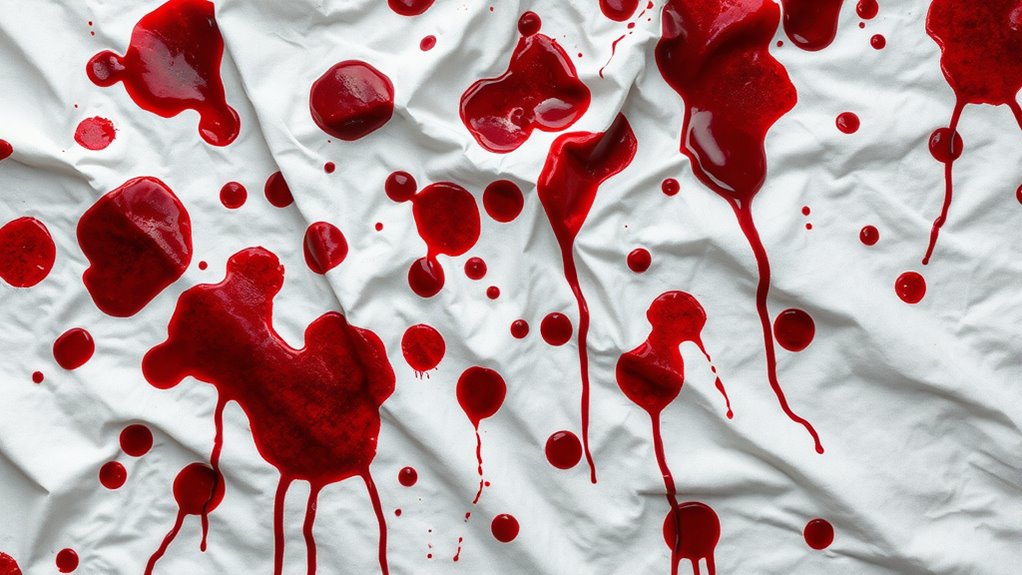
Blood stains on sheets can be alarming, but knowing how to identify and handle them can make the situation less stressful. When you notice blood on your bedding, it’s natural to feel overwhelmed. However, understanding the science behind bloodstain removal can empower you to act quickly and effectively. One of the most effective ways to deal with blood stains involves simple cold water and proper stain removal techniques, grounded in forensic analysis principles. Forensic experts study bloodstains meticulously to determine their origin and the best way to remove them without causing further damage. You can apply similar techniques at home to improve your chances of successful stain removal.
The first step is to act promptly. Fresh blood stains are much easier to remove than dried ones. When you discover the stain, rinse the affected area with cold water immediately. Cold water prevents the blood from setting into the fabric, which is essential because warm or hot water can cause proteins in the blood to coagulate and bind more tightly to the fibers. To maximize stain removal, gently blot the stain rather than rubbing it, which can spread the blood or embed it deeper into the fabric. This approach aligns with forensic stain analysis, where careful, precise movements preserve the integrity of evidence.
Next, consider stain removal techniques that are both simple and effective. Applying a mixture of cold water and a mild detergent or enzymatic cleaner can break down blood proteins, making it easier to lift the stain. Enzymatic cleaners are specifically designed to target organic stains like blood, and they’re often used in forensic labs to analyze blood evidence. When treating the stain, work from the outside edges inward to prevent spreading. Let the solution sit for at least 15 minutes before rinsing thoroughly with cold water. If the stain persists, repeat the process or try a paste of baking soda and water, which can help lift residual blood.
Forensic analysis also teaches you to be meticulous. Check your work after each treatment—if the stain remains, avoid drying the sheet, as heat can set any remaining blood permanently. Instead, repeat the cold water rinse and stain removal process. If the stain stubbornly persists, professional cleaning might be necessary, especially for valuable or delicate sheets. Understanding the science behind bloodstains, from forensic analysis to stain removal techniques, gives you a clear, practical approach. Additionally, employing data-driven marketing strategies can help you learn the best cleaning products and methods for your specific needs. With patience and the right methods, you can profoundly improve your chances of removing blood stains and restoring your sheets to their original condition.
Frequently Asked Questions
How Long Does Blood Stain Removal Take With Cold Water?
Blood stain removal with cold water usually takes about 15 to 30 minutes, depending on stain persistence and fabric compatibility. You should rinse the stain promptly, gently agitating the fabric to loosen blood particles. For stubborn stains, repeat the process or soak the fabric briefly. Using cold water helps prevent the stain from setting, but always check fabric care instructions to avoid damage. Patience guarantees better results.
Can Cold Water Completely Eliminate Old Blood Stains?
Think of cold water as a knight facing a dragon—sometimes brave enough, sometimes not. Cold water alone may not fully eliminate old blood stains, especially if blood enzymes have seeped into fabric porosity over time. The enzymes can hide deep within fibers, resisting simple rinses. For stubborn stains, you might need additional treatments like enzymatic cleaners, but cold water still plays a crucial first role in the fight.
Are There Stains That Cold Water Cannot Remove?
Some stains, like old or set-in blood, may resist cold water alone. You might need bleach alternatives or stain removal products for tougher stains. To prevent future issues, use stain prevention techniques like treating fresh stains promptly and avoiding hot water, which can set blood. Cold water helps, but it’s not always enough for every stain. Always test your cleaning methods to avoid damaging your sheets.
Does Blood Type Affect Removal Effectiveness With Cold Water?
Your blood type doesn’t considerably impact cold water’s stain removal effectiveness. Cold water works well for most blood stains regardless of whether you have type A, B, AB, or O blood. The key is to act quickly and avoid hot water, which can set the stain. Cold water dissolves and loosens blood proteins, making it easier to remove stains without regard to your blood type.
Is Cold Water Safe for All Fabric Types?
Some fabrics might not withstand cold water well, especially delicate or embellished ones, risking damage or color fading. However, for most fabrics, cold water is safe and helps with stain prevention while maintaining fabric care. Always check the care label first. Using cold water can prevent blood stains from setting, but avoid it on fragile or non-colorfast materials to ensure the best results and preserve your linens.
Conclusion
Next time you see blood stains on your sheets, remember the cold-water science behind them. Picture the stubborn crimson fading into the fabric’s fibers, quietly surrendering to your touch. Cold water works like a gentle but relentless force, pulling stains out without setting them deeper. With this simple yet powerful trick, you hold the key to restoring your sheets, turning what seems like permanent marks into memories washed away by the quiet strength of cold water.
Fall Picks
fall essentials
As an affiliate, we earn on qualifying purchases.