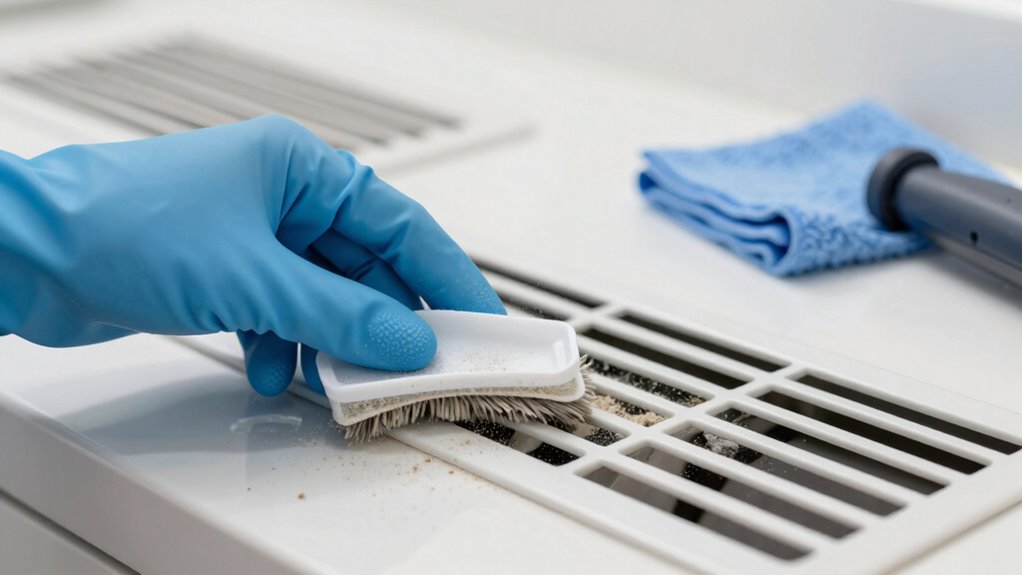
To clean around air vents and returns properly, start by turning off your HVAC system. Carefully remove the vent covers, vacuuming them with a brush attachment to remove dust, then wash with warm soapy water and dry thoroughly before reinstalling. Wipe surrounding areas with a microfiber cloth, paying attention to corners and crevices. Keep filters clean and replace them if needed. If you want complete tips for maintaining airflow and air quality, you’ll find helpful details below.

Get cleaning gear delivered free with Prime
- Fast, free delivery on millions of items
- Prime Video, Amazon Music and more included
- Member-only deals all year
Key Takeaways
- Turn off the HVAC system before starting to prevent dust circulation and ensure safety.
- Remove vent covers carefully, then vacuum and wash them thoroughly with warm, soapy water.
- Wipe the surrounding areas, including behind vents and around return registers, with a microfiber cloth.
- Check and replace or clean air filters regularly to maintain airflow and reduce dust buildup.
- Reinstall vent covers once completely dry and perform routine cleaning for ongoing air quality.
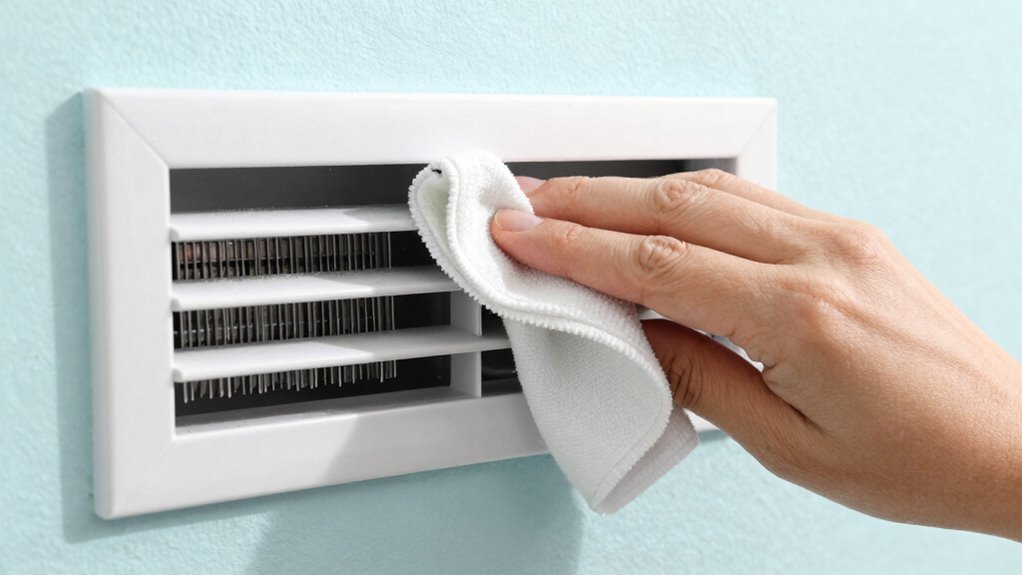
Cleaning around air vents and returns is vital for maintaining indoor air quality and guaranteeing your HVAC system runs efficiently. When you keep these areas clean, you help prevent dust buildup, which can hinder airflow and reduce the system’s effectiveness. Regular maintenance of air filters is essential because they trap dust, pollen, and other airborne particles, preventing them from circulating through your home. If you neglect air filter maintenance, dust can accumulate quickly around vents and returns, leading to poor air quality and increased strain on your HVAC system. By routinely replacing or cleaning filters, you minimize dust accumulation, making it easier to keep the surrounding areas clean and free of debris.
Start by turning off your HVAC system before cleaning. This step prevents dust from spreading while you work and guarantees safety during the process. Remove the vent covers carefully, using a screwdriver if necessary, and set them aside. Once removed, use a vacuum with a brush attachment to clean the vent covers thoroughly. Dust and dirt tend to cling to these covers, and vacuuming helps remove loose debris effectively. For stubborn grime, wash the covers with warm soapy water, then dry them completely before reinstalling. This not only improves airflow but also prevents dust from settling on the surfaces again.
Next, inspect the area behind the vents and around the return registers. Use a microfiber cloth or a duster to wipe down the surrounding surfaces, removing any dust or cobwebs. Pay close attention to corners and crevices, where dust tends to settle unnoticed. Regular dusting around vents prevents dust accumulation from spreading into the ductwork, which can cause your system to work harder and decrease indoor air quality. Additionally, check the filters inside the vents if accessible, and replace them if they look dirty or haven’t been changed recently. Doing so supports proper air filter maintenance and keeps dust particles from recirculating. Proper air filter maintenance helps prevent dust buildup and prolongs the lifespan of your HVAC system. Additionally, dust buildup can significantly impact your system’s efficiency and longevity, so keeping these areas clean is essential. Regular cleaning of these components is an effective way to prevent dust accumulation from becoming a persistent problem.
To further prevent dust buildup, keep your home clean and dust regularly with a damp cloth or microfiber duster, especially in high-traffic areas. Consider investing in high-efficiency filters for your HVAC system, which can trap finer particles and improve air quality. Regularly scheduled cleaning around air vents and returns not only maintains a healthier indoor environment but also extends the lifespan of your HVAC system. Through consistent effort, dust accumulation prevention becomes easier, and you keep your home’s air fresh, clean, and safe for everyone living there.
As an affiliate, we earn on qualifying purchases.
Frequently Asked Questions
How Often Should I Clean Around Air Vents?
You should clean around your air vents at least every 3 to 6 months. Regular cleaning helps improve air quality and reduces dust accumulation, which can trigger allergies or respiratory issues. If you notice more dust or debris, increase cleaning frequency. Maintaining clean vents also guarantees your HVAC system runs efficiently. Consistent upkeep keeps your home healthier and air fresher, making it a simple yet essential task for overall comfort.
Can I Use Water to Clean Vent Covers?
Yes, you can use water to clean vent covers, but you need to prioritize vent cover safety. Water cleaning works best if you remove the covers first, then wash them gently with warm water and mild soap. Avoid soaking or using harsh chemicals, which can damage the material. Make sure the covers are completely dry before reinstalling to prevent rust or mold growth. This method keeps your vents clean without risking damage.
What Tools Are Best for Cleaning Behind Vents?
You need the right tools to clean behind vents effectively—think of it as a treasure hunt for dust! Air vent brushes are your best friends here; they reach tight spots and loosen stubborn debris. Dusting cloths help wipe away lingering dust and dirt. Together, these tools make cleaning behind vents easier and more thorough, ensuring your air system stays clean and your home breathes fresh air.
Is It Safe to Remove All Vent Covers at Once?
It’s generally safe to remove all vent covers at once, but you should check their materials first. Vent covers made of plastic or thin metal are easier to handle, while heavier or ornate covers may require extra caution. Removing covers helps with allergens removal and allows you to clean around and behind them thoroughly. Just make certain you keep track of each cover’s placement to reinstall them correctly afterward, preventing damage and ensuring proper airflow.
How Do I Prevent Dust Buildup Around Vents?
Like a vigilant guardian, you can prevent dust buildup around vents by practicing regular vent maintenance and implementing dust prevention strategies. Schedule routine cleaning to remove accumulated dust and debris, and consider using high-efficiency filters to trap airborne particles. Keep the surrounding area tidy and dust-free, and wipe down vent covers with a damp cloth often. These steps help maintain air quality and guarantee your system runs efficiently, much like a well-kept temple.
As an affiliate, we earn on qualifying purchases.
Conclusion
Cleaning around your air vents and returns might seem like a small task, but it’s an essential part of maintaining a healthy home. Just as clear air promotes better breathing, neglect can lead to dust buildup and allergies. While the process requires effort, the fresh, clean environment you create is worth every minute. Remember, attention to detail isn’t just about cleanliness—it’s about caring for your well-being and ensuring your space breathes freely.
As an affiliate, we earn on qualifying purchases.
microfiber cleaning cloth for vents
As an affiliate, we earn on qualifying purchases.
As an affiliate, we earn on qualifying purchases.
Columbus Day / Indigenous Peoples' Day Picks
long weekend sales
As an affiliate, we earn on qualifying purchases.